- Basedment
- Posts
- A breakdown of military power. Who has the stronger war chest in the Israel-Iran war?
A breakdown of military power. Who has the stronger war chest in the Israel-Iran war?
Israel-Iran Special Edition Part 2 - 14th of June 2025

Editor-in-Chief
June 15, 2025
SPECIAL REPORT - BRIEFING
On Friday the 13th of June, Israeli forces conducted a combined operation codenamed “Rising Lion” against Iranian military and nuclear facilities. Israel deployed over 200 fighter jets alongside missile units to strike a multitude of targets across Iran. Iran has now stepped up and in response, launched barrages of ballistic missiles into Israel.
What was once a covert game of cat and mouse has now exploded into full-blown conflict. Israel and Iran, longtime rivals locked in a shadow war, are now trading blows out in the open.
With tensions hitting new highs and the world watching closely, the big question on everyone’s mind is: how do these two regional heavyweights actually compare when it comes to military muscle?
Ground Forces & Manpower
Iran: 950,000 soldiers (600,000 active + 350,000 reservists)
Israel: 630,000 soldiers (170,000 active + 460,000 reservists)
When it comes to sheer numbers, Iran’s got a serious headcount advantage. Their forces include the regular army (Artesh), the powerful Islamic Revolutionary Guard Corps (IRGC), and the paramilitary Basij. The IRGC isn’t just any force either, they’ve got their own ground, naval, and even aerospace divisions, and they play a major role in Iran’s military strategy both at home and across the region.
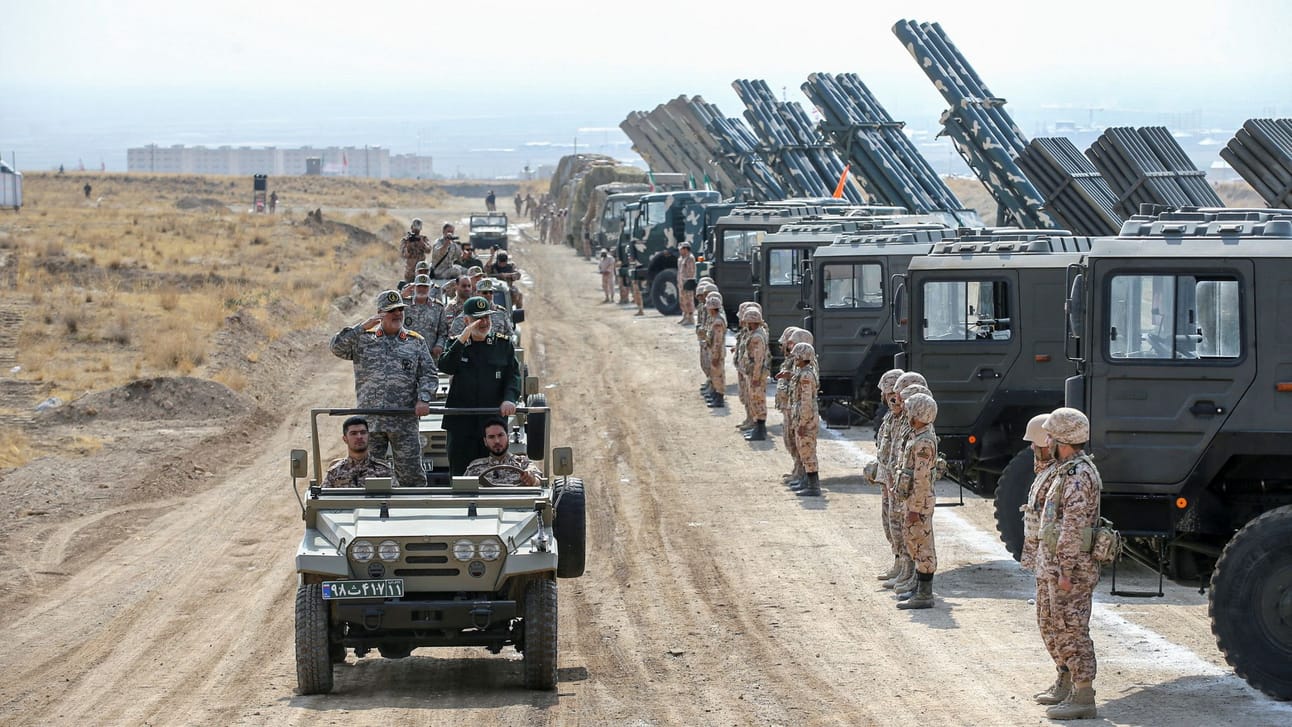
IRGC during a military drill in East Azerbaijan Iran.
Israel, on the other hand, runs a much smaller but seriously sharp military machine. The Israel Defense Forces (IDF) has about 170,000 active troops and around 460,000 reservists ready to roll. What they lack in size, they more than make up for in speed and precision. Thanks to compulsory service and a tightly integrated command setup, the IDF can mobilise fast and hit back hard
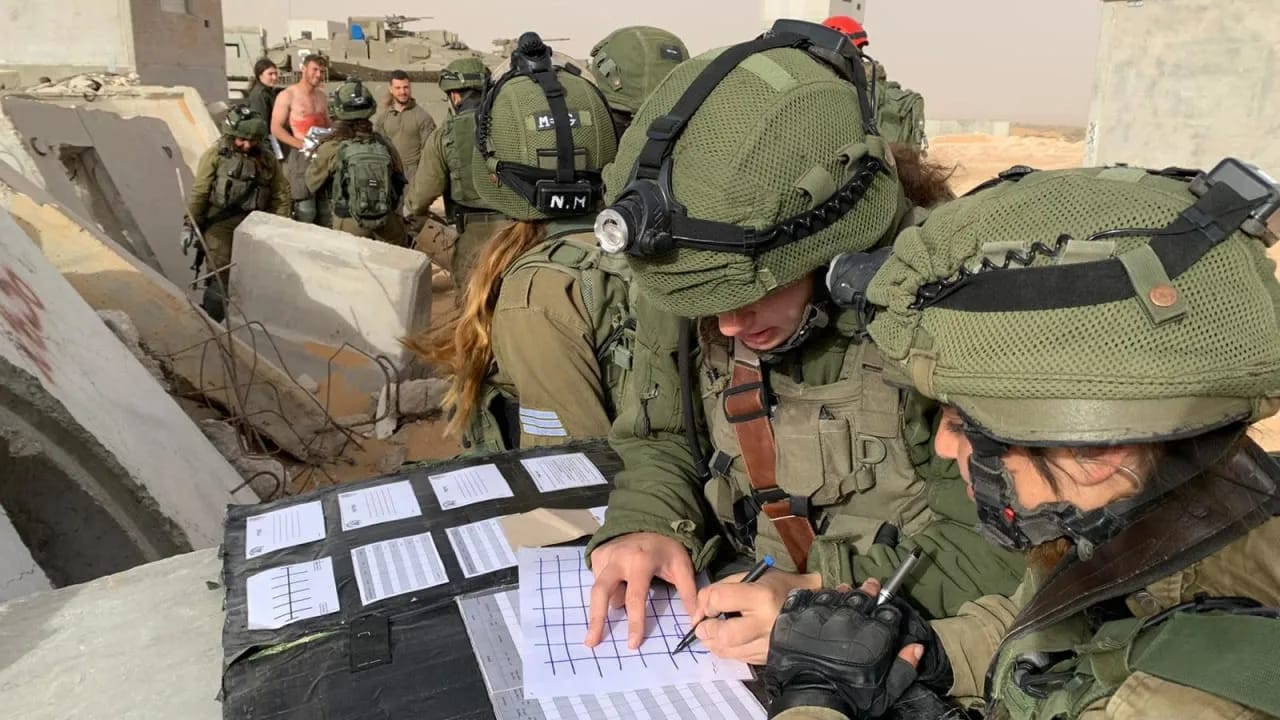
IDF Soldiers seen taking part in an simulated rescue mission
The verdict? Iran most likely wins on a points decision, but Israel has knock-out potential.
Combat Capable Aircraft
Iran: 312 aircraft
Israel: 340 aircraft
Iran’s air force is seriously lagging behind. After decades of sanctions and import bans, they’re still flying some pretty old-school gear, think American F-4s and F-5s from the Cold War era, a few MiG-29s from the Soviet days, and a handful of homegrown upgrades. There’s talk that some newer Russian tech has been added to the mix, but Iran still doesn’t have anything close to fifth-gen jets like the F-35. Instead, they rely heavily on surface-to-air missile systems to keep their skies defended.
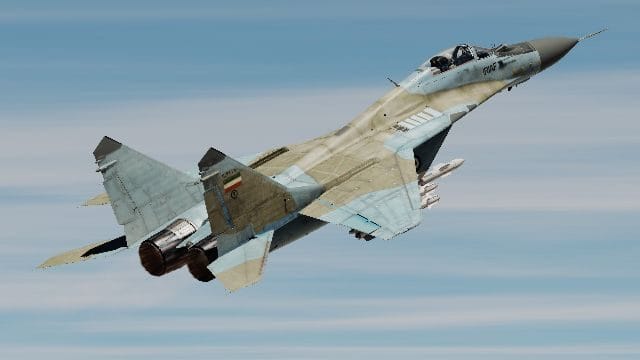
Iranian MiG-29S in action
Israel, by contrast, has long dominated the region when it comes to air power. The Israeli Air Force is stacked with cutting-edge F-35I ‘Adir’ stealth fighters, tricked-out F-15s and F-16s, plus mid-air refuelling tankers, surveillance planes, and electronic warfare gear. They showed just how effective this combo is during their June 2025 strikes, reportedly taking out multiple Iranian radar and missile sites in a single night with pinpoint accuracy. It’s that mix of speed, stealth, and surgical precision that gives Israel a massive edge in the skies.
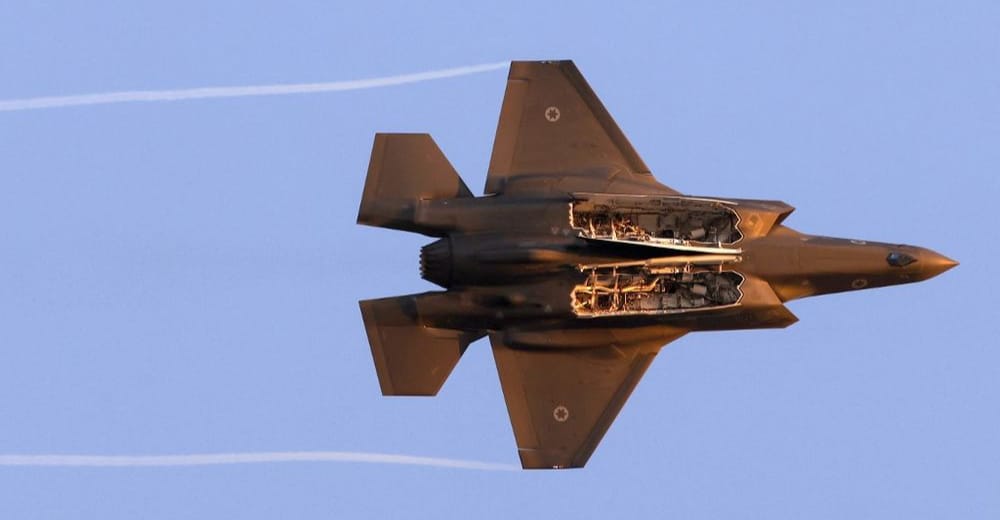
Israeli F-35 Stealth Fighter
The verdict? Israel’s got the clear upper hand when it comes to air combat, long-range strikes, and high-tech surveillance. Total air dominance.
Air Defence Systems
Iran’s air defences are getting an upgrade, but they’re still a bit patchy. They’ve brought in Russian S-300 systems and rolled out some homegrown tech like the Bavar-373 and Khordad-15, which Iran claims are on par with Russia’s top-tier S-400s. But recent Israeli airstrikes seem to have punched through with ease, suggesting there are still some major gaps when it comes to how well these systems actually work together in a real fight.
Meanwhile, Israel has built one of the most advanced missile defence setups on the planet. It’s got layers, literally. The Iron Dome takes care of short-range rockets, David’s Sling handles medium-range threats, and the Arrow systems go after long-range ballistic missiles. All of this was developed with help from the U.S., and since 2011, these defences have intercepted thousands of incoming threats. In 2024, they were crucial in blocking Iran’s retaliatory attacks, proving just how battle-tested the whole system is.
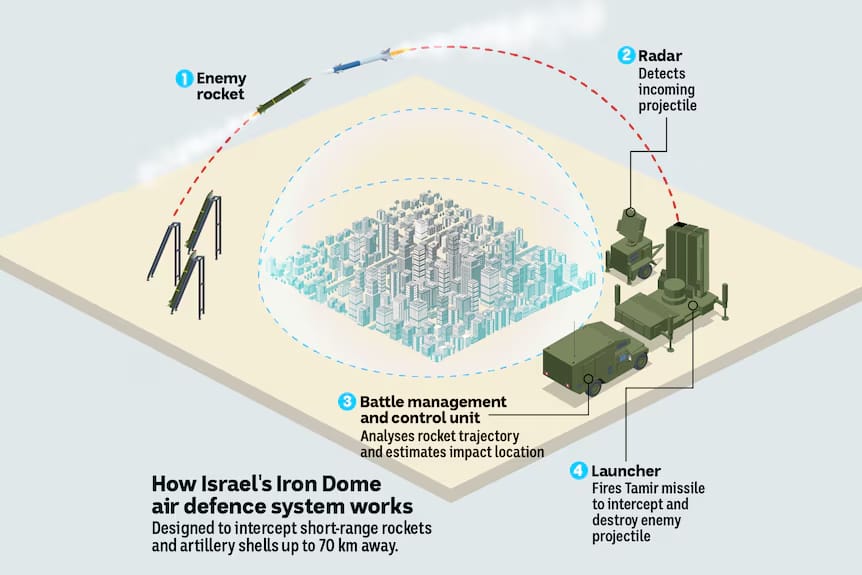
Israel's Iron Dome air defence system
The verdict? Israel’s missile defence game is rock solid, battle-tested and high-tech. Some recent proof below.
Images of Mossad operatives in Iran conducting strikes overnight. Appear to possibly use Spike ATGMs to hit air defence assets.
— ELINT News (@ELINTNews)
9:06 AM • Jun 13, 2025
Artillery (Drones & Missiles)
Iran’s missile game is no joke. It’s packing the biggest ballistic arsenal in the Middle East, with missiles like the Shahab-3, Fateh-110, and Sejjil, plus newer solid-fuel models that can reach anywhere from 300 to 2,000 km. These aren’t just for show either—the IRGC Aerospace Force runs the whole operation, with launchers hidden in underground bunkers and scattered across mobile units to keep things unpredictable. On top of that, Iran’s become a serious drone power, fielding UAVs like the Shahed-136, Mohajer-6, and Ababil-3 for everything from spying to kamikaze-style strikes. They've even shipped some of these drones to regional allies—and reportedly to Russia for use in Ukraine.
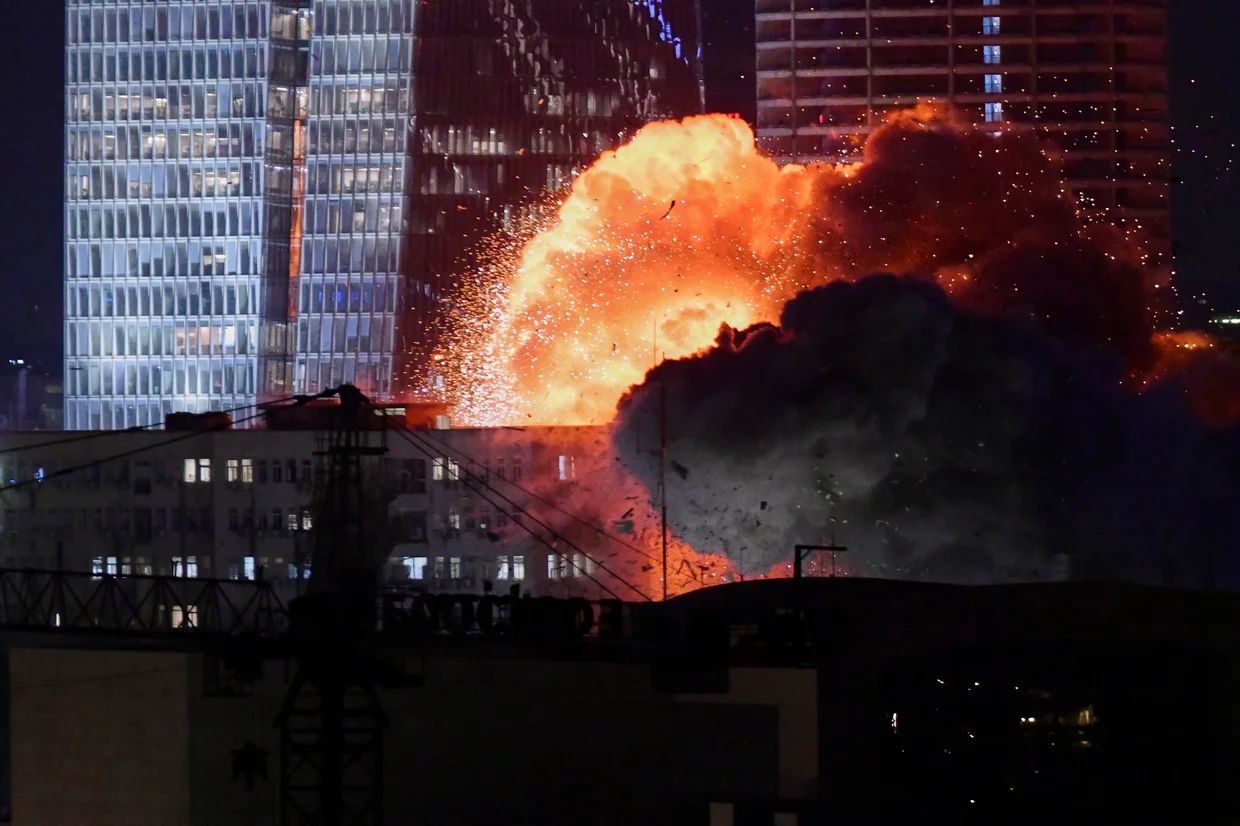
Explosions in Tel Aviv during Iran’s ballistic missile attacks
Israel, on the flip side, runs a much tighter and more precise missile setup. Their focus is on quality over quantity, with high-accuracy systems like the LORA and the Jericho series—believed to be key to Israel’s strategic deterrence. When it comes to drones, Israel’s tech is top-tier. Their UAVs are combat-proven and used for everything from recon to surgical strikes. But while Israel has the edge in precision and reliability, it doesn’t have the same sheer volume or variety of missile hardware that Iran’s stacked up.
The verdict? Iran’s got the numbers and long-range muscle when it comes to missiles, but Israel has the drone tech and pinpoint strike precision.
Naval Capabilities
When it comes to naval power, things get pretty lopsided—but in an interesting way. Iran runs two separate naval forces: the regular navy and the IRGC Navy. The IRGC side is all about guerrilla-style sea tactics, think fast boats, swarm attacks, missile-laden speedboats, and making life difficult for ships moving through the Strait of Hormuz. They’ve also got diesel-electric subs and have been experimenting with anti-ship ballistic missiles.
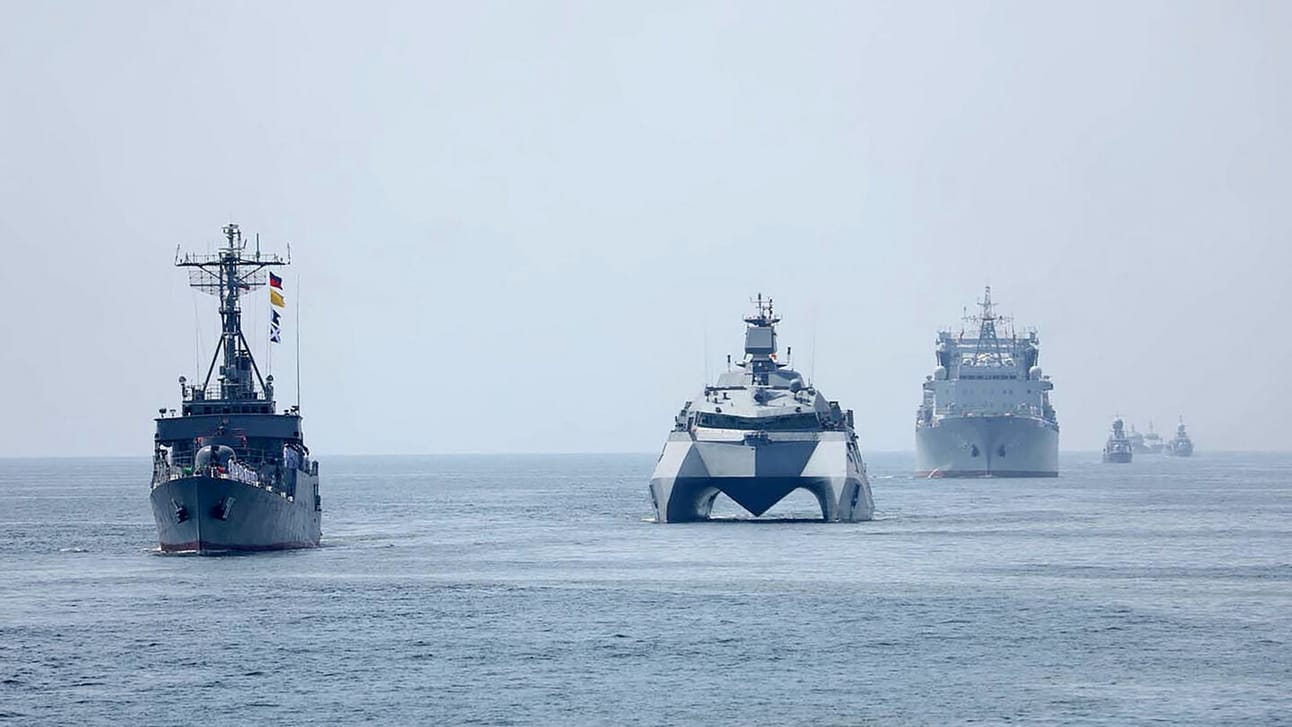
navy vessels taking part in a joint Iranian-Russian-Chinese military drill in the Gulf of Oman
Israel, on the other hand, has a much smaller fleet, but it punches way above its weight. Its Dolphin-class submarines are rumoured to be nuke-capable, and its Sa’ar-class ships are stacked with cutting-edge missile defence systems. Beyond coastal patrols, the Israeli navy plays a big role in protecting offshore gas fields and adds serious weight to Israel’s second-strike capabilities, thanks to its subs lurking quietly under the surface.
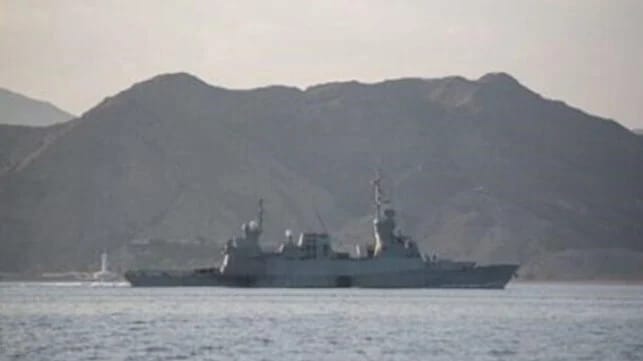
Sa'ar Class corvette off Eilat
The verdict? Iran’s built to stir things up close to home, but Israel’s got the edge when it comes to long-range naval power and underwater dominance.
Proxy Forces
One of the biggest contrasts between Iran and Israel isn’t just hardware — it’s how they play the game.
Iran leans heavily on a web of proxies to project power across the region. Think Hezbollah in Lebanon, Hamas and Islamic Jihad in Gaza, Shia militias in Iraq and Syria, and the Houthis in Yemen. This so-called “Axis of Resistance” lets Tehran stir the pot on multiple fronts, without needing to put its own forces directly in the firing line.
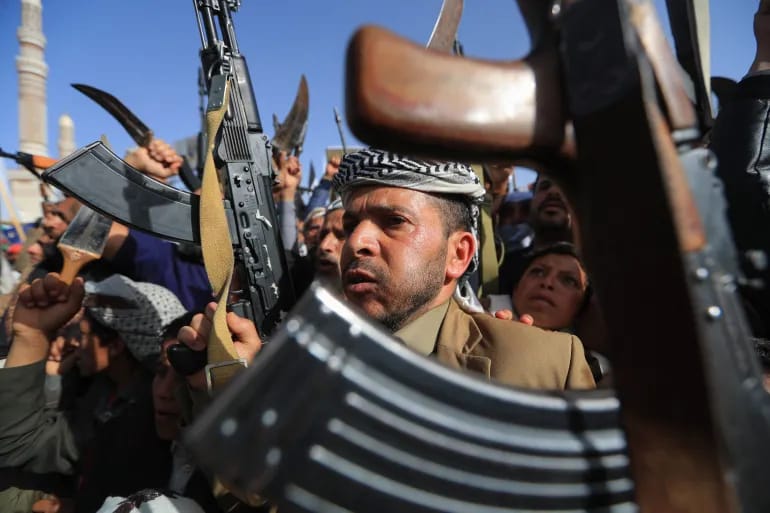
Houthi troops rally in solidarity in the Houthi-run capital of Yemen
Israel, on the other hand, doesn’t do proxies. Instead, it relies on elite intelligence, precision strikes, and direct action to keep threats in check. Whether it’s taking out IRGC commanders in Syria or Lebanon, or pulling off covert sabotage missions inside Iran, Israel’s doctrine is all about staying one step ahead—pre-empt, disrupt, repeat.
The verdict? Iran plays the long game through regional allies; Israel hits hard and fast with surgical precision and serious intel game…. And let’s not forget the US of A.
Closing Thought
On paper, Israel has the upper hand with cutting-edge air power, world-class cyber ops, a rock-solid missile shield and intelligence. But Iran plays a different game. With a deep bench of regional allies, a massive stockpile of missiles, and an asymmetric strategy designed to keep Israel stretched thin, Tehran knows how to punch above its weight.
Israel’s playbook is all about speed, tech, and surgical precision. Iran’s is about reach, pressure, and playing the long game.
So maybe the real question isn’t who’s stronger, but how much longer can this clash stay contained before it spills over into something much bigger, dragging in the region, or even the world.