- Basedment
- Posts
- A Divided Syria Heats Up Once Again
A Divided Syria Heats Up Once Again
Your daily dose of geopolitical updates and strategic analysis. Unbiased, but not unbased.

Editor-in-Chief
November 17, 2025
THE BRIEFING
Here’s what’s happening in geopolitics today.
It was another busy night on the geopolitical front, with everything from U.S. counter-narcotics strikes to rising tensions across the Middle East and Asia.
Several countries are juggling diplomatic pressure, security setbacks and major strategic visits, all of which are shaping the week’s global narrative. We also saw large-scale protests and fresh calls for accountability in Southeast Asia, adding to an already crowded news cycle.
Fresh border skirmishes and religious attacks in Damascus could be leading Syria into a new round of conflict.
THE LAST 24 HOURS IN GEOPOLITICS
1. U.S. forces kill 3 narco-terrorists in Eastern Pacific lethal strike
U.S. forces carried out a lethal strike on a vessel in the eastern Pacific under Operation Southern Spear, killing three men identified as “narco-terrorists.” Intelligence, according to U.S. Southern Command, confirmed the boat was carrying narcotics and operating along a known drug trafficking route. While Washington argues the campaign is a justified counter-narcotics effort, critics have raised serious questions about the strikes’ legality and lack of due process.
read more
2. Israeli drone strike in Southern Lebanon kills school principal
An Israeli drone struck a car in al-Mansouri, southern Lebanon, killing Muhammad Shweikh, the principal of al Mansouri Public School, according to Lebanese officials. The vehicle was near a football field when it came under fire and burst into flames, heightening outrage over civilian targets. While Israel typically says its drone strikes hit Hezbollah infrastructure, local sources say the schools’ principal had no weapons, underscoring the growing civilian cost of the conflict despite a ceasefire.
read more
3. Saudi Crown Prince visits U.S. with defence, AI and nuclear on the agenda
Saudi Crown Prince Mohammed bin Salman is visiting the U.S. to hold high-stakes talks with President Trump, with a focus on deepening defence cooperation, advancing artificial intelligence, and exploring civilian nuclear energy. MBS aims to secure access to cutting-edge AI chips and U.S. nuclear technology as key pillars of his Vision 2030 ambition to diversify Saudi Arabia’s economy beyond oil.
read more
4. South Korea proposes talks with North Korea over repeated DMZ incursions
South Korea is proposing talks with North Korea after a series of recent DMZ incursions, as President Lee’s administration pushes to restore a 2018 military pact that aimed to ease cross-border tension. U.S. Defense Secretary Pete Hegseth reinforced the message when he visited the DMZ alongside his South Korean counterpart, saying the alliance must remain “clear-eyed” about threats from the North.
read more
5. Thousands in Philippine capital hold second day of anti-graft protests
Tens of thousands of protesters took to the streets of Manila for a second straight day, demanding accountability over alleged corruption in flood-mitigation projects. They’re pressing for real investigations into what they say were substandard or “ghost” infrastructure builds, with kickback accusations against public works officials, construction firms, and lawmakers. The protests, part of a three-day mobilization, reflect mounting frustration with government transparency and come as security forces remain on high alert.
read more
DAILY DEEP DIVE
Syria: A Land Divided
The Euphrates River Battle
The Euphrates River, which has served as a natural border for kingdoms and empires for thousands of years, is once again at the forefront of tense escalations between two factions. To the east are the Syrian Democratic Forces, an umbrella organisation for a wide range of U.S.-backed Kurdish militia groups. To the west is the New Syrian Government, which is eager to unite Syria under one flag.
Reports indicate escalating clashes in the Raqqa countryside, specifically around the Ghanem al-Ali axis, following attempts by factions aligned with both the Damascus government (including HTS-linked elements) and Turkish-backed Syrian National Army (SNA) to infiltrate positions held by the Syrian Democratic Forces (SDF). Some infiltrating fighters were reportedly captured during the initial engagements. Note the source here has an anti-government bias. But without a doubt border skirmishes have been going on for days near Raqaa.
The SDF states it is responding under a framework of “legitimate defence,” while both pro-Damascus and pro-Ankara factions claim their actions are part of ongoing security operations. Independent verification of the sequence of events remains limited, but available footage confirms active clashes and the use of small-arms and light tactical manoeuvres across the line of contact.
The Grand Plan
The wider context is that the Syrian Government is seeking to integrate the Kurdish factions under one flag. This is driven partly by power dynamics: if al-Sharaa succeeds, he would centralise control over most of Syria’s recognised territory. Economically, much of the country’s oil supply comes from the east, with the SDF deriving an estimated 60–70% of its revenue from oil alone. Demographically, while Kurdish forces administer large parts of eastern Syria, many of the inhabitants are ethnic Arabs, which also shapes the government’s long-term calculus. Finally, achieving unification would represent a major symbolic victory on the world stage. As al-Sharaa continues to pursue broader international legitimacy, ending Syria’s de-facto “balkanisation” would be a significant step in strengthening his position.
For the Kurds, the primary objective is autonomy. They argue that after years of fighting, shedding blood, and acting as the West’s most reliable ground force against ISIS, they have earned the right to self-governance. Their leadership maintains that this contribution has cemented their legitimacy as an autonomous region. Any genuine integration with Damascus, they insist, would require firm security guarantees—both to protect Kurdish-administered territory and to preserve Kurdish cultural and political rights.
However, al-Sharaa’s inability (or in the view of some observers, unwillingness) to restrain rogue pro-government elements has raised concerns. Incidents of violence and intimidation against minority communities, including Christians, Alawites, and Kurds in western Syria, have created doubts about whether Damascus can guarantee the protections necessary for meaningful reintegration.
Terror In Damascus
This comes as the last 24 hours reports from Damascus indicate that residents of the Sommeriye neighbourhood (an area with a significant Alawite population) were instructed to evacuate within 24 hours due to planned demolitions. According to locals, a security official identified as Abu Huzeya informed them that homes marked in green would be cleared imminently. The announcement has caused considerable concern and uncertainty among residents. Footage from 5 September 2025 shows conditions inside the al-Sumaria neighbourhood of Damascus after days of pressure from security forces and local groups, which led most Alawite residents to flee to Mezzeh 86, al-Warwar, or the coast. Those remaining face new restrictions imposed by Jolani-aligned units, including the closure of all but one entrance, repeated raids, and reported looting. Nearby in al-Woroud, authorities are documenting Alawite households amid fears of further displacement. Reuters reported that al-Sumaria’s population dropped from roughly 22,000 to 3,000 within a week, with a proposed $2 billion metro project overlapping the neighbourhood. New plans include cement barriers and demolition of marked homes.

Sources:
News/Journal sources available upon request, not shown to maintain visual integrity of page.
TODAY IN HISTORY
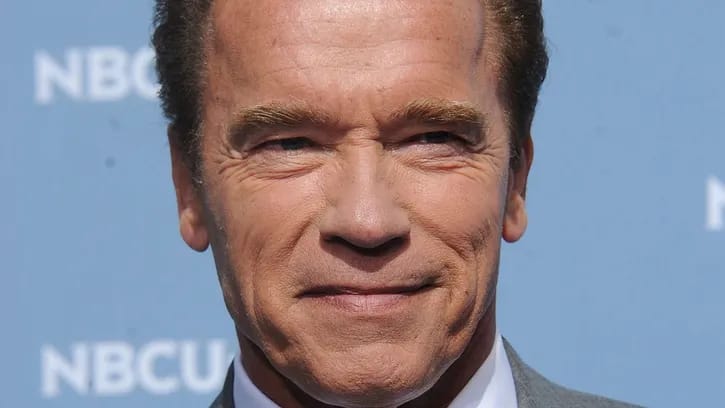
(November 17, 2003): Arnold Schwarzenegger inaugurated as governor of California
Republican Arnold Schwarzenegger, an Austrian-born American bodybuilder and film actor, was inaugurated on this day in 2003 as the governor of California following a recall election that ousted the sitting governor.