- Basedment
- Posts
- A New U.S.–Saudi Era And What It All Means
A New U.S.–Saudi Era And What It All Means
Your daily dose of geopolitical updates and strategic analysis. Unbiased, but not unbased.

Editor-in-Chief
November 19, 2025
THE BRIEFING
Here’s what’s happening in geopolitics today.
A busy day in global politics saw Trump roll out the red carpet for Saudi Arabia’s crown prince, China turn up the heat on Japan with a fresh seafood ban, and Elon Musk make a surprisingly diplomatic return to the White House.
In the region, tensions flared as Israel carried out its deadliest strike in Lebanon since last year’s ceasefire, while Nigeria grappled with another violent attack on a church in Kwara State.
And for today’s deep dive, we break down the key takeaways from the Saudi–U.S. meeting and outline the broader direction of Trump’s foreign policy and relationship with the Saudis.
THE LAST 24 HOURS IN GEOPOLITICS
1. Trump welcomes Saudi Crown Prince to the White House
Trump welcomes Mohammed bin Salman (MBS), Crown Prince of Saudi Arabia, to the White House in a visit marked by a military fly-over and honour guard on the South Lawn. During their Oval Office meeting the two leaders discussed Saudi investment commitments in the U.S. (raised to nearly US$1 trillion), defence deals including possible F-35 fighter-jet sales, and broader strategic cooperation. The visit, occurring years after the killing of journalist Jamal Khashoggi, which U.S. intelligence linked to the crown prince, saw Trump dismiss interrogation of the case and affirm his continuing partnership with Saudi Arabia.
read more
2. China suspends imports of Japanese seafood amid ongoing diplomatic disputes
China has reimposed a comprehensive suspension of Japanese seafood imports, citing the need for additional monitoring following Japan’s release of treated wastewater from the Fukushima Daiichi nuclear plant. The ban comes amid a sharp diplomatic escalation after Japan’s new Prime Minister Sanae Takaichi warned that a Chinese attack on Taiwan could threaten Japan’s survival. China says it’s enforcing stricter rules and has only approved a tiny fraction of Japanese seafood exporters to re-enter the market.
read more
3. Elon Musk makes first public visit to the White House since feud with Trump
Elon Musk made his first public appearance at the White House since his well-publicized feud with Donald Trump, attending a candlelit dinner hosted by Trump in honour of Saudi Crown Prince Mohammed bin Salman. The gathering included high-profile tech executives such as Apple’s Tim Cook and Nvidia’s Jensen Huang, signaling a warming of ties. Musk’s prior fallout with Trump stemmed from his strong criticism of the “Big Beautiful Bill” earlier this year.
read more
4. Israeli strike kills 13 at Palestinian refugee camp in Lebanon
An Israeli airstrike struck the Ain al-Hilweh Palestinian refugee camp near Sidon, Lebanon, killing at least 13 people and wounding several others, according to the Lebanese Health Ministry. Israel says it targeted a Hamas training compound within the camp, while Hamas denies the claim and says the hit struck a sports field. The strike is the deadliest on Lebanon since the November 2024 ceasefire with Hezbollah.
read more
5. Gunmen attach church in Nigeria, killing two and kidnapping others
Gunmen attacked a Christ Apostolic Church in Eruku, Kwara State, Nigeria, killing three worshippers and abducting several others, including the pastor, according to eyewitnesses and local media. The incident occurred during a service and prompted a joint response from police and community vigilante forces, who say the assailants fled into nearby bushland. The attack puts more pressure on the government, which is under scrutiny from U.S. President Trump who has threatened military action over persecution of Christians.
read more
DAILY DEEP DIVE
The Old And New Saudi-U.S Relationship
Many people were shocked by some of the comments President Trump made today during his meeting with Saudi Crown Prince and de facto ruler Mohammed bin Salman. There’s a lot to unpack here — from Trump’s admiration for “strong men,” to the upgraded status of the US–Saudi alliance, and the broader impact of the Trumpism era on American foreign policy.
The Main Takeaways From The Meeting
The first major point of discussion was the prospect of Saudi Arabia joining the Abraham Accords. Trump wants this because the Saudis are the symbolic leaders of Sunni Islam, and their involvement would redefine the regional landscape. MBS, in diplomatic language, said he was willing to consider it but stressed that any deal would require a genuine two-state solution.
At the black-tie event — which even Ronaldo attended — Trump announced that Saudi Arabia would become a “major non-NATO ally,” joining nineteen other nations. The main benefit of this status is that it streamlines US military hardware acquisition while boosting arms sales and defence cooperation. On a more technical level, a strategic defence agreement was signed, with the US securing “new burden-sharing funds from Saudi Arabia to defray US costs,” and Riyadh formally designating Washington as its primary strategic partner.
As most Trump meetings go, theres also something funny involved: Trump said he would not downgrade the F-35 fighter jets as part of this cooperation, despite him saying Israel was pushing for that downgrade to preserve its qualitative military edge (this is an actual official US policy). Trump also praised recent US strikes on Iran but signalled openness to a new deal, with MBS offering to help broker it and calling it beneficial for regional stability.
Riyadh meanwhile pledged up to US$1 trillion in US investments across technology, AI, and critical materials, deepening economic ties and creating substantial job opportunities. But the details still remain mostly unknown.
Trumpism Foreign Policy = Financial Investment
The big display of hospitality is not without reason. Trump is a pragmatic businessman, and he views regions long mishandled by previous US administrations as untapped investment frontiers. The Middle East, in particular, represents boundless wealth that Washington either misused or tried to control through costly occupations and a chaotic web of alliances. Trump believes the US squandered its economic advantage over the past two decades, allowing China to dominate global trade and influence. His approach is a shift away from the old model of policing the world, and towards using money, elite relationships, and strategic investment to regain American influence, all while still selling the message of “America First.”
Don’t Be Surprised By This
If you were surprised by Trump’s defence of MBS regarding the assassination of American-Saudi journalist Kashoggi, don’t be. Donald Trump’s financial relationship with Saudi Arabia spans decades, beginning with property sales to Saudi royals and the kingdom in the 1990s and early 2000s. After his presidency, the scale expanded dramatically. Trump and his family struck at least nine Saudi-linked deals, funnelling millions into his golf resorts, licensing business, and new real-estate projects through firms like Dar Al Arkan. Jared Kushner secured a $2 billion investment from the Saudi sovereign wealth fund for his private-equity firm, while LIV Golf events brought further revenue to Trump properties. By 2024 alone, the family earned an estimated $50 million from Saudi-connected ventures, cementing a deeply lucrative partnership.
If you look more closely at Mohammed bin Salman, he has been heavily involved in international investments, particularly in US start-ups — most famously through the Public Investment Fund’s $3.5 billion stake in Uber in 2016. Much of his domestic and foreign policy is shaped around using Saudi Arabia’s vast resources, chiefly Aramco and the Public Investment Fund, as global investment instruments designed to diversify the economy, project influence abroad, and accelerate the kingdom’s rise on the world stage.
And lastly, we’ve discussed this many times, Trump admires leaders he sees as strong, decisive, and reflective of how he views himself. We’ve seen this with President Putin, President Erdoğan, and we’re clearly seeing the same dynamic with MBS. To understand this contrast, look at how other leaders have been received at the White House. Zelensky is the most obvious example, particularly during his first visit. You could also argue that al-Sharaa’s treatment – being ushered in through a back entrance — was another case, though that may have been driven more by domestic Christian political sensitivities than by Trump’s personal preferences.
Sources:
News/Journal sources available upon request, not shown to maintain visual integrity of page.
TWEET OF THE DAY
A White House selfie with this mix of people was definitely NOT on my bingo card for 2025 😂
TODAY IN HISTORY
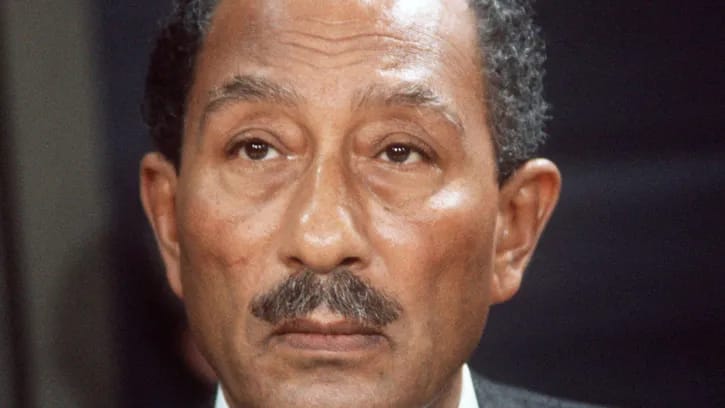
(November 19, 1977): Anwar Sadat's visit to Israel
After the Arab-Israeli war of 1973–74, Egyptian President Anwar Sadat began to work toward peace, and on this day in 1977 he began his historic visit to Israel, during which he offered a peace plan to its parliament.