- Basedment
- Posts
- Afghan-Pakistan Border Conflict Continues, New Patterns In Iran
Afghan-Pakistan Border Conflict Continues, New Patterns In Iran
Today we go over some of the patterns we have noticed in USA-Iran conflict - we also provide an update on the Afghan-Pakistan border conflict.

Editor-in-Chief
March 08, 2026
THE BRIEFING
Here’s what’s happening in geopolitics today.
Diplomacy, deployments and damage control dominate today’s headlines: Iran’s president apologises to Gulf neighbours after recent strikes, Vladimir Putin calls for an immediate halt to the conflict, and the UK signals deeper military and intelligence support for Saudi Arabia.
Meanwhile, Turkey weighs sending F-16s to Cyprus as Eastern Mediterranean tensions rise, while Donald Trump prepares to host Latin American leaders in Miami for a new regional security summit.
In today’s deep dive, we go over some of the patterns we have noticed in USA-Iran conflict - we also provide an update on the Afghan-Pakistan border conflict.
WE HAVE A PODCAST NOW!
EPISODES RELEASED EVERY WEEK, CHECK IT OUT!
This weeks topics:
Geopolitical shift: Leaders increasingly suggest the post–Cold War order is fading, with Trump’s foreign policy reflecting a move toward a more unstable and competitive era.
Conflict reality: The U.S.–Israel war with Iran is becoming more complex than expected, with no rapid collapse of the Iranian system despite the scale of strikes.
Changing battlefield: Ballistic missile barrages have declined, while Shahed drone attacks have expanded, exposing strain on air defences, jamming, and coordination systems.
Escalation risk: Kurdish militant activity in western Iran raises fears of a proxy ground war, with the possibility of troops on the ground not fully ruled out.
Watch on Youtube below!
THE LAST 24 HOURS IN GEOPOLITICS
1. Iran’s President apologises for air strikes on Gulf countries in state TV address
Iranian President Masoud Pezeshkian issued a public apology to neighbouring Gulf countries during a televised address, expressing regret for Iranian missile and drone strikes that have hit states hosting U.S. military facilities. He said Iran’s interim leadership had decided to halt attacks on neighbouring countries and would only launch further strikes if attacks against Iran originate from their territory. Despite the apology, Pezeshkian rejected calls from the United States for Iran’s “unconditional surrender,” insisting the country would continue defending itself as the regional conflict intensifies.
read more
2. Trump to meet with Latin American leaders for “shield” summit in Doral Saturday
U.S. President Donald Trump is set to meet with leaders from 11 Latin American countries at a “Shield of the Americas” summit being held at the Trump National Doral Miami on Saturday. The gathering is part of a new U.S. security initiative focused on strengthening cooperation across the Western Hemisphere, particularly targeting drug cartels, trafficking networks, and organised crime. Officials say Trump is also expected to unveil a major regional agreement aimed at expanding joint efforts against narcotics and security threats across the Americas.
read more
3. Turkey considering deployment of F-16s to Cyprus, ministry source says
Turkey is considering deploying F-16 fighter jets to northern Cyprus, according to a source from the Turkish Defence Ministry, as tensions rise across the Eastern Mediterranean. The potential deployment is being evaluated as part of a broader strategy to strengthen the security of the Turkish-controlled northern part of the island and protect Turkish Cypriots amid the expanding regional conflict. The move comes as several European countries have also increased military deployments around Cyprus
read more
4. Russia’s leader Putin calls for immediate halt to Iran conflict
Vladimir Putin has called for an immediate halt to the conflict involving Iran, urging a return to diplomacy during a phone call with Iranian President Masoud Pezeshkian. The Kremlin said Putin expressed condolences over the deaths of Iranian officials and civilians during what he described as Israeli-American military actions, while reiterating Russia’s stance that disputes in the Middle East should not be resolved through force. Putin also said Moscow remains in contact with leaders of the Gulf Cooperation Council as it pushes for de-escalation.
read more
5. UK’s Starmer discusses military, intelligence support with Saudi Crown Prince
UK Prime Minister Keir Starmer held talks with Saudi Crown Prince Mohammed bin Salman following recent Iranian strikes on Saudi Arabia and other regional partners. Starmer said the UK was prepared to support the kingdom’s defence and confirmed that additional British military assets were being deployed to the region. The two leaders also discussed expanding intelligence cooperation to support defensive operations and protect civilians as tensions across the Middle East continue to escalate.
read more
IRAN-USA CONFLICT DAY 8
We are officially entering week two of the Iran campaign and we’re already starting to notice some changing trajectories. Over the last few days we have discussed the issues with a protracted campaign, air defence problems (loss of radars, THAAD systems, interceptor replenishment), and also the growing talks of Kurdish involvement in a ground campaign. The overall strategy in the first week was quite straightforward: a mass air campaign to disrupt and paralyse decision-making centres through strikes on command and control centres, whilst targeting all air defence systems — primarily in western and coastal Iran — and then underground missile facilities.
New Patterns
In the last 48 hours we have seen three new patterns and one old pattern reemerging. The first is that underground missile launch facilities remain key targets. We have seen extensive strikes through civilian footage and CENTCOM unclassified releases. It has also been confirmed that B-52s have been used, as well as B-1s and B-2s. The shift to this priority target and the use of extremely vulnerable equipment like the B-52 (for bunker-buster drops) suggests that the U.S. and Israeli air forces have confidence in their air superiority over the region.
Secondly, there has been an added focus on the bombing of coastal facilities in the Strait of Hormuz. I would argue there are several reasons for this. The most immediate is to ease the pressure of IRGC naval capabilities targeting ships. Oil prices are flying high at the moment and domestic pressure is mounting on the administration. But the larger issue isn’t necessarily ships being bombed, but rather the insurance risk that no one dares fully test.
Another medium- to long-term consideration is the softening up of military facilities for any possible ground force incursion — unlikely, but it cannot be ruled out. To add to this, we’re now seeing direct strikes on dual-use or civilian infrastructure. For example, the international airport in Tehran was heavily bombed. This suggests there may be a shift toward degrading Iranian ground force capability for uprisings or potential ethnic splits.
Old Pattern Remerges
Given we are heading into day eight or nine, another pattern is clear: we are at the same stage the second half of the 12-day war reached. As Israel’s launch capability plummets, so too do its enemies’ interception rates. This is likely due to a combination of radar gaps created by strikes, interceptor depletion, and the introduction of newer Iranian missile systems that shorten reaction times.
Iran recently announced it is using newer missiles such as the Khamrator, Fahed, hypersonics, and what appear to be cluster munitions or cluster decoys. These new systems, combined with vulnerable radar gaps due to strikes, have allegedly dropped Israeli reaction time to 2–3 minutes for ballistic launches. Again, this is an endurance race. Strategically, Iran does not necessarily have the capability to deliver a decisive conventional blow, but it could theoretically sit it out and allow the costs for its enemies to accumulate.
Afghanistan-Pakistan Update
The conflict between Pakistan and Afghanistan has intensified over the past week, with the latest escalation triggered by militant attacks inside Pakistan. Islamabad launched strikes on targets linked to the Hafiz Gul Bahadur (HGB) group in Afghanistan’s Khost province after a suicide bombing in North Waziristan killed at least one person and injured several others. Pakistani officials blame militants operating from Afghan territory for the attack, part of a broader insurgent network connected to Pakistani Taliban factions.
At the same time, the Taliban government has responded militarily along the border. Videos released by the Taliban Ministry of Defence reportedly show its fighters targeting Pakistani border positions with anti-tank guided missiles (ATGMs), while Afghan-based militant groups under the Islamic Movement of Pakistan (IMP) banner have conducted sabotage operations, including the destruction of infrastructure such as bridges along the frontier.
Fighting has now entered its second week, with both sides accusing each other of supporting militant groups. Pakistan claims it is targeting insurgent networks such as Tehreek-e-Taliban Pakistan (TTP) and affiliated factions based in Afghanistan, while Kabul denies harboring militants and accuses Pakistan of killing civilians in cross-border strikes.
The humanitarian situation is deteriorating rapidly. According to UN estimates, tens of thousands of civilians have been displaced, with some assessments placing the figure at around 66,000 people forced from their homes as clashes intensify along the Durand Line. Civilian casualties have also been reported from airstrikes and artillery exchanges.
The broader concern is that the conflict is shifting from sporadic border incidents into a sustained cross-border confrontation. With militant groups, Taliban forces, and Pakistani military units all operating along the same frontier, the risk of escalation into a wider regional security crisis remains high.
TWEET OF THE DAY
TODAY IN HISTORY
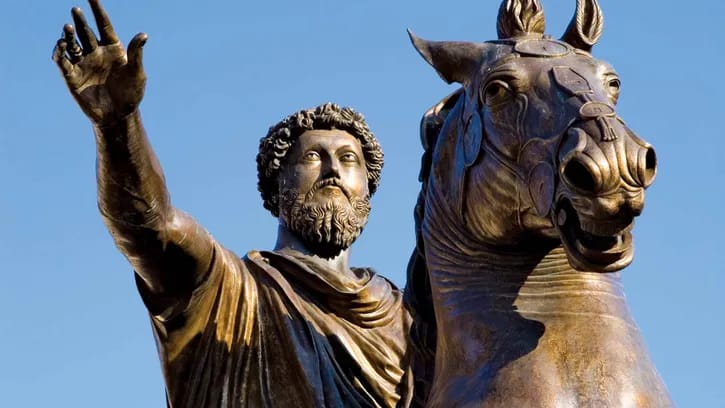
(March 7, 161): Marcus Aurelius becomes emperor of Rome
On this day in 161 ce, Marcus Aurelius declared himself and his adoptive brother Lucius Verus emperors of Rome, marking the first time two emperors would rule the Roman Empire simultaneously. Although his transition to power was smooth, his time as emperor was marked by wars and revolts, along with personal tragedy—both his wife, Empress Faustina, and co-emperor Lucius died within the first 15 years of his reign. During his rule, Marcus wrote his thoughts in a diary, which was published after his death. The resulting work, Meditations, formed the basis of Stoic philosophy.