- Basedment
- Posts
- Are We Seeing An Iranian Rebound? Siversk Front At Risk In Ukraine
Are We Seeing An Iranian Rebound? Siversk Front At Risk In Ukraine
In today’s deep dive, we cover the Middle East conflict, from Lebanon to Qatar, we also cover Russia and Ukraine — particularly the Siversk front.

Editor-in-Chief
March 21, 2026
THE BRIEFING
Here’s what’s happening in geopolitics today.
It’s another packed global rundown today: Israel says it struck Iran’s major gas field on its own, while Tehran responds with drone strikes on a Kuwaiti refinery and a senior Revolutionary Guards spokesman is killed in a separate strike in Tehran.
Ukraine is exporting its battlefield expertise to the Middle East by deploying counter-drone teams across several Gulf states, and in Europe, Norway’s Crown Princess has addressed past contact with Jeffrey Epstein after renewed scrutiny.
THE LAST 24 HOURS IN GEOPOLITICS
1. Netanyahu says Israel ‘acted alone’ in attack on Iranian gas field
Netanyahu said Israel “acted alone” when it carried out an airstrike on Iran’s South Pars gas field, emphasising that the operation was not conducted with U.S. involvement. The strike targeted one of Iran’s largest natural gas sites and formed part of the escalating conflict between Israel and Iran that has increasingly focused on energy infrastructure.
read more
2. Iran hits Kuwaiti oil refinery as Israel renews attacks on Tehran
Iranian drone strikes hit Kuwait’s Mina Al-Ahmadi oil refinery as Israel simultaneously renewed air attacks on targets in Tehran, marking another escalation in the regional conflict. Kuwaiti authorities said the strikes sparked fires at parts of the refinery, though emergency crews moved quickly to contain the blaze and no immediate injuries were reported. The attack is part of a broader pattern of Iranian strikes on Gulf energy infrastructure following Israeli attacks on Iran’s major gas facilities earlier in the week.
read more
3. Revolutionary Guards spokesman killed in Israeli strike
Iran’s Islamic Revolutionary Guard Corps said its spokesperson, Brigadier General Ali Mohammad Naini, was killed in an airstrike in Tehran during the ongoing Israel–Iran conflict. Iranian state media confirmed the death, while Israel’s military said the strike was carried out based on intelligence targeting the senior IRGC official. Naini had served as the Guards’ spokesman since 2024 and his killing marks another high-profile loss among Iran’s leadership as the war continues to escalate.
read more
4. Ukraine deploys units to intercept drones in five Middle Eastern countries
Ukraine has deployed specialized units to intercept drones and protect infrastructure in five Middle Eastern countries (the United Arab Emirates, Saudi Arabia, Qatar, Kuwait, and Jordan) according to Ukrainian officials. The teams are using expertise gained from defending against Russian and Iranian-designed drones during the war in Ukraine, and are focused on counter-drone operations and security assessments. The deployment reflects growing international demand for Ukraine’s air-defence and drone-interception capabilities.
read more
5. Norway’s Crown Princess says she was ‘manipulated and deceived’ by Epstein
Norway’s Crown Princess Mette-Marit said she was “manipulated and deceived” by disgraced financier Jeffrey Epstein, speaking publicly about their past association for the first time. She said she regretted the contact and wished she had never met him, adding that she was unaware of the full extent of his crimes during their interactions between 2011 and 2014. The comments follow renewed scrutiny after documents and reporting highlighted frequent communication between the two, though the crown princess has not been accused of any criminal wrongdoing.
read more
GLOBAL CONFLICTS UPDATE
ISRAEL-IRAN-USA
Israel is systematically degrading Hezbollah’s mobility in southern Lebanon, striking key crossings along the Litani River. At least six bridges have now been targeted, including the Qasmiyeh axis toward Tyre and crossings near Qaaqaaiyet El Jisr. Earlier strikes on the Zrariyeh–Tayr Filsay route and Khardali corridor reinforce a clear objective: sever logistical arteries and isolate the battlespace south of the Litani.
At the same time, cracks are emerging in the broader air war narrative. Like I have said multiple times, air superiority is not air supremacy. Israeli strike packages reportedly routed through CENTCOM-monitored airspace and maneuvererd around active Iranian air defenses near Bushehr—suggesting that Iranian AA systems are still a threat in some parts of the country. And just 24 hours later you get Iran claiming it may have downed a U.S. F-35 over its airspace. The mechanism remains unclear, whether advanced systems like Bavar-373 or sheer volume of fire. This has definitely hurt the staunch defenders of the F-35, for context many have criticised the large cost of the expensive (2 trillion over its lifetime) program.
Strategically, Iran is also demonstrating reach. Strikes on Qatar reportedly knocked out 17% of LNG export capacity, with repairs expected to take years—an economic lever with global implications. Meanwhile, Israel continues its decapitation campaign inside Iran, eliminating multiple IRGC and Basij-linked figures. However, Tehran’s layered succession planning raises questions about long-term impact. Killing leadership is one thing—degrading institutional capability is another. The pattern is increasingly familiar to last year : Iran absorbs early blows, then stabilises, adapts, and begins trading impacts more effectively but at a much lower fire rate. We saw Haifa get hit late into the 12-day war and we’ve just seen it happen now — are we seeing a shift in momentum?
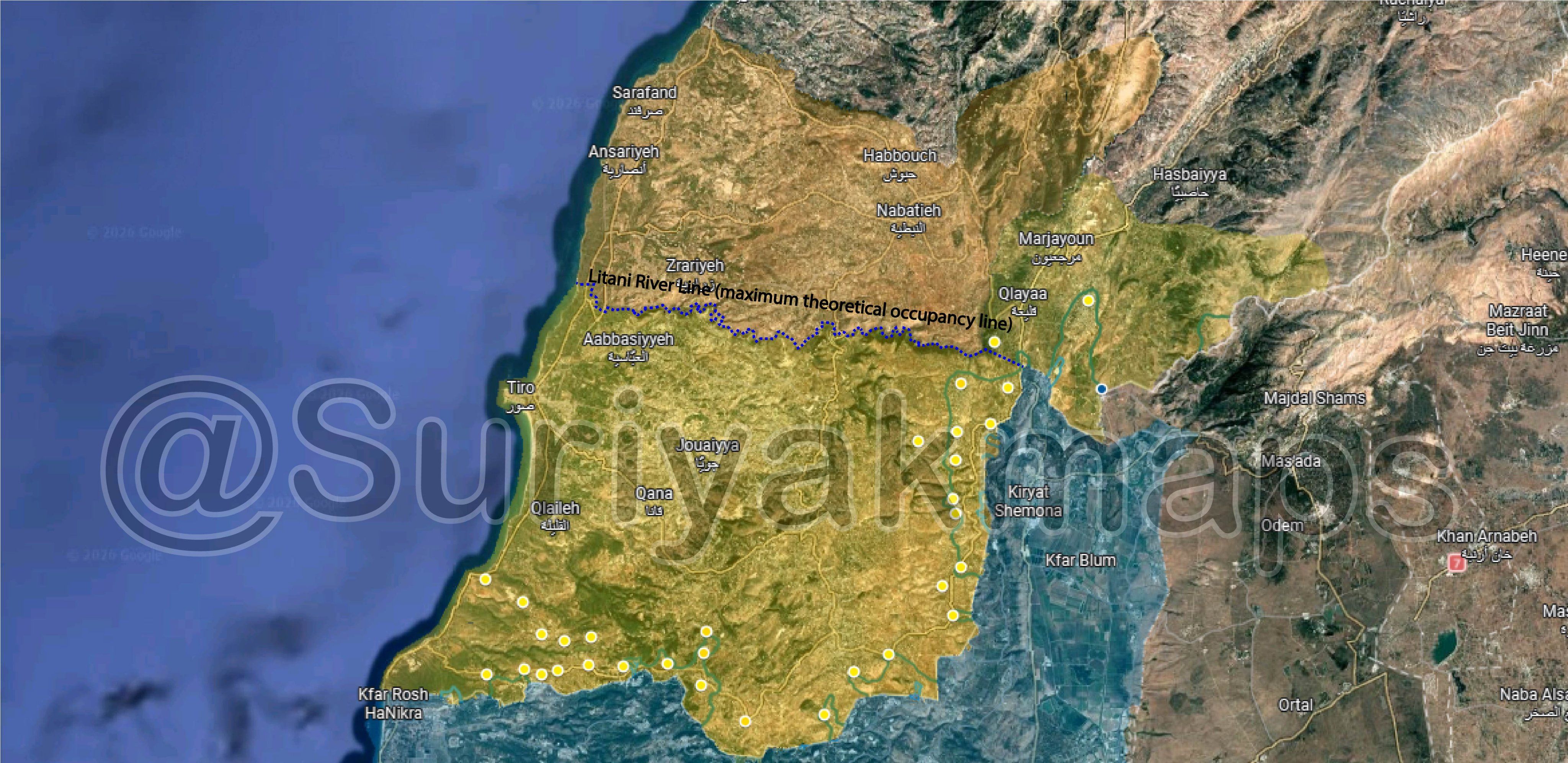
Suriyak is map source
RUSSIA UKRAINE
If there is a front to keep an eye on the most, it is without a doubt the Siversk-Rai Oleksandrivka front. It is the nearest front to the prized cities of Kramatortsk and Sloviansk. Russian forces are sustaining offensive momentum across the Rai–Oleksandrivka direction, advancing simultaneously along multiple axes to stretch Ukrainian defenses. Rai–Oleksandrivka will be a key target in the coming months due to its role as a vital strategic logistics node in the area/
In the north, Russian units cleared remaining resistance southwest of Zakitne and pushed into Kryva Luka, securing forests east of the village while infiltrating its eastern streets. Ukrainian counterattacks from Ozerne toward Yampil are ongoing but remain localised. Further southeast, Russian troops expanded control around Kryva Luka and Kalenyky, while crossing the Sukhha River into Riznykivka—partially isolating and clearing the settlement. Additional advances south and southwest are tightening control over surrounding forest belts. In the southwest, Russian forces captured Nykyforivka, Lypivka, and pushed into Fedorivka Druha, while also clearing Holubivka, Pryvillya, and Minkivka. Pressure is now extending toward Markove and along key river and highway corridors. Since our last update on this front, we have clearly seen more consolidation of frontline villages and defence systems rather than serious movement.
Meanwhile just over the river on the Lyman front, Russian units attempted a mechanised breakthrough and were stopped. Alleged losses include 2 tanks, 5 armoured personnel carriers, 7 infantry fighting vehicles and over 40 buggies and ATV’s were destroyed. Both sides have sharply increased use of quads, motorcycles etc - but we’re seeing a return to armour usage. I’ve touched on this before and will probably do a deep dive on it soon, but both sides are using more armoured assaults. At first it was due to the weather — usual treeline and folliage coverage for infantry decreases in winter. Yet it also seems there are new combined operations tactics with drone swarms and mechanised assaults being gradually tested out to try break the meat grinders on the frontlines.
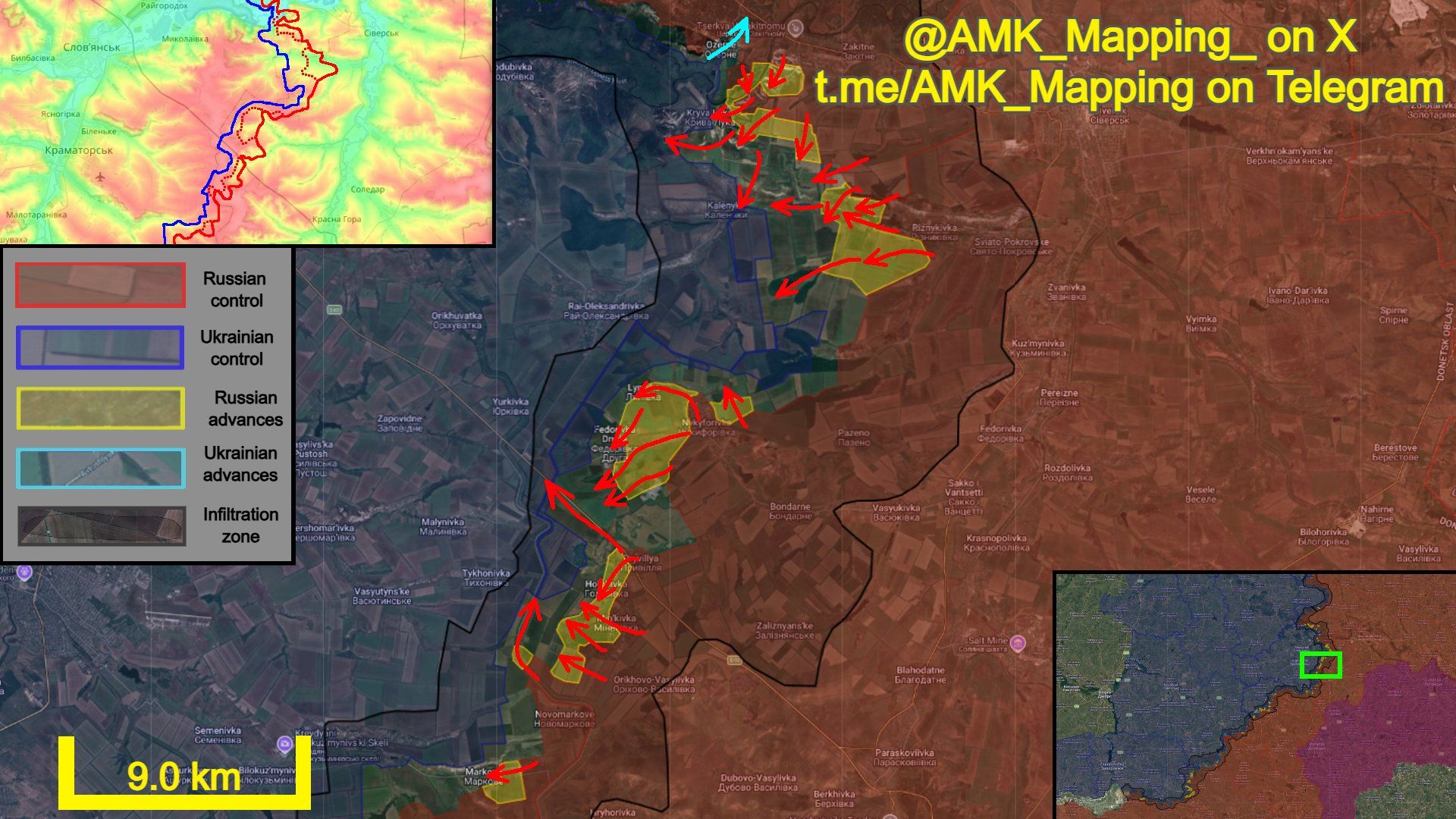
AMK_Mapping source
Sources available upon request
TODAY IN HISTORY
(March 20, 1815): The Hundred Days—during which Napoleon, having ended his exile by escaping the island of Elba, would try to recapture his empire in France—began with Napoleon's arrival in Paris.
