- Basedment
- Posts
- As Winter Sets In, The Front Becomes Stabilised In Some Sectors
As Winter Sets In, The Front Becomes Stabilised In Some Sectors
Father Winter strikes again as it seems the winter months have begun to stabilise the fronts in certain sectors.

Editor-in-Chief
January 03, 2026
THE BRIEFING
Here’s what’s happening in geopolitics today.
From New York City making history at midnight to a centuries-old Amsterdam landmark lost to flames, today’s headlines span political firsts, regional power plays and sobering reminders of global instability.
We’re tracking a landmark mayoral swearing-in, a pivotal Seoul–Beijing summit, deadly violence tied to Peru’s informal mining sector, and fresh tensions in Yemen as a key airport shuts amid a Saudi-UAE rift.
In this Deep Dive, we’re exploring the fronts of Pokrovsk, Lyman and Kupiansk as Russian forces consolidate gains and Ukrainian troops stabilise the frontline.
A WORD FROM OUR SPONSOR
Wall Street’s Morning Edge.

Investing isn’t about chasing headlines — it’s about clarity. In a world of hype and hot takes, The Daily Upside delivers real value: sharp, trustworthy insights on markets, business, and the economy, written by former bankers and seasoned financial journalists.
That’s why over 1 million investors — from Wall Street pros to Main Street portfolio managers — start their day with The Daily Upside.
Invest better. Read The Daily Upside.
THE LAST 24 HOURS IN GEOPOLITICS
1. Zohran Mamdani officially sworn in as New York City’s mayor
Zohran Mamdani was officially sworn in as the 112th mayor of New York City on January 1, 2026, taking his first oath shortly after midnight at a historic, decommissioned subway station beneath City Hall, an event symbolising his grassroots and diverse roots. He became the city’s first Muslim, first South Asian and youngest mayor in generations, marking a historic shift in the leadership of America’s largest city and pledging an ambitious, democratic socialist agenda focused on affordability and equity. Later in the day, Mamdani took part in a public inauguration ceremony at City Hall with Vermont Senator Bernie Sanders administering the oath, where he outlined plans to tackle housing costs and other major urban challenges.
read more
2. Amsterdam’s historic Vondelkerk destroyed in New Year’s fire
A massive fire tore through the historic Vondelkerk, a 19th-century neo-Gothic church in Amsterdam near Vondelpark, early on New Year’s Day, leaving the building “no longer salvageable” after its tower and large sections of the roof collapsed and only the exterior walls remained standing. Emergency services battled the blaze for hours as nearby homes were evacuated and power cut to surrounding streets, though no injuries have been reported in connection with the blaze. The cause of the fire is still under investigation.
read more
3. South Korean President Lee to visit Beijing for pivotal 2nd Summit with Xi
South Korean President Lee Jae-myung is set to embark on a four-day state visit to China from Jan. 4 to 7, 2026, during which he will meet Chinese President Xi Jinping in Beijing for a pivotal second summit shortly after their last discussions in late 2025. The leaders are expected to focus on bolstering bilateral ties, economic cooperation on supply chains and technology, and China’s potential role in advancing peace efforts on the Korean Peninsula, particularly regarding North Korea. This is Lee's first trip to China since taking office in June 2025.
read more
4. Three killed, 7 missing in New Year’s Eve attack on informal miners in Peru
At least three people were killed and seven others are reported missing after an attack on informal gold miners in the Pataz district of northern Peru on New Year’s Eve, according to the local mayor, marking the latest in a string of violent incidents affecting small-scale miners in the region. Authorities and mining company representatives said the assault occurred near an informal mining site as criminal gangs continue to contest control of mining areas, though official police confirmation of all details remains limited and the investigation is ongoing.
read more
5. Yemen’s Aden airport shuts as Saudi-UAE rift deepens
Yemen’s Aden International Airport suspended all flights on Thursday, a development tied to a deepening political and military rift between Gulf allies Saudi Arabia and the United Arab Emirates, whose competing influence in Yemen has exacerbated the country’s protracted civil conflict. The shutdown stemmed from a dispute over new flight inspection requirements for routes between Aden and the UAE, with the UAE-backed Southern Transitional Council (STC) accusing Saudi Arabia of imposing an effective air blockade, while Saudi sources said the internationally recognised Yemeni government had introduced the restrictions and the STC responded by halting all air traffic.
read more
DAILY DEEP DIVE
UKRAINE WAR UPDATE
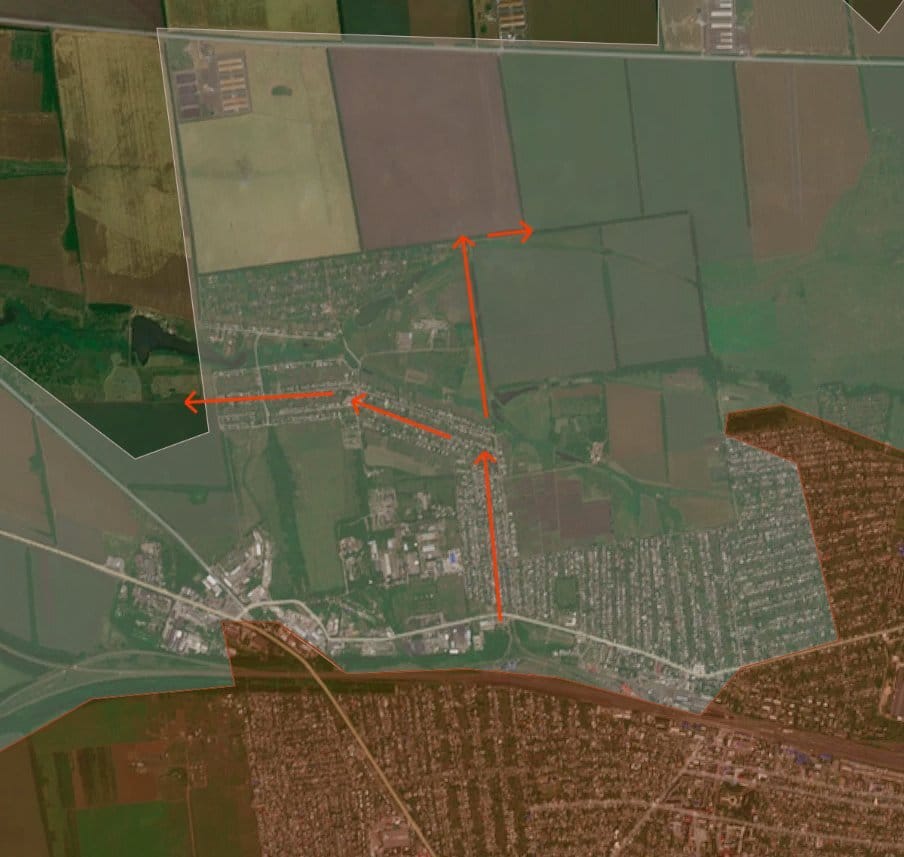
Over the past seven days, the Pokrovsk sector has seen zero confirmed Russian infiltrations beyond the red line according to Deepstate. Indicating a partial stabilization of the frontline. This pause appears closely tied to the onset of freezing temperatures and persistent snowfall, which have slowed movement and limited small-unit manoeuvre. The tactical picture, however, remains fragile. Ukrainian logistics in the area are under severe strain, with resupply and rotation increasingly difficult under winter conditions.
According to DeepState’s December 31 update, Russian forces have consolidated inside residential blocks west of the citadel in the Dinas district, pushing positions to the northernmost buildings. These areas likely serve as temporary staging points rather than fully secured footholds.
OSINT analyst Playfra reports continued Russian infantry movement in the Pokrovsk industrial zone. Small assault groups—often just one to three soldiers—advance in waves along the highway, cross the railway, and probe into the industrial area. Despite frequent traffic and repeated attempts, Russian forces still appear unable to consolidate gains inside the zone, suggesting high attrition and limited control rather than a decisive breakthrough.
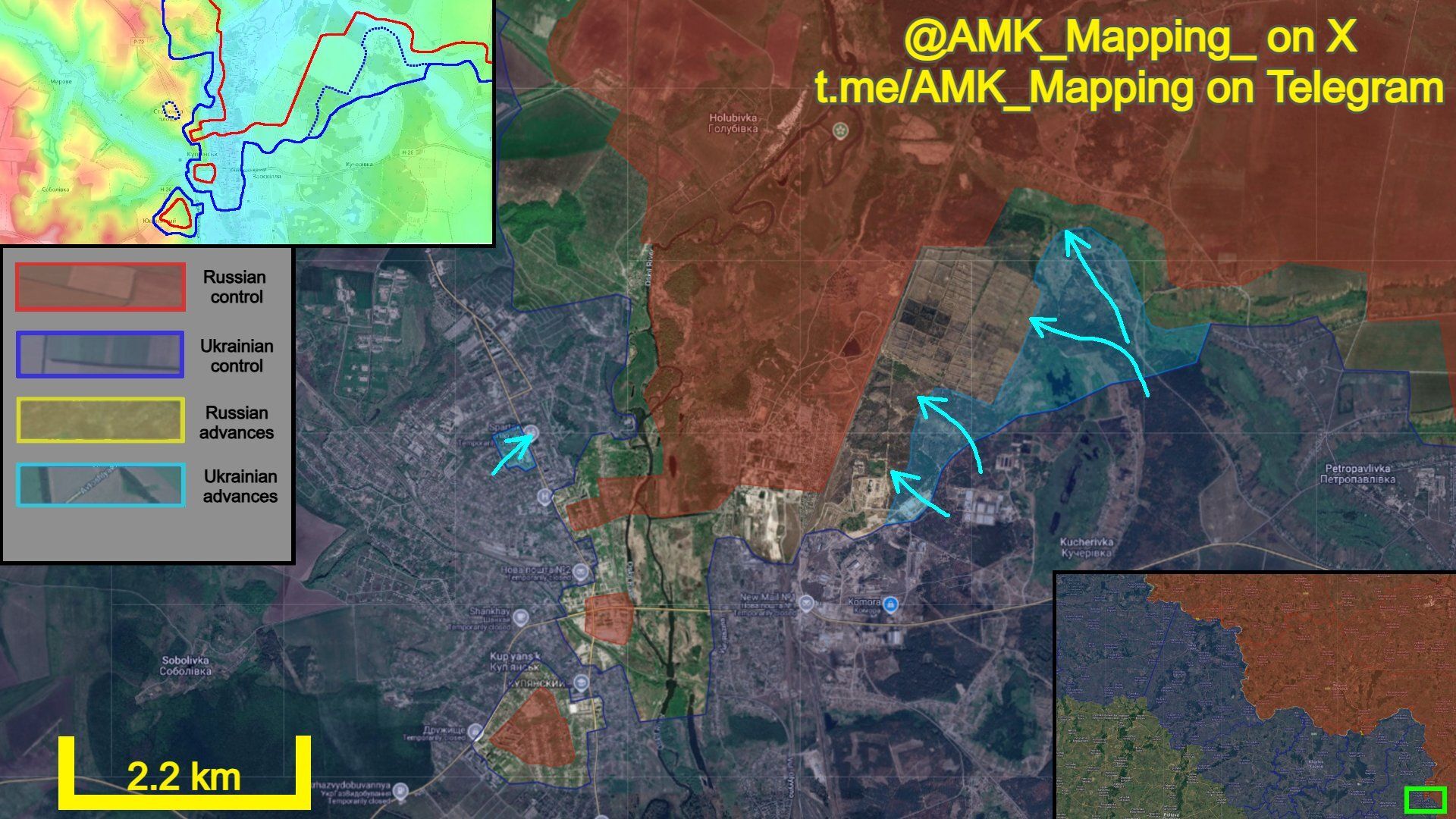
Ukrainian forces continue counterattacks around Kupyansk, making fresh gains on both banks of the Oskil River. In the east, units pushed deeper through forests northwest of Petropavlivka, retaking new positions and securing a small residential pocket on the village’s northwestern edge. Advances also continued northwest from Kucherivka, capturing parts of the industrial zone and adjacent woodland. To the west, after sustained clearing, remaining Russian troops surrendered in the “Comb” high-rise stronghold, enabling Ukrainian forces to fully secure it and refocus on the city centre.
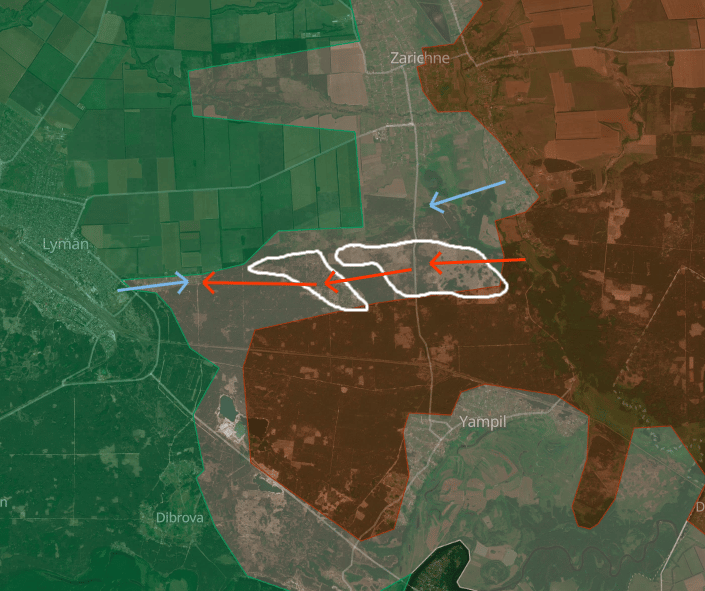
Around Lyman, the situation has partially stabilised with the onset of winter, and the frontline appears slightly more favourable to Ukrainian forces than many public maps suggest. According to OSINT analyst Playfra, Russian activity continues but with reduced effectiveness.
In the Lyman Forest, Russian forces are still attempting infiltration routes designed to bypass Ukrainian positions, crossing two exposed forest clearings before pushing toward the Maslyakivka district. Winter conditions and open terrain have made these movements highly visible. Ukrainian drones are consistently detecting and striking Russian infantry well before they reach built-up areas.
While some Russian troops occasionally enter Maslyakivka, they are rapidly cleared by Ukrainian assault groups working in coordination with FPV drones. With penetration attempts declining in recent weeks, Maslyakivka can now be assessed as a soft blue zone, rather than an actively contested breakthrough point.
Sources
News/Journal sources available upon request, not shown to maintain visual integrity of page.
TODAY IN HISTORY
(January 2, 1863): The Battle of Stones River came to an end during the American Civil War; bloody but indecisive, the clash was a psychological victory for the Union forces, which were led by General William S. Rosecrans.