- Basedment
- Posts
- Beijing & Belgrade: A Relationship Under Pressure
Beijing & Belgrade: A Relationship Under Pressure
Your daily dose of geopolitical updates and strategic analysis. Unbiased, but not unbased.

Editor-in-Chief
August 04, 2025
THE BRIEFING
Here’s what’s happening in geopolitics today.
Today’s top stories range from renewed violence in southern Syria to Ukraine’s sweeping anti-corruption crackdown and targeted drone strikes inside Russian territory.
In Sydney, tens of thousands took to the streets in a massive pro-Palestinian march, while Russia and China conducted coordinated naval drills in the Sea of Japan, signalling deepening military alignment. From local unrest to global posturing, each headline reflects how national interests continue to clash and recalibrate.
In today’s deep dive, we turn to a less visible but equally tense front, the evolving China–Serbia relationship, now under scrutiny after a fatal incident tied to a Chinese-led infrastructure project.
THE LAST 24 HOURS IN GEOPOLITICS
1. One killed after armed groups attack Syrian security forces in Sweida
Armed groups attacked Syria’s internal security forces in Sweida on Saturday, killing one member and wounding others before shelling multiple villages in the troubled province, a breach of the fragile ceasefire that had only recently been held. The violence marks another setback for the tentative peace brokered after weeks of deadly clashes between Druze factions and Sunni Bedouin fighters. While Syria has pledged to investigate the latest escalation, the incident underscores how any gains in stability remain fragile.
read more
2. Ukraine uncovers major corruption scheme in defence procurement
Ukraine’s top anti-corruption investigators, NABU and SAPO, announced on Saturday that they had uncovered a major graft scheme involving the procurement of drones and signal‑jamming systems at sharply inflated prices. A revelation that came just two days after parliament restored their independence amid mass protests. The agencies say contracts were marked up by up to 30%, with a sitting lawmaker, local officials, and National Guard personnel among the suspects; so far, four arrests have been made.
read more
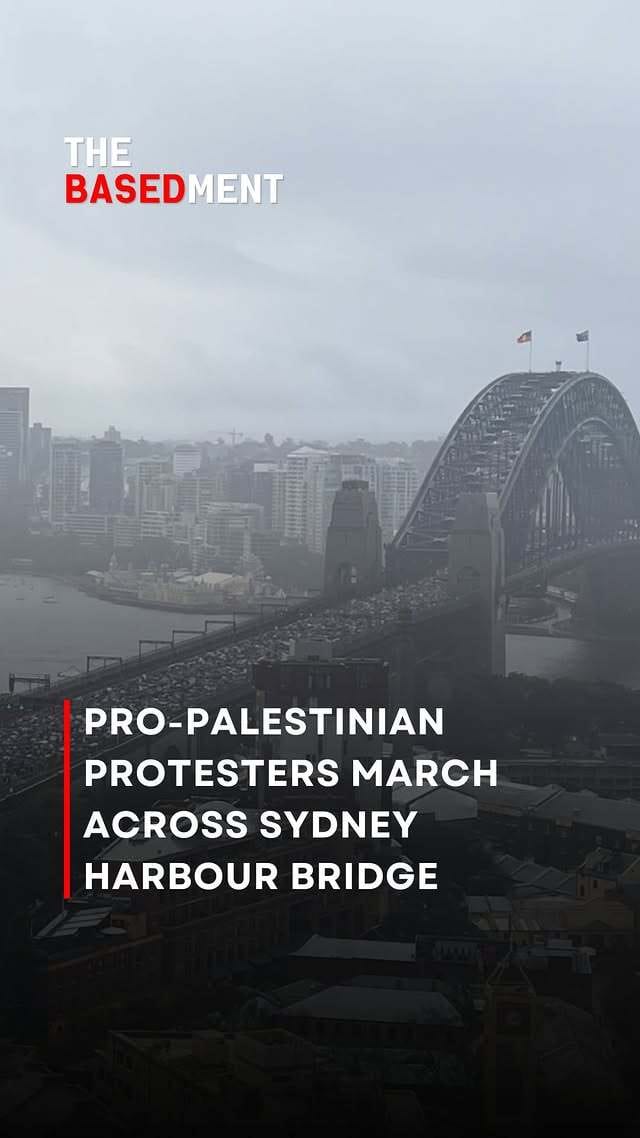
3. Tens of thousands join pro-Palestinian march over Sydney Harbour Bridge
Tens of thousands defied pouring rain to march across Sydney’s iconic Harbour Bridge on Sunday, calling for an end to the Gaza humanitarian crisis. Police estimated around 90,000 attendees, while organisers claimed up to 300,000, in a rally allowed to proceed by the Supreme Court after initial police objections caused by safety concerns. Marchers, including diverse groups and figures like Julian Assange, carried pots and pans as symbols of hunger, calling for unrestricted aid, a ceasefire, and international recognition of Palestinian statehood and framing it as a “March for Humanity” to global audiences.
read more

4. Russian and Chinese navies carry out artillery and anti-submarine drills in Sea of Japan
Russia and China have launched Maritime Interaction‑2025, a joint naval drill in the Sea of Japan featuring live artillery fire, sophisticated anti‑submarine warfare training, air‑defence simulations, and coordinated search-and-rescue exercises. The exercise brings together Russian anti‑submarine warships like Admiral Tributs, Chinese destroyers, diesel-electric submarines, and a Chinese submarine rescue vessel, all under a shared command structure designed to sharpen interoperability across mission types.
read more
5. Ukraine hits Russian oil facilities, military airfield
Ukraine’s Unmanned Systems Forces said on Saturday that they carried out a long‑range drone strike deep inside Russian territory, hitting a major oil refinery in Ryazan, triggering a blaze, and also targeting an oil storage site near Voronezh and a military airfield used for launching strike drones, alongside an electronics factory tied to Russia’s military-industrial complex. The attack carted off key logistics nodes: the refinery handles nearly 5 percent of Russia’s refinery capacity, while the airfield and Penza factory are crucial for Iran-supplied drone launches and command-control systems.
read more
DAILY DEEP DIVE
CHINA-SERBIA BILATERAL RELATIONS

We had some interest in our post last night about China and Serbia conducting their first ever military drills, so we decided to this growing relationship.
HISTORY AND CONTEXT
China and Serbia’s relationship has evolved into one of the most stable and strategic partnerships in Europe. Initially formalised in 1955 between China and Yugoslavia, ties were historically limited, with China favouring Albania during the Cold War. However, the 1999 NATO bombing of the Chinese Embassy in Belgrade became a turning point, fostering long-term political and diplomatic alignment rooted in shared grievances toward Western interventionism.
In the post-2000 period, bilateral ties rapidly intensified. Serbia recognised the One China policy, while China consistently backed Serbia’s position on Kosovo, offering diplomatic support in multilateral forums such as the UN. The relationship formalised into a Strategic Partnership in 2009, a Deepened Strategic Partnership in 2013, and a Comprehensive Strategic Partnership in 2016, during Xi Jinping’s landmark visit, the first by a Chinese head of state in three decades.
Both countries frame their cooperation through the lens of sovereignty, non-intervention, and multipolarity, anchoring their rhetoric in resistance to perceived Western double standards.
TRADE AND BRI
This alignment has materialised in Serbia becoming a central node for China’s Belt and Road Initiative (BRI) and China–CEEC (16+1) cooperation format. Infrastructure projects such as the Pupin Bridge, Belgrade–Budapest railway, and Kostolac power plant illustrate Beijing’s strategic investment approach, backed by Chinese state banks and executed by Chinese contractors.
Trade and investment ties are expanding rapidly. In 2023, bilateral trade reached US$4.35 billion, and a Free Trade Agreement (FTA)—China’s first with a Central and Eastern European country—entered into force on 1 July 2024. Key Serbian exports include copper, ores, wood, and machinery, while China exports electronics, industrial equipment, and vehicles. China is now Serbia’s largest source of FDI, with major stakes in mining (Zijin in Bor), steel (HBIS in Smederevo), and automotive sectors (Linglong, Yanfeng, Minth).
SOFT POWER AND CONTROVERSY
Soft power and political symbolism also feature prominently. Commemorations of the 1999 bombing, centred at the Chinese Cultural Center in Belgrade, serve both memorial and messaging functions. Media cooperation agreements, student exchanges, and public infrastructure projects reinforce China’s visibility. This acts as both a reminder that western powers were responsible for the attack and the need to be united against a ‘hegemonic’ system.
Most Serbian civilians of the younger generations do not take a large notice to the warming of relations, while older generations who remember the bombing of the embassy have a higher regard for the relationship.
However, much of this changed on November 1 2024, when the roof of a newly renovated train station in Novi Sad collapsed, killing 16 people and critically injuring two. The station had been under construction for three years by a Chinese consortium as part of Beijing’s Belt and Road Initiative. The tragedy sparked widespread protests across Serbia, with demonstrators linking the disaster to corruption and poor oversight tied to foreign infrastructure deals. The protests are unique in the sense there is wide demographic support, from conservatives, liberals, old and young.

A section of the collapsed roof can be seen here
LOOKING FORWARD
Looking forward, Serbia positions itself as a strategic partner outside the EU framework, offering China political loyalty and geographic access in exchange for capital, infrastructure, and diplomatic backing. While also aiming to create a buffer between it self and it’s dependence on Russia as a friend in the international space. China, in turn, views Serbia as a model partner for its engagement with non-EU Europe, enabling deeper integration into regional trade and logistics networks without the constraints of Brussels. China will also need to focus on fixing its public image across eastern Europe where the roof incident has gained widespread traction, without end it seems.
The bilateral trajectory suggests continued consolidation, with both sides leveraging the relationship to offset Western pressure, amplify multipolar narratives, and embed long-term strategic interdependence.
Sources:
China Briefing. (2024, June 28). China and Serbia sign free trade agreement: Bilateral trade and investment outlook. https://www.china-briefing.com/news/china-and-serbia-sign-free-trade-agreement-bilateral-trade-and-investment-outlook/
Chang, V. K. L. (2025, May 15). The political messaging of China and Serbia’s Belgrade bombing commemoration. The Diplomat. https://thediplomat.com/2025/05/the-political-messaging-of-china-and-serbias-belgrade-bombing-commemoration/
Lowy Institute. (2024, May 9). Serbia all aboard for the China ride. The Interpreter. https://www.lowyinstitute.org/the-interpreter/serbia-all-aboard-china-ride
Ministry of Foreign Affairs of the Republic of Serbia. (n.d.). China. https://www.mfa.gov.rs/en/foreign-policy/bilateral-cooperation/china
TWEET OF THE DAY
That’s a whole lot of umbrella’s…
Over 300,000 people in rain marched across Sydney Harbour Bridge today in solidarity with Gaza.
Israel has been exposed — and its crimes will never be forgotten.
— Zohran Mamdani (@zohranmamdani)
11:55 AM • Aug 3, 2025
TODAY IN HISTORY
(August 3, 1492): Hoping to find a westward route to India, Christopher Columbus on this day in 1492 set sail on his first transatlantic voyage, departing from Palos, Spain, with three small ships, the Niña, Pinta, and Santa María.
