- Basedment
- Posts
- Copper Tariffs, Turkish Crackdown & has Russia's offensive stalled?
Copper Tariffs, Turkish Crackdown & has Russia's offensive stalled?
Your daily dose of geopolitical updates and strategic analysis. Unbiased, but not unbased.

Editor-in-Chief
July 10, 2025
THE BRIEFING
Here’s what’s happening in geopolitics today.
Global currents are shifting, from soaring copper prices in the U.S. after Trump’s 50% copper tariff bombshell to a sweeping political crackdown unfolding in Turkey.
Ukraine’s rebuilding efforts get a lifeline with over €10 billion pledged at a Rome summit, while high-level diplomacy continues as America’s Rubio and Russia’s Lavrov meet in Kuala Lumpur. Meanwhile, Iran lashes out at the UN nuclear watchdog, accusing it of double standards after strikes on its nuclear sites.
Today, we dive deep into the Russian Summer Offensive? Is the Russian offensive stalling or are we seeing a consolidation of gains?
THE LAST 24 HOURS IN GEOPOLITICS
1. Copper prices in U.S. hit record high after Trump announces 50% tariff
President Donald Trump has announced a 50% tariff on copper imports, set to take effect on August 1, 2025, as part of his broader strategy to implement unilateral trade deals. This move, under Section 232, aims to bolster domestic industries by reducing reliance on foreign copper. The announcement led to a significant surge in U.S. copper futures, with prices reaching historic highs, and sparked discussions among international trade partners regarding potential retaliatory measures.
read more
2. Hundreds of Erdogan opponents detained in claimed corruption crackdown
Turkey has detained over 500 individuals, primarily opposition figures, in a sweeping anti-corruption operation dubbed the "octopus" probe by President Recep Tayyip Erdoğan. The investigation, which began in Istanbul, has expanded nationwide, targeting municipalities governed by the main opposition Republican People's Party (CHP). Critics argue that the crackdown is politically motivated, aiming to suppress dissent ahead of the 2028 elections, especially following the arrest of prominent opposition leader and Istanbul Mayor Ekrem İmamoğlu earlier this year.
read more
3. Conference commits over 10 billion euros to Ukraine rebuilding
At the Ukraine Recovery Conference held in Rome on July 10, international participants pledged over €10 billion to support Ukraine's post-war reconstruction efforts. The conference, co-hosted by Italian Prime Minister Giorgia Meloni and Ukrainian President Volodymyr Zelensky, saw commitments from governments, financial institutions, and private sector entities, including approximately 200 agreements ready for signing. President Zelensky emphasised the urgent need for investments in air defence systems and drone technology to counter ongoing Russian attacks, calling for increased international support in these areas.
read more
4. Russia’s Lavrov and US’ Rubio meet in Kuala Lumpur
U.S. Secretary of State Marco Rubio and Russian Foreign Minister Sergey Lavrov convened on July 10 in Kuala Lumpur during the ASEAN Foreign Ministers' Meeting. This marks their second face-to-face discussion this year, following a February meeting in Riyadh. The talks occur amidst escalating global trade tensions, notably the U.S.'s impending tariffs on several ASEAN nations, and ongoing efforts to address the protracted conflict in Ukraine. While specific details of their conversation remain undisclosed, the meeting underscores the significance of U.S.-Russia dialogue within the broader context of regional and global diplomacy.
read more
5. Iran urges UN nuclear watchdog to drop ‘double standards’
Iranian President Masoud Pezeshkian has called on the International Atomic Energy Agency (IAEA) to abandon what he describes as "double standards" if it hopes to resume cooperation with Tehran. He criticized the agency for failing to condemn recent U.S. and Israeli airstrikes on Iran's nuclear facilities, which led to Iran suspending collaboration with the IAEA and the withdrawal of its inspectors. Pezeshkian emphasised that the IAEA's perceived bias undermines its credibility and contributes to regional instability.
read more
DAILY DEEP DIVE
The Stalled Summer Offensive?
A few days ago, this graph from the Black Bird Group popped up showing Russian advances for each month. We can see a considerable rise in May—when the Spring/Summer offensive began. Some have begun to speculate that the offensive has stalled, but there may be more to it.
Firstly, the frontline is very fluid—much more so than in previous years. Mainly due to the increased usage of smaller reconnaissance groups, which muddy the maps. Some commentators have placed the June number closer to 600.
Secondly, the offensive should not be viewed purely based on a geographical gain system. What we need to consider is that some land is more important than other land. For instance, Russia has taken villages in Sumy larger than those north of Siversk. But Siversk has far more strategic value. In saying this, the Russian offensive in some areas has been slow, such as Zaporizhzhia. Particularly because the idea is to rather find weak spots (something we have discussed multiple times) rather than create significant strategic breakthroughs.
Lastly, the Russian military does take time to consolidate gains before recommencing offensives, as most militaries do. Pro-Ukrainian sources have already suggested a fresh wave of assaults have begun west and north of Toretsk. However, in Sumy, Ukraine has put on a fierce resistance and managed to retake the village of Varachyne - with the use of constant counterattacks. On other parts of the front, such as east of Toretsk, Ukraine has had success holding off and pushing back the Russians.
We discuss this below:

Black Bird Group
21 days have passed, and the Siverskyi-Donets canal front is still holding east of Toretsk. This is a critical area that Russia needs to collapse if it wants to apply any meaningful pressure on Kostyantynivka.
Why the struggle?
For one, it's no secret that Ukraine is prioritising this front the most. More than a dozen reinforcement brigades have been sent here. The battles are fierce.
Secondly, many of the Ukrainian reinforcement positions are centred around the two obvious Russian advance points: Bila Hora and Stupochky. In Bila Hora, Russia has not had major success. Reconnaissance groups and motorcycle assaults have been attempted but repelled. Russians are actively using treelines to approach, aiming to minimise drone detection. The motorcycle attacks have targeted western Bila Hora in an attempt to cut off the central and northern parts of the town—but they’ve been repelled.
Ukraine has had counterattack success on the Stupochky front, pushing Russians out of the southern part of the village. This is significant, as it previously gave the Russians an easy launchpad to swing into Predtechyne—effectively completing half of a pincer movement.
Again, it all comes down to attrition. The Russians will probably crack open this area eventually—but at what cost? A recent correspondence between Russian soldiers and an online user (shared by @Playfra on X) revealed that soldiers on their first assault aren't issued quality body armour. The logic is grim: why waste gear on those expected to die in a first wave? Those who survive multiple assaults are forced to purchase their own.
This takes us to the usual Russian strategy: when you can't go around, go through.
In an interesting turn of events, it seems the Russians have managed to break through a section of the Siverskyi-Donets canal line—which hadn't moved in many months. While this is only a tactical breakthrough (Ukraine is actively pressing back), it complicates the picture. More Ukrainian attention will now be needed here, possibly disrupting logistics and communication along what was once a stable frontline.

Sources:
Blackbird
Institute for the Study of War
Suryiak (Map)
TWEET OF THE DAY
Put your phone down!
(After reading today’s newsletter)
2 weeks without smartphone internet significantly improved sustained attention.
The effects were similar to being a decade younger.
— Nicholas Fabiano, MD (@NTFabiano)
11:32 AM • Jul 10, 2025
TODAY IN HISTORY
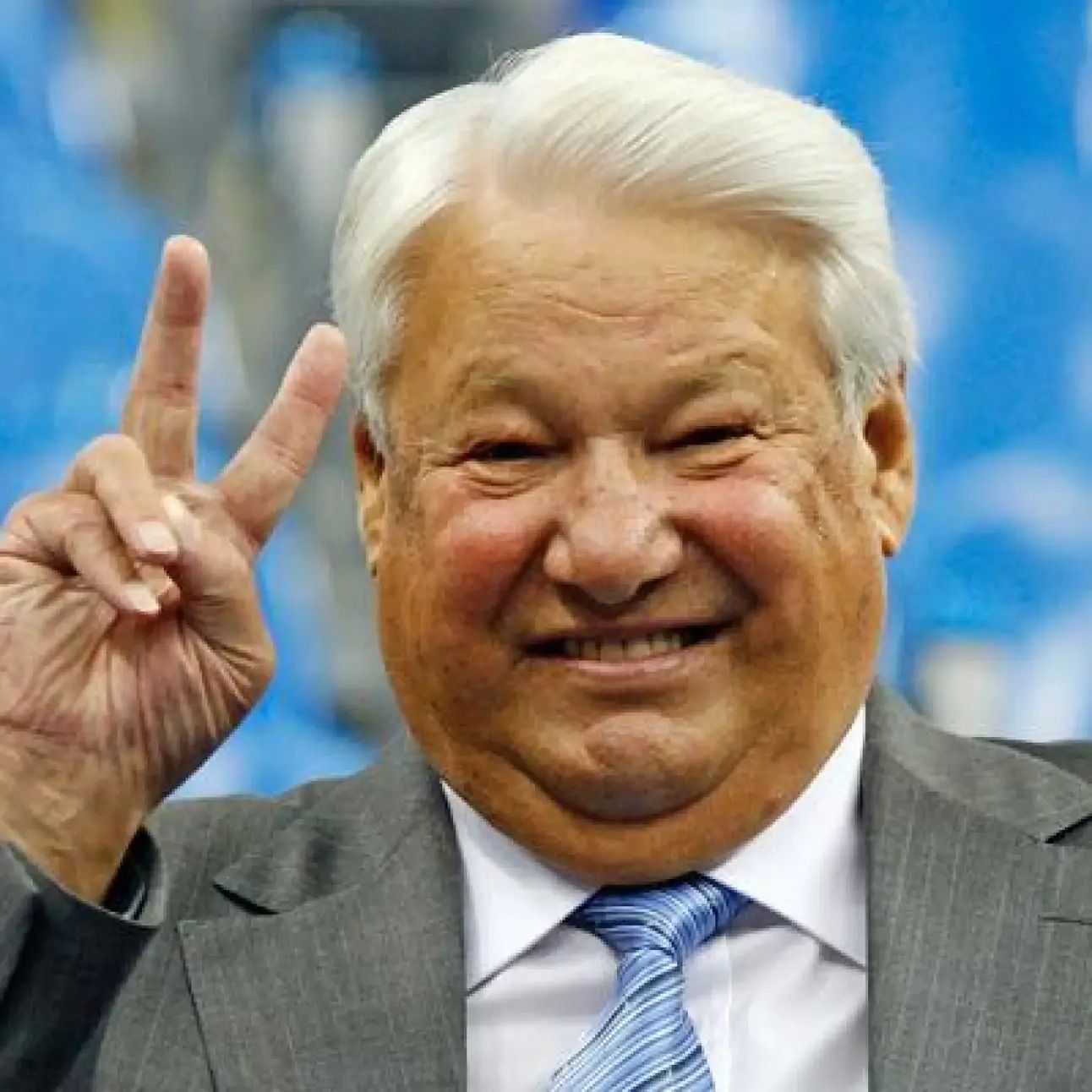
(July 10, 1991): Boris Yeltsin was sworn in as Russia’s first democratically elected president, marking the country’s shift away from Soviet rule. His presidency set the stage for the collapse of the USSR later that year and the turbulent transition to a market economy.