- Basedment
- Posts
- Free Speech or Silencing? Trump’s Changing Tune on the Media
Free Speech or Silencing? Trump’s Changing Tune on the Media
Your daily dose of geopolitical updates and strategic analysis. Unbiased, but not unbased.

Editor-in-Chief
September 20, 2025
THE BRIEFING
Here’s what’s happening in geopolitics today.
Trump has moved to dramatically raise H-1B visa fees, a major cyberattack has disrupted European airports, and Trump and Xi are edging closer to a TikTok deal.
Meanwhile, Russian jets violated NATO airspace in Estonia and Portugal has announced it will officially recognize a Palestinian state.
Today’s deep dive looks at Trump’s evolving stance on free speech — and the contradictions between his promises to end censorship and his moves to silence critics.
THE LAST 24 HOURS IN GEOPOLITICS
1. Trump to impose $100,000 fee per year for H-1B Visas
Trump has signed a proclamation imposing a $100,000 annual fee on H-1B visa applications, a dramatic jump from the previous ~$215 charge, as part of a sweeping move to limit legal immigration and push for domestic hiring. The tech industry, particularly Indian IT firms, warned that this change could severely disrupt operations and U.S.-based projects dependent on foreign skilled workers. While Trump claims the fee is designed to protect American workers and reduce exploitation of the visa program, critics argue it’s likely to hinder U.S. innovation, raise costs for companies, and could face legal challenges over Congress’s role in immigration lawmaking.
read more
2. Cyberattack disrupts European airports including Heathrow, Brussels
A cyber-attack overnight targeting Collins Aerospace’s MUSE software disrupted check-in, boarding, and baggage tag systems at major European airports including Heathrow, Brussels, and Berlin, forcing staff to revert to manual processes. The fallout included at least 10 flight cancellations at Brussels, 15 delays of an hour or more, and long queue times as digital systems remained offline. Heathrow described the impact as “minimal” in terms of cancellations, but warned travellers to expect disruptions and to check flight status before heading to the airport.
read more
3. Trump and Xi make progress on TikTok deal, plan to meet in South Korea
Trump and Chinese President Xi Jinping have reportedly made progress on a TikTok deal during recent trade talks in Madrid, establishing a framework that could allow the app to continue operating in the U.S. under U.S.-controlled ownership. They’re slated to meet in person next month at the APEC summit in South Korea to finalize details, with both sides negotiating issues like data privacy, algorithm ownership, and investor roles. Treasury Secretary Scott Bessent warned that failure to reach terms would result in the app being banned, showing how closely tied this tech issue is to national security and broader U.S.-China trade tensions.
read more
4. Russian jets violate NATO airspace in Estonia
Three Russian MiG-31 fighter jets entered Estonian airspace near Vaindloo Island for 12 minutes on Friday, with Estonia calling the incursion “unprecedentedly brazen”. The jets flew without a flight plan, had transponders off, and did not communicate with air traffic control—actions Estonia says violate its sovereignty. NATO scrambled Italian F-35s under its Baltic air policing mission in response, and Estonia has requested consultations under Article 4, signalling serious concern.
read more
5. Portugal to recognise a Palestinian state, government says
Portugal’s government has announced it will officially recognize a Palestinian state this Sunday, according to the foreign ministry. The move comes just ahead of next week’s High-Level United Nations General Assembly, where several Western nations are expected to follow suit. Portugal had previously delayed recognition, citing a desire to align with broader EU policy, but growing international pressure over the humanitarian situation in Gaza has pushed Lisbon to act.
read more
DAILY DEEP DIVE
FREE SPEECH OR SILENCING? TRUMP’S CHANGING TUNE ON THE MEDIA
Since returning to office, Donald Trump has championed himself as a free-speech crusader, even vowing to “immediately stop all government censorship and bring back free speech to America”. He rails against “cancel culture,” calling it “the very definition of totalitarianism,” and strikes populist poses as the victim of social-media bans after January 6. But in practice his administration has mounted a fierce campaign against media outlets and pundits critical of him. As one analysis notes, “he is now conducting the most punishing government crackdown against major American media institutions in modern times”. His rhetoric paints him as a defender of speech, yet his actions suggest a selective tolerance: friends of his often face no consequences for incendiary remarks, while critics may lose air time or even networks.
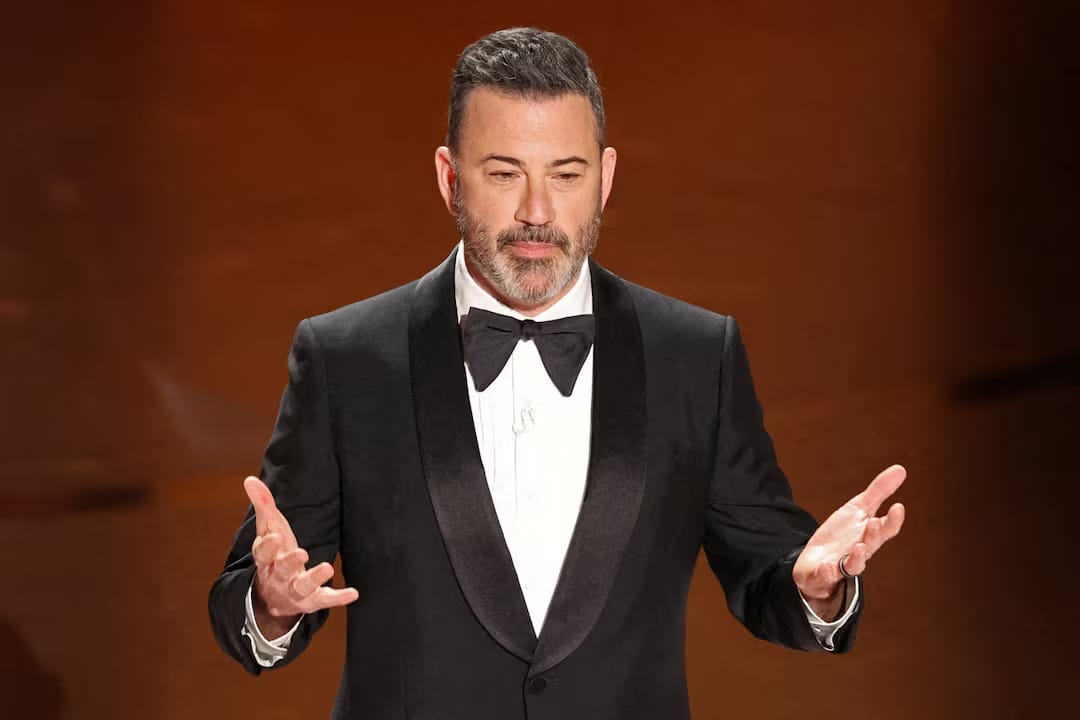
Jimmy Kimmel
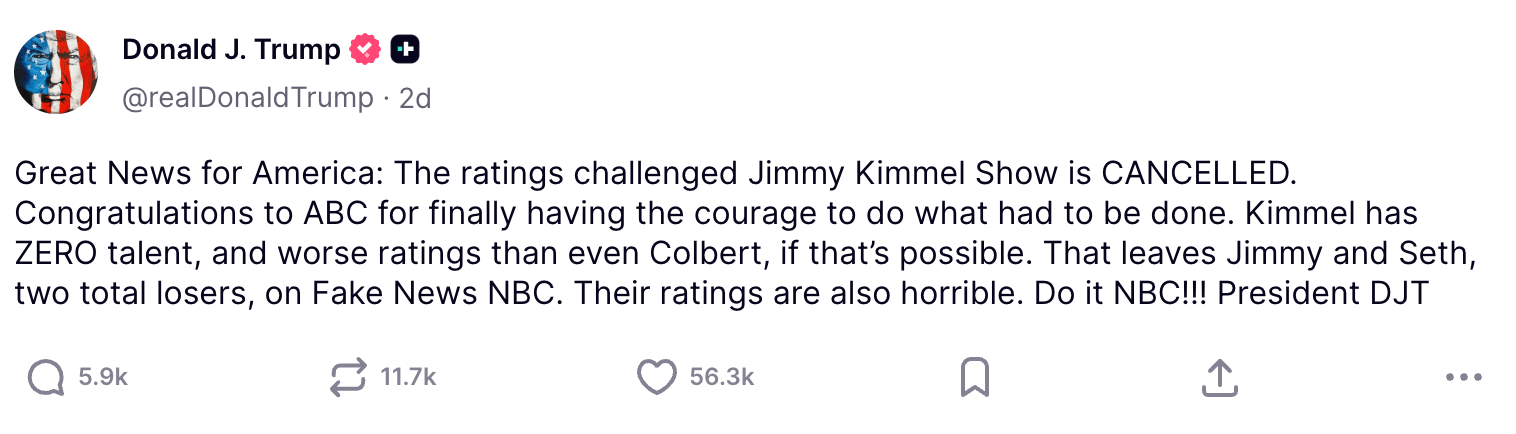
A stark example came with late-night TV host Jimmy Kimmel. When Kimmel made jokes about the killing of a conservative activist, Trump did not defend the comedian’s right to speak. Instead he gloated when ABC “indefinitely” suspended Kimmel’s show, declaring it “Great News for America” on his own Truth Social feed. He went further, publicly urging regulators to strip broadcast licenses from networks whose late-night hosts speak “negatively” about him. In short, Trump cheered a comedienne’s silencing, then said the networks airing dissenters should lose the right to operate. This selective tolerance stands in glaring contrast to his pro-free-speech rhetoric. As a media scholar observed, the combined legal threats, changes in news coverage, and now celebrity suspensions amount to an unprecedented, wide-ranging assault on the press.
By contrast, the Biden White House’s involvement with social media has centered on disinformation rather than party loyalty. In 2022–24 the administration sometimes urged platforms to flag or remove COVID and election misinformation, prompting charges of “censorship” from critics. But the U.S. Supreme Court ultimately rejected those First Amendment challenges, finding no evidence that Biden officials coerced companies to suppress disfavored speech. The Biden team defended its actions as public-health measures (for example warning about false vaccine claims). In short, Biden’s clashes with tech giants have been framed in terms of safety and fact-checking, whereas Trump’s clashes with TV and news outlets have been portrayed in ideological terms.
International observers have taken note of these contradictions. Spain’s El País pointed out the irony that political figures who once lamented being “banned from … public discourse” now seek to “cancel what they disagree with”. Katie Fallow of Columbia’s Knight First Amendment Institute called Trump’s threats to penalize dissent “extremely hypocritical,” emphasizing that “freedom of speech should not be censored or suppressed, regardless of whether you are right-wing or left-wing”. Press-freedom groups are blunt: Reporters Without Borders says Trump’s self-styled crusade for free speech is “inherently detrimental to press freedom,” noting his threats to “weaponize the government against expression he doesn’t like”. These critiques underscore a growing concern abroad that America’s free-speech culture is eroding into partisan warfare.
As the Trump administration progresses through its second term, his mixed messaging on free speech remains under close observation at home and abroad. His promise to dismantle government censorship sits uneasily alongside moves to punish criticism, curtail federal funding for media, and limit speech tied to protests or dissent. For many watching from outside the U.S., these contradictions raise larger questions about whether America’s free speech culture is shifting toward partisanship over principle, and what that shift might mean for its global image.
Sources:
Analysis is drawn from contemporary reporting on Trump’s media policies and Biden’s social-media efforts, including Jim Rutenberg’s No parallel: With Kimmel, Trump hits media with everything he has, Reuters legal coverage of Biden’s platform outreach, and international commentary (El País, RSF) on free speech and press freedom.
TWEET OF THE DAY
Elon really doesn’t miss a beat when it comes to contemporary issues… 😂
TODAY IN HISTORY
(September 20, 1870): Rome incorporated into Italy
On this day in 1870, Italian troops occupied Rome, leading to the eventual incorporation of Rome into the Kingdom of Italy and the limiting of papal governing authority to the Vatican itself and a small district around it.