- Basedment
- Posts
- GEOPOLITICS DAILY BRIEFING - 17 JUNE
GEOPOLITICS DAILY BRIEFING - 17 JUNE
Your daily dose of geopolitical updates and strategic analysis. Unbiased, but not unbased.

Editor-in-Chief
June 18, 2025
THE BRIEFING
Here’s what’s happening in geopolitics today.
The world feels like it’s teetering on the edge. From Trump’s dramatic G7 exit to mounting civilian casualties in Gaza and Ukraine, the stakes in every direction are rising fast.
Today’s top five stories cover major flashpoints, from missile strikes in Israel/Iran to diplomatic firestorms with China.
We also dive deep into the long history of the Turkistan Islamic Party (TIP). Their history, their role in the fall of Assad and whats next for them in the new geopolitical climate.
THE LAST 24 HOURS IN GEOPOLITICS
1. Trump abruptly departs the G7 summit
President Donald Trump abruptly departed the G7 summit in Canada to address the escalating conflict between Israel and Iran. He dismissed the notion of a ceasefire, stating, "It certainly has nothing to do with a Cease Fire. Much bigger than that," and emphasized that Iran must not obtain nuclear weapons. Upon returning to Washington, Trump convened his National Security Council to deliberate on the crisis, signaling a potential shift in U.S. involvement in the region
read more
2. Israeli forces kill 51 Palestinians waiting for aid in Southern Gaza
At least 51 Palestinians were killed and over 200 injured in Khan Younis, Gaza, after Israeli tank fire struck a crowd waiting for humanitarian aid, according to Gaza's Health Ministry. The Israeli military acknowledged firing in the area and stated the incident is under review, expressing regret over civilian casualties. This tragedy underscores the escalating humanitarian crisis in Gaza, where over 55,000 Palestinians have been killed since October 2023.
read more
3. Russia unleashes massive 10-hour assault on Kyiv
Russia launched a massive overnight assault on Kyiv, Ukraine, resulting in at least 15 deaths, including a 62-year-old American citizen, and injuring over 100 others. The nearly nine-hour barrage involved 175 drones, 14 cruise missiles, and two ballistic missiles, causing extensive damage to residential buildings and critical infrastructure. Ukrainian President Volodymyr Zelensky condemned the attack as "pure terrorism" and urged stronger international support in response to the escalating aggression.
read more
4. China accuses Trump of ‘pouring oil’ on the situation between Israel and Iran
China has accused U.S. President Donald Trump of exacerbating tensions between Iran and Israel following his call for Tehran residents to "immediately evacuate" amid escalating hostilities. Chinese Foreign Ministry spokesperson Guo Jiakun stated that such actions "will only intensify and widen the conflict," urging all parties to take immediate measures to de-escalate tensions . In response to the deteriorating situation, China's embassies in Iran and Israel have advised Chinese citizens to leave the countries "as soon as possible."
read more
5. Iranian attack targets Mossad building in Herzliya
Iran has claimed responsibility for missile strikes targeting Israeli military intelligence facilities, including a Mossad operations center. One missile reportedly struck a "sensitive site" in Herzliya, a term often used to describe strategic or military installations. These attacks mark a significant escalation in the ongoing conflict between the two nations, with both sides exchanging military actions.


DAILY DEEP DIVE
THE TIP HAS HAD A LONG HISTORY IN SUPPORTING THE DOWNFALL OF ASSAD, BUT WHATS NEXT?

HISTORY OF THE TIP
The Turkistan Islamic Party (TIP), is a jihadist group primarily composed of ethnic Uyghurs originating from China's Xinjiang region. Originally formed in the 1990s, the group established ties with al-Qaeda and the Taliban, adopting transnational jihadist objectives under a Salafi-jihadi framework.
Following US military operations in Afghanistan, TIP fighters migrated westward. By 2013, TIP units had arrived in Idlib and Latakia, aligning with Jabhat al-Nusra, the Syrian al-Qaeda affiliate. The TIP played a supporting role in several offensives, particularly in Latakia and Idlib, reported as well-disciplined and battle hardened, receiving a well-acclaimed distinction for battle hardiness.
In Idlib, the TIP retained its distinct Uyghur identity while integrating into the broader Salafi-jihadi ecosystem. It built semi-autonomous enclaves around Jisr al-Shughur. The group strategically (generally) avoided confrontation with dominant factions such as Hayat Tahrir al-Sham (HTS), formerly Jabhat al-Nusra.
JOLANIS VISION FOR THE TIP
Following the collapse of Regime-held Idlib in 2015 onwards, and the consolidation of Hayat Tahrir al-Sham (HTS) control, the Turkistan Islamic Party (TIP) had maintained a structured and armed presence under the broader framework of the Syrian Salvation Government (SSG). Although it held no formal civilian or administrative role, the group had been granted significant latitude in military affairs, particularly in and around Jisr al-Shughour.
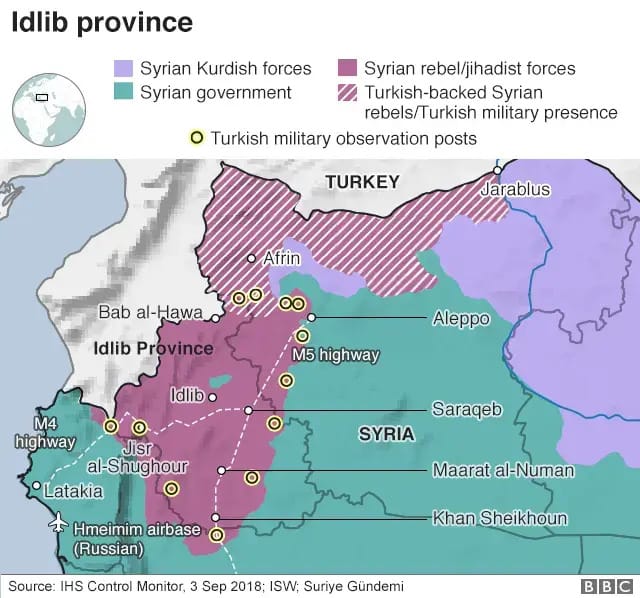
The New Transitional Government (NTG) strategy aims to integrate all foreign factions, including the TIP, into a unified military structure. 3500 foreigners, mostly Uyghurs were put into the newly established 84th division of the Syrian army. This move seeks to eliminate parallel command chains and consolidate Jolani’s influence under a single chain of command. The promotion of over half a dozen foreign fighters, including several TIP members, to the rank of brigadier general reflects a calculated effort to institutionalise their role and reinforce loyalty. It signals to these groups that they remain valued within the emerging political-military order.
WILL THE STRATEGY HOLD?
However, this arrangement may prove temporary. NTG’s current offering may face limitations as state-building imperatives deepen. Many Uyghur fighters view their involvement in Syria as ideologically linked to their opposition to Chinese state repression, drawing direct parallels between the Assad regime and Beijing’s authoritarianism. With NTG engaging in diplomatic posturing and seeking regional legitimacy—including tacit overtures to governments once deemed hostile—the future alignment of TIP members within this shifting political framework is unclear. The key challenge lies in whether TIP’s core fighters will accept a demilitarised role in a restructured Syrian entity or resist NTG’s diplomatic engagement with actors perceived as enemies of Islam, such as Israel or China. Nonetheless, the TIP has, in recent years, refrained from endorsing or claiming operations in China, positioning itself for greater legitimacy. Yet communal pledges
The transitional administration’s control over its armed factions has already come under scrutiny. Earlier massacres targeting Alawite and Christian communities were attributed to rogue elements, according to official statements. Regardless of accuracy, the incidents suggest that certain factions operate with degrees of autonomy beyond NTG’s declared command structure.
THE FUTURE
If the TIP continues its current trajectory, it would be sigh of relief for many state-actors. Despite President Trump explicitly stating the removal of all foreign fighters was a key condition for lifting U.S. sanctions, interim leader Ahmad al-Sharaa proceeded to retain and promote groups like the TIP. French President Emmanuel Macron publicly defended the decision, framing it as recognition for those who supported the Syrian revolution. For Turkey, Gulf states, Israel and the US a confined foreign fighter presence allows for easier dealings with Syria in having a more active role against Iran. For China, TIP’s contained posture reduces external pressure over Uyghur militancy, easing geopolitical tensions.

Sources:
Atlantic Council – Syria’s post-Assad future: HTS, China, and the new geopolitical calculus. https://www.atlanticcouncil.org/blogs/menasource/syria-assad-hts-china-future/
Czasopisma Marszałek – Foreign Fighters in the Syrian Civil War: Typology and Security Consequences. https://czasopisma.marszalek.com.pl/images/pliki/apsp/79/apsp7910.pdf
Foreign Policy – Uyghur Fighters in Syria Are Preparing for the Next War. https://foreignpolicy.com/2025/04/04/uyghurs-tpd-syria-fighters/
Foundation for Defense of Democracies (FDD) – Trump Tells Syria to Expel Foreign Fighters—but Sharaa Gives Them Army Divisions. https://www.fdd.org/analysis/2025/05/20/trump-tells-syria-to-expel-foreign-fighters-but-sharaa-gives-them-army-divisions/
Lowy Institute – Syrian boss Ahmed al-Sharaa: Can a leopard fix its spots? https://www.lowyinstitute.org/the-interpreter/syrian-boss-ahmed-al-sharaa-leopard-fix
TWEET OF THE DAY
Israel really wants U.S to jump into the action in Iran.
TODAY IN HISTORY
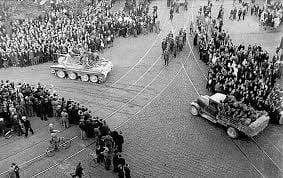
(June 17, 1940):
On this day in history, The Soviet Red Army invaded Latvia, marking the beginning of its forced incorporation into the Soviet Union. This occupation led to decades of Soviet control over the Baltic state.