- Basedment
- Posts
- GEOPOLITICS DAILY BRIEFING - 2 July
GEOPOLITICS DAILY BRIEFING - 2 July
Your daily dose of geopolitical updates and strategic analysis. Unbiased, but not unbased.

Editor-in-Chief
July 03, 2025
THE BRIEFING
Here’s what’s happening in geopolitics today.
From spiritual showdowns in Tibet to political brinkmanship in Washington, today’s news underscores the diverse fault lines reshaping global affairs. The Dalai Lama stakes out his own path for succession, Trump edges closer to a legislative win at home, and fragile ceasefire talks inch forward in Gaza.
Meanwhile, Germany cracks down on Russia’s shadow oil fleet, and Ukraine faces new worries as U.S. missile shipments stall.
Against this backdrop, our deep dive explores the famous Russian VDV units, the alleged elite backbone of the Russian army.
THE LAST 24 HOURS IN GEOPOLITICS
1. Dalai Lama confirms he will be reincarnated and his trust will identify successor
As the Dalai Lama approaches his 90th birthday, he has affirmed that the institution of the Dalai Lama will continue through reincarnation. He declared that the Gaden Phodrang Trust, a non-profit he established, will have the exclusive authority to identify his successor, explicitly rejecting any involvement by the Chinese government. This announcement challenges China's insistence on selecting the next Dalai Lama through a historical ritual requiring approval by Beijing, setting the stage for renewed tensions over Tibetan spiritual leadership.
read more
2. Hamas responds to Trump-backed 60-day ceasefire proposal
President Donald Trump announced that Israel has agreed to a U.S.-brokered 60-day ceasefire in Gaza and urged Hamas to accept the deal, warning that rejecting it would worsen their situation. Hamas responded by expressing openness to a truce but insisted that any agreement must lead to a complete end to the war. The proposal, mediated by Qatar and Egypt, includes provisions for a partial Israeli withdrawal and increased humanitarian aid, but significant gaps remain as both sides hold firm to their core demands.
read more
3. Senate narrowly advances Trump’s ‘One Big Beautiful Bill’.
The U.S. Senate has narrowly passed President Donald Trump's sweeping tax-and-spending legislation, known as the "One Big Beautiful Bill," with a 51–50 vote secured by Vice President JD Vance's tie-breaking support . The bill, which includes permanent tax cuts, Medicaid reforms, and increased defence and border security funding, now moves to the House, where Republicans aim to finalise it before Trump's self-imposed July 4 deadline. Despite the Senate parliamentarian's ruling that certain provisions, such as Medicaid cuts, cannot proceed under reconciliation, GOP leaders are working to adjust the bill to maintain its momentum.
read more
4. Germany launches insurance crackdown on Russian shadow fleet
Germany has intensified scrutiny of oil tankers traversing the Baltic Sea, mandating that eastbound vessels provide proof of valid insurance coverage. This initiative targets Russia's "shadow fleet", a collection of aging, often uninsured tankers employed to circumvent Western sanctions and transport oil above the G7-imposed $60 per barrel price cap. The move aims to enforce sanctions compliance and mitigate environmental risks associated with these vessels, which have been linked to numerous accidents in recent years.
read more
5. US halts some missile shipments to Ukraine
The U.S. has paused shipments of key air defence missiles and precision-guided munitions to Ukraine, citing concerns over dwindling domestic stockpiles. This decision comes as Russia intensifies aerial assaults on Ukrainian cities, prompting Kyiv to summon the top U.S. diplomat for clarification. While the Pentagon emphasises the need to prioritise American military readiness, Ukrainian officials warn that the halt could embolden Russian aggression and compromise Ukraine's defence capabilities.
read more
DAILY DEEP DIVE
VDV IN UKRAINE (2022–2025): FROM SHOCK TROOPS TO EVOLVING ROLE
At the outset of the full-scale invasion in February 2022, Russia’s Airborne Forces (VDV) consisted of roughly 45,000 personnel organised into high-readiness formations such as the 76th, 98th, and 106th Airborne Divisions, as well as the 31st and 45th Brigades. VDV doctrine emphasised rapid air-mobile operations, vertical envelopment, and seizure of strategic objectives—missions requiring speed, precision, and independence from front-line attritional combat. What also separated the VDV from the regular army units was that they had a slightly larger make up of professional troops than conscripts.

VDV AT HOSTOMEL
The Battle of Hostomel Airport (February 24–25, 2022) showcased this doctrine in action. Roughly 300 troops from the 31st Guards Air Assault and 45th Spetsnaz Brigades, supported by helicopter assets, conducted an air assault to seize the airfield and enable a follow-on airbridge into Kyiv. Though the VDV secured the airport, Ukrainian resistance damaged the runway, forcing the abandonment of incoming Il-76 transports while VDV troops tactically retreated from the site, linking up with the main Russian thrust and retaking the airport. Russian sources framed this as a tactical success, while Western analysts noted the operation’s inability to fulfil its strategic goal: rapid capture of the capital.
By late 2022 and into 2023, the VDV’s operational role shifted dramatically. Units were committed to static engagements and frontal assaults in Bakhmut, Kreminna, Izyum, and elsewhere, often conducting trench raids, urban clearance, and holdout missions. These tasks, far from VDV’s doctrinal core, contributed to substantial attrition across all divisions. Estimates suggest the VDV fell to under 35,000 troops by 2025, underscoring the cost of their sustained use in infantry-heavy roles.
Colonel General Mikhail Teplinsky, VDV commander, became a central figure in internal disputes over the branch’s misuse. He reportedly opposed Gerasimov’s practice of deploying airborne units in conventional assaults, especially in Bakhmut. Though briefly sidelined in 2023 for a few months, Teplinsky was later reinstated and remains influential. Yevgeny Prigozhin, in a detailed June 2023 interview, echoed Teplinsky’s criticisms, arguing that elite units were being wasted in roles that undermined their tactical strengths.
By mid-2025, the VDV remains active across high-priority sectors:
76th Division (104th, 234th, 237th Regts) – Yunakivka, Sumy
106th Division (51st, 137th Regts) – Sumy Oblast
11th and 83rd Brigades – Novomykolaivka–Yablunivka line
98th Division (331st Regt) – Chasiv Yar
7th/ Division (108th, 247th Regts) – Kamyanske, Zaporizhia
These deployments reflect an ongoing shift. VDV formations now function in a hybridised role—high-readiness light mechanised infantry operating under drone-dense, artillery-saturated conditions, often integrated into broader combined arms groupings. This evolution aligns with broader Russian military restructuring efforts. As outlined in Shoigu’s 2022–2024 reforms, two new VDV helicopter assault divisions were slated for formation, underscoring a continued strategic role for the airborne force, even if reimagined.
The broader attritional nature of the war, paired with heavy losses in elite units, has impacted all arms of the military. As of early 2025, total Russian active personnel has grown from 900,000 prewar to 1.13 million, but elite branches have contracted—VDV from 45,000 to 35,000, and Naval Infantry from 35,000 to 10,000. This reflects the difficulty of preserving elite formations under prolonged wartime strain.
In conclusion, the VDV has not been structurally abandoned but rather adapted. While the force no longer fits its prewar doctrinal mould, its role remains relevant as an agile, deployable, and politically symbolic component of Russian military power - albeit damaged in the western lens. The war in Ukraine has transformed the VDV from a shock force into a multirole contingent, reflecting the changing character of the conflict and Russia’s broader shift toward a mass-mobilised, division-centric military posture.
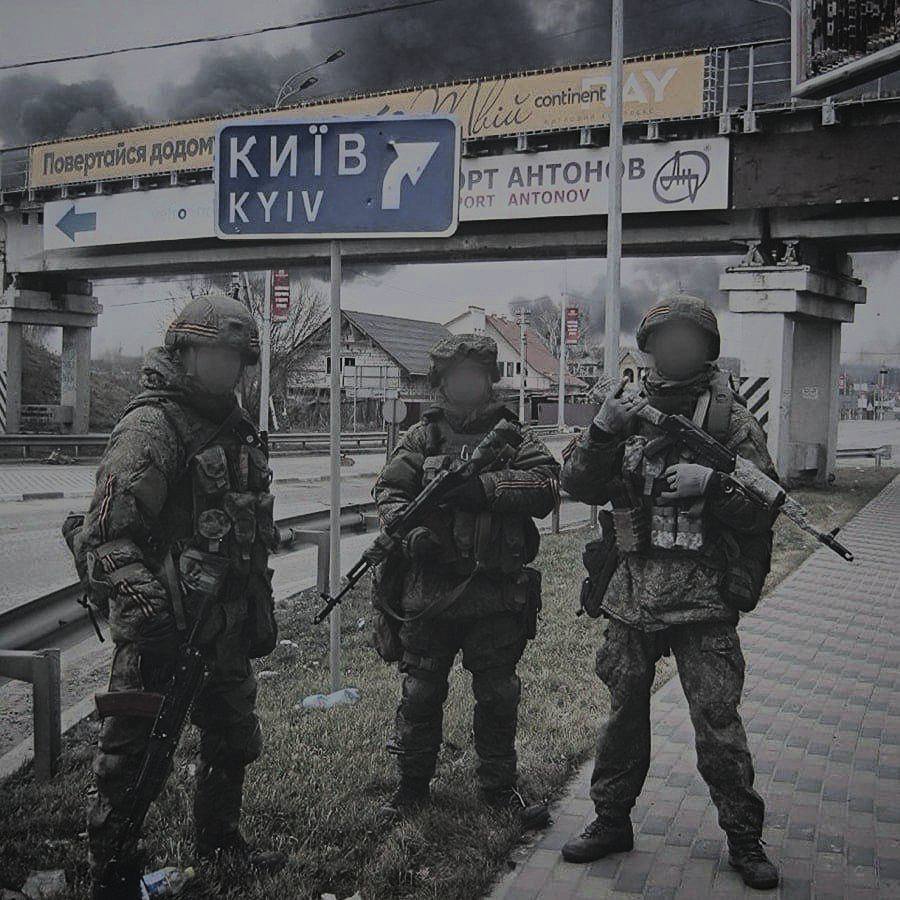
VDV in 2022
Sources
JSTOR: The Russian Airborne Troops: Past, Present, and Future (2011)
Newsweek – “Russia's Airborne Troops Take a Beating in Ukraine”
Russian Military Analysis – “Rethinking the Structure and Role of Russia’s Airborne Forces” (2019)
Understanding War – Russian Offensive Campaign Assessment (June 30, 2025)
TWEET OF THE DAY
Actual slavery starting to sound better than corporate slavery…
TODAY IN HISTORY
(July 2, 1867):
On this day in 1964, U.S. President Lyndon B. Johnson signed the Civil Rights Act, perhaps the most important U.S. law on civil rights since Reconstruction (1865–77) and a hallmark of the American civil rights movement.

Civil Rights Act signed