- Basedment
- Posts
- GEOPOLITICS DAILY BRIEFING - 22 June
GEOPOLITICS DAILY BRIEFING - 22 June
Your daily dose of geopolitical updates and strategic analysis. Unbiased, but not unbased.

Editor-in-Chief
June 22, 2025
THE BRIEFING
Here’s what’s happening in geopolitics today.
As tensions spiral across the Middle East and Asia, today’s headlines are dominated by U.S. strikes on Iranian nuclear facilities, targeted Israeli assassinations, and global warnings of escalation.
From China's condemnation of U.S. action to the UK’s naval challenge in the Taiwan Strait, the geopolitical landscape is shifting fast. Meanwhile, Iran vows retaliation, Israel tightens its grip, and world leaders scramble to contain the fallout.
In today’s feature, we ask the critical question: will Trump’s bunker-busting bombs actually achieve what U.S. and Israeli policymakers hoped and cripple Iran’s nuclear program for good?
THE LAST 24 HOURS IN GEOPOLITICS
1. U.S strikes Iranian nuclear sites
The US launched strikes on Iran’s nuclear facilities at Natanz, Fordow, and Isfahan. Trump claimed a “spectacular success,” warning further attacks if Iran retaliates. Iran condemned the move as a breach of international law, calling for a UN emergency session. The IAEA reported no radiation leaks. Global leaders urged de-escalation. Iran said the US crossed a “red line” and vowed a response under its right to self-defence, with forces on full standby.
read more
2. Israel assassinates top IRGC commanders
Israel killed IRGC Quds Force commander Saeed Izadi in Qom, calling him key to the October 7 Hamas attack. Another IRGC commander, Behnam Shahriyari, was killed hours later in western Iran. Iran has not confirmed the deaths. Israel says both were crucial to arms transfers to Hamas and Hezbollah. These assassinations signal a deep intelligence penetration into Iran. Trump suggested US support for future Israeli operations.
read more
3. "Ukraine still holds territory in Kursk” - Ukraine military
New Zealand halted $16.9 million in aid to the Cook Islands after the latter signed deals with China without consultation. The Cook Islands called the deals non-binding and focused on climate and development, denying any defense elements. However, New Zealand says this violates their “free association” agreement. The pause reflects growing distrust over China’s role in the Pacific. Wellington says future funding depends on the Cook Islands taking steps to repair diplomatic and security ties.
read more
4. China condemns attack on Iran
China strongly condemned the US airstrikes on Iran’s nuclear facilities, calling them a violation of international law and the UN Charter. Beijing emphasized that the targeted sites were under IAEA safeguards and warned the attacks would further destabilise the Middle East. It reaffirmed its willingness to work with the global community to restore regional peace and uphold international justice.
read more
5. UK warship crosses Taiwan strait sparking Chinese fury
The Royal Navy’s HMS Spey transited the Taiwan Strait, the first UK patrol since 2021. China condemned it as a “provocation” and threatened military response. The UK cited international law and freedom of navigation. Taiwan welcomed the move, contrasting Beijing’s rising military pressure, including encirclement drills and nuclear bomber deployments.
read more
DAILY DEEP DIVE
Will Trump’s Bunker-Busters actually stop Iran’s Nuclear Program?
As reported, President Trump authorized U.S. airstrikes on Iran's three key nuclear facilities: Fordow, Natanz, and Isfahan. According to a conversation with Fox News, Trump disclosed that six “bunker buster” bombs were deployed on Iran’s Fordow nuclear site by several B-2 stealth bombers. He also reported that the U.S. launched 30 Tomahawk cruise missiles from submarines stationed approximately 400 miles off the Iranian coast.


While Trump proclaimed the sites were "completely and totally obliterated," Iran contends that critical equipment had been relocated prior to the attacks, minimizing the damage. Satellite imagery indicates damage to surface structures at Fordow, but the extent of impairment to the deeply buried enrichment infrastructure remains uncertain.
The first wave of satellite imagery of the Fordow Nuclear Facility in Iran after it was hit by bunker busting bombs are only just being released. Three puncture holes in close proximity to each other can be seen in the face of the cliff in the direction of the underground facilities, formed from the entry points of the missiles. Despite the satellite images, it’s still difficult to understand the extent of the damage underground.

Satellite Images of the Fordow Nuclear Facility
Strategic delay, not destruction
Experts suggest that, although the strikes may have disrupted Iran's nuclear activities, they are unlikely to have permanently dismantled the program. Iran's nuclear knowledge and dispersed infrastructure mean that operations could resume or relocate, potentially within months. This action may serve more as a temporary setback than a definitive end to Iran's nuclear ambitions.
Escalation Risks and Regional Stability
Iran's immediate response involved missile attacks on Israeli cities, with threats of further retaliation. The U.S. strikes have intensified regional tensions, raising concerns about a broader conflict. While the U.S. aims to deter Iran's nuclear development, the potential for escalation and the involvement of proxy groups like Hezbollah and the Houthis could destabilize the region further… or perhaps closing the Strait of Hormuz?

In summary, the situation underscores the complexities of addressing nuclear proliferation through military means and the importance of considering the broader geopolitical ramifications.
The world is watching closely. If the bunker-busters failed to finish the job, Trump may soon face the choice of doubling down or backing off. Either way, the Middle East just entered a far more dangerous chapter.
TWEET OF THE DAY
Here’s something a little more light-hearted for any of our readers that’ll be tuned into game 7 of the NBA finals tomorrow:
WW3 about to start and SGA already at the free throw line 😭
— Hater Report (@HaterReport_)
12:58 AM • Jun 22, 2025
TODAY IN HISTORY
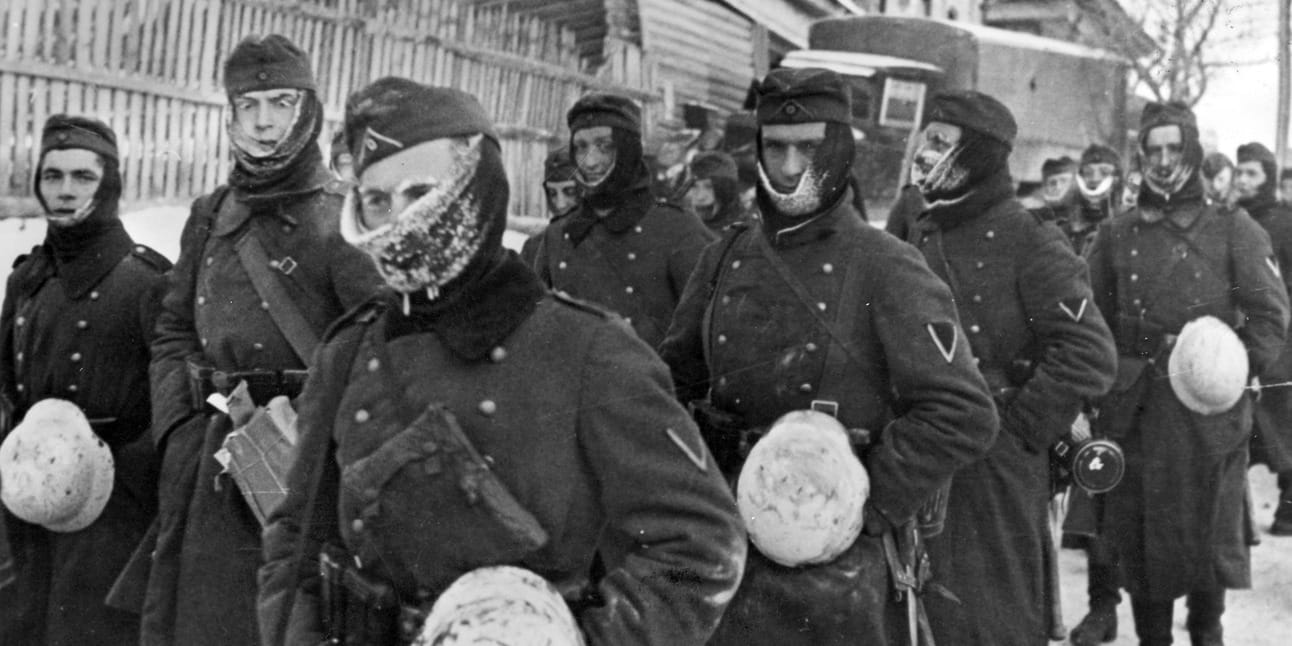
(June 22, 1941):
1941 – Operation Barbarossa launched at 3:15 a.m., Nazi Germany, with over 3–3.8 million troops, 11,000+ tanks, and 7,000–9,000 aircraft, invaded the Soviet Union along a 1,600–2,900 km front—history’s largest land invasion.
It marked the start of the brutal Eastern Front, resulting in ~8 million military casualties and tens of millions of civilian deaths.