- Basedment
- Posts
- GEOPOLITICS DAILY BRIEFING - 29 June
GEOPOLITICS DAILY BRIEFING - 29 June
Your daily dose of geopolitical updates and strategic analysis. Unbiased, but not unbased.

Editor-in-Chief
June 30, 2025
THE BRIEFING
Here’s what’s happening in geopolitics today.
Ukraine endures relentless Russian airstrikes and mourns a fallen F-16 pilot as Zelensky withdraws from the landmine treaty and pleads for more Western air defences. In Serbia, mass protests challenge Vucic’s rule, Uganda’s Museveni confirms a re-election bid, and Trump defends Netanyahu amid growing legal and political turmoil. In today’s deep dive we zoom into the village of Bila Hora, north of Toretsk and its tactical importance.
THE LAST 24 HOURS IN GEOPOLITICS
1. Trump backs Bibi in corruption case
Donald Trump lashed out at Israeli prosecutors over Prime Minister Netanyahu’s ongoing corruption trial, calling it “insanity” and suggesting that US financial support to Israel could be reviewed. He claimed the case undermines Netanyahu’s ability to handle negotiations with Hamas and growing tensions with Iran. Netanyahu is due to take the stand on Monday over bribery and fraud charges, which he denies. Critics in Israel say he’s exploiting regional conflict to deflect from the trial. Trump publicly backed him, thanking him online.
read more
2. Ukraine withdraws from Ottawa Convention
President Zelensky has signed a decree to begin Ukraine’s withdrawal from the Ottawa Convention, which bans the use and stockpiling of anti-personnel mines, according to MP Roman Kostenko. The move follows similar announcements from Poland and the Baltic states amid growing fears of a wider European war. Kostenko said the reality of Russia’s ongoing use of mines demanded this step. The decree, yet to be formally published, will next be reviewed by Ukraine’s parliament for implementation.
read more
3. Ugandan President aims to extend 40 year rule
Uganda’s President Yoweri Museveni has confirmed he will run for re-election in 2026, aiming to extend his nearly 40-year rule. The 80-year-old pledged to grow Uganda’s economy from $66bn to $500bn within five years. Opposition leader Bobi Wine will also run, renewing a tense political rivalry. Critics accuse Museveni of using military courts and constitutional changes to tighten his grip on power—allegations he denies. Rights groups have condemned Uganda’s use of military trials against civilians.
read more
4. New wave of protests hit Serbian president
Serbian police clashed with roughly 140,000 anti-government protesters in Belgrade demanding early elections and an end to President Aleksandar Vucic’s 12-year rule. The student-led protests, the largest in recent months, turned violent as riot police used tear gas and stun grenades. Vucic accused protesters of being part of a foreign-backed coup plot. Demonstrations began last year after a fatal train station collapse sparked outrage over corruption. Despite pressure, Vucic has rejected snap elections. His ruling coalition controls a parliamentary majority.
read more
5. Ukraine pilot dies after F-16 shot down
A Ukrainian F-16 pilot, Lt. Col. Maksym Ustymenko, was killed during one of Russia’s largest aerial assaults to date, involving over 470 drones and 60 missiles. Ustymenko, praised for downing seven targets before his death, became the third F-16 pilot lost. Ukraine's air force confirmed he tried to divert the jet from a populated area but had no time to eject. President Zelensky called for increased Western air defence support as missile and drone attacks continue to overwhelm Ukrainian cities and infrastructure.
read more
DAILY DEEP DIVE
WHY THE VILLAGE OF BILA HORA IS TACTICALLY IMPORTANT TO TAKING KOSTYANTYNIVKA
Following the fall of Bakhmut in 2023, Ukrainian forces established a hardened defensive line behind the Siverskyi Donets–Donbas Canal. The canal served not only as a physical barrier—acting as a natural moat—but also as a key defensive feature to blunt Russian armoured and infantry advances. This fortified line was a major reason Russian forces struggled to make gains around Chasiv Yar for months.
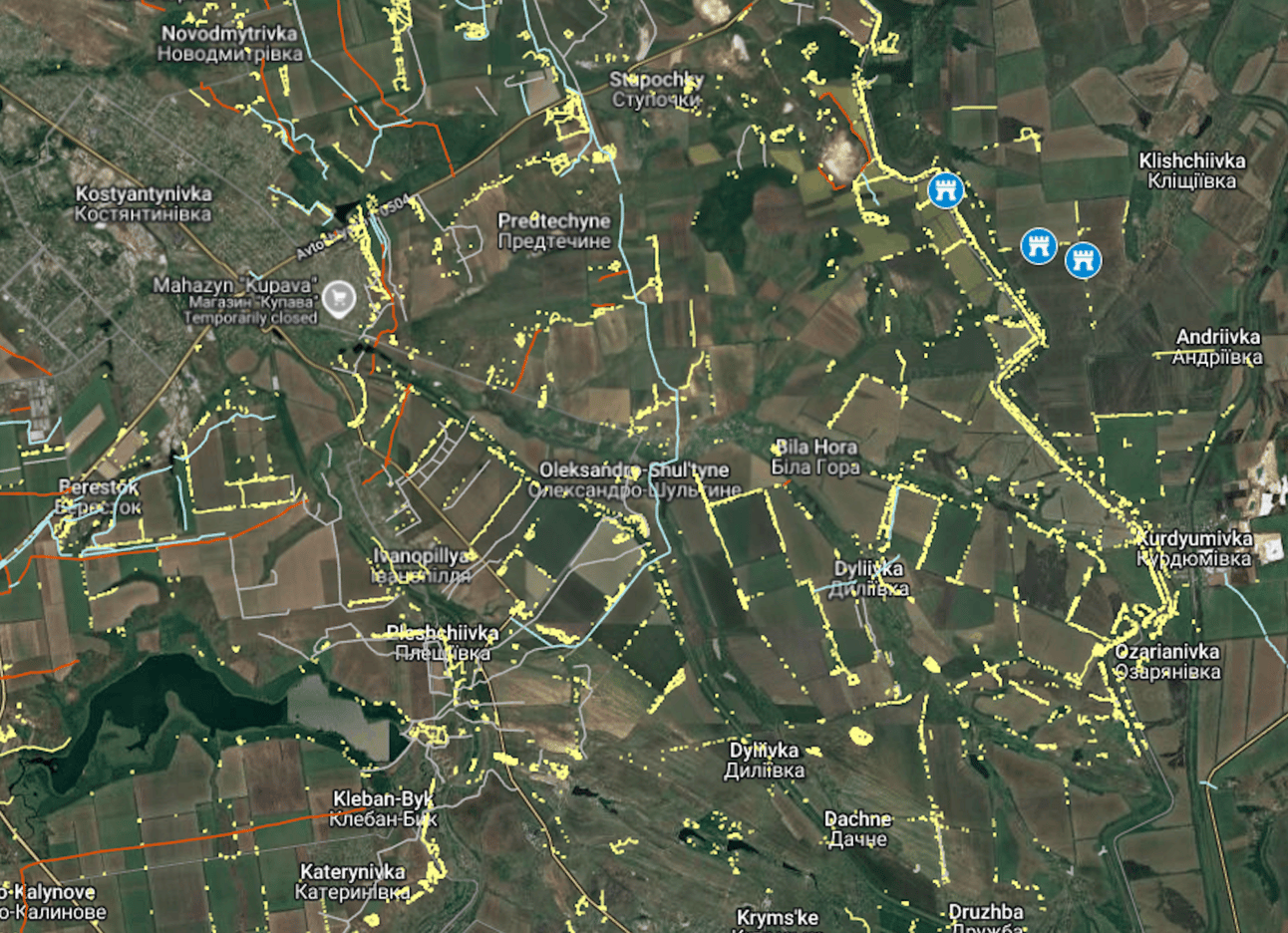
The yellow dots and lines are representations of Ukrainian defences (trenches, fortifications).
But over the course of many months, Russian forces have breached the Chasiv Yar defences and advanced into Stupochky, placing them on the canal’s western flank. Stupochky is also on an elevated position, further threatening the defences on the canal. More critically, a separate axis of advance is unfolding further south. Naturally, with the advance of Russian units from Toretsk, the southern part of the canal’s flank has been exposed. This manoeuvre has outflanked many of the canal-based defences, putting their strategic value into question.

Russian tactics in the area continue to rely on reconnaissance-in-force operations, as discussed in previous analysis. Small units—often just 1 to 4 soldiers—probe no-man’s-land, identify vulnerabilities, and call in follow-on elements to exploit gaps. This approach is being applied aggressively south of Bila Hora. The town holds significant tactical relevance: it sits on the western edge of a potential pincer movement. If Russian forces manage to advance from Bila Hora and create a push from Stupochky, they risk encircling Ukrainian positions along the canal. Using the wooded terrain near Dyiilivka, Russian troops are navigating treelines to avoid drone detection and bypass fixed fortifications. There is also a considerable fortification system east of Bila Hora, that is protecting the southern flank of the remaining canal fortifications. Taking Bila Hora, will expose this fortification.
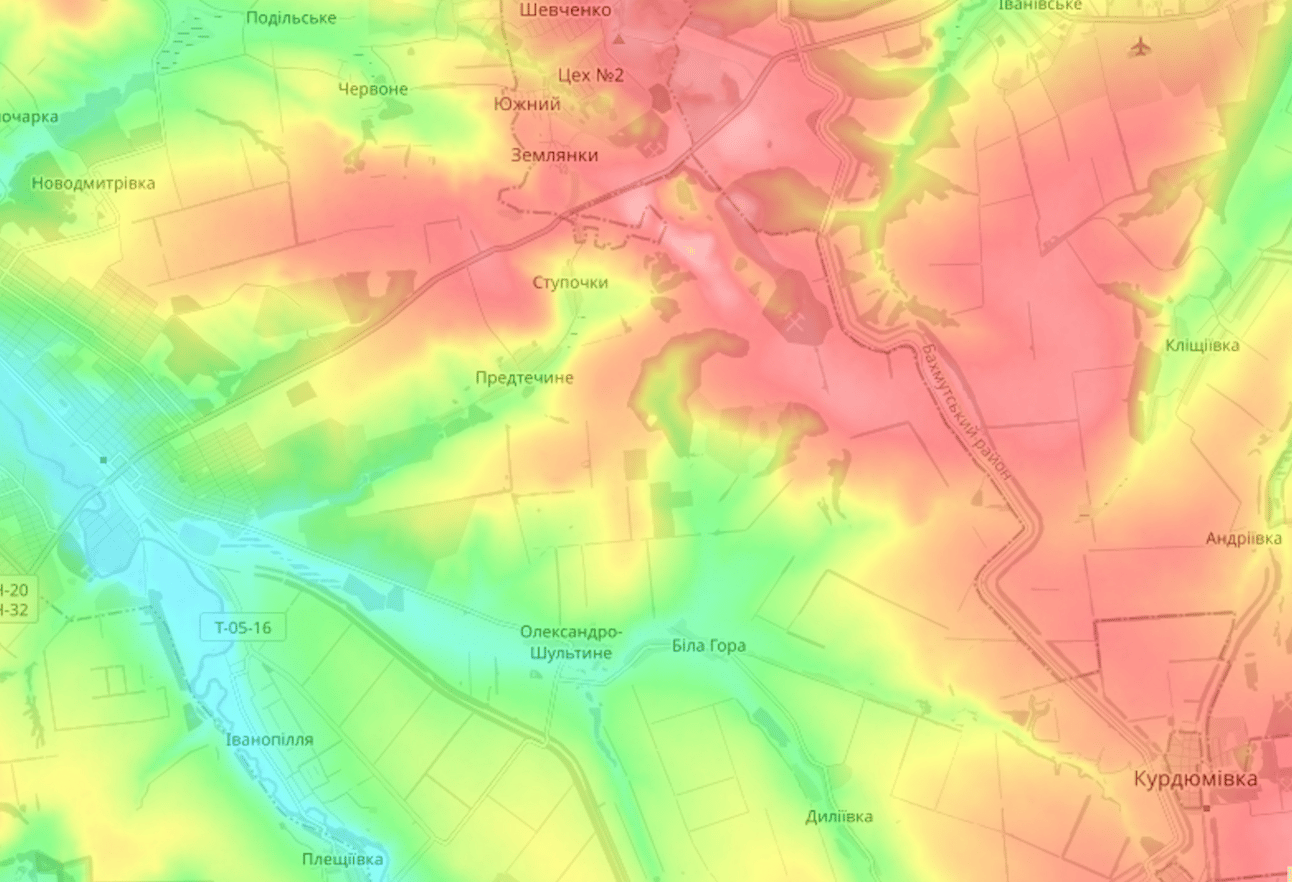
Sources:
Sukiyaki T
Playinfra X
TWEET OF THE DAY
Piers Morgan has been defending himself on Twitter over his comments on the controversial Glastonbury Festival
Piers Morgan: “We only have serious people on.”
Also Piers Morgan:
— Eyal Yakoby (@EYakoby)
4:06 PM • Jun 27, 2025
TODAY IN HISTORY
(June 29, 1914):
After a year of conflict against the Ottoman Empire, tensions rose among the victorious members of the Balkan League over how to divide the newly captured lands. Disagreements escalated, and on this night, Bulgaria launched an attack on Greek and Serbian positions in Macedonia, sparking the Second Balkan War.
