- Basedment
- Posts
- BRICS in Brazil, Musk’s new party & China eyes Taiwan skies
BRICS in Brazil, Musk’s new party & China eyes Taiwan skies
Your daily dose of geopolitical updates and strategic analysis. Unbiased, but not unbased.

Editor-in-Chief
July 07, 2025
THE BRIEFING
Here’s what’s happening in geopolitics today.
From deadly floods sweeping through Texas to geopolitical shifts on the global stage, it’s been another whirlwind day in world affairs.
Iran steps onto the BRICS stage in Brazil as Tehran looks to pivot eastward, while China rattles nerves near Taiwan with a new flight path skirting the Strait’s delicate balance. Japan flexes its naval support for the Philippines amid tensions in the South China Sea, and Elon Musk sets American politics ablaze by launching his own party in a break from Trump.
In today’s deep dive, we turn our focus to the BRICS Summit unfolding in Rio and what it might mean for the future of global power dynamics.
THE LAST 24 HOURS IN GEOPOLITICS
1. At least 51 dead in Texas Floods, including 15 children
A catastrophic flash flood in Texas has claimed at least 51 lives, including 15 children, with the majority of fatalities occurring in Kerr County along the Guadalupe River basin. Torrential rains caused the river to surge 26 feet in just 45 minutes early Friday, inundating summer camps and vacation spots during the Fourth of July weekend. At Camp Mystic, a Christian summer camp, many children remain missing, and extensive search and rescue operations continue.
read more
2. Iranian Foreign Minister Araqchi arrives in Brazil to attend BRICS Summit
Iranian Foreign Minister Abbas Araqchi has arrived in Rio de Janeiro to attend the 17th BRICS Summit, aiming to strengthen Iran's engagement with the bloc of emerging economies. The summit, themed "Strengthening Global South Cooperation for More Inclusive and Sustainable Governance," provides a platform for Iran to advocate for multilateralism and enhanced collaboration among member states. Araqchi's participation underscores Tehran's commitment to diversifying its international partnerships amid ongoing geopolitical tensions.
read more
3. China opens third extension to sensitive Taiwan Strait flight path
China has unilaterally introduced a third civil aviation route near the Taiwan Strait's median line, drawing sharp criticism from Taipei. Beijing asserts that the new flight path enhances "safety" and "efficiency," but Taiwanese officials view it as a strategic move to erode the tacit boundary that has long served as a buffer between the two sides. Analysts warn that this development could further strain cross-strait relations and complicate Taiwan's air defense operations.
read more
4. Japan’s used destroyers head to Philippines to counter China
Japan has agreed to transfer six Abukuma-class destroyer escorts to the Philippines, marking a significant enhancement of Manila's naval capabilities amid escalating tensions in the South China Sea. These vessels, equipped with anti-submarine and anti-ship weaponry, will be inspected by a Philippine Navy delegation this summer as part of the acquisition process. The move underscores the deepening strategic partnership between the two U.S. allies, aiming to bolster deterrence against China's maritime expansion in contested waters.
read more
5. Musk announces the forming of ‘America Party’ following his Trump feud
Elon Musk has officially launched the "America Party," signaling a definitive split from former ally President Donald Trump. The move follows Musk's sharp criticism of Trump's recently signed "One Big Beautiful Bill," which Musk labeled as fiscally irresponsible, warning it could increase the national deficit by $3.9 trillion. Musk announced the party's formation on his platform X after a poll indicated strong public support for an alternative to the traditional two-party system. The America Party aims to challenge the political status quo, advocating for fiscal conservatism and reduced government inefficiency.
read more
DAILY DEEP DIVE
BRICS BRAZIL 2025: WHAT YOU NEED TO KNOW
The 2025 BRICS summit in Rio de Janeiro underscores the bloc’s growing ambitions and enduring contradictions. Now expanded into BRICS+ with ten full members and ten strategic partners, the group represents significant demographic and economic weight. Yet despite its rhetorical push for multipolarity and reform of Western-led institutions, internal divisions and strategic restraint continue to define its political character.
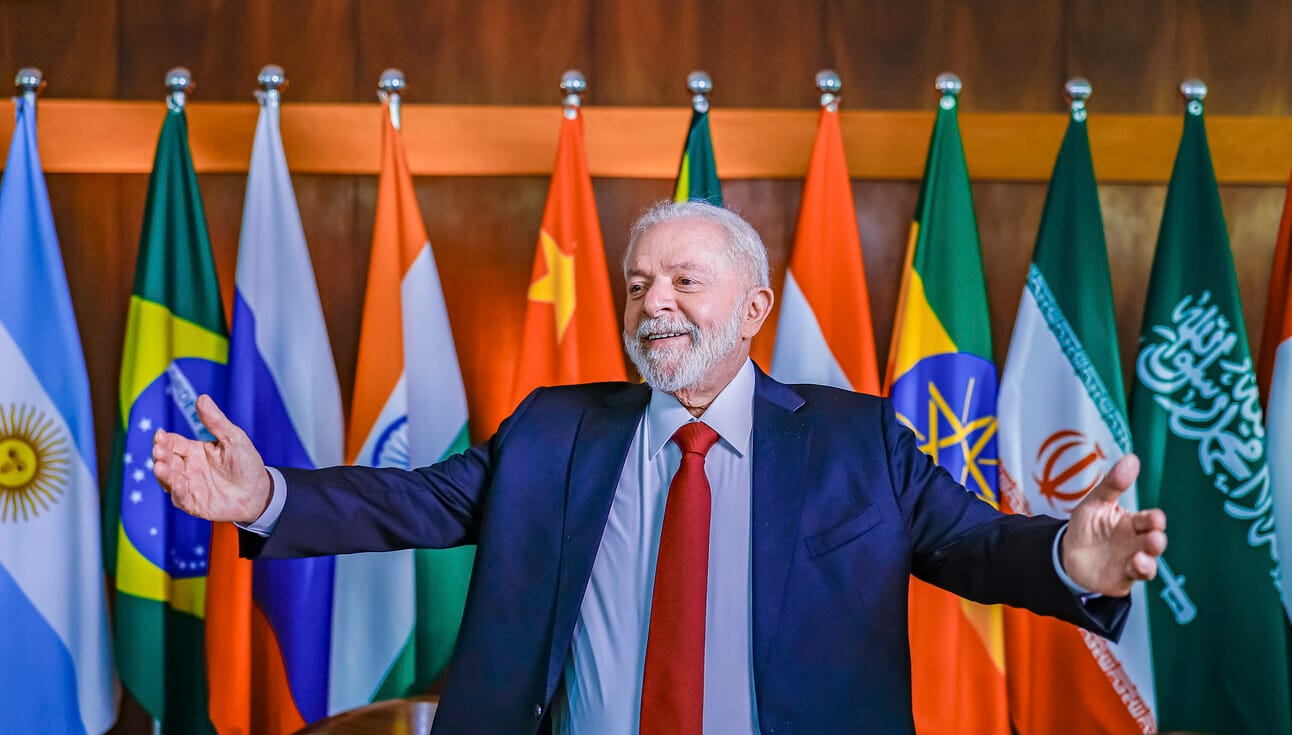
The absence of Chinese President Xi Jinping—his first since taking office—is a calculated move. By sending Premier Li Qiang, Beijing is not retreating from BRICS, but recalibrating its summit diplomacy. Faced with domestic economic headwinds and low expectations for breakthrough outcomes, China appears content to let others take the spotlight. Trump’s “America First” approach, which has strained US alliances, arguably eases Beijing’s pressure to lead an overt counter-Western bloc this year. Still, China remains committed to using BRICS as a vehicle for expanding its influence in the Global South and buffering against Western-dominated multilateralism.
Russian President Vladimir Putin’s virtual attendance reflects persistent legal constraints due to the ICC warrant. For Moscow, BRICS is more than symbolic. It serves as a crucial venue to promote de-dollarisation, bypass SWIFT, and explore alternative financial mechanisms. Strategies vital for both Russia and Iran, given the weight of Western sanctions. Yet the bloc has quietly sidelined more ambitious ideas such as a common BRICS currency, likely in response to Trump’s threats of 100 percent tariffs on members that attempt to challenge dollar primacy.
As chair, Brazil has adopted a strategy of caution. President Lula’s agenda (emphasising AI governance, climate policy, institutional integration, and intra-bloc trade) reflects a pragmatic effort to avoid provoking Washington. Brazil has so far avoided direct tariff fallout and is keen to maintain that economic buffer. Lula’s bilateral diplomacy with both Xi and Putin earlier this year also suggests a preference for behind-the-scenes alignment over ideological posturing.
The expected final communiqué will mirror this strategic ambiguity. Despite its expanding scope, BRICS remains a coordination platform rather than a unified bloc. Divergent governance models, strategic alignments, and unresolved rivalries dilute its coherence. Calls for UN Security Council reform and greater financial autonomy are likely to continue, but actionable consensus remains elusive.
In its current form, BRICS is a forum of potential rather than power. Its influence lies less in collective action and more in offering emerging powers a stage to signal dissatisfaction with the status quo—incrementally, pragmatically, and on their own terms.
TWEET OF THE DAY
Elon’s really lost all faith in Trump… or perhaps he’s just a stern believer that the course of the future is best studied in history books?
TODAY IN HISTORY
(July 6, 1942):Anne Frank and her family went into hiding in a concealed annex in Amsterdam to escape Nazi persecution. Their time in hiding, which lasted until their arrest on August 4, 1944, was later chronicled in Anne’s diary—a work that has since become one of the most significant accounts of life during the Holocaust.