- Basedment
- Posts
- GEOPOLITICS DAILY BRIEFING
GEOPOLITICS DAILY BRIEFING
Your daily dose of geopolitical updates and strategic analysis. Unbiased, but not unbased.

Editor-in-Chief
June 11, 2025
THE BRIEFING
Hey readers! Here’s what’s happening in geopolitics today.
Large-scale airstrikes continue to hit Ukraine, with the latest wave targeting oil facilities in Kyiv. Once again described as “the largest attack yet”— a headline that’s worn thin, as Russia’s air campaign intensifies almost daily — Russian forces are also making progress on several key fronts.
In India’s Manipur state, authorities imposed a curfew and shut down internet access after violent protests erupted over the arrest of five leaders from the Meitei radical group Arambai Tenggol.
In the U.S., Trump has deployed an additional 2,000 National Guards and 700 Marines to Los Angeles amid a fourth day of unrest.
Canada has pledged to meet NATO’s 2% defense spending target within the next year.
Meanwhile, Trump is in a growing dispute with the UN over mineral rights in international waters, as his controversial travel ban on citizens from 12 countries officially takes effect.
THE LAST 24 HOURS IN GEOPOLITICS
1. U.S. Military Deployed for Immigration Raids
The Pentagon confirmed Donald Trump is sending 2,000 National Guard troops and 700 Marines to Los Angeles to support immigration raids. California Governor Gavin Newsom plans legal action, calling it unconstitutional. Protests have intensified since ICE operations began, with the rare military involvement drawing sharp criticism.
read more
2. Manipur Imposes Curfew Amid Renewed Unrest
Authorities in Manipur, India, imposed curfews and internet blackouts after protests erupted over the arrest of five leaders from the Meitei group Arambai Tenggol. Clashes, arson, and roadblocks followed in a state destabilized by ethnic violence since 2023. Critics have accused PM Modi of neglecting the crisis.
read more
3. Canada Fast-Tracks Defense Spending Amid Global Threats
Canada will hit NATO’s 2% defense spending target by March 2026, pledging C$9.3 billion to modernize its military and boost Arctic security. PM Mark Carney cited growing threats from Russia, China, and a retreating U.S. role. The plan includes submarines, drones, and a new procurement agency.
read more
4. UN Warns Against Deep Sea Mining ‘Wild West’
UN chief António Guterres warned against unregulated deep sea mining, following Trump’s order allowing U.S. firms to extract minerals in international waters. Over 30 nations back a moratorium. At the UN Oceans Conference, leaders pushed for ratification of the High Seas Treaty to protect 30% of global waters by 2030.
read more
5. Trump Travel Ban Sparks Global Backlash
Trump’s new travel ban blocks citizens from 12 countries and restricts seven more, citing national security. While exemptions apply, the move has drawn criticism at home and abroad. Chad suspended U.S. visas, and the African Union urged dialogue, calling the ban a repeat of Trump’s 2017 policy.
read more
DAILY DEEP DIVE
Russian air campaign: increased intensity and changing strategy.
“The Largest Airstrikes Yet To Hit Ukraine”
We’ve all heard the phrase, sometimes daily. But what does it really mean? Media exaggeration, or a reflection of escalating reality? Let’s break down Russia’s intensifying air campaign and what’s actually happening beneath the surface.
Is China Quietly Fuelling Russia’s Drone Surge?
Senior Ukrainian officials have long accused China of indirectly supplying Russia with essential components—ranging from communications gear to engines and spare parts—for long- and short-range drone production. While Beijing denies any involvement, Ukrainian sources claim Chinese companies use shell corporations and legal loopholes to bypass direct responsibility.
And Russia is catching up.
Ukraine currently produces around 100 long-range drones per day. But Russia has scaled up its production to 300 daily, with a target of 500, according to President Zelenskyy.
According to Ukrainian senior official Aleksandrov, Russia boosted long-range drone output from 15,000 units in 2024 to over 30,000 in 2025. Additionally, small tactical drone production has reportedly reached 2 million this year.
Source
A Strategic Shift: Why Western Ukraine Is Now a Target
In recent days, Russia has shifted a significant portion of its missile and drone strikes toward western Ukraine—a notable change in targeting strategy.
This could signal several developments:
Russia may have acquired new intelligence or adopted a more aggressive posture toward suspected NATO weapon stockpiles.
Ukraine may be prioritizing its air defense systems around Kyiv and eastern regions, leaving the west more vulnerable to attack.
The head of the Ternopil Oblast Military Administration, Viacheslav Nehoda, described the recent barrage as “the most massive air attack on our oblast.”
Source
Cities like Lutsk, Ternopil, and Dubno—all in western Ukraine—sustained confirmed hits. Footage shows multiple back-to-back impacts, suggesting that Ukrainian air defenses were either caught off guard (possibly by a new flight route), under-equipped in the region, or simply overwhelmed. Ukrainian officials report that close to 500 missiles and drones were launched in just one night.
Why It Matters: Ukraine’s Lifeline Under Threat
If this pattern of strikes on western Ukraine continues, it could severely disrupt Ukraine’s logistical backbone. Much of the military support from Western allies—Taurus missiles, ATACMS, even incoming F-16s—flows through and is stored in this region.
Targeting these corridors could limit Ukraine’s ability to supply the front lines and force a strategic recalibration.
Whether this is the beginning of a broader campaign or a temporary escalation remains to be seen. But these strikes on western Ukraine are not random—they represent a calculated shift in Russia’s air war.
TWEET OF THE DAY
Democrats and Republicans are having a full on internet beef over the LA riots.
TODAY IN HISTORY
(June 10, 1940):
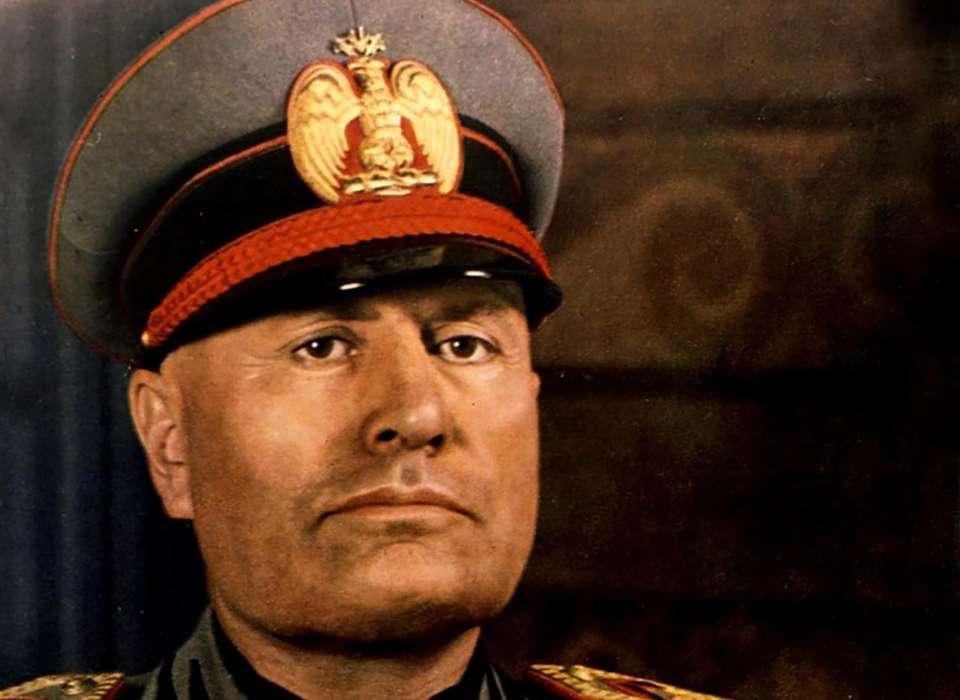
Italy, led by Benito Mussolini, declared war on France and Great Britain, officially entering World War II on the side of Nazi Germany. The move came as France was already collapsing under German assault, and Mussolini hoped for quick territorial gains.