- Basedment
- Posts
- Hundreds of ISIS Prisoners On The Loose And More
Hundreds of ISIS Prisoners On The Loose And More
Today we're digging deeper into the hundreds of ISIS prisoners who are now unaccounted for, and why the reality on the ground may be far worse than previously believed.

Editor-in-Chief
January 25, 2026
In partnership with

THE BRIEFING
Here’s what’s happening in geopolitics today.
From a deadly U.S. strike on a suspected narco-trafficking vessel in the Pacific to rising tensions as Washington and Tehran trade warnings, today’s headlines reflect a world on edge.
We’re also tracking Denmark’s show of support for Greenland, mass protests against immigration enforcement in Minnesota, and a new U.S. diplomatic push in the South Caucasus as JD Vance heads to Azerbaijan and Armenia.
In today’s deep dive, we turn to an even darker undercurrent — hundreds of ISIS prisoners now unaccounted for, and why the reality on the ground may be far worse than previously believed.
A WORD FROM OUR SPONSOR

Join over 4 million Americans who start their day with 1440 – your daily digest for unbiased, fact-centric news. From politics to sports, we cover it all by analyzing over 100 sources. Our concise, 5-minute read lands in your inbox each morning at no cost. Experience news without the noise; let 1440 help you make up your own mind. Sign up now and invite your friends and family to be part of the informed.
THE LAST 24 HOURS IN GEOPOLITICS
1. US Military says it struck vessel in Eastern Pacific, killing two people
The U.S. military has carried out a strike on a vessel in the eastern Pacific Ocean, killing two people and leaving one survivor, after intelligence indicated the boat was involved in narco-trafficking operations along known smuggling routes. The U.S. Southern Command described those killed as “narco-terrorists” and notified the U.S. Coast Guard to begin search and rescue efforts for the survivor. This operation marks the first such boat strike since Venezuelan President Nicolás Maduro was captured earlier this month and reflects a broader U.S. campaign targeting narcotics trafficking networks at sea.
read more
2. Denmark’s Prime Minister visits Greenland in show of support
Danish Prime Minister Mette Frederiksen travelled to Greenland on Friday in a show of support for the autonomous territory after heightened diplomatic tensions with the United States over former President Donald Trump’s remarks about acquiring the island. Frederiksen was greeted in Nuuk by Greenlandic Premier Jens-Frederik Nielsen, and the visit followed meetings with NATO Secretary-General Mark Rutte to discuss strengthening security and cooperation in the Arctic region. Both leaders emphasised that Greenland’s sovereignty is non-negotiable and discussed diplomatic and political pathways for U.S.–Denmark–Greenland engagement, including updating the 1951 agreement governing U.S. military access.
read more
3. Thousands rally against immigration enforcement in Minnesota
Thousands of people marched through downtown Minneapolis Friday despite subzero temperatures to protest against the Trump administration’s expanded Immigration and Customs Enforcement (ICE) operations, part of a wider “ICE Out of Minnesota: Day of Truth and Freedom” action involving labor unions, faith leaders and community organizations. Protesters also rallied at Minneapolis-Saint Paul International Airport where roughly 100 clergy members were arrested for demonstrating against deportation flights. Hundreds of businesses across the state also closed in solidarity.
read more
4. Iran warns any attack will mean ‘all-out-war’ after Trump says ‘armada’ on its way
Iran warned that it would treat any U.S. attack as “an all-out war against us,” saying its military is on high alert and prepared to respond forcefully to any form of strike, even if described as limited or “surgical,” amid rising tensions over a U.S. naval buildup. Trump announced that a large military “armada,” including an aircraft carrier strike group, is heading toward Iran and renewed warnings over Tehran’s nuclear activities and its crackdown on protesters, while saying he hoped force would not be necessary.
read more
5. JD Vance set to travel to Azerbaijan and Armenia next month
JD Vance is set to travel to Azerbaijan and Armenia next month, President Donald Trump announced, marking a major diplomatic mission to the South Caucasus following a U.S.-brokered peace agreement between the two countries in August 2025. The trip is intended to help “advance the Trump Route for International Peace and Prosperity,” a framework aimed at reinforcing the Armenia-Azerbaijan peace deal and strengthening U.S. strategic partnerships in the region. Trump said Vance’s visit will involve efforts to deepen cooperation, including expanded strategic ties with Azerbaijan and agreements on peaceful nuclear cooperation and defence equipment with Armenia, as both nations work to uphold their commitments under the peace agreement that ended decades of conflict over Nagorno-Karabakh.
read more
DAILY DEEP DIVE
Hundreds of ISIS Prisoners Unaccounted For, But Things May Be Worse Than Believed
Context
The ISIS detention system in northeast Syria is the legacy of an unresolved post-caliphate problem rather than a single policy failure. Since the territorial defeat of Islamic State in 2019, roughly 9,000 male ISIS fighters have been held in more than a dozen prisons, while tens of thousands of women and children linked to ISIS have been confined in sprawling displacement camps.
These facilities were primarily guarded and administered by the Syrian Democratic Forces, with financial and security backing from the United States–led coalition. The largest and most notorious site, al-Hol camp, has housed around 24,000 people, including foreign nationals, ISIS families, and ideologically hardened supporters living alongside civilians in poor conditions.
The detention system was always treated as temporary. Few countries repatriated their citizens, deradicalisation programs were minimal, and camp governance focused on containment rather than long-term resolution. Over time, conditions deteriorated, radical networks persisted inside the camps, and children grew up knowing little beyond life inside ISIS-linked enclosures.
The system began to unravel during January 2026 fighting between Syrian government forces and the SDF, when security vacuums enabled prison breaks and escapes, some of which remain unaccounted for. In response, U.S. Central Command began transferring up to 7,000 male ISIS detainees to Iraqi custody as an emergency measure.
Meanwhile, women and children remain inside camps now guarded by Damascus, while the United Nations has re-entered sites like al-Hol to restore aid and water access — without authority over security or repatriation. The result is a fragile system still searching for a political solution that never arrived.
Since the retreat of the SDF, more than 150 known ISIS fighters have escaped. However, analysts admit they do not know the true number of escapees and the number is definitely much, much higher.
Our Analysis
What happens next is the central question for this region. The collapse of the detention system represents an international failure that was ultimately left in the hands of the SDF, with potentially severe consequences. The prisons and camps were always a short-term containment mechanism for a long-term ideological problem. Detaining ISIS members and their families under the guard of forces that ISIS had systematically massacred made abuse, resentment, and radicalisation almost inevitable, even before accounting for the lack of planning, resources, and oversight by the Coalition and international NGOs.
Numerous videos — most unverified — have emerged showing STG-affiliated fighters arriving at ISIS prisons and camps in a celebratory manner, alongside footage of large numbers of people leaving these facilities. While such material should be treated cautiously, the consistency of these videos across locations and sources gives them analytical value, particularly when matched with on-the-ground reporting of weak security procedures. In several cases, detainees appear to have undergone only minimal identity checks before being released, highlighting a breakdown in detention discipline rather than an isolated lapse.
This exposes a deeper structural issue. While President al-Sharaa and his former organisation, Hayat Tahrir al-Sham, are historically fierce enemies of ISIS at the leadership and ideological level, this hostility does not uniformly extend down the chain of command. Among lower-level fighters, ISIS is often viewed less through a political lens and more as fellow Islamist combatants who fought the Western coalition. This raises a critical question for Damascus: whether the central leadership can exert meaningful control over armed elements with varying degrees of radicalisation – an issue we have raised numerous times.
The fact that ISIS cells were able to exploit the chaos during the initial government offensive, with no immediate or visible reprisal, suggests more than temporary disorder. At a minimum, it points to a loss of local control; at worst, it indicates tacit tolerance at the tactical level. Either scenario carries serious implications for regional security.
Sources
News/Journal sources available upon request, not shown to maintain visual integrity of page.
TODAY IN HISTORY
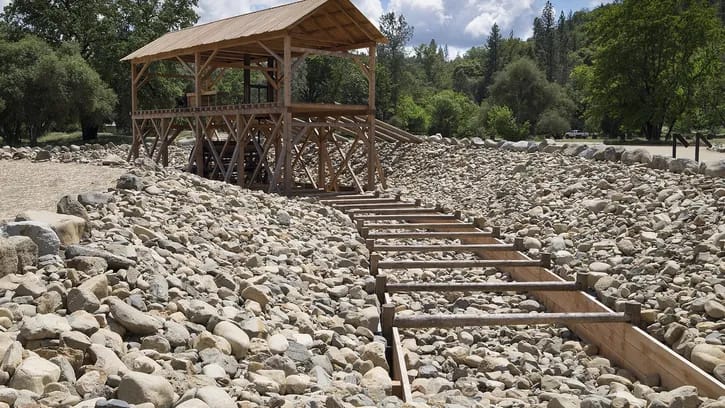
(January 24, 1848): Gold discovered in California
On this day in 1848, James Marshall spotted gold nuggets glistening in a California stream while constructing a sawmill for John Sutter, the Swiss-born founder of what would become the state's capital city. Although the pair initially kept the nuggets a secret, Sutter eventually reported their finding to the government, setting off the California Gold Rush, which enticed hundreds of thousands of settlers west to try their luck.