- Basedment
- Posts
- Iran’s Nuclear Reboot & Israel's Latest Push
Iran’s Nuclear Reboot & Israel's Latest Push
Your daily dose of geopolitical updates and strategic analysis. Unbiased, but not unbased.

Editor-in-Chief
July 21, 2025
THE BRIEFING
Here’s what’s happening in geopolitics today.
From a far-right surge in Japan’s elections to renewed border tensions between Thailand and Cambodia, today’s headlines reflect a world navigating complex power shifts.
Israeli military activity continues to stretch beyond Gaza, this time targeting Houthi positions in Yemen, while tanks roll deeper into central Gaza amid hostage recovery efforts. Meanwhile, Philippine President Marcos Jr. heads to Washington to negotiate trade terms as tensions simmer in the South China Sea.
In today’s deep dive we explain the geopolitical situation regarding Iran’s new nuclear talks and the possible outcomes.
THE LAST 24 HOURS IN GEOPOLITICS
1. Israeli military attacks Houthi targets in Yemen’s Hodeidah
Israeli forces launched airstrikes on Houthi-controlled sites in Yemen’s Hodeidah port on Monday, targeting what Israel called military infrastructure facilitating missile and ship attacks on vessels bound for Israel. Israeli Defense Minister Israel Katz warned the operation aimed to “forcefully counter any attempt to restore terror infrastructure” and drew a parallel between Yemen’s fate and that of Iran . The strikes mark Israel’s latest escalation amid ongoing Houthi-led missile launches and attacks on Red Sea shipping in solidarity with Gaza, underscoring the widening regional fault lines.
read more
2. Landmine dispute escalates tensions between Thailand and Cambodia
A fresh landmine scandal has sprouted tensions between Thailand and Cambodia after three Thai soldiers were injured near the Chong Bok border zone - Thailand claims recent Russian-made PMN‑2 mines were planted by Cambodian forces, while Cambodia denies involvement and has countered with videos accusing Thai troops of planting mines themselves. The Thai military has dispatched demining teams, closed key crossings, lodged diplomatic protests, and even suggested recalling its ambassador if the allegations are confirmed.
read more
3. Philippines’ Marcos to meet Trump hoping to secure trade deal
Philippine President Ferdinand Marcos Jr. is in Washington this week for what will be his first bilateral meeting with U.S. President Donald Trump, aiming to secure a more favourable trade deal before a 20% tariff on Philippine exports kicks in on August 1. Alongside trade, the visit will double as a reinforcing moment for economic cooperation and defense ties, as the Philippines seeks to solidify its role as a key U.S. ally amid rising tensions with China in the Indo‑Pacific.
read more
4. Israel sends tanks into central Gaza’s Deir Al-Balah for the first time
Israeli tanks advanced into southern and eastern parts of Deir al-Balah on Monday, marking the first time troops have entered that section of central Gaza since the war began. According to Israeli sources, intelligence suggests that some of the remaining hostages taken by Hamas on October 7 may be located in the area. The incursion comes amid continued bombardment and intensified operations across the Strip, as pressure mounts on the Israeli government to secure hostage returns.
read more
5. Japan’s PM refuses to step down despite hard-right surge
The fringe far‑right Sanseito party was one of the standout winners in Japan’s July upper‑house election, skyrocketing from a single seat to 14 with its “Japanese First” campaign, warning of a “silent invasion” of immigrants while promising tax cuts and expanded welfare. Led by Sohei Kamiya, a YouTube‑savvy influencer-turned-politician, the party’s blend of economic populism, nationalist messaging, and anti-foreign rhetoric resonated with voters frustrated by inflation and demographic decline. Its surge has rattled the ruling LDP–Komeito coalition, contributing to their loss of a majority and signalling a broader rightward shift in public sentiment on immigration and economic policy.
read more
DAILY DEEP DIVE
IRAN AND E3 NATIONS: NUCLEAR TALKS ON FRIDAY
Iran is set to hold nuclear talks with France, Germany, and the United Kingdom (collectively known as the E3) in Istanbul on Friday, as pressure mounts over the fate of the 2015 nuclear deal and the threat of renewed international sanctions.
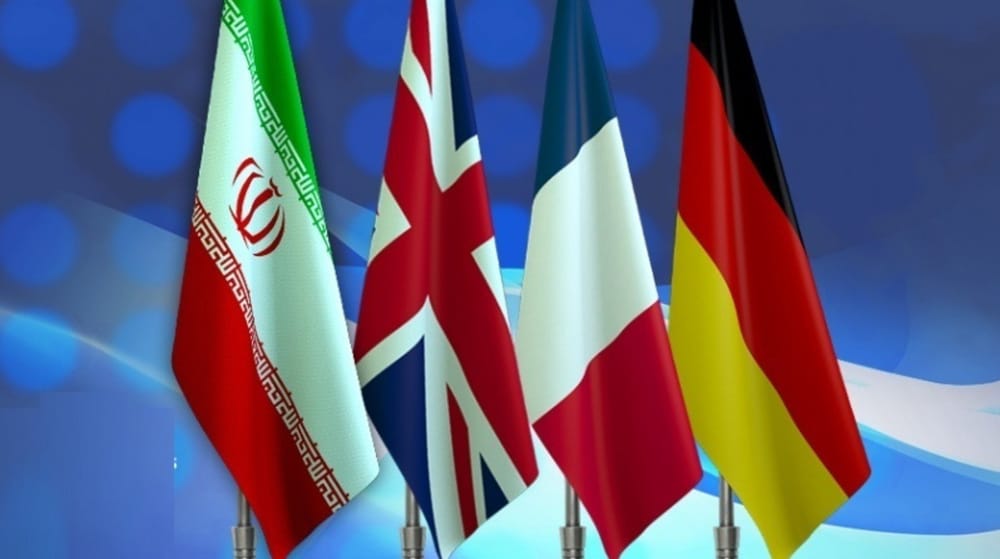
The talks follow the first direct communication between Iranian Foreign Minister Abbas Araghchi and his E3 counterparts, along with the EU’s foreign policy chief, since last month’s joint Israeli-U.S. strikes on Iranian nuclear facilities in the overall 12-day war. The E3 states, all signatories to the original Joint Comprehensive Plan of Action (JCPOA), have warned that if Iran does not return to serious nuclear negotiations, they will move to reimpose United Nations sanctions by the end of August through the “snapback” mechanism. Iran, in turn, accuses the E3 of failing to meet their JCPOA obligations and denounces the threat of snapback sanctions as legally and morally baseless.
Iran Wire: At its core, the snapback mechanism is an emergency brake built into the 2015 Joint Comprehensive Plan of Action (JCPOA) - a unique provision that allows for the swift reimposition of United Nations sanctions against Iran if it violates its nuclear commitments.
Prior to the escalation, Iran and the U.S. had conducted five rounds of indirect talks mediated by Oman, but key issues such as uranium enrichment remained unresolved. Western powers continue to push Iran to lower enrichment levels to reduce the risk of potential weaponisation, while Tehran insists its nuclear programme remains strictly civilian.
CHINA AND RUSSIA
In parallel, Iran will meet with Russia and China on Tuesday in a separate trilateral forum to coordinate responses to the UN sanctions threat. Iranian officials have characterised the E3 as negligent in upholding the nuclear agreement, shifting blame to the European parties for the breakdown in negotiations. Interestingly, Russia hosted a surprise meeting between President Vladimir Putin and Ali Larijani (a top adviser to Iran’s Supreme Leader) yesterday. This lined up with the announcement to have talks with the E3. Regarding China, top officials of Iran recently flew to China as well, with many rumoured talks of military purchases.
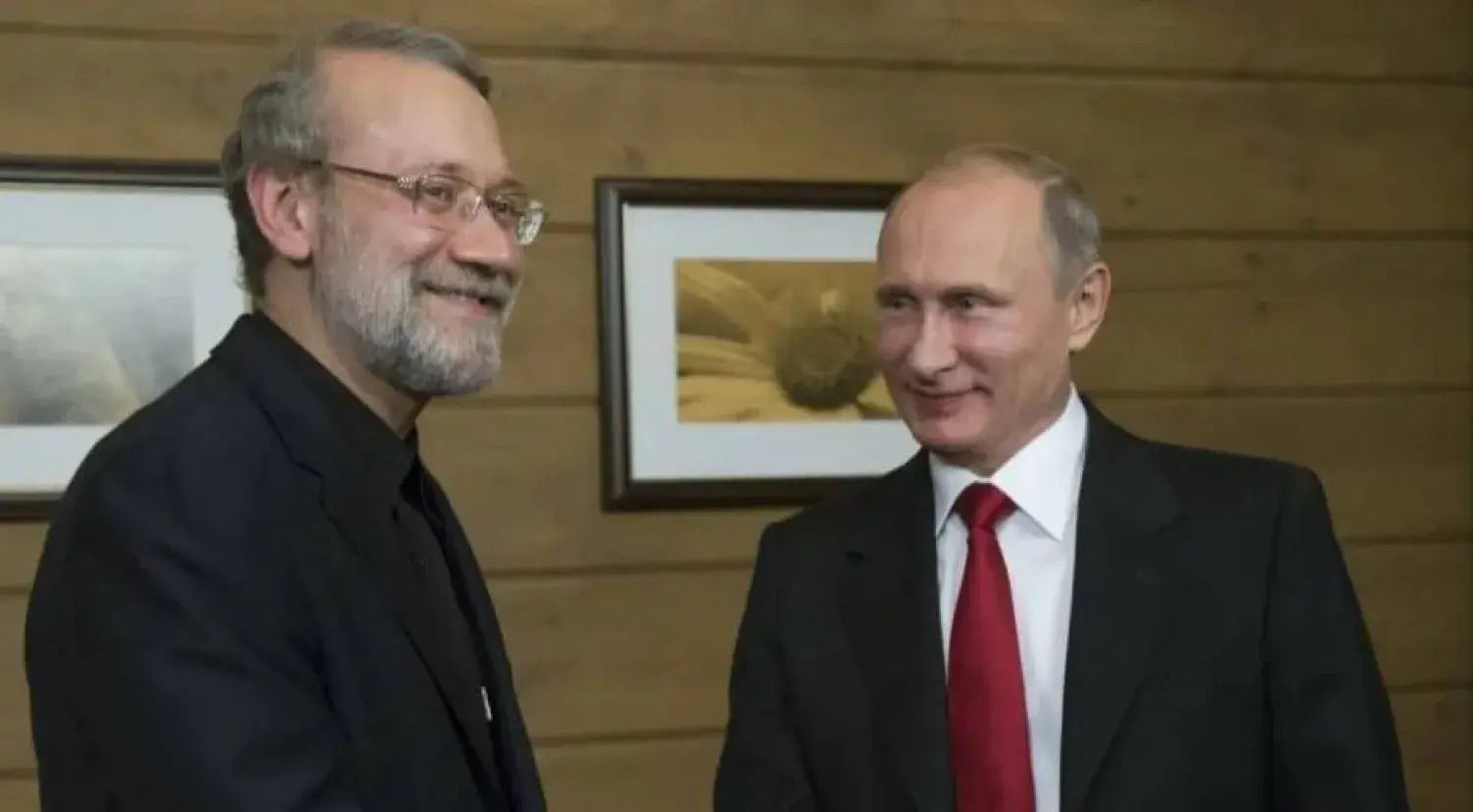
President Vladimir Putin and Ali Larijani
So that’s the quick summary with a bit of background for these upcoming meetings.
But what can we garner from these meetings? Regarding the E3 nations, there seems to be a general consensus in Western Europe to appease U.S. foreign policy. We saw this at the recent NATO summit, which appeared aimed at pleasing President Trump. This was done through agreeing to an adjusted 5% defence spending bill (contested in some countries), and even limiting Ukraine’s presence and airtime around the president as much as possible.
So what may be happening here is an attempt to both appease American foreign policy makers, whilst at the same time trying to bring Iran back into the fold to reduce global tensions.
As a counterpoint, the E3 could also argue that sanction threats are a last-resort effort to rescue the JCPOA, not appeasement. From this perspective, the pressure is intended to compel Iran back to compliance, not to serve American interests per se.
What will come of the meeting with China and Russia?
It’s tough to say. The difference between this “alliance” and the West’s is that authoritarian regimes tend to be less trustworthy and more focused on their own strategic interests. Clear proof of this lies in the recent agreement signed by Russia and Iran, which stopped short of a defence pact due to a shaky history of bilateral relations.
Publicly, at least, the meeting signals a strengthening of ties between the three. Economically, Iran will likely use the opportunity to prepare a fallback plan in case sanctions are reimposed. For instance, China is already the majority buyer of Iranian oil and would likely remain a critical partner if Tehran becomes further isolated from Western markets.
Sources:
Al Jazeera. (2025, July 20). Iran to hold nuclear talks with 3 European powers on Friday. Al Jazeera. https://www.aljazeera.com/news/2025/7/20/iran-to-hold-nuclear-talks-with-3-european-powers-on-friday
IranWire. (n.d.). How the snapback mechanism brings back sanctions on Iran. IranWire. https://iranwire.com/en/politics/136431-how-the-snapback-mechanism-brings-back-sanctions-on-iran/
Reuters. (2025, July 21). Iranian lawmaker points to regional insecurity if UN sanctions are reimposed. Reuters. https://www.reuters.com/world/middle-east/iranian-lawmaker-points-regional-insecurity-if-un-sanctions-are-reimposed-2025-07-21/
Times of Israel. (2025, July 21). Iran, China, Russia to discuss UN threat to reimpose sanctions on Tehran on Tuesday. Times of Israel. https://www.timesofisrael.com/liveblog_entry/iran-china-russia-to-discuss-un-threat-to-reimpose-sanctions-on-tehran-on-tuesday/
Council on Foreign Relations. (n.d.). What is the Iran nuclear deal? Council on Foreign Relations. https://www.cfr.org/backgrounder/what-iran-nuclear-deal
TWEET OF THE DAY
Go woke, go broke?
Nike ads, 2021 vs 2025:
— End Wokeness (@EndWokeness)
3:34 AM • Jul 21, 2025
TODAY IN HISTORY
(July 21, 1798): Napoleon’s Army of Egypt defeated the forces of Murād Bey at the Battle of the Pyramids, employing the innovative divisional square formation. The victory marked a decisive moment in Napoleon’s Egyptian campaign, one which would end in failure and his retreat back to France.