- Basedment
- Posts
- Is Netanyahu's Grip On Power Collapsing? Part 2
Is Netanyahu's Grip On Power Collapsing? Part 2
Your daily dose of geopolitical updates and strategic analysis. Unbiased, but not unbased.

Editor-in-Chief
October 04, 2025
THE BRIEFING
Here’s what’s happening in geopolitics today.
From Iran’s execution of alleged Israeli-linked militants to new U.S. military strikes off Venezuela’s coast, tensions remain high across several fronts.
We’re also following Macron’s accusation against Moscow over a journalist’s death, Trump’s ultimatum to Hamas, and Europe’s latest airport drone disruption.
And in part two of our Netanyahu special we focus on the growing international exclusion of Israel, the Trump peace plan and the role of Hamas in Netanyahu’s future.
THE LAST 24 HOURS IN GEOPOLITICS
1. Iran executes six militants accused of ties to Israel
Iran executed six individuals it accused of carrying out deadly attacks in the country’s southwest with support from Israel, the judiciary’s Mizan news agency reported. The men were said to be behind bombings and killings of security personnel, though trial details were scarce and conducted behind closed doors. The move is seen as part of a broader crackdown on alleged espionage and foreign-backed militancy amid rising tensions with Israel.
read more
2. U.S. Military strikes another alleged drug boat off Venezuela
The U.S. military launched another strike on a vessel off Venezuela, claiming the boat was trafficking narcotics and killing four people aboard. Defense Secretary Pete Hegseth said the occupants were identified as “narco-terrorists” and that the strike was authorized under a broader campaign to battle cartels. Although carried out in international waters, the operation has prompted sharp criticism from Venezuela over legality and sovereignty.
read more
3. Macron blames Russia for death of a French journalist in Ukraine
President Emmanuel Macron publicly blamed Russia for the death of French photojournalist Antoni Lallican, who was killed in a drone strike while reporting in Ukraine’s Donbas region. Macron said Lallican was targeted in a “Russian drone attack,” calling it a tragic example of the dangers faced by journalists in conflict zones. The accusation adds to mounting diplomatic pressure on Moscow, reinforcing France’s narrative that Russia is aggressively trying to suppress independent reporting.
read more
4. Trump sets Sunday night deadline for Hamas to back Gaza plan
Trump has set a Sunday 6 p.m. deadline for Hamas to accept his 20-point Gaza peace plan, warning that “all hell” will break loose if they reject it. His ultimatum frames the offer as a “last chance,” pressing Hamas to disarm, release hostages, and cede governance to an interim authority. With Israel and Arab states on board, the pressure now rests squarely on Hamas, and the consequences of refusal would be severe.
read more
5. Munich Airport begins slow reopening after late-night drone sightings
Munich Airport has begun a gradual reopening after a late-night shutdown triggered by suspected drone sightings, bringing relief to thousands of stranded travelers. The airport initially resumed operations at around 7 a.m. local time, although some services remain limited as authorities investigate and restore full functionality. The disruption marks the second major drone-related closure in less than 24 hours, spotlighting growing concerns over aerial security across European airspace.
read more
DAILY DEEP DIVE
IS NETANYAHU’S GRIP ON POWER COLLAPSING?
The global attitude has begun to significantly shift against Israel due to Netanyahu’s policies. Increasingly, Israel is being viewed as a global pariah, eerily similar to apartheid-era South Africa. More importantly, we are seeing a Western shift on Israel. France, Australia, Portugal, and the UK have all formally stated their support for a two-state solution. Whether this is symbolic or truly substantial is a topic for another day. One could make a pessimistic argument that the writing is on the wall, and that we may be witnessing the early stages of a formal end to this conflict, with current heads of state reluctant to be caught on the wrong side of history as their own electorates demand compassion for Palestinian civilians. The issue, however, is that Netanyahu remains defiant. Has he gone mad with power, and boxed himself into a corner by appeasing his domestic die-hard nationalists? Regardless, his hardline stance on the global stage has significantly damaged Israel’s international image.
Now, you may ask how Netanyahu still commands enough influence to order strikes in Qatar without Mossad’s backing, or to launch a new Gaza offensive without the full support of the IDF high command. The answer may lie in Netanyahu’s personal influence over the United States. He has publicly stated that if he is not in power, Israel risks losing its privileged level of influence in Washington, largely through the lobby group AIPAC. Yet no matter the strength of political ties, public opinion tells a different story. The NYT/Siena poll shows a sharp generational and partisan divide in American views on Israel nearly two years into the Gaza war. Younger voters are the most critical: nearly seven in ten under-30s oppose further military or economic aid, with majorities now sympathising more with Palestinians. Democrats have shifted dramatically, with 54% siding with Palestinians compared to just 13% with Israel, while older white Democrats have joined younger cohorts in reversing their sympathies. Republicans remain largely supportive of Israel, with 64% siding with it, but even there support has slipped from 76% in 2023, and around a third now say Israel is not doing enough to prevent civilian deaths.
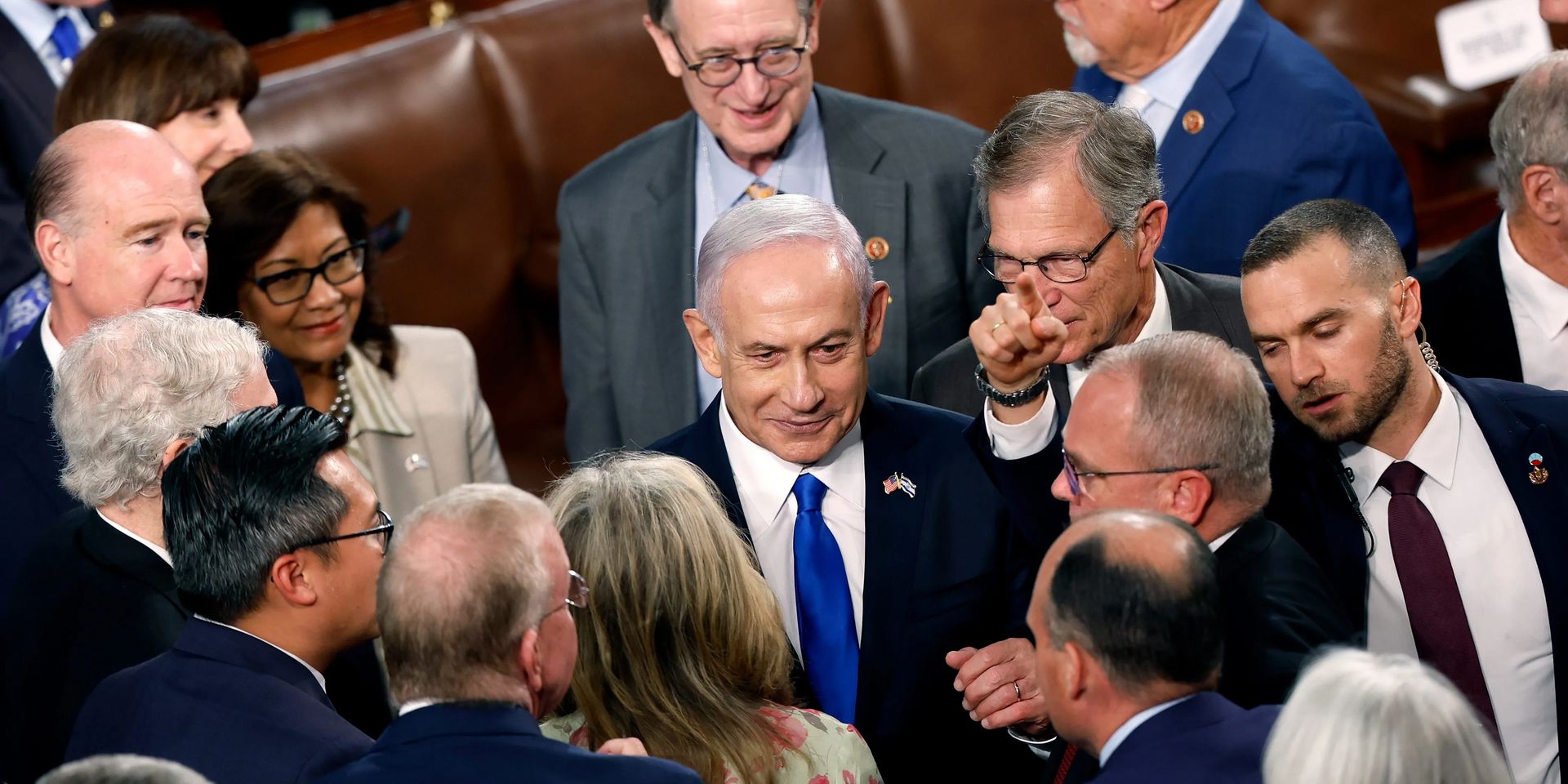
Netanyahu after addressing Congress at the U.S. Capitol in 2024
This is why Netanyahu staged a publicly released meeting with American influencers, backed by pro-Israel donors, to stress the need to regain American public support. In the video, Netanyahu berated both what he labelled the far-right (the “far Reich,” as he mockingly put it) and the far-left. He stressed that the most important platforms for influencers to focus on are X and TikTok. X, he argued, is the first funnel through which news travels in the modern media landscape. TikTok, meanwhile, is crucial because of its ability to set viral narratives, especially among younger voters. Notably, Larry Ellison was a key investor in the recent TikTok deal intended to curb Chinese influence. But Ellison is also a long-standing and major donor to Israel, underscoring his role as a vital private backer of its political and strategic interests. His influence extends into U.S. politics, illustrated by leaked emails showing that he vetted Marco Rubio with the help of former Israeli ambassador Ron Prosor to ensure Rubio’s alignment with Israel. Wealthy Jewish businessmen remain aligned with Netanyahu, and he has decades of rapport with the U.S. Congress. Yet even the Jewish diaspora has begun to call for an end to the war, as it bears the brunt of rising antisemitism. Major diaspora organisations have now joined in calls for a ceasefire.
So yes, Netanyahu clearly continues to command influence, but this has long been the case, and Israel’s support across various demographics is slipping, with every indication that it will continue to do so. One must ask just how much damage Netanyahu’s aggressive Gaza policies, pre-emptive strikes, and proud posturing have inflicted, as anti-Israel sentiment and antisemitism surge to their highest levels in decades. Of course, this cannot be blamed solely on Netanyahu, as many of the tensions surrounding Palestinian statehood date back to 1948. Yet his leadership has undeniably accelerated the global decline of Israel’s image.
The Trump peace plan has been presented as placing the ball firmly in Hamas’s court, forcing the group to decide whether it will engage with the terms of a ceasefire. The language of the plan is deliberately open to interpretation, allowing Netanyahu to frame it differently to different audiences. Central to the proposal is the release of Israeli hostages, which Netanyahu can use to demonstrate to the public that he has a concrete strategy to bring them home. This focus strengthens his case for an early election, giving him a potential boost in voter support. At the same time, the plan notably avoids any explicit mention of Palestinian statehood, which allows Netanyahu to avoid alienating his far-right partners. By endorsing the deal, he appears pragmatic to international allies while still stalling domestically to keep his coalition intact. But as his personal video release following the proposal made clear, this deal is one Hamas is unlikely to accept.

Trump and Netanyahu at a press conference in the White House on Monday
Hamas will inevitably play a defining role in Netanyahu’s legacy, and the irony is difficult to ignore. If, as many expect, Hamas rejects the Trump peace plan, the outcome will almost certainly be more bloodshed, further destruction in Gaza, and additional pressure on Netanyahu to double down on his hardline agenda. Such a rejection would allow him to justify continued military escalation, reinforcing his image among far-right allies who demand nothing short of total victory. Yet the very same scenario threatens to undermine him, as the deaths of more hostages could erode his credibility and weaken his standing ahead of a potential early election. Netanyahu needs hostages alive to claim success, but prolonging the war risks diminishing that chance while deepening international and domestic criticism. In this way, Hamas’s choices could simultaneously give Netanyahu the justification he craves for escalation while also stripping him of the political capital he requires to survive.
Our Assessment
Netanyahu increasingly looks like a leader who has backed himself into a corner, raising the question of whether he has overplayed his cards. With elections looming, he faces the contradictory need to secure the release of hostages while also delivering an end to the war - achievements that appear increasingly difficult to reconcile.
Internationally, doubts are growing over whether other governments will be willing to work with him, given his strained credibility and confrontational style throughout the conflict. Domestically, his far-right allies demand escalation while much of the public demands compromise, leaving him trapped between two irreconcilable camps. Meanwhile, his corruption cases continue to hang over him, ensuring that even a military or diplomatic “victory” cannot fully erase the legal and ethical clouds surrounding his leadership. The result is a political survival strategy that looks increasingly fragile, with his legacy now tied as much to hostages and elections as to the courts and his credibility abroad.
Sources:
Sources available upon request, not shown to maintain visual integrity of page.
TWEET OF THE DAY
"Chat, we're cooked" 😂
Tesla Optimus learning Kung Fu
— Elon Musk (@elonmusk)
5:00 AM • Oct 4, 2025
TODAY IN HISTORY
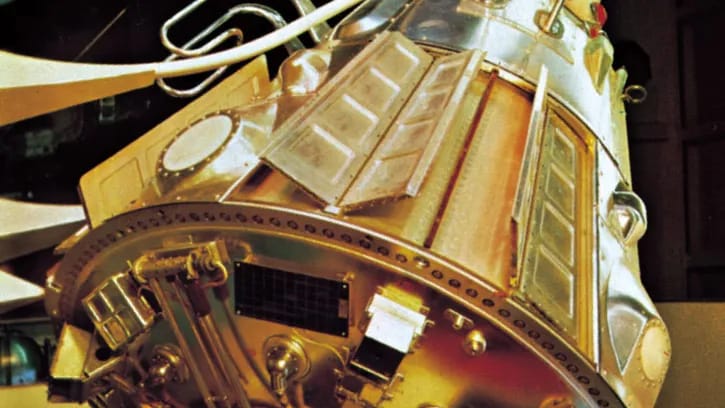
(October 4, 1957): Sputnik 1 launched by U.S.S.R.
On this day in 1957 the Soviet Union launched Sputnik 1, the first artificial satellite, which orbited Earth until 1958, inaugurated the space age, and heightened Cold War competition between the U.S.S.R. and the U.S.