- Basedment
- Posts
- Is Trump's deployment of 5,000 Marines a sign of desperation?
Is Trump's deployment of 5,000 Marines a sign of desperation?
Today we take a deep dive into Trump's decision to deploy 5,000 Marines to the Middle East, and what it signals about the state of the US-Iran war.

Editor-in-Chief
March 15, 2026
THE BRIEFING
Here’s what’s happening in geopolitics today.
The Middle East remains firmly at the centre of global attention today, with the U.S. deploying thousands of Marines to the region, striking military targets on Iran’s key oil hub at Kharg Island, and a major fire erupting at the UAE’s Fujairah port after a suspected Iranian-linked strike.
Beyond the Gulf, tensions are also simmering elsewhere, with an explosion damaging a Jewish school in Amsterdam and Thailand’s new parliament opening under scrutiny over controversial election ballots.
In today’s deep dive, we double click on Trump's decision to deploy 5,000 Marines to the Middle East, and what it signals about the state of the US-Iran war.
THE LAST 24 HOURS IN GEOPOLITICS
1. Circa 5,000 US sailors & marines deploying to the Middle East to support war in Iran
The United States is deploying roughly 5,000 sailors and Marines to the Middle East as part of a new military reinforcement tied to the ongoing war with Iran. The deployment includes an amphibious ready group and Marine expeditionary unit, centered on the assault ship USS Tripoli, providing air, sea, and ground capabilities to support operations and protect regional shipping routes. U.S. officials say the move is intended to strengthen American military options and deter further Iranian attacks as fighting continues across the Persian Gulf region.
read more
2. Trump says US struck military targets on Iran’s Kharg Island oil hub
Trump said American forces carried out strikes on military installations on Kharg Island, Iran’s main oil export hub in the Persian Gulf. Trump said the operation targeted and destroyed military sites on the island while deliberately avoiding damage to the oil export infrastructure, which handles the vast majority of Iran’s crude shipments. He also warned that the United States could target energy facilities if Iran interferes with shipping through the Strait of Hormuz, a critical route for global oil supplies.
read more
3. Iran strike on UAE’s Fujairah port oil terminal triggers huge fire
A strike linked to Iran triggered a large fire at the Port of Fujairah in the United Arab Emirates, one of the world’s key oil storage and bunkering hubs. The blaze followed a drone attack and falling debris during air-defence interceptions, prompting the suspension of some oil-loading operations at the port. Fujairah handles roughly 1 million barrels per day of crude, and the incident highlights the growing risk to Gulf energy infrastructure as the wider Iran conflict intensifies.
read more
4. Explosion damages Jewish school in the Netherlands
An explosion damaged a Jewish school in Amsterdam early on Saturday, causing limited damage to the building but no reported injuries. Authorities said the blast struck the exterior wall of the school, and CCTV footage reportedly shows a suspect placing the explosive device before fleeing. Dutch officials condemned the incident as a targeted attack on the Jewish community and have increased security around Jewish institutions while police investigate.
read more
5. Thai parliament to open amid scrutiny over election ballots
Thailand’s newly elected parliament has formally opened after last month’s general election, with King Maha Vajiralongkorn presiding over the ceremony in Bangkok. The opening comes as the Constitutional Court reviews complaints about barcodes and QR codes printed on ballots, which critics say could potentially compromise the secrecy of the vote. Despite the legal scrutiny, the pro-government Bhumjaithai Party and its allies are moving ahead with forming a coalition government and preparing for upcoming parliamentary votes to finalize leadership positions.
read more
IS TRUMP’S DEPLOYMENT OF 5,000 TROOPS A SIGN OF DESPERATION?
Two weeks into its air campaign against Iran, the Trump administration has taken a significant step by deploying up to 5,000 Marines and several warships to the Middle East. The move, approved by Defence Secretary Pete Hegseth following a request from US Central Command, centres on the USS Tripoli, which was spotted sailing from its Japan base through the Bashi Channel en route to the region. The question now dividing analysts is whether this represents a calculated strategic escalation, or an admission that the war is not going as planned.
The Strait of Hormuz: The real battlefield
At the heart of the crisis lies the Strait of Hormuz, through which roughly one-fifth of the world's oil supply passes. Since the US and Israeli strikes on Iran began, Tehran has effectively turned the waterway into a weapon. According to Lloyd's of London, in the two weeks since hostilities began, just 77 transits have been recorded through the Strait, compared to 1,229 on the same days in 2025. Iran's new Supreme Leader Mojtaba Khamenei has been unambiguous, stating that blocking the Strait must remain a "tool to pressure the enemy." The economic consequences are mounting fast and Treasury Secretary Scott Bessent noted the disruptions have already cost the US $11 billion.
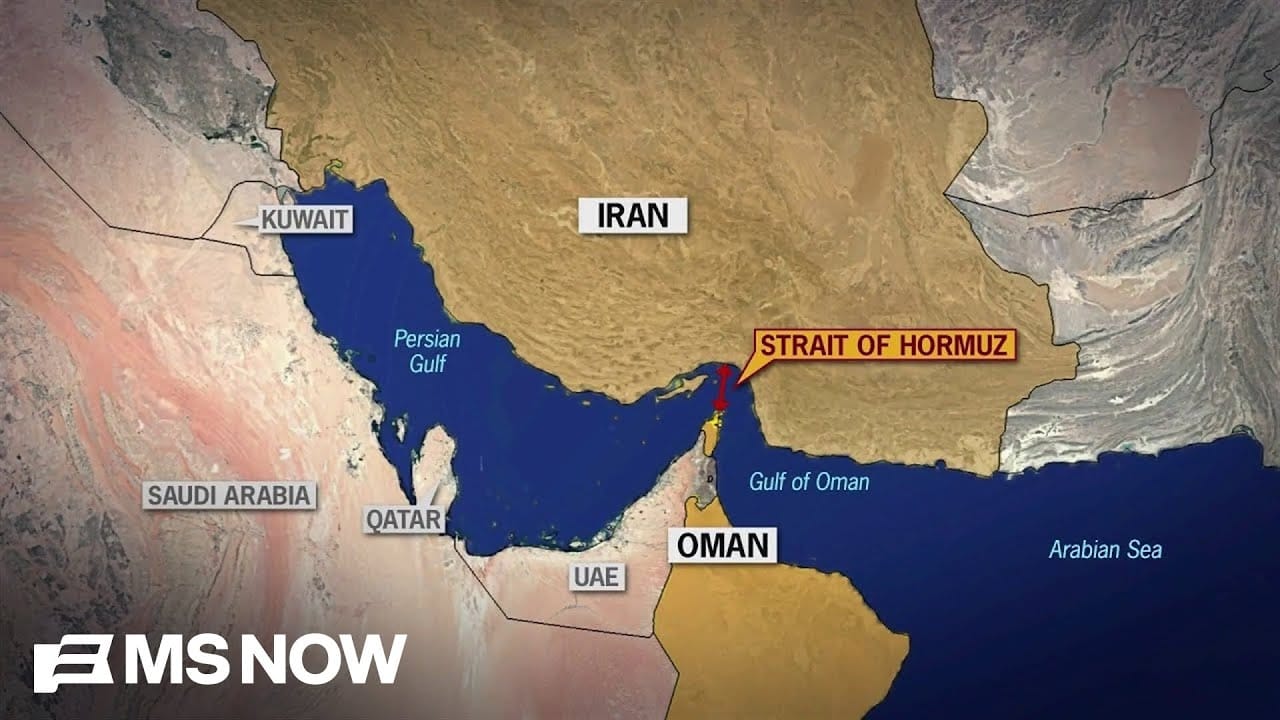
The Strait of Hormuz
What are the Marines actually for?
According to the Wall Street Journal, CENTCOM requested the force specifically "to have more options for military operations against Iran," with the Marine expeditionary unit capable of conducting ground operations if ordered. That last detail is significant. Marines are amphibious specialists who are trained for exactly the kind of beach landing that could, in theory, be used to neutralise Iran's land-based anti-ship missile systems along the Strait's coastline. Speculation has also grown around a potential operation to seize Kharg Island, the terminal through which the vast majority of Iran's oil exports are loaded, though hitting it risks worsening the very oil crunch the US is trying to resolve.
What makes the deployment notable is its timing. Days before the announcement, Trump appeared to suggest the conflict was "done," and the administration has consistently projected confidence. Hegseth, for his part, dismissed reporting about US unpreparedness as "patently ridiculous," while insisting the military is "totally destroying" Iran's capabilities. Yet the troop movement tells a different story, one where air power alone has not been enough to reopen the waterway.
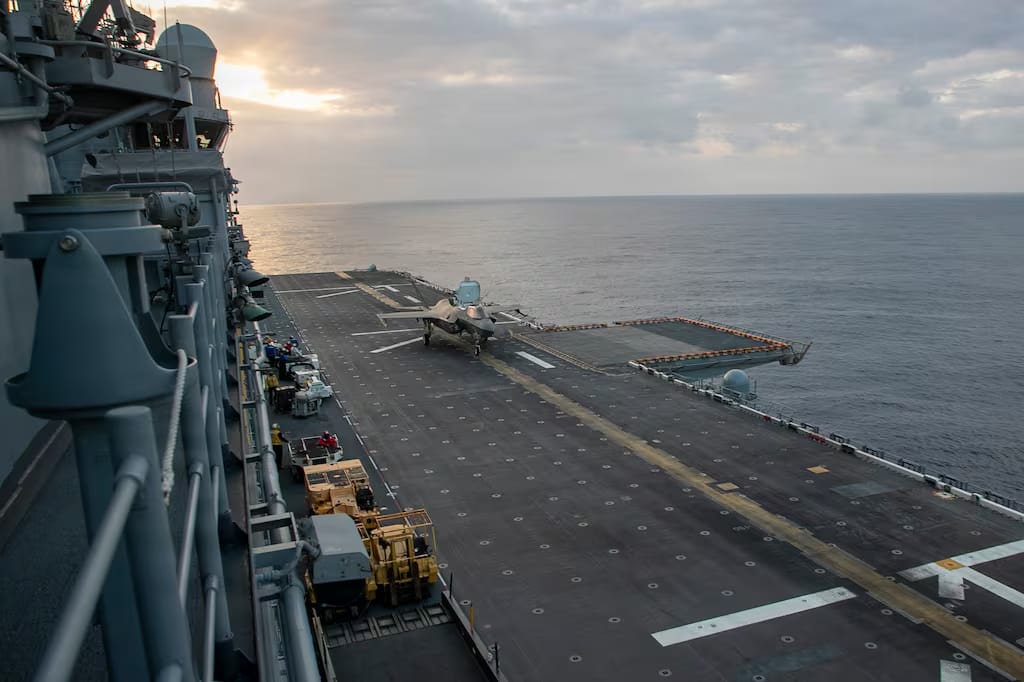
An F-35B Lighting II prepares to take off from the USS Tripoli
A delicate political tightrope
Trump was elected on a promise to keep America out of foreign wars, which makes the spectre of ground troops in Iran politically combustible. White House press secretary Karoline Leavitt told Fox News that Trump was keeping his "options on the table" regarding US troops in Iran, stopping short of ruling anything out. Meanwhile, the US death toll has reached 13, including six service members who died after a KC-135 refuelling aircraft crashed in western Iraq.
On the diplomatic front, the cracks are showing. India secured passage for two of its gas carriers after PM Modi spoke directly with Iranian President Pezeshkian, bypassing Washington entirely. France and Italy are reportedly leading quiet European efforts to negotiate with Tehran to protect non-combatant shipping. The coalition, in other words, is not monolithic.
Whether the Marine deployment is a masterstroke of deterrence or a sign of strategic overreach remains to be seen. What is clear is that the war's centre of gravity has shifted from the skies above Iran to a narrow, 33-kilometre-wide strip of water and whoever controls it will likely determine how this conflict ends.
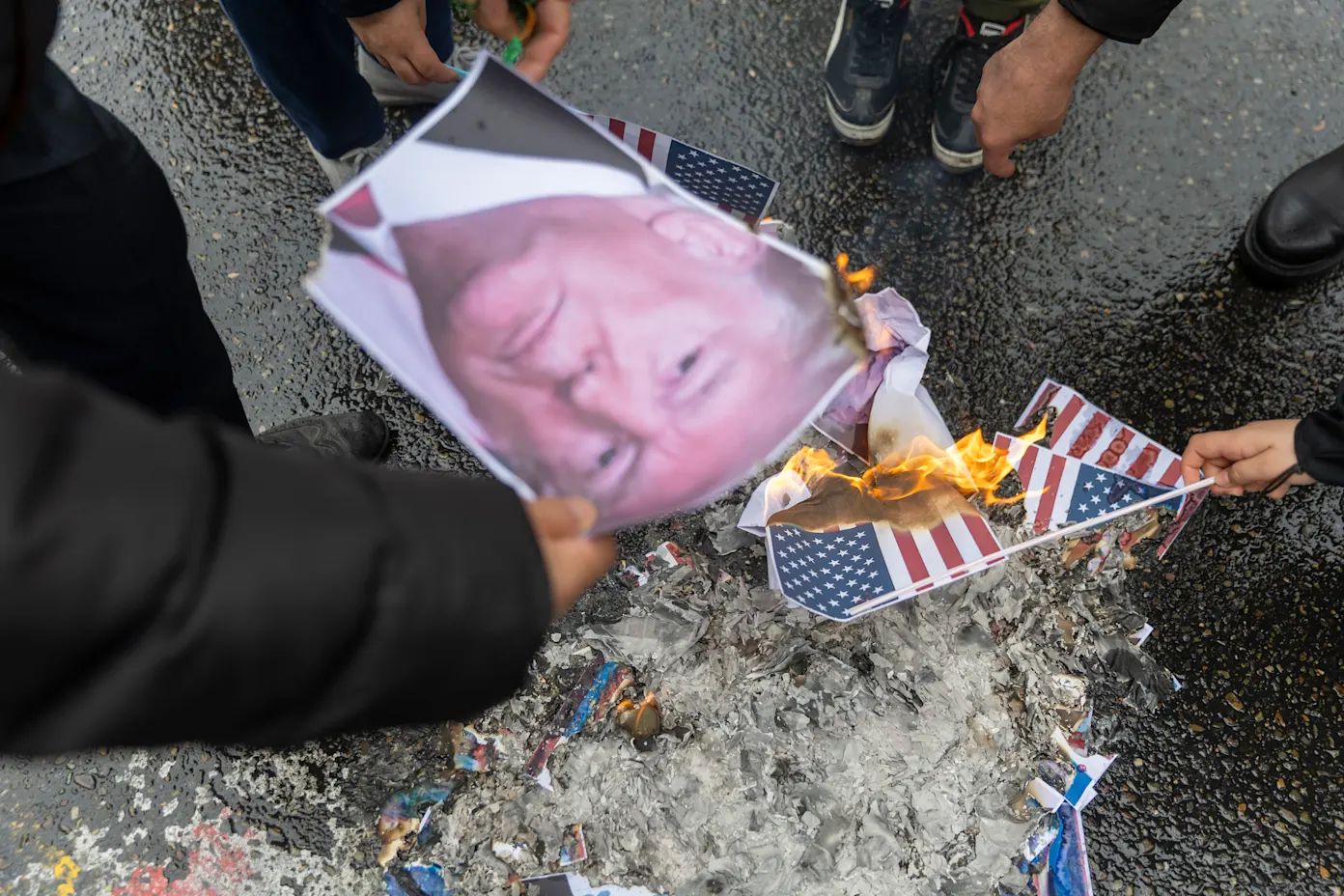
Pictures of American flags and Trump burning at a Quds Day march on Friday in Tehran, Iran.
Sources available upon request
TODAY IN HISTORY
(March 14, 1950): FBI debuts “Ten Most Wanted” list
On this day in 1950, FBI director J. Edgar Hoover introduced the infamous “Ten Most Wanted” list, which provided the names of the “worst of the worst” U.S. fugitives. The list has changed throughout the years based on crime trends in the country: the 1950s saw bank robbers and burglars for the most part, while lists during the civil unrest of the 1960s and early '70s included political activists such as Angela Davis. Some other famous names on the list include Ted Bundy, Osama bin Laden, and James Earl Ray. The list has been described as crowdsourced law enforcement, because of its direct appeal to ordinary citizens.