- Basedment
- Posts
- Is Washington and Caracas Sleepwalking Toward War?
Is Washington and Caracas Sleepwalking Toward War?
Your daily dose of geopolitical updates and strategic analysis. Unbiased, but not unbased.

Editor-in-Chief
October 14, 2025
THE BRIEFING
Here’s what’s happening in geopolitics today.
It’s been a momentous start to the week on the global stage.
In the Middle East, hostages have finally been returned to Israel under a landmark ceasefire, while President Trump’s speech in the Knesset framed the moment as the start of a “new era” for the region. Elsewhere, India and Canada have reset their frosty ties, Pakistan has seen deadly clashes at anti-Israel rallies, and Buckingham Palace is preparing to welcome Germany’s president for a rare state visit.
In today’s deep dive, we take a closer look at how Venezuela prepares for a possible conflict with the U.S as Trump says he isn’t ruling out inland strikes.
THE LAST 24 HOURS IN GEOPOLITICS
1. Hamas frees hostages and Israel releases prisoners
All 20 living Israeli hostages held in Gaza since the October 2023 conflict have now been released and returned to Israel, following the newly ratified ceasefire agreement. The operation also includes the transfer of 28 deceased hostages’ bodies, as part of the broader swap involving over 1,900 Palestinian detainees. The returns were widely celebrated across Israel, with massive crowds gathering to greet hostages and express relief after more than two years of uncertainty.
read more
2. Trump hails ‘dawn of a new Middle East’ in Knesset speech
During his address to Israel’s Knesset, President Trump declared the ceasefire in Gaza marked the “end of an age of terror and death” and heralded the moment as the “historic dawn of a new Middle East.” He praised Israel’s recent military gains, celebrated the return of hostages, and cast the moment as a turning point toward lasting peace. The speech was met with strong applause from lawmakers and was attended by Prime Minister Netanyahu and other Israeli leaders.
read more
3. India, Canada agree on a new roadmap for their relations
India and Canada have agreed on a new roadmap to strengthen their bilateral relations, following talks between their foreign ministers in New Delhi. The joint statement emphasises cooperation across trade, investment, security, and diplomatic engagement, signalling a reset after tensions earlier in the year. Observers see the move as an effort to mend strained ties and build a more stable, mutually beneficial partnership.
read more
4. Clashes in an anti-Israel rally in Pakistan kill five
Clashes broke out between Pakistani police and protesters during an anti-Israel march along the Grand Trunk Road in Muridke, leading to the deaths of at least five people, including a police officer, three protesters and one bystander. According to authorities, the violence erupted after protesters allegedly opened fire and burned more than 40 vehicles during their attempt to march toward Islamabad. The protest was led by hardline group Tehrik-e-Labaik Pakistan (TLP), which claims it was a peaceful show of solidarity with Palestinians; it argues that police used excessive force.
read more
5. King Charles to host German President for state visit in December
King Charles III will host German President Frank-Walter Steinmeier (and his wife) for a state visit from December 3–5 at Windsor Castle, marking the first German presidential state visit to the UK in 27 years. The visit follows state tradition and reciprocates Charles’ 2023 trip to Germany, highlighting efforts to deepen Anglo-German ties after Brexit.
read more
DAILY DEEP DIVE
AS VENEZUELA PREPARES, TRUMP DOES NOT RULE OUT INLAND STRIKES
Overview
Tensions between the United States and Venezuela intensified sharply in early October 2025 after President Trump formally declared a “non-international armed conflict” against drug cartels operating in the Caribbean. A move widely interpreted as an attempt to provide legal justification for U.S. military strikes near Venezuelan waters. The declaration, criticised by several lawmakers and legal experts, effectively classified cartel-linked operations as hostile “non-state armed groups”. Soon afterwards, Venezuela accused U.S. combat aircraft of carrying out provocative flights just beyond its airspace. As diplomatic relations collapsed, Trump ordered all official dialogue with Caracas to cease on 6 October, prompting Qatar to step in as an intermediary through back-channel diplomacy to prevent further escalation.
Venezuela Prepares
Social media imagery suggests widespread mobilisation across civilian, administrative, and military levels. As discussed previously, Maduro is training tens of thousands of civilians into government-backed militias that reinforce an import-reliant military of about 109,000 active personnel, 8,000 reserves, and more than 200,000 auxiliaries in the Bolivarian militia and National Guard. Though mid-ranked globally, it remains regionally weak compared with Brazil or Colombia. Administratively, dragon’s teeth defences are being installed along coastal highways to delay U.S. armour, while the military has showcased its underground network (over 60 bunkers nationwide) in new drills featuring ships, helicopters and Russian jets. Anti-air batteries are being placed across public parks and key urban zones, signalling both preparedness and propaganda.

Still from video shows Venezuelan tank within tunnel network
Internal Combustion?
The awarding of the Nobel Peace Prize to a Venezuelan opposition leader, María Corina Machado, has sent shockwaves through Caracas, deepening political tensions. While the prize is being celebrated abroad as recognition of democratic resistance, within Venezuela it is likely to be seen by President Nicolás Maduro’s government as a provocation. Perhaps even the opening act of a renewed campaign for regime change. Washington could seize on the award as moral justification to rally international pressure or even covertly encourage internal dissent within the Venezuelan armed forces.
The central question now is whether the Venezuelan military remains loyal. Maduro’s hold on power has always depended on the loyalty of the security establishment, particularly the senior officer corps of the National Bolivarian Armed Forces (FANB). Over the years, he has systematically purged officers suspected of disloyalty, most famously during incidents such as the exposure of “three plotting generals” in 2014 and the failed Operation Gideon in 2020, when dissidents and foreign contractors attempted a sea-borne incursion to capture him. These experiences have reinforced Maduro’s paranoia and his reliance on trusted loyalists, intelligence surveillance, and Cuban-trained counterintelligence networks.
Yet, the Nobel announcement introduces new uncertainty. If the opposition leader becomes a global symbol of peaceful resistance, disillusioned elements within the military or bureaucracy might reconsider their allegiance, particularly if the United States and its allies begin offering incentives, recognition, or safe passage to potential defectors. However, such moves risk backfiring. Maduro will aim to turn external pressure into nationalist defiance, portraying Venezuela as a fortress under siege by American imperialism. The narrative of an existential struggle could unify supporters, legitimise crackdowns, and energise civilian militias, who see themselves as defenders of the revolution.

Pictured: María Corina Machado
Trump Won’t Rule Out Strikes Inside Venezuela
Analysts such as Geoff Ramsey of the Atlantic Council warn that any move to strike targets inside Venezuela would require dismantling the country’s air defence systems, risking a direct confrontation with Maduro’s forces, a scenario Washington has so far sought to avoid. Nevertheless, President Trump has signalled possible escalation, telling senior military commanders he would “look very seriously” at cartels operating by land. Drug policy expert Nathan Jones has questioned the effectiveness of these strikes, noting that Caribbean interdictions are unlikely to affect the fentanyl flow, which largely originates from China and moves through Mexico. In Washington, efforts by Senators Adam Schiff and Tim Kaine to curb Trump’s authority through a war powers resolution narrowly failed, while Republican leaders such as Jim Risch defended the strikes as a legitimate act of self-defence against narcoterrorism.
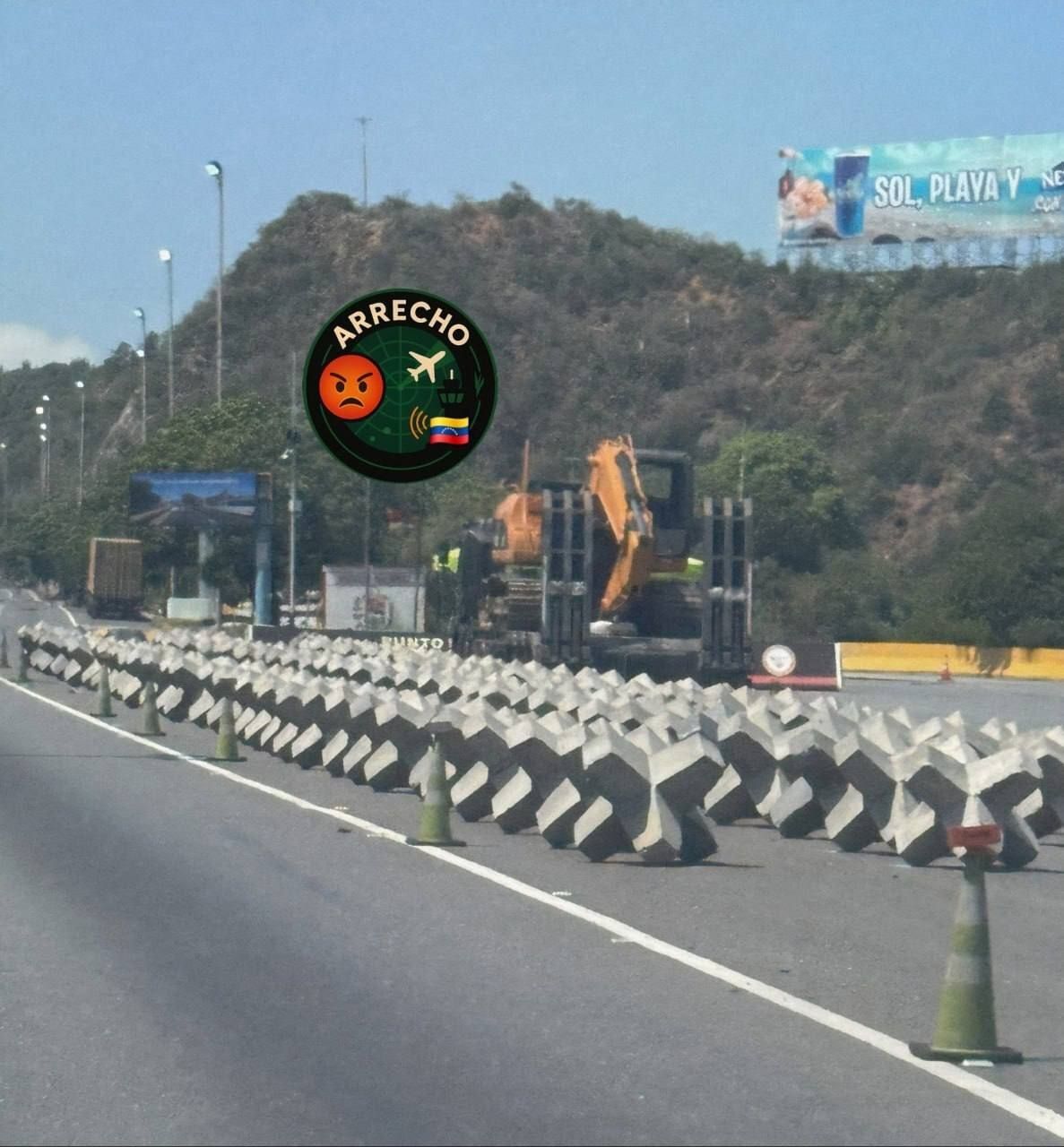
Variation of concrete Dragons Teeth being lined up
Bonus Take
Both sides face heavy risks in any offensive move. For Washington, striking Venezuelan territory could trigger a wider regional war, while for Caracas, retaliation would expose its military to overwhelming U.S. air and naval power. Venezuela’s air defence network (a mix of S-300VMs, Buk-M2s, and older systems) remains functional but uneven, offering some deterrence inland and almost none over the Caribbean. This leaves Iranian-supplied Zolfaghar-class boats highly vulnerable, as they would likely be destroyed by U.S. drones or missiles within minutes. With both sides aware of these constraints, the standoff has settled into strategic posturing (surveillance flights, naval drills, and sharp rhetoric) without either daring to make the first move, yet…
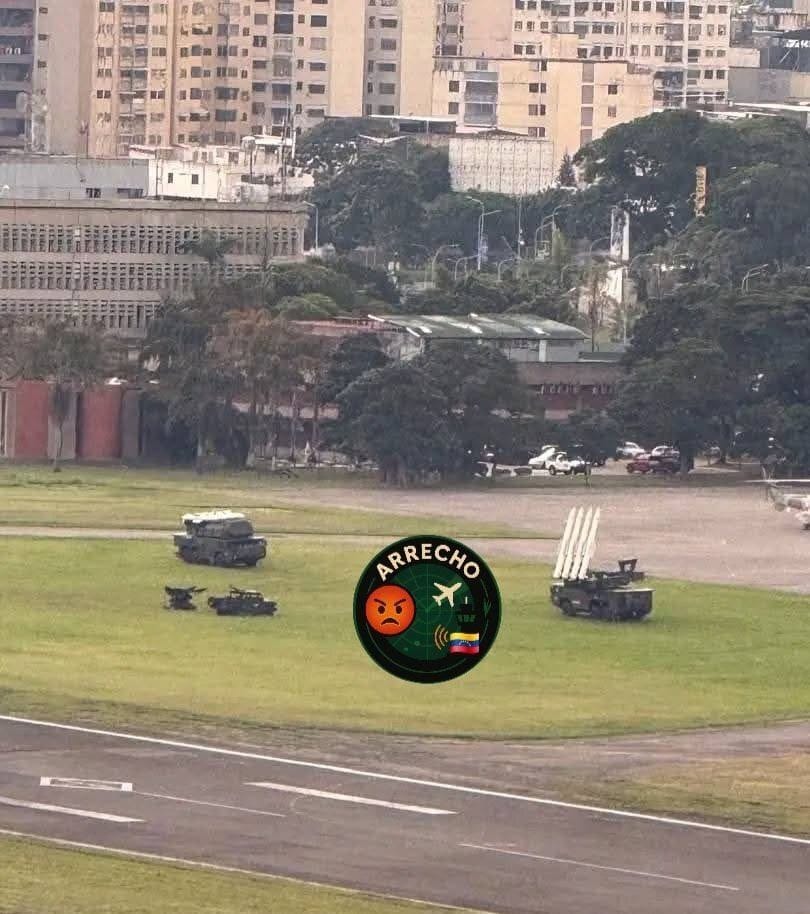
Anti-Air battery setup on airfield
Sources:
Sources available upon request, not shown to maintain visual integrity of page.
TWEET OF THE DAY
The result of paper straws… 😂
Thank god California banned plastic straws.
— DogeDesigner (@cb_doge)
7:55 PM • Oct 12, 2025
TODAY IN HISTORY
(October 13, 1792): Cornerstone laid for the White House
The cornerstone for the White House, the official office and home of every U.S. president and first lady since 1800 (when John and Abigail Adams moved in near the end of his term), was laid this day in 1792.
