- Basedment
- Posts
- Large Protests Begin Across Coastal Syria
Large Protests Begin Across Coastal Syria
Your daily dose of geopolitical updates and strategic analysis. Unbiased, but not unbased.

Editor-in-Chief
November 25, 2025
THE BRIEFING
Here’s what’s happening in geopolitics today.
It’s been a busy day on the geopolitical front. India is tightening its defence ties with France, Pakistan and Afghanistan are trading accusations after deadly cross-border strikes, and Pope Leo XIV is gearing up for a peace-focused debut abroad.
Meanwhile, Australia’s Senate had its own moment of political theatre, and Trump is once again talking up “extremely strong” ties with Beijing after a call with Xi.
Today we’re providing further updates on the escalating sectarian violence, as Alawite protests begin across the Syrian coastline.
THE LAST 24 HOURS IN GEOPOLITICS
1. India, France to jointly manufacture HAMMER air-to-ground weapons
India’s Bharat Electronics Limited (BEL) and France’s Safran Electronics & Defence have formed a 50:50 joint venture to produce the HAMMER (Highly Agile Modular Munition Extended Range) precision-guided air-to-ground weapon domestically. The agreement includes a phased transfer of production, with BEL leading final assembly, testing, and quality assurance, and is expected to localise up to 60% of components over time. The HAMMER has a combat-proven design, is compatible with aircraft like Rafale and Tejas, and its production in India aligns with New Delhi’s “Make in India” push to boost self-reliance in defence.
read more
2. Pakistan strikes on Afghanistan after Peshawar attack kill at least 10
Pakistani airstrikes on Afghan territory have killed at least 10 civilians, the Taliban government said, including nine children and one woman, in what it described as a strike on a civilian house in Khost province. Additional bombs in the border regions of Kunar and Paktika reportedly wounded four more people, according to Taliban spokespeople. The strikes followed a suicide attack against a security compound in Peshawar, escalating already-tense cross-border relations.
read more
3. Pope Leo XIV set for first overseas trip to Turkey, Lebanon
Pope Leo XIV will embark on his first overseas trip as pope, visiting Turkey (27–30 November) and Lebanon (30 November–2 December) with a mission to promote peace and Christian unity. In Turkey, he will mark the 1,700th anniversary of the Council of Nicaea with a pilgrimage to İznik and a joint event alongside Orthodox Patriarch Bartholomew I. In Lebanon, Leo plans to visit the 2020 Beirut port-blast site, lead an interfaith event, and deliver a public Mass, symbolising solidarity amid the country’s ongoing political and economic crisis.
read more
4. Australian Senate erupts in anger after far-right lawmaker arrives wearing burqa
Australian Senator Pauline Hanson sparked outrage in the Senate by wearing a burqa during a parliamentary session, as part of her long-standing campaign to ban full-face coverings. The stunt prompted senators to suspend proceedings when she refused to remove the garment, and she was later formally censured and suspended for seven sitting days. Critics condemned the act as “racist” and Islamophobic, while Penny Wong called it “disrespectful” to both the Parliament and people of faith.
read more
5. ‘Extremely strong’: Trump praises China ties after call with Xi
Trump said he had a “very good” phone call with Chinese President Xi Jinping, during which they discussed Ukraine, fentanyl smuggling, and agricultural trade. Following the call, Trump posted on Truth Social that U.S.-China relations are “extremely strong” and announced he had accepted Xi’s invitation to visit Beijing in April. A statement from Trump noted that both leaders agreed to more one-on-one engagement, with Xi planning a state visit to the U.S. in the near future.
read more
DAILY DEEP DIVE
Violence Worsens Across Syria
Updated Context
Two days ago, a Sunni husband and wife were brutally murdered in their home in the dead of night in the city of Homs. Anti-Sunni messages were smeared on their walls using the victims’ own blood. By morning, members of the Bani Khalid tribe — to which the couple belonged — began organising protests that quickly devolved into looting and arson across the Christian and Alawite quarters of Homs. An Alawite couple was murdered in the attacks.
Early footage suggested that soldiers and Interior Ministry police either refused or were unable to stop the attacks. By the end of the day, the army and police had regained control of the situation, and a citywide curfew was imposed on Homs.
You can read the full write-up of this event in yesterday’s newsletter.
Calls For Protests And Federalism
In the aftermath of the Homs violence – and after a series of earlier massacres on the Alawite coastline and routine kidnappings – the Head of the Supreme Alawite Islamic Council, Sheikh Ghazal Ghazal, delivered one of the strongest public rebukes of the new Syrian government to date. In a video now circulating widely, he accuses the state of transforming from a guarantor of security into a force he describes as “terrorist, extremist, and exclusionary”, claiming it has weaponised Sunni communities for political ends. Ghazal calls for federalism and political decentralisation as the only way to protect minority rights and prevent the country sliding back into sectarian conflict.
Later, the Supreme Alawite Council issued a formal statement calling for peaceful sit-ins in response to the Homs events. Stating: “Syria must not become a new quagmire for ISIS, and the only sustainable path forward is a power-sharing arrangement built on federalism and decentralisation.” For the Alawite leadership, this is no longer a theoretical reform, it is now framed as a political priority and an existential demand.
Protests Begin, Trouble Arrives
In the early hours of this morning, protests began across the main squares of the coastal cities, including Jableh, Tartus and Latakia. However, only a few hours in, alleged Sunni counter-protesters arrived on the scene. Gunfire could be heard being fired into the air, and journalists reported assaults on demonstrators using sticks and bare hands. I’d like to mention that the information arriving from these protests is coming from OSINT accounts and journalists who are not supportive of the new government, but in my own estimation I would say these videos and allegations are credible.
See the protests here
The Timing Is Everything
The Alawite religious leadership’s calls for decentralisation and federalism are not accidental, they are timed strategically. Sheikh Ghazal is choosing this moment precisely because the Kurds in the east are struggling with their own integration as they push for autonomy, while the Israeli-backed Druze are simultaneously mounting their own campaign for self-rule.
This morning, Suweida’s streets saw a large car parade, with participants raising Israeli flags alongside photos of Netanyahu, Druze figure Muwaffaq Tarif, and Sheikh Hikmat al-Hijri. In a symbolic escalation, the word “governorate” was removed from the Saraya building in central Suweida today. The message is unambiguous: the Druze are demanding self-determination and a political break from Damascus. For the Kurds, border-clashes near the former ISIS capital of Raqqa have been on going for a few weeks now, as tensions continue to rise.
Furthermore, the SNA (Turkish backed rebels) and Government troops have been in their own skirmishes in the former Kurdish enclave of Afrin, in north-western Syria. Another bout of internal-politics between the army and foreign groups.
The New Syrian Government is attempting in some areas to fix some of these issues but it is ultimately lacklustre. For instance, more than 20,000 families have returned to Afrin since Assad’s fall, with ongoing efforts to restore homes and businesses seized or abandoned during the 2018 Turkish–SNA offensive. Parallel returns are also underway from Eastern Ghouta, where residents displaced by the regime’s 2018 takeover are gradually moving back.
Sources:
News/Journal sources available upon request, not shown to maintain visual integrity of page.
TODAY IN HISTORY
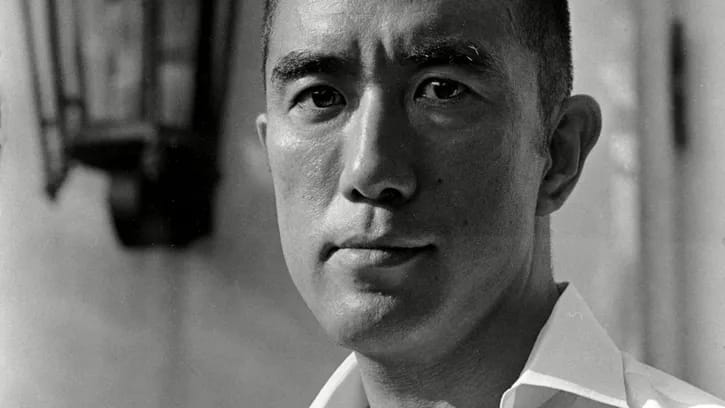
(November 25, 1970): Japanese military base seized by Mishima Yukio
On this day in 1970, Japanese novelist Mishima Yukio and four members of his Shield Society, a private army formed to preserve Japan's martial spirit, seized a military headquarters in Tokyo, and he later committed seppuku.