- Basedment
- Posts
- Maduro Extraction Mission: The What, Why, How
Maduro Extraction Mission: The What, Why, How
With Venezuelan President Maduro captured, you might be thinking what, why and how it all happened? We're going through every detail from Russian and Irainian support to Crude oil and more.

Editor-in-Chief
January 04, 2026
THE BRIEFING
Here’s what’s happening in geopolitics today.
The year has barely begun and geopolitics is already in overdrive. From shockwaves in Caracas after President Maduro’s dramatic capture, to Kyiv reshuffling its inner circle as the war grinds on.
Elsewhere, Yemen’s southern separatists have taken a constitutional leap toward independence, Myanmar’s military is tightening its grip via the ballot box, and Washington is again turning up the heat on Tehran amid growing unrest.
In this Deep Dive, we’re unpacking a big start to the year with the capture and extraction of President Maduro. We’re looking into what happened, why it happened and how it happened.
A WORD FROM OUR SPONSOR
Turn AI Into Your Income Stream

The AI economy is booming, and smart entrepreneurs are already profiting. Subscribe to Mindstream and get instant access to 200+ proven strategies to monetize AI tools like ChatGPT, Midjourney, and more. From content creation to automation services, discover actionable ways to build your AI-powered income. No coding required, just practical strategies that work.
THE LAST 24 HOURS IN GEOPOLITICS
1. Trump says US forces have ‘captured’ Venezuelan President
Trump said on Saturday that American forces had carried out a “large-scale strike” inside Venezuela and captured President Nicolás Maduro and his wife, flying them out of the country, in what Trump described on social media as an operation conducted “in conjunction with U.S. law enforcement.” Caracas experienced multiple explosions during the early-morning strikes targeting military installations around the capital, and the Federal Aviation Administration temporarily banned U.S. commercial flights over Venezuelan airspace amid ongoing military activity.
read more
2. Zelenskyy names spy chief to head Presidential office
Zelenskyy has appointed military intelligence chief Lt. Gen. Kyrylo Budanov as head of the Presidential Office, effectively making him Ukraine’s new chief of staff following the resignation of long-time aide Andriy Yermak amid a corruption probe. Budanov, 39, led Ukraine’s Main Directorate of Intelligence and is widely recognised for directing high-profile operations against Russian forces, and Zelenskyy said the move reflects a need for stronger focus on security, defence development and diplomatic negotiations.
read more
3. Yemen’s separatists announce a constitution for an independent south
Yemen’s UAE-backed Southern Transitional Council (STC) on Friday announced a 30-article constitution for an independent southern state it calls the “State of South Arabia,” covering territory roughly aligned with the former People’s Democratic Republic of Yemen. The STC said the constitution would remain in effect for two years, after which a referendum on self-determination is planned, and it demanded that other Yemeni factions recognise the move amid the country’s ongoing civil war.
read more
4. Military-backed party leads in early election results in Myanmar
Early results from Myanmar’s first general election since the 2021 military coup show the military-backed Union Solidarity and Development Party (USDP) leading after the first phase of voting, with the Union Election Commission reporting the party has won the majority of seats tallied so far, as widely expected. he USDP, closely aligned with Myanmar’s ruling junta, secured 38 of 40 counted lower-house seats and also dominated several regional contests in the initial round held on December 28, though complete results will only be known after the January 11 and January 25 phases.
read more
5. Trump warns Tehran that US is ‘locked and loaded’ to support Iranian protesters
Trump warned on Friday that the United States is “locked and loaded and ready to go” if Iranian authorities violently suppress or kill peaceful protesters, signalling heightened U.S. readiness to intervene in the wake of widespread demonstrations across Iran driven by economic grievances and a collapsing currency. Iranian officials swiftly condemned the remarks as interference in domestic affairs and cautioned that any U.S. action would destabilise the region and threaten American interests, with some suggesting U.S. forces in the Middle East could become targets if Washington follows through on its threat.
read more
DAILY DEEP DIVE
VENEZUELA: THE WHAT, HOW AND WHY
What
At 2 a.m. local time, residents of Caracas were jolted awake by what some initially mistook for distant thunder, only to quickly realise that coordinated explosions were rocking the city. It soon became clear that it wasn’t only civilians who had been asleep, but most—if not all—of the country’s military apparatus. Within the first hour, dozens of videos surfaced showing airstrikes hitting multiple military targets across the city.
What followed was even more striking. Footage emerged of CH-47 Chinooks flying calmly over Caracas, alongside what appeared to be highly secretive, possibly stealth-modified variants of the UH-60 Black Hawk. It was now evident that some form of ground operation was underway, though its scope and objective were still unclear at the time. Soon after, videos began circulating of AH-1Z Vipers firing their rotary cannons, as well as other helicopters launching rockets at close range against Venezuelan military positions. Most shocking of all was the near-total absence of resistance, particularly a lack of any meaningful air-defence response.
Before 5:30 a.m. local time, President Trump announced on Truth Social that U.S. forces had captured Nicolás Maduro and his wife, with both being extradited to the United States.
Republican Senator Mike Lee later said Secretary of State Marco Rubio confirmed that Maduro was arrested by U.S. forces and will face trial in the United States. Rubio reportedly expects no further military action in Venezuela.
READ HERE
While Nicolás Maduro has been captured, what comes next remains uncertain. Both Defence Minister Vladimir Padrino López and Interior Minister Diosdado Cabello survived the operation and have struck a defiant public tone, insisting the country remains calm and signalling resistance to any further U.S. action. So far, there has been no visible collapse or overturning of the existing power structure, suggesting continuity rather than immediate regime change. However, Venezuelan opposition sources told Sky News that Maduro’s capture was part of a negotiated exit with Washington—raising the possibility that behind-the-scenes arrangements, rather than open confrontation, may shape the next phase. It remains far too early to draw firm conclusions.
READ HERE
Pam Bondi said Nicolás Maduro and Cilia Flores have been formally indicted in New York on multiple charges, including narco-terrorism, drug trafficking, and illegal weapons offences, and will be prosecuted in U.S. courts. She praised President Trump’s push for accountability and commended U.S. forces for carrying out what she described as a decisive and highly successful capture operation.
READ HERE
Why
The removal of Nicolás Maduro is fundamentally tied to crude oil—specifically heavy crude—not short-term supply shocks. The United States may be the world’s largest oil producer, but its refinery system, particularly along the Gulf Coast, is structurally dependent on heavy and extra-heavy crude that domestic shale cannot replace. Venezuela holds the world’s largest proven reserves, concentrated in the Orinoco Belt, with crude grades historically optimised for U.S. refining infrastructure.
Sanctions and mismanagement collapsed Venezuelan output, but they also locked away enormous latent capacity. From Washington’s perspective, this represents strategic optionality: hundreds of billions of barrels that could re-enter aligned markets under different political conditions. Capturing Maduro is therefore less about punishment and more about reshaping control over a critical energy asset. It denies adversaries influence over Venezuelan crude, restores long-term leverage over refining inputs, and reinforces U.S. dominance in hemispheric energy flows without requiring immediate regime collapse or open military occupation.
Geopolitically, this move will either deliberately or indirectly pressure China, which remains the primary buyer of Venezuelan crude. Disrupting Venezuelan supply chains complicates Beijing’s access to discounted heavy oil and weakens its leverage over Caracas. It also undermines China’s use of Venezuelan oil as a tool for debt repayment and long-term energy security. By raising the cost and risk of sanctioned oil flows, Washington forces Chinese firms into riskier, less transparent routes. In effect, Venezuela becomes another pressure point in the broader U.S.–China strategic competition.
This fits into what the Trump administration has explicitly framed as a revived and expanded Monroe Doctrine, treating the Western Hemisphere as a core U.S. security and enforcement space. Under Donald Trump, U.S. policy has openly rejected external great-power influence—particularly from China and Iran—in Latin America. Military planners and senior officials have described the region as a zone where sanctions enforcement, interdictions, and coercive pressure are no longer exceptional but routine. The tanker seizure, pressure on Venezuela, and kinetic readiness reflect this shift from passive containment to active hemispheric control. In practice, it signals that Washington is willing to use force, law enforcement, and economic pressure to reassert dominance across the Americas.
I also will not be surprised if certain businessmen tied to the Trump administration gradually make their way into Venezuela. Nor would I be surprised if this is only the first of other strikes on state actors that do not align within the new Monroe Doctrine.
How
On paper, Venezuela possesses a military that should have been capable of contesting, or at least complicating, a strike package of the type reportedly seen over Caracas. Years of investment by Russia, China, and Iran produced a layered force structure: modern Su-30MK2 fighters, S-300VM air-defence systems, dense MANPADS coverage, coastal missile boats, and a large internal-security apparatus designed to protect the regime. Geographically, Venezuela is also defensively advantaged. Urban density, coastal chokepoints, and proximity to key bases should favour air denial and attritional defence rather than rapid collapse.
Yet the operation exposed how much of this strength exists only on paper. The most glaring failure was the apparent absence of an effective air-defence response. Whether due to surprise, paralysis, or deliberate restraint, Venezuelan systems failed to contest low-altitude helicopter operations—an area where MANPADS, radar cueing, and layered alert states should have been decisive. This suggests either that forces were caught off guard, that readiness levels were extremely low, or that command-and-control failed at a critical moment.
Training and discipline are also likely factors. Venezuela’s military is heavily politicised, with loyalty often prioritised over professionalism. Maintenance standards are uneven, crews are rarely exercised under realistic combat conditions, and sanctions have degraded spare parts, radar uptime, and interceptor availability. Integration challenges—Russian SAMs, Chinese radars, Iranian systems, and legacy U.S. platforms—further complicate rapid response, particularly under electronic warfare pressure.
A stand-down order or negotiated restraint cannot be ruled out. Reports of a “negotiated exit” raise the possibility that senior leadership chose not to resist, either to avoid escalation or because the political decision had already been made. If so, the failure was not tactical but political.
In short, Venezuela had the latent capability to make this operation far costlier. What went wrong was not a lack of hardware, but a collapse in readiness, coordination, and possibly will—turning a defensive force into a bystander at a decisive moment.
The operation highlighted the effectiveness of U.S. combined arms and joint special operations planning, executed with precision and speed. Coordination between United States Special Operations Command, Joint Special Operations Command, and the 160th Special Operations Aviation Regiment enabled deep penetration, air dominance at low altitude, and rapid ground action. This integration allowed special operations forces to operate freely in contested urban airspace. While on a macro-scale, intelligence agencies, U.S. Airforce and Navy assets all completed their part to neutralise targets that could hinder the extraction mission. We do have confirmed footage showing Buk launcher systems at La Carlota airbase were destroyed, underscoring that Venezuelan air defences were deliberately degraded early.
Click to See destroyed BUK’s
Sources
News/Journal sources available upon request, not shown to maintain visual integrity of page.
TODAY IN HISTORY
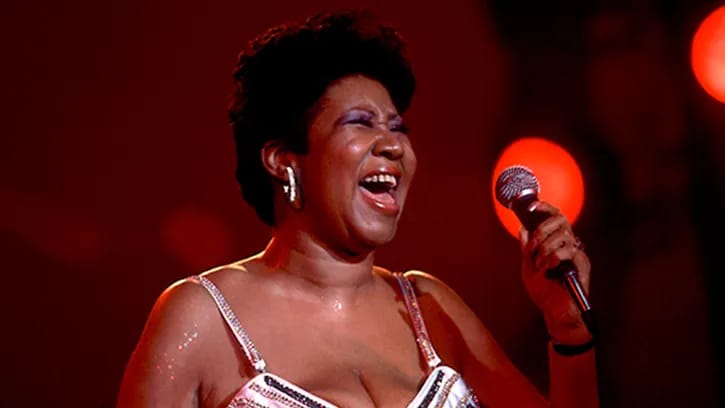
(January 3, 1987): A first for the Queen of Soul
Aretha Franklin became the first woman voted into the Rock and Roll Hall of Fame. More than 80 other women have entered the hall since her induction was announced on this day in 1987.