- Basedment
- Posts
- Maduro Extraction Mission: The What, Why, How (PART 2)
Maduro Extraction Mission: The What, Why, How (PART 2)
Today we look at why there was such a lack of resistance from Air Defence? It could be to do Cyber Warfare. We also unpack more of the details that we did not know yesterday.

Editor-in-Chief
January 04, 2026
THE BRIEFING
Here’s what’s happening in geopolitics today.
It’s a busy start to the year, with airstrikes against ISIS in Syria, a dramatic U.S. intervention in Venezuela, and fresh reminders that the war in Ukraine continues to spill across borders.
Elsewhere, Myanmar signals a limited thaw with a mass prisoner amnesty, while South Korea heads to Beijing to recalibrate ties with China amid regional tension.
In this Deep Dive, we’re unpacking some more information that has been released by a bunch of sources regarding the capture and extraction of Maduro and his wife.
THE LAST 24 HOURS IN GEOPOLITICS
1. UK and France carry out strikes against ISIS target in Syria
British and French air forces carried out a joint strike on Saturday evening targeting an underground facility in central Syria long used by Islamic State fighters to store weapons and explosives, the UK Ministry of Defence said. RAF Typhoon FGR4 jets, supported by a Voyager air-to-air refuelling tanker, dropped precision-guided Paveway IV bombs on multiple access tunnels leading into the complex north of the ancient city of Palmyra, and initial indications suggest the target was successfully engaged with no risk to civilians.
read more
2. Trump says US will ‘run’ Venezuela after Maduro capture
Trump said on Saturday that the United States will “run” Venezuela following a surprise military operation that resulted in the capture of President Nicolás Maduro and his wife, who were flown to New York to face U.S. charges, and that Washington will oversee the country “until such time as we can do a safe, proper and judicious transition”. Trump characterised the mission as a success and signalled potential deeper U.S. involvement though he did not provide detailed plans for governance. The announcement has sparked widespread international criticism and legal questions, with some foreign governments and experts condemning the operation as a violation of Venezuelan sovereignty.
read more
3. Myanmar to free 6,186 prisoners in Independence Day amnesty
Myanmar’s military government announced it will release 6,186 prisoners as part of an Independence Day amnesty, state media reported, in a move described as a humanitarian gesture coinciding with the early stages of the country’s three-phase general election. The amnesty includes 52 foreign nationals who will be deported and also involves reducing sentences by one-sixth for many inmates, though those convicted of serious crimes such as murder, rape, terrorism, corruption and arms or drug offences are excluded. It remains unclear whether political detainees are among those freed.
read more
4. South Korean President Lee Jae Myung begins four-day state visit to China
South Korean President Lee Jae-myung began a four-day state visit to Beijing on Sunday, his first to China since taking office in June 2025, at the invitation of Chinese President Xi Jinping and accompanied by a large delegation of business and political leaders. The visit, set against rising regional tension including recent North Korean missile tests, aims to strengthen diplomatic and economic ties, boost cooperation on supply chains, technology and tourism, and explore China’s potential role in advancing peace on the Korean Peninsula. Lee has emphasised respect for the “One-China” policy and seeks to deepen bilateral engagement.
read more
5. One killed, two injured in Ukraine’s drone attack in Russia’s border region
A Ukrainian drone strike on Sunday in Russia’s western Belgorod region killed one man and wounded a woman and a four-year-old child, regional authorities said, underscoring ongoing cross-border violence linked to the Russia-Ukraine conflict. The incident occurred when the drone hit a vehicle near Russia’s border with Ukraine, according to the governor’s office, though details remain limited and Kyiv has not publicly commented on the specific attack.
read more
DAILY DEEP DIVE
VENEZUELA: THE WHAT, HOW AND WHY
Cyber And Electronic Warfare
One of the least visible—but most consequential—elements of the operation against Venezuela was the cyber domain. U.S. officials confirmed that United States Cyber Command conducted non-kinetic cyber operations in advance of the first kinetic strikes on Caracas. These actions were aimed at suppressing Venezuelan air-defence and command-and-control systems, creating the permissive environment that allowed helicopters to operate deep over the capital with minimal resistance. No technical details were released, but senior officials acknowledged cyber effects were deployed before aircraft crossed into contested airspace.
The blackout that swept parts of Caracas during the operation only deepened speculation. Donald Trump later said the loss of power was due to “a certain experience that we have,” stopping short of explicitly attributing it to cyber operations. From a technical standpoint, such an effect is entirely plausible—either through remote access to grid control systems or via localized intrusion. That said, deliberately burning high-value cyber access or zero-day exploits in a single operation carries long-term costs. Those capabilities, once exposed, are likely to be patched. Even so, using them here would align with what a major power can do when strategic stakes outweigh future cyber concealment.
What distinguishes this operation is how cyber effects were integrated—not as a standalone weapon, but as a force multiplier synchronized with air and special operations. Rather than destroying every radar and launcher kinetically, cyber suppression reduced response times, degraded situational awareness, and likely sowed confusion inside Venezuelan command nodes at the decisive moment.
Comments from General “Raizin” Caine
That picture is reinforced by comments from General “Raizin” Caine. Caine stated the operation involved 150 aircraft and months of preparation, stressing that intelligence teams knew “where Maduro lived, where he traveled, what he ate, what he wore, what were his pets.” This was not rhetorical flourish. It reflects the depth of pattern-of-life intelligence gathered long before the strike window opened. Axios reporting adds critical texture that was not widely understood yesterday. A small CIA team had been operating clandestinely inside Venezuela since August, tracking Nicolás Maduro’s movements in real time. One source described the intelligence as providing “extraordinary insight” that made the capture “seamless.” This was not a last-minute ISR effort—it was months of human intelligence, surveillance, and confirmation, layered atop technical collection.
I mean, we just have to look at numbers to understand how seamless this operation was. U.S. forces arrived at Maduro’s compound at approximately 1:01 a.m. local time. From first contact to complete evacuation from Venezuelan territory, just 88 minutes elapsed. That timeline alone explains why resistance, even if present, never had time to coalesce into an organized response.
Caine confirmed helicopters came under fire during insertion, with at least one aircraft hit but remaining flyable. U.S. forces returned fire in self-defence. It seems that much of the resistance came from the presidential honour guard, which included Cuban personnel—something Maduro increasingly relied upon amid fears of betrayal within his own ranks. Trump’s remark that “many Cubans died” suggests that, at least at the compound, loyalty translated into actual resistance rather than symbolic defence.
What was funny to me was that Trump watched the entire operation from a makeshift command room at Mar-a-lago - and to top it off, the images released show OSINT accounts from X on the main screens. We really do live in interesting times. Trump watched the operation unfold via body-worn camera feeds, alongside senior military and intelligence officials.
Targets
U.S. strikes in Venezuela focused narrowly on military enablers rather than political symbols. Targets included Russian-supplied Buk surface-to-air missile systems at Higuerote airport and La Carlota Air Base, communications facilities on the El Volcán ridgeline, and multiple depot-type buildings linked to logistics and vehicle storage. Along the coast, explosions were recorded at La Guaira port, though the exact target there remains unclear. The heaviest concentration of strikes occurred around the Fuerte Tiuna military complex, where satellite imagery shows at least four buildings destroyed across three locations. Notably, Miraflores Palace was untouched, underscoring a mission focused on air defence suppression, communications disruption, and logistical isolation rather than symbolic regime targets.
Sources
News/Journal sources available upon request, not shown to maintain visual integrity of page.
TODAY IN HISTORY
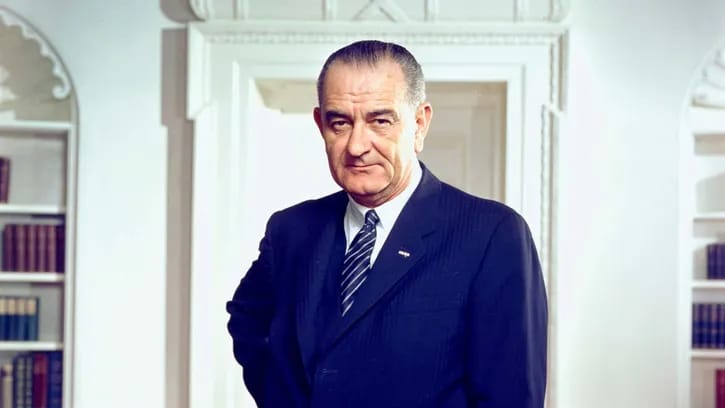
(January 4, 1965): The first prime-time State of the Union
On this day in 1965, U.S. President Lyndon B. Johnson delivered the first prime-time televised State of the Union address, transforming a traditionally somewhat boring afternoon speech to Congress into a media event aimed at the American people.