- Basedment
- Posts
- Myrnohrad, Huliapole And Rodynske Fall
Myrnohrad, Huliapole And Rodynske Fall
In a rare development, three settlements were reportedly captured by Russian forces in a single day. We’re analysing how accurate these claims are—and what could come next.

Editor-in-Chief
December 28, 2025
THE BRIEFING
Here’s what’s happening in geopolitics today.
From fresh cash pledges for Ukraine to a high-stakes Trump–Zelenskyy meeting aimed at locking in a peace plan, today’s lineup is heavy on diplomacy and unfinished business.
Elsewhere, voters are heading to the polls in Myanmar, Kosovo and Guinea, though in each case the ballot box is unfolding under very different political constraints and levels of genuine competition.
In this Deep Dive, we’re analysing the significance and fall of Myrnohrad, Huliapole, and Rodynske
THE LAST 24 HOURS IN GEOPOLITICS
1. Canada to provide $2.5B in economic aid for Ukraine
Canadian Prime Minister Mark Carney announces that Canada will provide an additional CA$2.5 billion in economic assistance to Ukraine, reaffirming Ottawa’s support amid Moscow’s ongoing war and ahead of key peace talks. The funding is intended to help Ukraine unlock further financing from international institutions such as the International Monetary Fund and the World Bank, and support reconstruction, debt relief and energy security measures.
read more
2. Trump and Zelenskyy to meet Sunday, try to close out peace plan
Zelenskyy is scheduled to meet with Trump in Florida on Sunday as part of efforts to finalise a revised 20-point U.S.-led peace plan aimed at ending Russia’s nearly four-year war in Ukraine; Zelenskyy has described the framework as about 90 % complete and said substantial progress has been made. The talks are expected to focus on security guarantees for Ukraine and contentious territorial issues which remain among the most difficult sticking points. Trump has indicated that he will review and approve the proposal, though it is unclear whether any final agreement will be signed during the meeting.
read more
3. Polls open in Myanmar as military holds first election since 2021 coup
Polls opened today in Myanmar for the first phase of the country’s first general election in five years under military rule since the 2021 coup, with voting taking place in areas controlled by the junta while a civil war continues across much of the country. Critics, including the United Nations and Western governments, have condemned the election as neither free nor fair, noting that major opposition parties such as Aung San Suu Kyi’s National League for Democracy have been barred from participating and the process is seen as aimed at legitimising continued military dominance.
read more
4. Kosovo goes to the polls in snap election in bid to end political crisis
Voters in Kosovo went to the polls today in snap parliamentary elections aimed at breaking a prolonged political deadlock after months of failed coalition talks and the dissolution of the previous assembly, marking the second national vote this year. The election comes as Prime Minister Albin Kurti’s Vetëvendosje party seeks a majority to end nearly a year of paralysis that halted key budget approvals and delayed vital international funding from the EU and World Bank.
read more
5. Guinea votes in presidential election expected to cement Doumbouya’s rule
Guinea held a presidential election today that is widely expected to extend junta leader Mamady Doumbouya’s rule, nearly five years after he seized power in a 2021 coup and backed a new constitution allowing him to run with a seven-year term. Facing eight largely fragmented opponents while key rivals remain exiled or sidelined, Doumbouya’s campaign has emphasised economic initiatives like the long-delayed Simandou iron ore project and resource nationalism, boosting his appeal among some voters.
read more
DAILY DEEP DIVE
Three Cities, One Day - Ukraine War Update
Myrnohrd
According to multiple sources, it now appears that Myrnohrad has finally fallen, effectively closing one of the last chapters of the Pokrovsk–Myrnohrad battle. KalibratedMaps had assessed the city as fallen last week, though I considered it premature at the time, as no other major mappers had confirmed the change. As of today, Suriyak and several others have now also marked Myrnohrad as lost. The battle for both cities proved costly in both time and manpower for Russian forces. Analysts had expected Myrnohrad to fall as early as August–September, particularly after the initial Russian breakthrough into the southern districts. However, Ukrainian defences held firm despite relentless Russian infantry assaults and sustained pressure over months.
Zooming out, the wider battle for the Dobropillya salient significantly slowed Russian momentum. Initially, Russia—like Ukraine—committed substantial resources to this axis, believing a major breakthrough could be consolidated. When Ukraine committed reserves and launched counterattacks, Russia reinforced the sector further, doing so at the expense of forces that might otherwise have finished off Myrnohrad and Pokrovsk earlier.
For the Ukrainian soldiers who remained in Myrnohrad, difficult questions will linger for years. Was their sacrifice decisive, or ultimately in vain? Would a withdrawal have changed the outcome regardless? Several hundred troops were reportedly operationally encircled for weeks, gradually forced back into the inner suburbs. Many will argue that experienced soldiers were sacrificed unnecessarily—forces that might have been redeployed elsewhere to fight another day. While Ukraine achieved some tactical success with counterattacks north of Myrnohrad, these failed to produce operational consolidation or a breakthrough, leaving Ukrainian defenders in the city with little outcome beyond surrender or death.
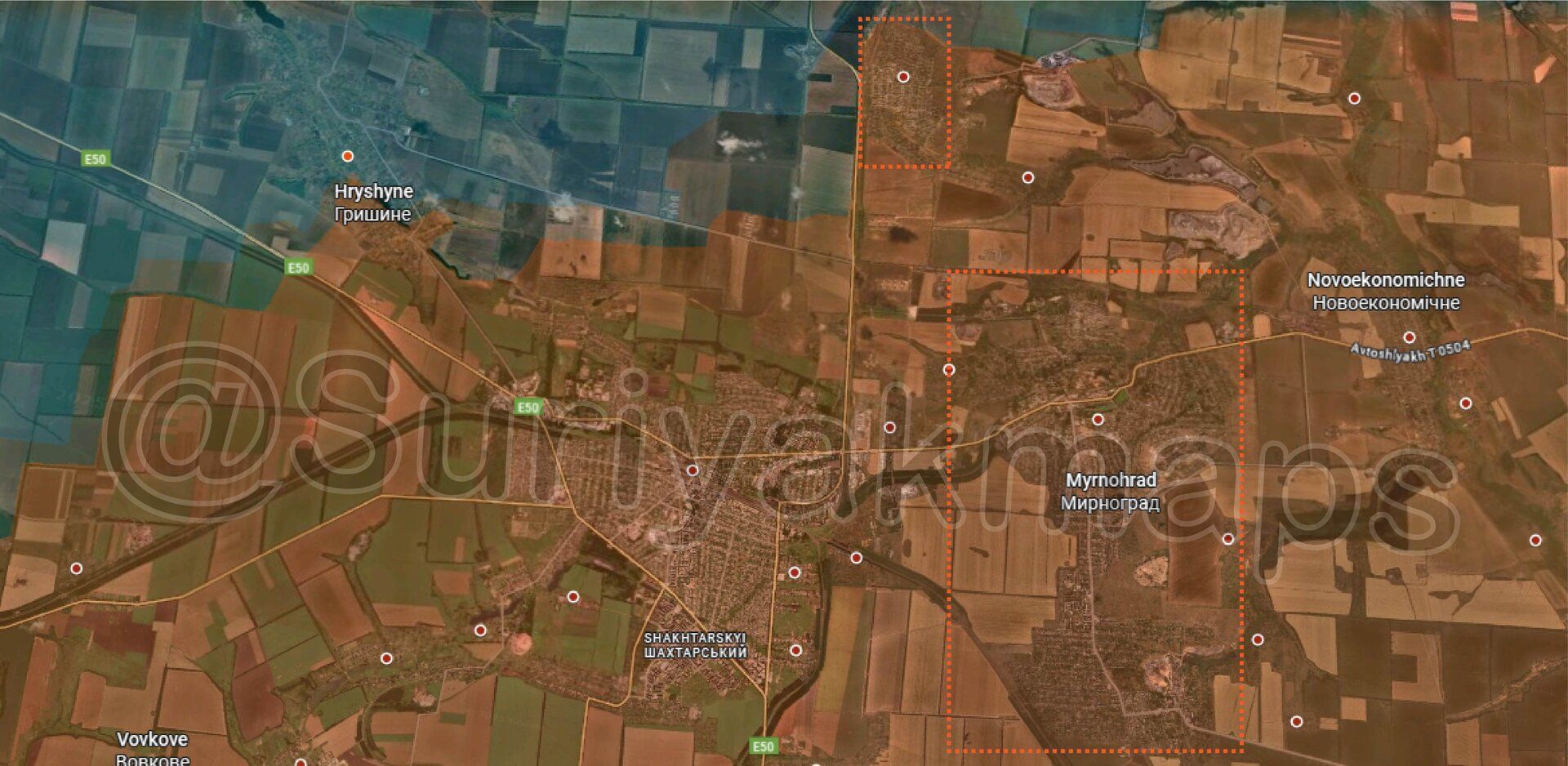
Rodynske can be seen north of Myrnohrad
Rodynske
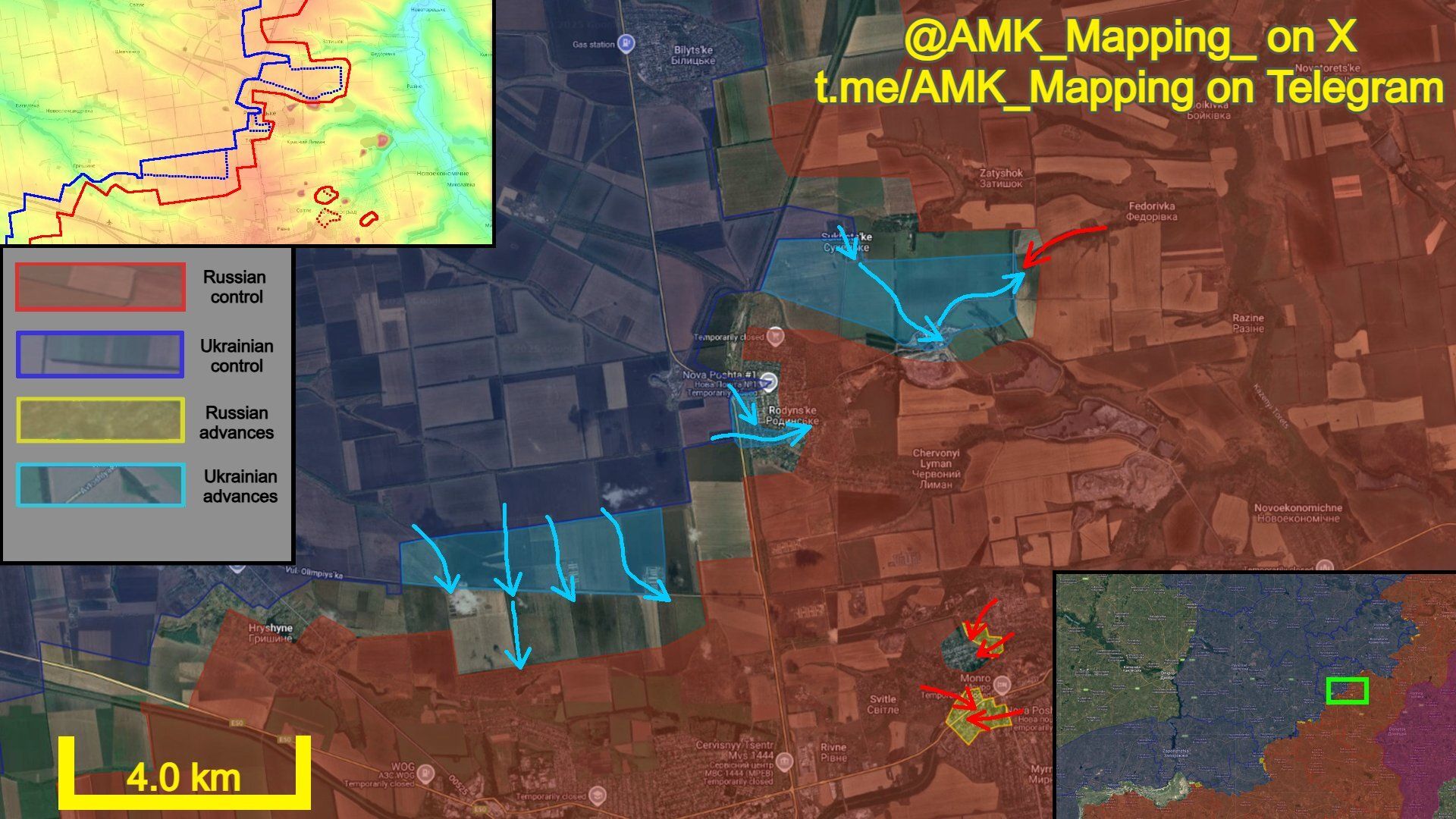
According to Suriyak and AMK Mapping, Rodynske has fallen to Russian forces. This represents a major tactical gain ahead of upcoming operations north of Pokrovsk and Myrnohrad. Rodynske sits astride a key highway running north from Pokrovsk and offers strong defensive potential due to its dense, concrete apartment blocks. Its importance cannot be overstated. Ukrainian and Russian units have been locked in a prolonged, street-by-street struggle for control of the town. While the formal capture is significant, it must be viewed within the wider operational context, rather than as a standalone turning point.
Ukrainian forces have launched localised counterattacks north of Pokrovsk, briefly regaining ground but without a decisive breakthrough. A mechanised assault recaptured pig farm complexes and treelines on the city’s northwestern approaches, though the push toward Pokrovsk itself—supported by Abrams tanks from the 425th Separate Assault Regiment “Skala”—was repelled.
In Rodynske two days ago, Ukrainian units advanced from western strongpoints into southeastern districts, clearing parts of low-rise housing and entrenching in high-rise blocks which were now hit by rigorous Russian FAB glide-bomb strikes. Further northeast, Ukrainian forces achieved their most notable success, retaking southern Sukhketske and securing the Krasnolymanskaya Mine, repelling a large Russian mechanised counterattack with heavy losses. Securing the mine gives Ukraine a tactical height advance if they can secure the mound and will allow them to reapply pressure on Rodynske. It also puts them close to Razine which has acted as a major crossing point for Russian units over the river. I would say this battle is not yet finished.
Huliapole
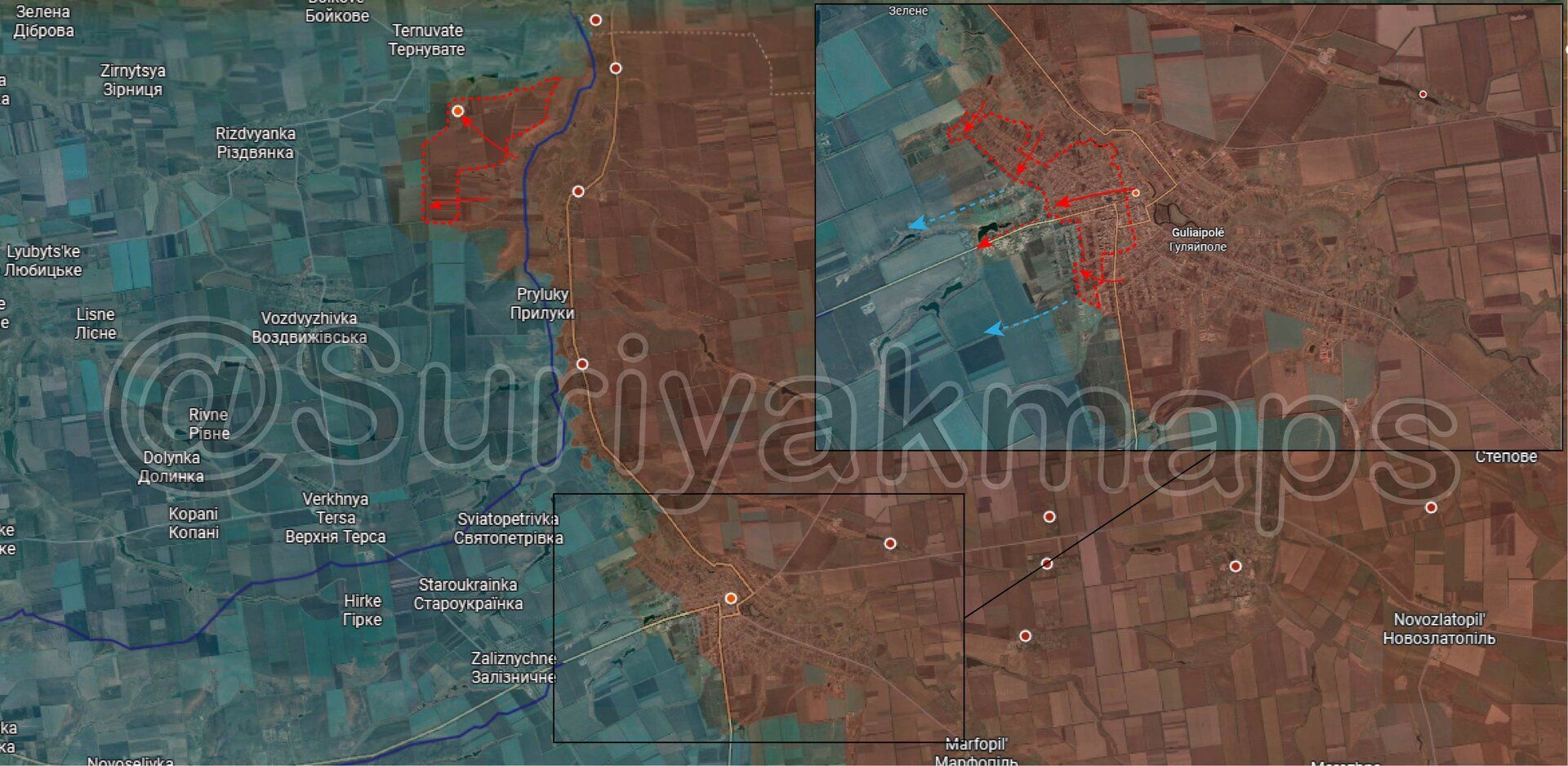
The sudden fall of Huliapole has not come as a surprise. Its loss encapsulates many of the structural problems that continue to plague this sector of the front. The area has long been neglected in both manpower and operational capacity. Critically, fortifications facing east were never properly constructed along the wider Pokrovsk–Huliapole axis, even after months of steady Russian advances. When the situation became untenable, Ukrainian high command deployed a mix of so-called “firefighter” brigade elements to plug gaps along the line. While this temporarily stabilised the front, it resulted in ad-hoc formations composed of units unfamiliar with one another, degrading cohesion, command clarity, and communication. Huliapole’s fall now provides Russian forces with a launchpad around fortifications on the left bank of the Haichur River, while also forcing Ukrainian units to abandon southern defensive lines that had remained largely unchanged since 2023. Separately, Ukraine’s Defence Forces have opened an internal investigation after reports that Russian troops seized a command-and-observation post in the city, a military spokesperson told Suspilne. Journalists report a parallel probe into the alleged abandonment of an observation post by a battalion of the 106th Territorial Defense Brigade, where personal belongings—potentially containing sensitive data—were left behind. Footage circulating online shows Russian forces claiming control of the site. A source speaking to Hromadske confirmed it was the former command post of the 1st Battalion, 106th Brigade, stating that higher command did not authorise a timely withdrawal, leading to contact with advancing Russian units and a rushed retreat.
Sources
News/Journal sources available upon request, not shown to maintain visual integrity of page.
TODAY IN HISTORY
(December 28, 1981): An American IVF milestone
Elizabeth Jordan Carr, the first American born via in vitro fertilization, was born on this day in 1982. Her mother gave birth to her in Virginia because IVF was illegal in her home state of Massachusetts.