- Basedment
- Posts
- NATO Kaliningrad threat & transatlantic pressure
NATO Kaliningrad threat & transatlantic pressure
Your daily dose of geopolitical updates and strategic analysis. Unbiased, but not unbased.

Editor-in-Chief
July 19, 2025
THE BRIEFING
Here’s what’s happening in geopolitics today.
Today’s briefing spans a sharp uptick in transatlantic pressure—from Europe tightening the screws on Russian energy, to the U.S. officially sanctioning a Pakistan-based terror group linked to Kashmir attacks.
Israel faces diplomatic fallout after a Gaza church strike, while European leaders warn Iran that time is running out to re-engage on nuclear talks. Meanwhile, Trump’s leg condition raised questions, though officials maintain his overall health is strong.
Kaliningrad has made the spotlight, with NATO generals stating a plan exists to rapidly neutralise the city if Russia attacks. We explore the strategic overview of this region in our deep dive.
THE LAST 24 HOURS IN GEOPOLITICS
1. US declares group accused of Kashmir attacks a ‘Terror Group’
The United States has officially designated The Resistance Front (TRF), an offshoot of Pakistan-based Lashkar‑e‑Taiba, as a Foreign Terrorist Organization and Specially Designated Global Terrorist, following its claim of responsibility for the April 22 Pahalgam attack. This move brings TRF under U.S. sanctions aimed at freezing its assets and disrupting its financial and logistical networks, reinforcing global pressure on Lashkar-e-Taiba proxies.
read more
2. EU hits Russia with fresh sanctions aimed at banking and energy
Europe has approved its 18th sanctions package against Russia, introducing a dynamic oil price cap set 15% below its average market rate and extending the ban on Nord Stream pipeline transactions. The sanctions also blacklist 105 vessels in Russia’s so‑called “shadow fleet,” along with key Russian banks and Chinese finance institutions aiding sanctions evasion. While the EU calls it its toughest package yet, traders and analysts warn it may offer limited disruption to Russian crude exports due to persistent enforcement challenges.
read more
3. Trump diagnosed with vein condition causing leg swelling
Trump has been diagnosed with chronic venous insufficiency after experiencing leg swelling and slight bruising, confirmed via vascular studies and ultrasound. The White House clarified there are no signs of deep vein thrombosis, heart failure, kidney issues, or arterial disease, and that hand bruising likely stems from frequent handshaking and aspirin use. While this condition may cause discomfort and require lifestyle adjustments like compression stockings and exercise, officials emphasize Trump's overall health remains excellent.
read more
4. Europeans warn Iran of UN sanctions unless concrete progress on nuclear talks
France, the UK, and Germany have issued a stern warning to Iran to resume substantive nuclear diplomacy immediately, following a call with Foreign Minister Abbas Araqchi. They’ve set a clear deadline: without "concrete progress" toward a verifiable agreement by the end of summer, they will activate the UN’s snapback mechanism and reinstate sanctions. With the current Security Council resolution expiring on October 18, a sanctions reinstatement process could be triggered within 30 days of non-compliance.
read more
5. Netanyahu calls Pope following damage to Gaza church
Israeli Prime Minister Benjamin Netanyahu called Pope Leo on Friday following an airstrike that hit Gaza’s only Catholic church, leaving three dead and several injured, including a priest, the Vatican said. During their conversation, Pope Leo renewed his urgent plea for a ceasefire and stressed the need to protect civilians and sacred sites amid the deepening humanitarian crisis.Israel expressed regret over the "stray round" that struck the church and has launched an investigation, while Christian patriarchs visited the damaged site, delivering aid and calling for renewed peace efforts.
read more
DAILY DEEP DIVE
Kaliningrad and NATO: Strategic Overview
General Donahue’s recent comments sparked a wave of media attention, yet his remarks were specifically framed around a hypothetical Russian-initiated attack. This deep dive does not attempt to cover the full operational detail of a Kaliningrad campaign. Instead, we provide a general overview of the strategic situation. A full tactical assessment may follow in a future Part II.
RUSSIA
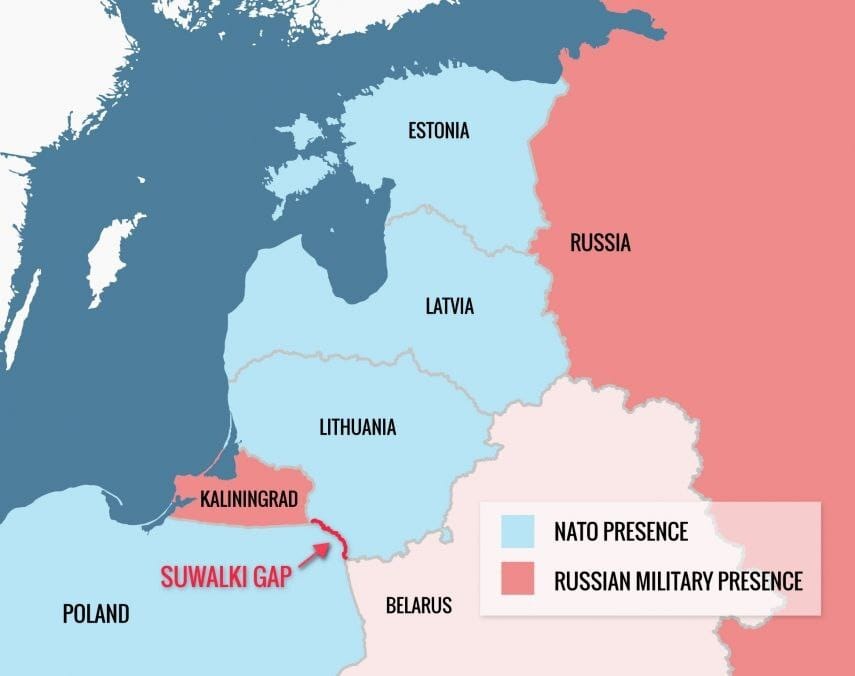
For Russia, Kaliningrad is a key geopolitical enclave. It enables the potential for a pincer movement to cut off the Baltic states. The critical land corridor between Poland and Lithuania is known as the Suwałki Gap. Securing this area would be a primary Russian objective in any NATO-Russia conflict, as it would isolate NATO’s eastern flank.
Kaliningrad also functions as a strategic naval hub. While its fleet is ageing, it remains capable, with cruise-missile-launching warships, submarines, and even an aircraft carrier, albeit outdated. Its Baltic location is slightly warmer than St. Petersburg, making it more viable year-round. As seen in Syria and Crimea, access to warm-water ports is a long-standing Russian strategic priority.
On land, Russian forces in Kaliningrad are estimated to include approximately 25 manoeuvre battalions. This consists of 5–6 motor rifle regiments, a tank regiment, and a marine brigade. These forces are reinforced by extensive layered air defence systems, electronic warfare (EW) capabilities, and nuclear assets. Kaliningrad has also been a focal point for GPS jamming in recent years. Importantly, Iskander missile platforms located here further embed the enclave into Russia’s nuclear deterrence posture.
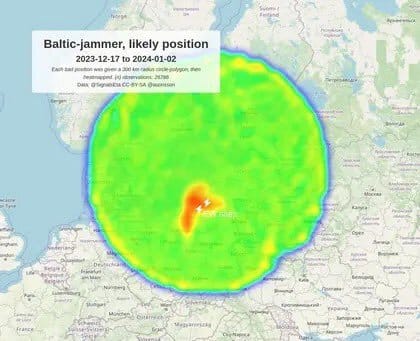
Many similar jamming operations have taken place coming from Kaliningrad
Defensive and Offensive Considerations
Any NATO strike on Kaliningrad would likely be viewed by Moscow as a direct attack on Russian territory. The presence of nuclear weapons and missile systems elevates the risk of strategic escalation. Russia has signalled that Kaliningrad constitutes a nuclear redline. Since, 2024 Polish FM has stated Russia moved an additional 100 nuclear missiles to Kaliningrad. It was also reported troops were sent to Kursk from Kaliningrad suggesting Russia believes in it’s current deterrence strategy.
In the event Russia chooses to take the Suwałki Gap, Belarus would be required to coordinate an offensive from the east. While Belarus maintains a sizeable armed force on paper, its reliability is questionable. Despite rumours of Belarus entering the war in Ukraine, this has not materialised. Many analysts argue that Moscow does not fully trust the Belarusian military, or Lukashenko’s ability to maintain internal cohesion.
NATO
NATO forces that could respond rapidly comprise approximately 38 battalions: 30 from Poland, 4 from Lithuania (likely only one brigade), and 4 to 5 from the US and other NATO battle groups forward-deployed in Poland and the Baltics.
Lithuania faces dual vulnerabilities. To the south, it borders Belarus, which has previously engaged in hybrid warfare (notably the 2021 migrant crisis). To the west, it borders Kaliningrad. These strategic realities explain why Lithuania and other Eastern European NATO members have been leading contributors to Ukraine’s defence.
Following Russia’s full-scale invasion of Ukraine, NATO deployed enhanced forward presence (eFP) missions across the eastern flank. These include:
The UK in Estonia
Canada in Latvia
Germany in Lithuania
The US in Poland
France in Romania
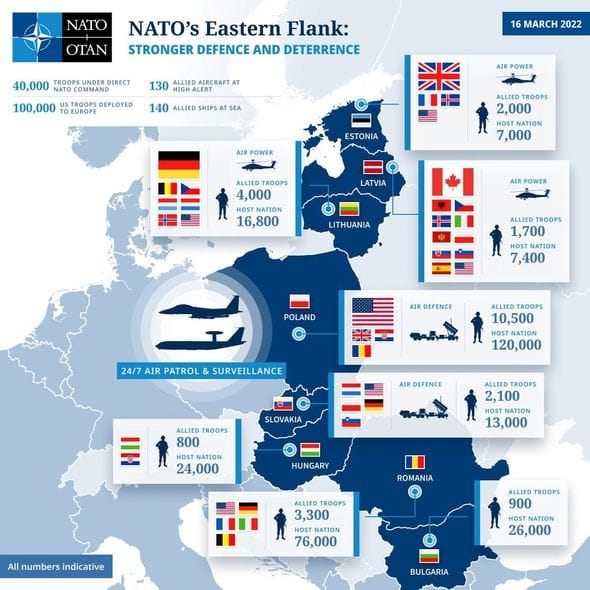
Based on 2022 - has expanded since then.
Poland, in particular, has undergone a dramatic military expansion. Defence spending has increased from €10.1 billion in 2014 to €35 billion in 2024. Procurement includes 250 new Abrams tanks, 116 second-hand Abrams, 1,000 Korean K2 tanks (800 to be built domestically), 35 US-made F-35A aircraft, and 48 Korean FA-50s.
Polish forces have also conducted live-fire exercises within 40 km of Kaliningrad. This suggests not only a posture of deterrence, but also preparation for potential offensive operations. Given Poland's military strength, historical animosity with Russia, and geographic proximity, it would likely play a leading role in any NATO campaign involving Kaliningrad.
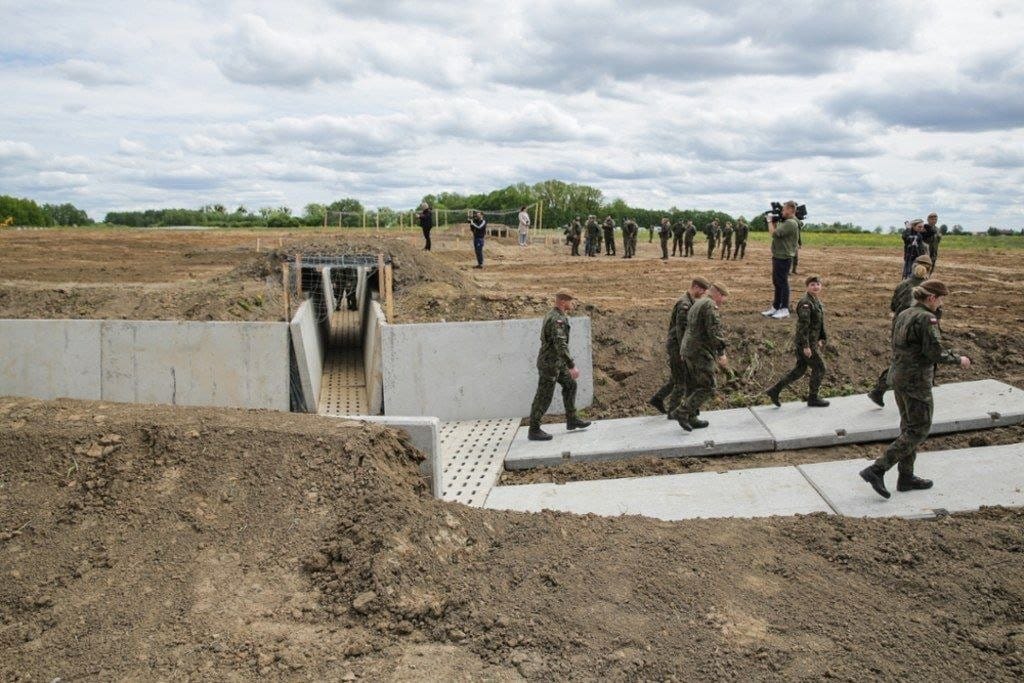
Defensive structures being built in Poland (across all Baltic states as well)
Prolonged Conflict Considerations
Two recent case studies highlight the structural challenges of sustained modern conflict: the 12-Day Israel-Iran exchange, and the India–Pakistan border standoff. In both cases, rapid depletion of munitions and logistical strain forced early de-escalation. This reflects a broader trend: most modern military doctrines prioritise deterrence over endurance.
In the context of Kaliningrad or a broader NATO–Russia conflict, strategic breakthroughs would need to occur rapidly. A protracted engagement would nullify air and missile advantages, bog down forces, and create high-intensity attritional warfare reminiscent of Ukraine.
While NATO has learned extensively from the Ukrainian experience, it is Russia that has sustained large-scale high-intensity operations for over two years. That combat experience could provide a tactical edge, especially in early phases of conflict.
Sources:
@AtumMondi on X.
@Clement_Molin on X.
BBC website - NATO plan revealed
TWEET OF THE DAY
Elon being Elon…
How to make a totally invisible plane
— Elon Musk (@elonmusk)
10:31 PM • Jul 17, 2025
TODAY IN HISTORY
(July 18, 1925): The first volume of Mein Kampf, Adolf Hitler’s political manifesto that would later become a foundational text of Nazi ideology in Germany’s Third Reich, was published on this day in 1925. The second volume followed in 1927.