- Basedment
- Posts
- Nepal: Everything You Need To Know
Nepal: Everything You Need To Know
Your daily dose of geopolitical updates and strategic analysis. Unbiased, but not unbased.

Editor-in-Chief
September 13, 2025
THE BRIEFING
Here’s what’s happening in geopolitics today.
Welcome to today’s briefing. From Poland shutting its Belarus border ahead of Russia-led military drills to Germany signalling support for a U.N. resolution on a two-state solution, it’s been another busy day in global affairs.
In the U.S., the Charlie Kirk shooting suspect has been identified, while the Middle East sees mounting pressure as Israeli forces arrest hundreds in Tulkarm.
We’ll cover all of that and more before turning to today’s deep dive where we take a brief look at Nepal, where a week of heavy anti-government protests has shaken the country.
THE LAST 24 HOURS IN GEOPOLITICS
1. Poland closes Belarus border due to Russia-led military exercises
Poland has shut its border with Belarus at midnight, citing national security concerns tied to the upcoming Zapad-2025 joint military exercises being run by Russia and Belarus near its frontier. The closure is part of a broader effort by Warsaw to guard against what it views as aggressive military posturing, including drills involving advanced weaponry and possible nuclear scenarios.
read more
2. Germany will back U.N. resolution for two-state solution
Germany has declared it will support a United Nations resolution endorsing a two-state solution to the Israel-Palestine conflict, meaning a Palestinian state alongside Israel, based on pre-1967 borders. However, Berlin clarified that it does not believe the moment is right yet to formally recognise a Palestinian state. The move aligns with Germany’s long-standing diplomatic stance: backing legal international norms and peaceful coexistence, while insisting recognition must follow progress on peace, security, and humanitarian concerns.
read more
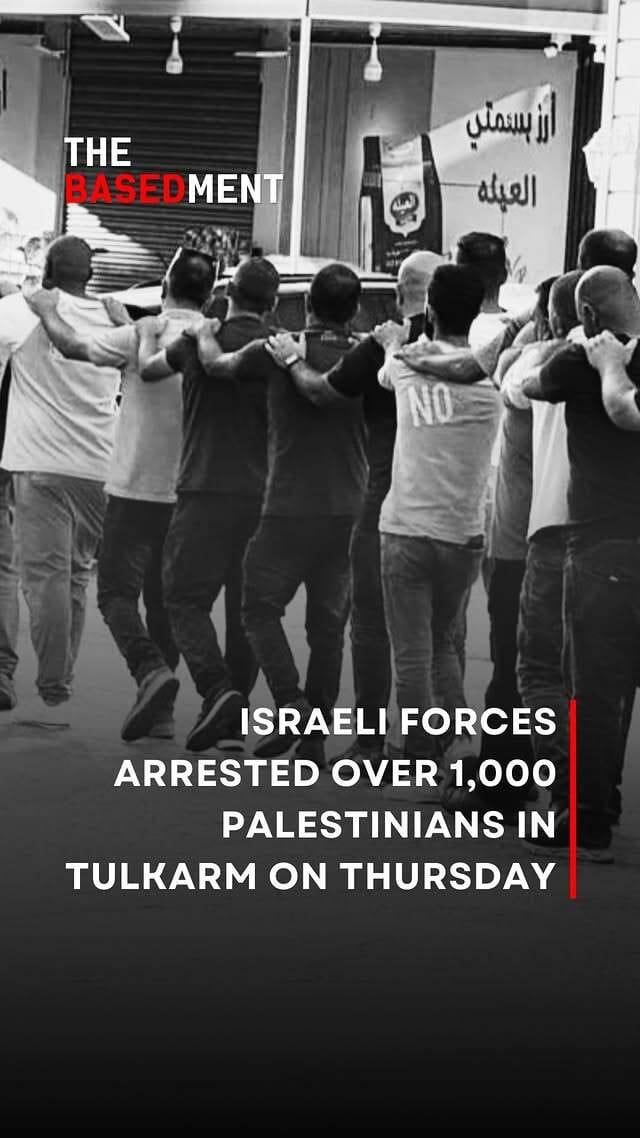
3. Israeli forces arrest over 1,000 Palestinians in Tulkarm on Thursday
Israeli forces have detained more than 100 Palestinians in raids on the occupied West Bank city of Tulkarm and have imposed a curfew, Al Jazeera Arabic reports, as the Israeli offensive in Gaza City has forced more than 200,000 Palestinians to flee the largest urban center in the enclave. As previously reported Israel’s military has been conducting raids in Tulkarm after it said two Israeli soldiers were wounded when their vehicle was “hit by an explosive device“.
read more

4. Charlie Kirk shooting suspect identified as 22 year old Utah man
A 22-year-old Utah man named Tyler Robinson was taken into custody Thursday night in connection with the murder of conservative activist Charlie Kirk, who was fatally shot while speaking at Utah Valley University. Authorities say Robinson had made incriminating statements to a family friend, which triggered a tip to law enforcement, and evidence recovered includes a bolt-action rifle and engraved bullet casings. The arrest comes about 33 hours after Kirk was killed.
read more
5. Russia and Belarus launch military exercises
Russia and Belarus kicked off their joint military exercise, Zapad-2025, on Friday with drills that span parts of Russia, Belarus, and the Baltic and Barents Seas. The timing has drawn sharp concern from NATO because it comes just two days after Poland shot down Russian drones that violated its airspace, heightening fears these manoeuvres may test the military readiness of neighbouring countries. Kremlin officials say the drills are defensive, aimed at improving coordination, but many in Europe view them as a message at NATO’s doorstep.
read more
DAILY DEEP DIVE
NEPAL GEN Z REVOLT: PROTESTS, GEOGRAPHY AND GEOPOLITICS
Nepal has erupted into its worst violence in decades. What began as demonstrations against a government social media ban quickly morphed into a nationwide uprising that toppled Prime Minister K.P. Sharma Oli, left parliament in flames, and forced the army to retake control of Kathmandu’s streets. The crisis has killed more than 30 people, injured over a thousand, and even enabled the escape of some 13,500 prisoners. Yet the causes of this turmoil go far beyond a single regulation: they touch the deep structural weaknesses of the Nepali state, the frustrations of its young generation, and the competing interests of its giant neighbours, India and China.
From Social Media Ban to National Revolt
The spark was a ban on major platforms such as Facebook, Instagram, and YouTube, imposed after the companies refused to register under new government rules. The official justification was preventing hate speech and cybercrime. But protesters saw it as an attempt to silence dissent, especially criticism of politicians’ children flaunting luxury lifestyles in one of Asia’s poorest countries.
The outrage tapped into broader discontent. Corruption scandals have gone unpunished. Per capita income is only about $2,200 a year. Youth unemployment hovers near 20 percent. For a generation that grew up online, the ban felt like both censorship and a final insult. Tens of thousands flooded the streets in Kathmandu and beyond, torching government buildings, storming parliament, and even setting fire to ministers’ homes.
Calling themselves the “Gen Z movement,” the demonstrators have little formal leadership. But their anger proved powerful enough to topple a four-time prime minister and throw Nepal into political limbo.
Nepal’s turmoil has spilled into the digital sphere, with Discord emerging as an unlikely political arena. After the government’s failed attempt to ban social media triggered deadly protests and toppled the prime minister, more than 100,000 young Nepalis flocked to the platform to debate the nation’s future. Dubbed the “Parliament of Nepal” by users, the chat rooms have become a virtual convention where competing visions, leaders, and strategies are contested in real time.
Dysfunction Beyond Politics
The deeper story is that Nepal’s state has long been fragile. Arnurd Bertrands reflection on Nepal paints a sombre picture. Having lived in the country during the 2015 earthquake, one recalls how entire communities were left to fend for themselves. Formal governance often exists more on paper than in practice, especially outside the capital. Corruption is endemic, and in many villages, crimes are handled by mob justice rather than the police.
Nepal’s geography makes governance harder still.
It has some of the world’s steepest terrain, cutting off communities from one another.
Every monsoon season, storms barrel into the Himalayas, turning streets into rivers within minutes.
Earthquakes are frequent — the same forces that created the Himalayas keep reshaping them.
The country is landlocked, squeezed between India and China, with few options for trade routes.
These constraints make national development extraordinarily difficult. Even the most competent government would struggle to deliver prosperity under such conditions.
India’s Uneasy Watch
For India, however, Nepal’s turmoil is a serious concern. The two countries share a 1,750-kilometer open border. Around 3.5 million Nepalis live or work in India, and 32,000 serve in the Indian Army as Gurkhas. Bilateral trade is worth $8.5 billion, and Nepal depends heavily on Indian oil and food imports. Cultural and religious ties are deep, with Nepali temples drawing thousands of Indian pilgrims each year.
Delhi was reportedly caught off guard by Oli’s resignation, just as it was by uprisings in Sri Lanka (2022) and Bangladesh (2024). Analysts note the strategic stakes: Nepal borders China’s Western Theatre Command, and the routes into the Indo-Gangetic plains run straight through its territory. For India, instability in Kathmandu complicates both border management and regional security.
Sources:
Sources available on request, reduced to maintain visual integrity of page.
Good read on state of Nepal (one of the references for this article)
https://x.com/RnaudBertrand/status/1965663406729633903
TWEET OF THE DAY
No caption needed.
It has indeed come to this
— Elon Musk (@elonmusk)
12:25 AM • Sep 12, 2025
TODAY IN HISTORY
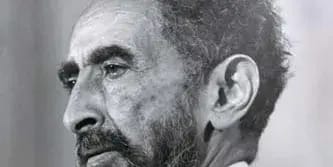
(September 12, 1974): Emperor Haile Selassie deposed
On September 12, 1974, Emperor Haile Selassie I of Ethiopia was deposed by the Derg, a Marxist military junta. His fall ended centuries of imperial rule and ushered in years of authoritarianism, civil war, and upheaval in the Horn of Africa.