- Basedment
- Posts
- New Negotiations Close Says Sources, While Iran Thinks Otherwise
New Negotiations Close Says Sources, While Iran Thinks Otherwise
Another day, another deadline, another negotiation — today we dive into the latest in USA-Iran negotiation news.

Editor-in-Chief
April 06, 2026
THE BRIEFING
Here’s what’s happening in geopolitics today.
A packed geopolitical slate today: Ukraine is expanding its reach into the Middle East with a new security pact with Syria, while Washington and Tehran weigh a peace proposal even as threats over the Strait of Hormuz intensify.
In Asia, Taiwan’s opposition is heading to China on a rare “peace” visit, while on the battlefield a strike has trapped dozens of miners in eastern Ukraine and a top Iranian intelligence official has been killed.
Another day, another deadline, another negotiation — today we dive into the latest in USA-Iran negotiation news.
SUPPORT OUR PODCAST!
You guys asked for it, we delivered it! New podcast based off your questions.
In the podcast we discussed: The F-15E crash and rescue, Iranian capabilities, Russia and Ukraine, Fall of the Roman Republic
Watch and listen here
THE LAST 24 HOURS IN GEOPOLITICS
1. Ukraine and Syria to cooperate on security, Zelensky says
Ukrainian President Volodymyr Zelensky said Ukraine and Syria have agreed to deepen cooperation on security following talks with Syrian President Ahmed al-Sharaa in Damascus. The discussions focused on sharing Ukraine’s military expertise, particularly in countering drones and missiles, while also exploring broader cooperation on energy, food security and regional stability. The agreement comes as Kyiv expands its diplomatic outreach across the Middle East, positioning itself as a security partner amid the wider Iran conflict.
read more
2. US and Iran receive peace proposal as Donald Trump vows ‘hell’ if Strait stays shut
The United States and Iran have both received a proposed peace framework aimed at ending the conflict, with the plan reportedly outlining an initial ceasefire followed by broader negotiations toward a long-term agreement. Despite the diplomatic push, Trump has warned Iran it will face “hell” if it does not reopen the Strait of Hormuz, a critical global oil route that has been disrupted. Iran has so far not committed to the proposal, underscoring the gap between escalating military threats and ongoing but uncertain efforts to reach a ceasefire.
read more
3. Taiwan opposition leader to make ‘peace’ visit to China, first in 10 years
Taiwan’s main opposition leader Cheng Li-wun is set to visit China on what she has described as a “peace” mission, marking the first such trip by a Kuomintang (KMT) leader in a decade. The visit comes amid rising military pressure from Beijing and heightened cross-strait tensions. The move has sparked political debate in Taiwan, with the ruling party warning it could undermine national security, while the opposition argues dialogue is essential to reducing the risk of conflict.
read more
4. 41 miners trapped after Ukrainian strike in Russian-controlled Luhansk region
A Ukrainian strike has hit a coal mine in the Russian-controlled Luhansk region, trapping 41 miners underground after reportedly damaging a power substation. Authorities in the region said contact has been established with the workers, who have access to drinking water, while emergency services work to restore power and carry out rescue operations.
read more
5. Intelligence head of Iran’s IRGC killed in strike
The head of intelligence for Iran’s Islamic Revolutionary Guard Corps, Major General Majid Khademi, has been killed in a strike, according to Iranian state media. Tehran said the attack was carried out by “American-Zionist” forces. Khademi’s death marks one of the most significant losses for Iran’s security apparatus during the conflict, further escalating tensions and highlighting the continued targeting of high-ranking officials.
read more
GLOBAL CONFLICT TRACKER
Iran-USA-Israel
Five deadlines. Five extensions. And tonight, the clock is ticking again.
As of April 6, the U.S. and Iran find themselves locked in an increasingly bizarre diplomatic dance, where Trump threatens catastrophe, extends the clock, then threatens again. The current deadline, Tuesday April 7 at 8 PM Eastern, carries the same energy as every previous one, which is to say, nobody is entirely sure it will hold.
Here is where each side actually stands.
On the U.S. side, Trump told Axios he is "in deep negotiations" with Iran, saying "there is a good chance" of a deal, before adding, "if they don't make a deal, I am blowing up everything over there." The proposed framework on the table, according to sources, is a two-phased arrangement, starting with a 45-day ceasefire during which a permanent end to the war would be negotiated, with the Strait of Hormuz and Iran's highly enriched uranium stockpile left as bargaining chips for the final deal. Pakistan's army chief was reportedly in contact overnight brokering the latest framework proposal. We really have to take into account the internet memes about the news often being tied to the markets opening and closing — as funny as it is, this is has to be considered — Trump greatly cares about public opinion and the stock market.
Iran's position, however, is considerably harder. Tehran says it has formulated a response to ceasefire proposals from intermediaries, but will not engage in direct talks while U.S. and Israeli attacks continue. Per the Arab diplomat cited in regional media, Iran privately believes it can end this war on its own terms, not Washington's, viewing the 15-point U.S. proposal as little more than dressed-up surrender. The IRGC Navy went further, saying the Strait situation will "never return" to what it was before the war.
Arab diplomat source
Mediators have reportedly told Iranian officials that the next 48 hours represent the last real opportunity to avoid massive destruction. Iran, for now, appears unmoved. Like I’ve said before, Trump is entering dangerous waters here, he risks falling for the same red line paradox that Putin found himself in. He can continue to keep calling for more strikes but each new “wave” loses symbolism and effect. Simply put, until the U.S. and Israel can figure out how disable or eliminate these missile launch platforms, Iran can control the leverage game. This is why we’re seeing an increase on infrastructure attacks — if the U.S. cannot smoke the IRGC out of the mountains, it will destroy anything it can that will severely limit the resumption of a functioning state. If anything will push the Iranians towards a deal, it will be strikes on infrastructure.
Tuesday will be telling.
Sources available upon request
TODAY IN HISTORY
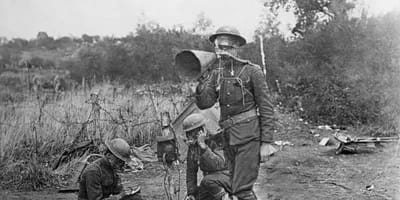
(April 6, 1917): The United States declared war on Germany, thus entering World War I three years after the conflict began.