- Basedment
- Posts
- New Peace Agreement Signed In Syria
New Peace Agreement Signed In Syria
Today we analyse the new Syrian peace agreement between the Government and Kurdish forces, what's the agreement made up of, and other important information.

Editor-in-Chief
January 30, 2026
THE BRIEFING
Here’s what’s happening in geopolitics today.
From an alleged cold-weather pause in Ukraine to quiet diplomacy unfolding in Moscow and Damascus, today’s headlines are a mix of temporary truces and long-term power plays.
We’re also tracking political crackdowns in West Africa, a tentative reopening of Venezuela’s skies, and shifting alignments across the Middle East.
In Today’s deep dive, we turn to Syria as we analyse the new Syrian peace agreement between the Government and Kurdish forces — what's the agreement made up of and other important information.
THE LAST 24 HOURS IN GEOPOLITICS
1. Trump says Putin agreed to not fire on Kyiv for a week during cold
Trump said on Friday that he personally called Vladimir Putin and asked him to halt attacks on Kyiv and other Ukrainian towns for one week because of an “extraordinary cold” spell, and asserted that Putin agreed to the temporary pause in hostilities. Trump made the claim during a White House Cabinet meeting, saying many had doubted such a request would succeed; however, the Kremlin has not independently confirmed the cease-fire pledge. Trump framed the week-long pause as a humanitarian gesture to spare civilians enduring severe winter conditions amid ongoing strikes on Ukraine’s energy infrastructure, even as fighting elsewhere in the conflict continues.
read more
2. Russian President Putin met with UAE President in Moscow
Vladimir Putin hosted United Arab Emirates President Sheikh Mohammed bin Zayed Al Nahyan in Moscow on Friday for bilateral talks focused on strengthening strategic cooperation and tackling regional issues. The leaders discussed close monitoring of Iran tensions, cooperation on humanitarian matters including Gaza, and broader geopolitical challenges, underscoring deepening ties between Moscow and Abu Dhabi. Putin also highlighted Russia’s appreciation for the UAE’s role in facilitating recent diplomatic efforts, including trilateral engagements on Ukraine, while the UAE president reaffirmed commitment to expanding multifaceted partnership in areas such as trade, investment and peace efforts.
read more
3. Burkina Faso’s military government dissolves political parties
Burkina Faso’s military-led government has issued a decree dissolving all political parties in the country and scrapping the legal framework that governed their activities, a move approved by the council of ministers on Thursday. The Interior Minister said the dissolution was intended to “rebuild the state” after what the junta described as abuses and divisions caused by the previous multiparty system, and ordered that all party assets be transferred to the state. Political parties had already been suspended following the 2022 coup that brought Captain Ibrahim Traoré’s military government to power, and the new decree also paves the way for proposed laws to regulate future political organisations.
read more
4. Trump says Venezuelan airspace will reopen to commercial travel
Trump announced that the United States will reopen Venezuelan commercial airspace to flights, saying he has instructed officials to take steps to allow air travel over Venezuela by the end of the day. Trump told a Cabinet meeting he informed Venezuela’s acting president, Delcy Rodríguez, of the plan and said “American citizens will very shortly be able to go to Venezuela, and they’ll be safe there.” The move follows the suspension of flights in 2019 amid longstanding diplomatic tensions and comes as American Airlines has announced intentions to resume direct U.S.–Venezuela service pending government approvals and security assessments.
read more
5. Syrian government, Kurdish forces announce integration deal
The Syrian government and the Kurdish-led SDF announced a comprehensive ceasefire and phased integration agreement after weeks of fighting in the country’s northeast, aiming to stabilise the region and begin the process of unifying military and administrative structures under Damascus. Under the deal, Syrian Interior Ministry forces will enter Kurdish strongholds such as al-Hasakah and Qamishli, three SDF brigades will be reorganised into a new military division, and local Kurdish institutions and personnel will be integrated into state bodies. The agreement also includes provisions to secure civil and educational rights for Kurds and to facilitate the return of displaced people.
read more
DAILY DEEP DIVE
Agreement Reached In Syria
Context
The agreement between Damascus and the SDF marks the most consequential shift in northeast Syria since the defeat of ISIS. On paper, it is a comprehensive framework: Interior Ministry forces entering Hasakah and Qamishli, phased military and administrative integration, the merger of self-administration institutions into the Syrian state, guarantees on Kurdish civil and educational rights, and the return of internally displaced persons. Structurally, it places virtually all public institutions under Syrian state authority, while Kurdish units are retained in a policing role within Kurdish areas.
Crucially, the military component reflects a model Damascus had previously floated — and the SDF rejected. As noted by Hassan I. Hassan, the proposed “Northern Division” would blend Syrian Army and SDF units, including a division composed of three SDF brigades and a Kobani brigade subordinated under an Aleppo-linked command. The fact that this framework has now been accepted suggests a significant recalculation by SDF leadership, likely driven by strategic isolation, pressure from Ankara, and uncertainty over long-term U.S. commitments.
Supporters of the deal will argue it formalizes realities already taking shape: open Damascus–SDF channels, creeping state re-entry, and the limits of autonomous governance in a reunifying Syria. From this view, negotiated reintegration — with explicit protections for Kurdish rights — is preferable to a slow erosion under military or economic coercion.
However, Karim Franceschi raises a serious counterpoint. Framed diplomatically, the agreement may functionally amount to a surrender of autonomy. Interior Ministry deployment into Kurdish urban cores strikes at the heart of operational sovereignty, while “phased integration” leaves ample room for coercion once state presence is normalized. Historical precedent in Syria suggests that guarantees on paper do not always survive consolidation on the ground.
The core risk is not elite consent, but grassroots legitimacy. Local cadres, security units, and civilian networks built over a decade of de facto autonomy may resist a deal they perceive as irreversible subordination. However, the reality is that it will not get much better than this, like we have said many times the Kurdish position is foundationally weak.
The SDF–Damascus agreement mirrors the fate of Herzeg-Bosnia’s Croats in the 1990s. Herzeg-Bosnia functioned as a de facto state during war, with its own army, administration, and institutions, but was later reintegrated under the Washington and Dayton frameworks. Cultural and educational rights were preserved, while real sovereignty was dismantled. The Syrian Kurds now face a similar trade-off: guarantees of language, education, and local policing in exchange for the loss of administrative and security autonomy. As in Bosnia, reintegration is presented as stability, but once central authority returns, autonomy rarely survives.
Much like Herceg-Bosna, the SDF functioned as a political instrument shaped by the circumstances of its time, rather than a permanently sustainable political project.
Sources
News/Journal sources available upon request, not shown to maintain visual integrity of page.
TODAY IN HISTORY
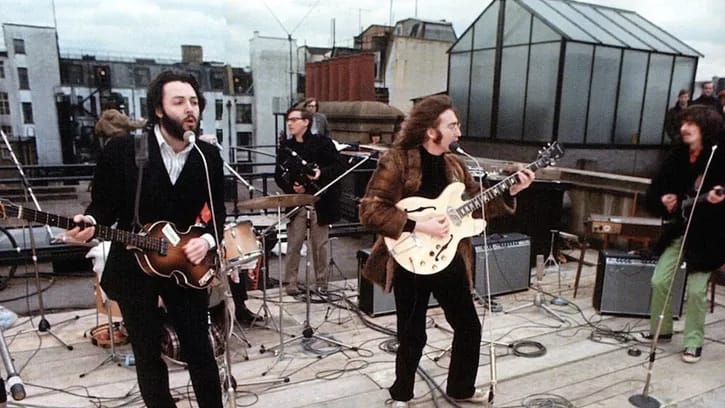
(January 30, 1969): Beatles perform together for the last time
On this day in 1969, the Beatles—John Lennon, Paul McCartney, George Harrison, and Ringo Starr—performed together for the last time. The 42-minute set, which took place on the rooftop of Apple Corps headquarters in London, ended after neighbours filed noise complaints, leading the police to show up. Footage from the session appeared in the documentary Let it Be.