- Basedment
- Posts
- New Russian Strategy: Paralyse Ukraine
New Russian Strategy: Paralyse Ukraine
Your daily dose of geopolitical updates and strategic analysis. Unbiased, but not unbased.

Editor-in-Chief
November 18, 2025
THE BRIEFING
Here’s what’s happening in geopolitics today.
It’s been a big day on the geopolitical front. Ukraine is gearing up for a major boost in airpower, the U.N. is moving ahead with a new stabilisation force for Gaza, and Washington is opening the door for Saudi Arabia to join the F-35 club.
Meanwhile, Canada’s new PM squeaked his first budget through Parliament, and Lebanon has finally released Hannibal Gaddafi after nearly a decade in detention.
Today we’re updating you with some context on recent changes in Russian strategy, with less of a focus on targetting infantry and more on logistics.
THE LAST 24 HOURS IN GEOPOLITICS
1. Ukraine signs deal to obtain 100 French-made Rafale warplanes
Ukraine has signed a letter of intent with France to acquire up to 100 Dassault Rafale fighter jets, alongside drones, guided bombs, and eight SAMP/T air-defence systems. President Zelenskyy called the deal “historic,” while French President Macron described it as a major step in deepening long-term military cooperation. That said, the agreement isn’t a finalized purchase, funding is still being explored, including through EU mechanisms and potentially frozen Russian assets.
read more
2. UN Security Council approves U.S. plan for Gaza stabilisation force
The U.N. Security Council has approved a U.S.-drafted resolution creating an international stabilisation force in Gaza, aimed at securing the territory, overseeing demilitarization, and supporting reconstruction efforts. A transitional “Board of Peace,” to be established under the resolution, would temporarily govern Gaza alongside a vetted Palestinian police force.
read more
3. Trump says U.S. will sell F-35 jet fighters to Saudi Arabia
Trump announced that the U.S. will sell F-35 advanced fighter jets to Saudi Arabia, calling the kingdom a “great ally” as Asia’s first Arab country looks to acquire up to 48 of the stealth jets. The move represents a major shift in U.S. policy, potentially altering the military balance in the Middle East and raising concerns about maintaining Israel’s “qualitative military edge.” Meanwhile, critics warn the deal could face serious hurdles in Congress, particularly over Saudi Arabia’s human-rights record and questions about whether F-35 technology could be compromised.
read more
4. Canada narrowly approves Carney’s first federal budget
Canada’s Parliament narrowly approved Prime Minister Mark Carney’s first federal budget with a 170-168 vote, allowing the minority Liberal government to avoid the threat of an immediate election. The budget-motion clears the way for a broader fiscal plan focused on bolstering infrastructure and defence in response to trade pressures from the U.S., though its deficit and spending commitments raise questions about sustainability. Even as Carney’s government claims the budget will help Canada “stand strong” amid global uncertainty, the narrow vote signals the fragility of his mandate and the challenges ahead in building broader legislative support.
read more
5. Qaddafi son freed by Lebanon now seeks to travel to South Africa
Hannibal Gaddafi, the youngest son of Libya’s late dictator Muammar Gaddafi, was released by Lebanese authorities, after nearly ten years in detention without trial. His bail was dramatically reduced from US$11 million to approximately US$900,000, and a travel ban was lifted, allowing him to leave the country. He is reportedly looking to travel to South Africa, which has expressed readiness to host him.
read more
DAILY DEEP DIVE
Russian Strategy: Paralyse The Ukrainian Military
Energy and Infrastructure Are Key Targets
In recent months we have seen several changes in Russian strategy. From missile and drone strikes, to combat movement, to targeting etc. What we’re beginning to see is a systematic attempt to break the economic and military logistics of Ukraine.
For a bit of context, Russia has begun primarily targeting Ukraine's energy grid for months on end, and it is causing significant damage – one strike knocked out 60% of energy capability for instance. . Millions of Ukrainians are facing the effects of nationwide power outages and many are beginning to worry about the effect this will have in the coming freezing winter months.
Russia targets Ukrainian energy infrastructure for several interconnected strategic reasons. Hitting power plants, grids, and heating facilities weakens Ukraine’s war effort by disrupting logistics, rail transport, air-defence networks, and command systems. These strikes also place heavy economic and psychological pressure on the population, aiming to erode morale and force the government to divert resources to repairs. Large, fixed energy sites allow Russia to exhaust Ukraine’s air-defence stockpiles through mass drone and missile waves. Attacks typically intensify before winter, when outages have maximum impact. Overall, energy infrastructure is a critical vulnerability Russia exploits to gain leverage without needing territorial advances.
We’ve also seen an increase in strikes targeting railway stations and bridges. This is an area where many analysts have long questioned why such attacks did not begin earlier. Some argue it reflected a “gloves on” approach in the early stages of the war, although multiple factors likely played a role. Regardless, the trend is now clear. At a broader societal level, Russia is attempting to paralyse Ukraine’s war-fighting capability by disrupting critical movement and supply routes.
Rubikon Strikes Back
And this isn’t happening only at the strategic, national level — it’s also visible in the rear areas of the frontline. Russia’s Rubikon drone group has had a significant impact on countering Ukraine’s heavy reliance on drones. One of Rubikon’s primary roles is locating and eliminating Ukrainian drone teams. Compounding this, the increasing fluidity of small-team DRG infiltrations has blurred the distinction between “frontline” and rear areas, leaving drone operators far more exposed and much closer to active fighting than they would prefer.
Russian units are now layering these tactics. FPV teams aren’t just eliminating Ukrainian FPV and Mavic crews, they’re systematically degrading Ukrainian logistics. We’re also seeing a decrease in targeting of infantry and more videos of these rear area attacks. So how does this work? Reconnaissance drones map weak points in Ukraine’s rear areas, guiding small assault elements through gaps in the line. Those infiltrating groups are then monitored, directed, and even resupplied by drones in real time. The key is that all of these processes run simultaneously, creating pressure across multiple layers of the battlespace. And at the centre of it all remains Ukraine’s core problem: a shrinking pool of available manpower to plug those gaps
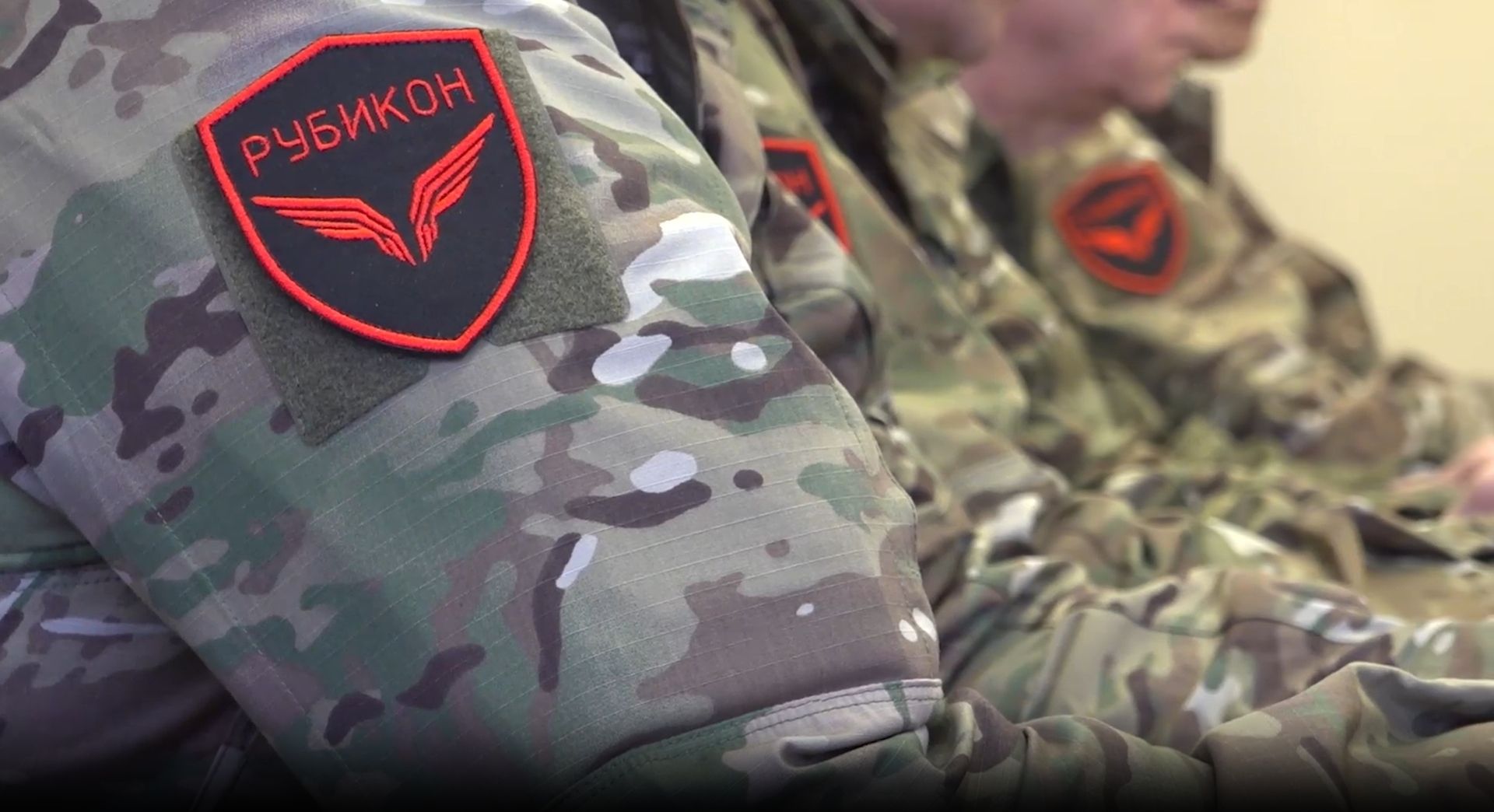
Rubicon Group.
Sources:
News/Journal sources available upon request, not shown to maintain visual integrity of page.
Ukrainian NCO detailing the strategy (one of our primary sources):
https://www.facebook.com/ukrainianwitness/posts/pfbid02paCdwno1zvZ3J2T4PTjKtW74xt9HZk1XH28o3iVpahcRdtSQZsYchVxwB3YKXA6Kl
TODAY IN HISTORY
(November 18, 1978): Jonestown massacre
Jim Jones, leader of the Peoples Temple religious community that he formed in the 1950s, and some 900 of his followers died this day in 1978 in Guyana in a massive act of murder-suicide known as the Jonestown massacre.
