- Basedment
- Posts
- No Progress On The Integration of Kurds into Syria
No Progress On The Integration of Kurds into Syria
Your daily dose of geopolitical updates and strategic analysis. Unbiased, but not unbased.

Editor-in-Chief
November 04, 2025
THE BRIEFING
Here’s what’s happening in geopolitics today.
A busy mix of diplomacy, defence, and disruption defines today’s geopolitical landscape. London has stepped up support for Kyiv with another batch of long-range missiles, while Peru’s diplomatic rift with Mexico underscores how political crises in Latin America continue to spill across borders.
In Asia, Xi Jinping reaffirmed China’s economic alignment with Russia, and Saudi Arabia’s Crown Prince prepares for a closely watched visit to Washington. Meanwhile, Brazil has launched the opening events for COP30, though optimism over climate ambition remains tempered by global divisions.
Today, we’re examining the deepening stalemate between the Syrian government and Kurdish authorities — a complex power struggle defined by mistrust and competing interests.
THE LAST 24 HOURS IN GEOPOLITICS
1. UK sends Ukraine more storm shadow missiles to strike in Russia
The UK has announced a new delivery of Storm Shadow long-range missiles to Ukraine, weapons which are capable of striking deep inside Russian territory. London says the move is part of its “unwavering support” for Kyiv as Russian offensives intensify. The Storm Shadow, with a range of over 250 km, gives Ukraine rare precision-strike capability, though Moscow has warned it will respond “asymmetrically” to further Western arms deliveries.
read more
2. Peru severs diplomatic relations with Mexico after former PM claims asylum
Peru announced it has severed diplomatic relations with Mexico after former Prime Minister Betssy Chávez, facing charges related to the 2022 coup-attempt under ex-President Pedro Castillo, sought asylum at the Mexican embassy in Lima. Peruvian Foreign Minister Hugo de Zela called Mexico’s move an “unfriendly act” and accused it of interfering in Peru’s internal affairs, Mexico defended its decision, saying it acted in accordance with international law. The break marks a major diplomatic escalation between two longtime Latin American partners and raises concerns about the region-wide fallout from domestic political crises.
read more
3. Xi Jinping seeks to boost investment, expand economic ties with Russia
Xi Jinping met with Mikhail Mishustin in Beijing on Tuesday and pledged to expand mutual investment with Russia, affirming that China would advance ties despite “turbulent external conditions.” He highlighted cooperation in key sectors including energy, agriculture, aerospace, the digital economy and green development as part of a strategic push to deepen bilateral engagement. The commitment comes as Russia faces major Western sanctions and China contends with U.S. pressure on trade and technology, making the partnership a significant signal in the current global order.
read more
4. Saudi Crown Prince MBS to visit Trump on Nov 18
Mohammed bin Salman, Crown Prince of Saudi Arabia, is scheduled to meet with Donald Trump at the White House on November 18, 2025, marking a significant high-level working visit. The meeting is expected to focus on courting Saudi Arabia into the Abraham Accords and could also include discussions on a potential U.S.–Saudi defence accord. The visit comes amid strategic realignments in the Middle East, reflecting Washington’s broader push to deepen ties with Gulf partners despite regional turbulence and external pressures.
read more
5. Brazil kicks off COP30 climate events as global tensions test climate ambition
Brazil has kicked off three weeks of events linked to the upcoming COP30 climate summit, with meetings in Rio, São Paulo and Belém intended to demonstrate global resolve amid a fractured diplomatic landscape. Business leaders and city officials are already pressing for stronger policy action, while analysts warn that rising geopolitical strain and waning multilateral momentum could blunt the summit’s impact. Amid these set-pieces, Brazil’s emphasis on adaptation and resilience is seen as both a strategic pivot and a reflection of the challenges the climate agenda now faces in an increasingly divided world.
read more
DAILY DEEP DIVE
KURDISH-SYRIAN RELATIONS - “NO TANGIBLE PROGRESS”
“No Tangible Progress” - Syrian FM
Syria’s Foreign Minister Asaad al-Shibani admitted that the government’s talks with the Kurdish-led authorities in the northeast have brought no tangible progress, despite what he described as a “positive atmosphere.” The negotiations aim to integrate the Kurdish-dominated Syrian Democratic Forces (SDF) and their autonomous administration into the state’s political and military framework.
The discussions stem from an eight-point framework agreement between interim President Ahmad al-Sharaa and SDF commander Mazlum Kobane, brokered under U.S. mediation. While the deal was meant to outline steps for reunifying governance and military structures, almost nothing has been implemented. Damascus continues to demand full central control, while Kurdish representatives seek to preserve local autonomy, administrative control, and the right to maintain their own defense forces. The divide highlights competing visions of Syria’s post-war identity — one built on centralised power, the other on regional self-rule. Turkey’s opposition adds another layer of tension, viewing the SDF as an extension of the PKK and warning against any formal recognition of Kurdish autonomy.
In essence, the talks remain politically useful but practically stagnant. Shibani’s statement reflects a broader reality: despite Western optimism and symbolic gestures, the path to genuine integration is blocked by distrust, diverging strategic goals, and regional interference. The result is a stalemate where rhetoric advances faster than reconciliation, leaving Syria’s territorial unity still hanging in the balance.
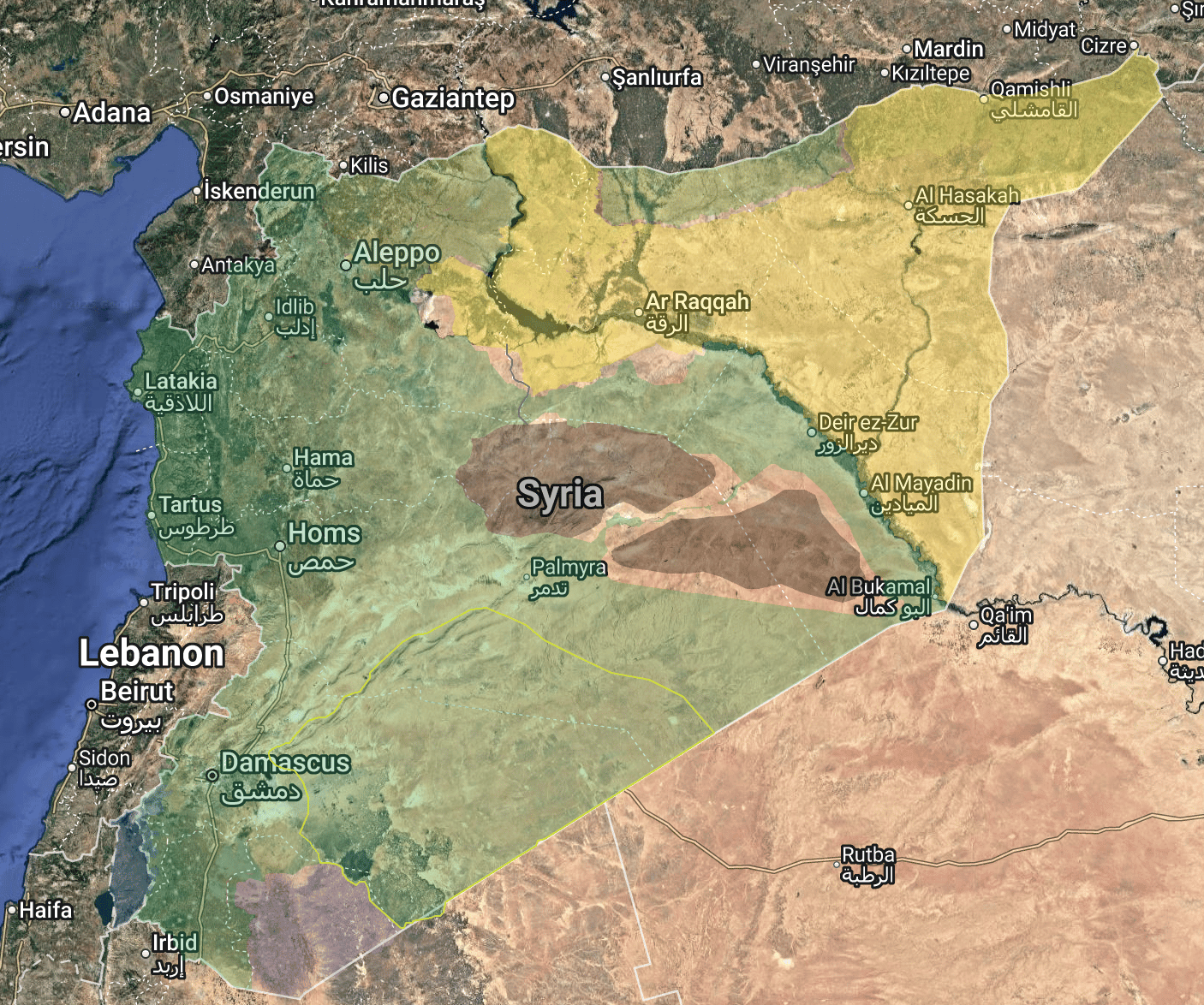
The Kurdish Perspective
From the Kurdish perspective, several key points deserve closer attention. While Kurdish forces control roughly one-third of Syria, they also maintain a notable presence in the Sheikh Maqsoud neighbourhood of Aleppo — a small but symbolically important enclave that has long fought alongside the Syrian Arab Army within a complex web of shifting alliances. Recently, clashes have erupted there between local militias and government troops, underscoring the fragile nature of these relationships.
For the Syrian Democratic Forces (SDF), any integration deal with Damascus would be difficult to finalise without concrete security guarantees for Sheikh Maqsoud. The memory of Afrin — a former Kurdish enclave northwest of Aleppo that many Kurds regard as being under Turkish occupation — still looms large. Without assurances that similar outcomes won’t be repeated, the SDF will remain deeply cautious about committing to any agreement with the central government.
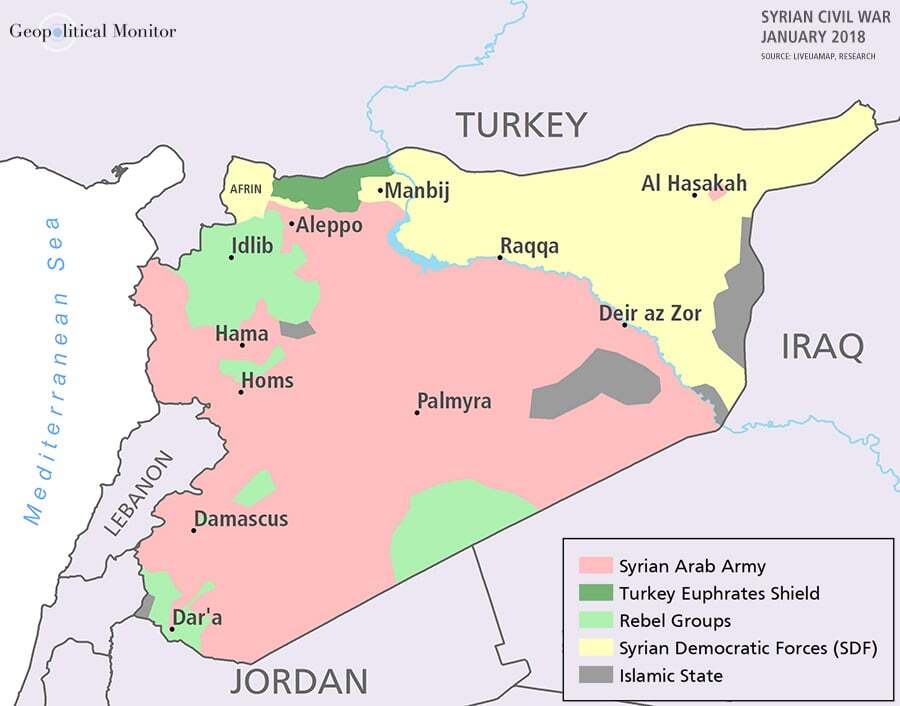
Afrin located north of Aleppo, before Turkish incursion.
While Kurdish-controlled territory in Syria is vast and resource-rich, its stability remains precarious. A significant portion of the population in these areas is Arab, not Kurdish, which complicates long-term governance and identity politics. Before the SDF’s victory over ISIS, much of eastern and central Syria had been strong Free Syrian Army territory before transitioning to ISIS control, often through shifting allegiances rather than outright conquest.
This history highlights how fluid local loyalties can be. The SDF’s current hold over regions like Raqqa rests on a delicate balance of pragmatic cooperation and residual mistrust. Any heavy-handed government incursion could easily reignite local resentment and spark uprisings against Kurdish forces. In short, the territorial control is wide, but the political cohesion underneath it is thin, a fragile patchwork that could unravel quickly under renewed pressure.
We also have to consider the Turkey-PKK peace deal. The PKK’s announcement that it is withdrawing its fighters from Turkey marks the first tangible step in a peace process aimed at ending four decades of conflict that has claimed over 40,000 lives. On the surface, it’s a move toward disarmament and stability within Turkey. However, the real significance lies in where those fighters are going. For Syria, the development indirectly impacts the US-backed Syrian Democratic Forces (SDF), due to the shared ideological and operational roots between PKK and YPG – a major faction in the SDF coalition. Turkey views both as extensions of the same militant network. As Damascus attempts to reintegrate the SDF under its security forces, the PKK’s re-positioning could influence Kurdish leverage in these talks and Washington’s regional posture.
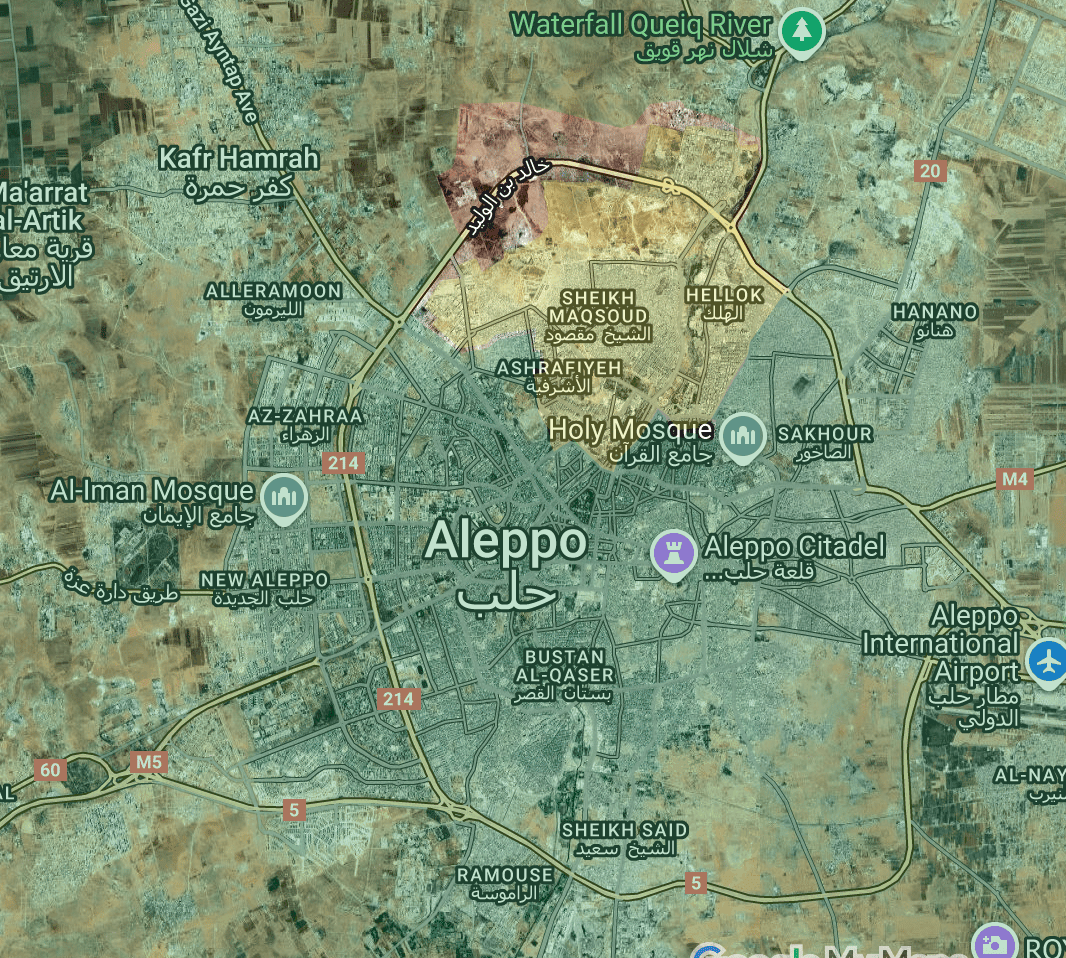
Neighbourhood of Sheikh Masqoud
Lastly, it’s crucial to understand that analysing non-Western regions requires stepping outside a Western lens and viewing events from within their own social and historical realities. Syria’s demographic landscape is deeply fragmented — marked by factionalism, sectarian divides, and layers of discrimination that shape every political decision. For the Kurds, who have long lived as a marginalised minority, surrendering their leverage now would be strategically unwise, especially while U.S. backing remains a vital shield.
Compounding this hesitation is the Syrian government’s unresolved “foreign jihadist” dilemma. Following a string of attacks earlier in the year on minority, primarily Alawite, villages, the issue remains politically sensitive and fresh in Kurdish memory. From their perspective, trusting Damascus while such threats linger seems risky.
Adding to these tensions are cultural and linguistic policies that further alienate Kurdish communities. The transitional government in Damascus recently reclassified Kurdish as a “foreign language,” stripping it of its previous semi-official recognition. Kurdish instruction, once part of the curriculum in Afrin, has now been erased under a new system that designates only Arabic as the national language. Such moves, alongside the continued Turkish presence in Afrin since 2018, reinforce Kurdish fears of cultural erasure and political subjugation.
In essence, these developments explain why Kurdish leaders remain reluctant to enter any integration framework without strong guarantees. For them, this is not merely about political representation, but about cultural, territorial, and existential survival.
Sources:
News/Journal sources available upon request, not shown to maintain visual integrity of page.
TWEET OF THE DAY
Sorry, not geopolitics related, but this is ridulously accurate 😂
Investor: We need AI.
CEO: Yes, we need AI.
PM: Build AI.
Dev: Okay, here’s AI.
User: I don’t want AI.— Anastasia Zik (@nastiazik)
5:39 PM • Nov 2, 2025
TODAY IN HISTORY
(November 4, 1995): Yitzhak Rabin assassinated
Israeli Prime Minister Yitzhak Rabin, corecipient with Shimon Peres and Yāsir ʿArafāt of the Nobel Prize for Peace in 1994, was assassinated this day in 1995 by a Jewish extremist while attending a peace rally.
