- Basedment
- Posts
- October 7th: The Lasting Effects Two Years On
October 7th: The Lasting Effects Two Years On
Your daily dose of geopolitical updates and strategic analysis. Unbiased, but not unbased.

Editor-in-Chief
October 08, 2025
THE BRIEFING
Here’s what’s happening in geopolitics today.
It’s been a varied 24 hours on the global front - from economic stimulus in Thailand to fresh diplomatic and security tensions across Europe and the Middle East.
Greta Thunberg’s return to the spotlight after her deportation from Israel drew major crowds in Athens, while the EU weighed new curbs on Russian diplomats amid rising espionage fears. The Vatican also confirmed Pope Leo XIV’s first overseas trip, and Iran reported a deadly clash involving its Revolutionary Guards.
It’s been exactly two years since Hamas launched its October 7th attack on Israel — an event that reshaped not only the region, but also global politics, media narratives, and public opinion. Today, we look at how that day continues to affect Israel, Gaza, and the world.
THE LAST 24 HOURS IN GEOPOLITICS
1. Thailand deploys US$1.4B stimulus to spur consumption
Thailand’s cabinet has approved a 44 billion baht (about US$1.36 billion) “co-payment” stimulus program designed to boost consumer spending by subsidising up to 60% of costs for certain goods among qualified citizens. The move is part of the new government’s effort to counter economic headwinds, such as weak consumption, high household debt, and external pressures from U.S. tariffs. Officials expect the stimulus to add up to 0.4 percentage points to GDP growth in the fourth quarter.
read more
2. Greta Thunberg greeted by crowd after Israel expels flotilla activists
Greta Thunberg landed in Athens to a warm welcome on Monday, greeted by a cheering pro-Palestinian crowd after being deported by Israel along with hundreds of other activists. Israel expelled 171 participants from the flotilla, including Thunberg, as part of its effort to prevent their ships from breaking the naval blockade of Gaza. Upon arrival, she used the moment to condemn Israeli actions in Gaza, calling the situation a genocide and accusing global institutions of failing Palestinians.
read more
3. EU moves to restrict travel of Russian diplomats amid espionage fears
EU countries are edging closer to a deal that would restrict the internal travel of Russian diplomats within the bloc, though no formal agreement has yet been reached. The proposed rules would require diplomats posted in one EU member state to notify other states before traveling, giving host governments the option to deny entry. Moscow has already warned of retaliation, calling the move an attempt to erect new “dividing walls.”
read more
4. Pope Leo to visit Turkey, Lebanon in November in first trip abroad
Pope Leo XIV will make his first international trip in November, visiting Turkey from November 27 to 30 and then travelling to Lebanon from November 30 to December 2, the Vatican announced. In Turkey, he plans to meet Patriarch Bartholomew to commemorate the 1,700th anniversary of the Council of Nicaea, while in Lebanon he will address the challenges facing Middle Eastern Christians and remember the victims of the Beirut port explosion. The visit carries deep symbolic weight, reflecting his early priorities in interfaith dialogue, Christian unity, and humanitarian concerns.
read more
5. Two Revolutionary Guard members killed in Western Iran clash
Iranian state media says two members of the Revolutionary Guards were killed in an “anti-revolutionary attack” in Sarvabad, in western Iran. Three other security personnel were wounded in the incident, though details remain thin and no group has claimed responsibility. The attack underscores ongoing instability and challenges to security in Iran’s border regions.
read more
DAILY DEEP DIVE
OCTOBER 7TH - TWO YEARS ON
In geopolitics, as in history, certain moments act as catalysts shifting the course of nations. The assassination of Archduke Franz Ferdinand. September 11. And, to a similar extent, October 7 has become one of them.
Note: Our focus is not on who or what started it, but on how that single day reshaped the Middle East, global politics, and public opinion.
Human Cost
Two years after Hamas’ October 7th attack, the human toll of the conflict, and the wars it triggered, remains staggering. In Gaza, more than 67,000 Palestinians have been killed since 2023, according to Gaza’s Health Ministry, with nearly a third of the dead under 18. Israel claims at least 20,000 of those killed were Hamas fighters, while a UN commission recently concluded that Israel’s campaign in Gaza amounted to genocide, citing the scale of the killings. Israel rejected the findings as politically motivated and “scandalous.”
In Israel, at least 1,665 Israelis and foreign nationals have died since the start of the war, including 1,200 on October 7 alone. The Israeli Defense Forces report 466 soldiers killed and nearly 3,000 wounded in Gaza operations. Of the 251 hostages taken into Gaza, 48 remain — with around 20 believed to be alive.
The conflict has expanded far beyond Gaza. In Lebanon, over 4,000 people have been killed and 16,000 injured, as Hezbollah’s confrontation with Israel has intensified. Estimates are roughly around 4,000–5,000 Hezbollah fighters killed. Over 1 million people have been displaced during Israeli operations in Lebanon. Israeli strikes in Syria have killed dozens, with sources reporting between 33 and 43 civilians and 30 to 35 soldiers dead. While Israel is believed to have lost 87 security personnel and 46 civilians against Hezbollah – and one soldier died in Israel’s ongoing Syria campaign.
The Iran–Israel war added another layer of devastation. By late June 2025, Israeli airstrikes in Iran had killed 1,190 and injured over 4,000, according to HRANA. Iranian attacks in return killed 29 Israelis and injured more than 3,000. The Houthi–Israel conflict has extended the regional fallout of the Gaza war into the Red Sea, where Houthi forces have targeted Israeli-linked vessels and military assets. The clashes have resulted in under 100 international civilian deaths, several hundred Yemeni injuries, and an estimated 100–300 deaths overall.
Material and Economic Damage
The scale of destruction across the Middle East since October 7th is almost without precedent in the 21st century. In Gaza, the United Nations Satellite Centre (UNOSAT) reported that around 193,000 buildings have been damaged or destroyed as of July 2025, nearly the entire urban landscape. This includes 213 hospitals and 1,029 schools, many of which have been targeted or rendered inoperable. According to the World Health Organisation, only 14 of Gaza’s 36 hospitals remain even partially functional, most of them overwhelmed in southern Gaza. The U.N. human rights office described the destruction of Gaza City and repeated displacement of civilians as potentially tantamount to ethnic cleansing, with only 18% of the territory now outside displacement zones.
In Lebanon, the fallout from Israeli–Hezbollah clashes has been economically devastating. The World Bank’s 2025 Rapid Damage and Needs Assessment estimated over US$11 billion in reconstruction and recovery needs and US$14 billion in total economic cost, including US$6.8 billion in direct structural damage.
In Iran, the twelve-day Iran–Israel conflict in mid-2025 caused an estimated US$6–35 billion+ in direct and indirect losses. Israeli airstrikes inflicted widespread industrial and infrastructural damage, particularly around Tehran and Isfahan. It is difficult to calculate the economic loss given the secrecy of Iran’s nuclear program.
Israel has faced claims of NIS 5 billion (~USD 1.47 billion) in property damages from Iranian missile and drone strikes, according to more than 45,000 filed claims after the 12-day war. Reconstruction plans include NIS 15 billion (~USD 4.1 billion) over five years for northern regions, with NIS 3.3 billion already spent to allow 67,000 evacuated residents to return, and another NIS 17.5 billion (~USD 5.25 billion) allocated for rebuilding 47 Gaza-border communities destroyed after October 7. U.S support has been critical, totalling over USD 21 billion since October 2023, according to twin reports by the Costs of War Project.
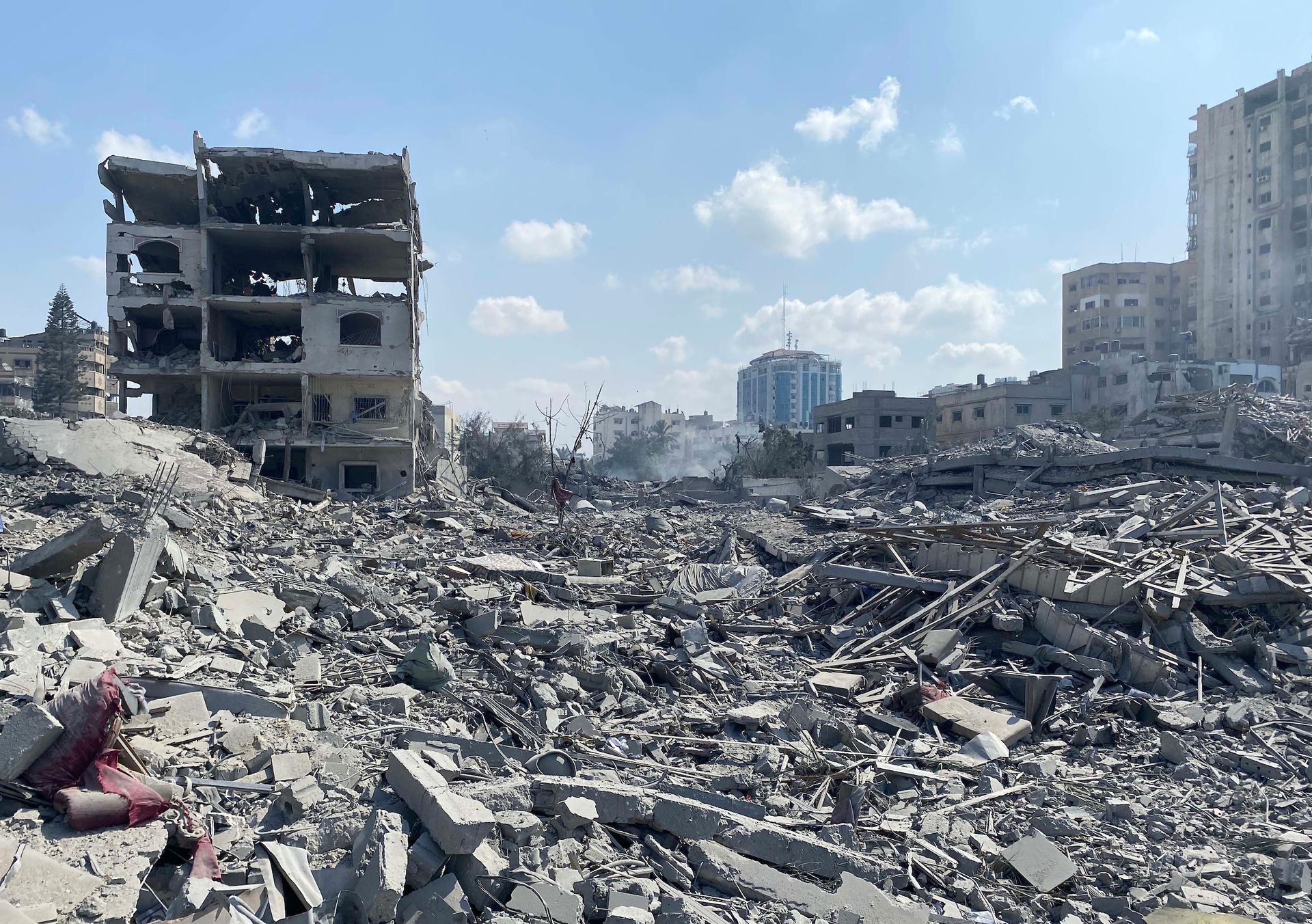
Familiar scenes across Gaza.
Geopolitical Shifts
Two years on, the aftershocks of October 7th have redrawn the regional balance of power. Hezbollah, once Iran’s most effective proxy, has been severely weakened. The group’s military infrastructure in southern Lebanon has been devastated, while Israeli and U.S. pressure have eroded Iran’s ability to project influence through its regional network. Syria, long seen as a critical node in Iran’s “axis of resistance,” has fallen from Tehran’s orbit as the Gulf states and Turkey swoop in.
At the same time, Israel’s international standing has suffered and is increasingly seen as a global pariah. Its conduct in Gaza — condemned by much of the Global South and increasingly criticised within the West — has isolated it diplomatically. Nations such as France, Australia, and the U.K. have reaffirmed support for a two-state solution, while others, including Spain and Ireland, have formally recognized Palestine. In Washington, support for Israel remains strong but increasingly conditional, shaped by public discontent and partisan divides. While claims of war fatigue continue to rise from the higher echelons of the Israeli military and intelligence agencies.
Meanwhile, Turkey has emerged as one of the main geopolitical beneficiaries. Ankara’s assertive diplomacy has elevated its regional influence. Iran, battered by war and economic sanctions, faces growing domestic instability and weakened deterrence. The post-October 7 landscape now reflects a fragmented Middle East: one in which Israel retains military superiority but diminished moral capital and growing war fatigue; Iran struggles to maintain its proxies, and Turkey and the Gulf states cautiously move to fill the strategic vacuum.
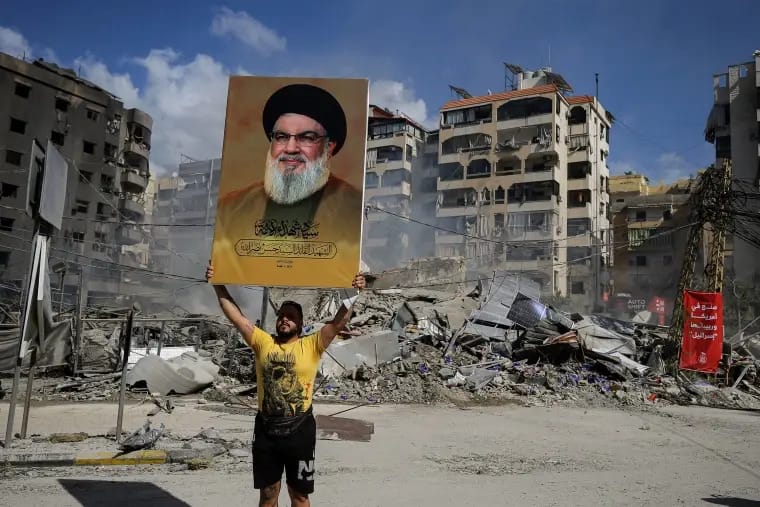
Hezbollah supporter in Southern Lebanon after airstrikes.
Global Public Opinion
Public sentiment surrounding the war has undergone a dramatic shift since October 7th. What began as widespread solidarity with Israel after the Hamas attacks quickly evolved into a global backlash as images of devastation in Gaza dominated international media. Polls from the Pew Research Center show that majorities across Europe, Latin America, and Asia now view Israel’s response as disproportionate, reflecting a sharp decline in global approval. At the same time, anti-Israel sentiment has intensified across universities, online platforms, and protest movements worldwide. This marks one of the most significant shifts in international public opinion in modern history.
In the United States, support remains divided along partisan lines, with younger and Democratic voters increasingly critical of Israeli policy and of Prime Minister Netanyahu, whose leadership is seen as deepening the crisis. Across much of the Global South, sympathy for Palestine has solidified, framing the conflict as part of a broader struggle against Western double standards. The result is a world more polarised than ever, where Israel’s battlefield victories have come at the cost of its global legitimacy.
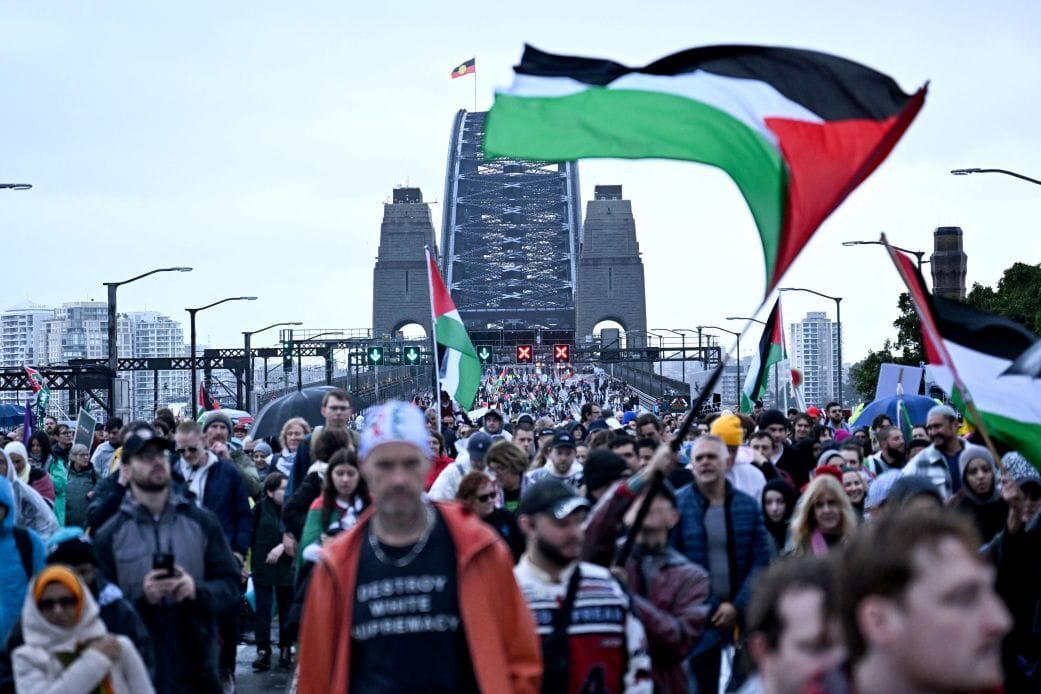
Thousands of anti-war protestors marched across the Sydney iconic Harbour Bridge
Sources:
Sources available upon request, not shown to maintain visual integrity of page.
TWEET OF THE DAY
Never thought I would see the day Gretta is compared to a Big Mac 😂
LMAO I can’t
— Caт Bee (@CatShoshanna)
3:30 PM • Oct 6, 2025
TODAY IN HISTORY
(October 7, 1944): UN's foundations built
The Dumbarton Oaks Conference concluded in Washington, D.C., on this day in 1944. During the weeks-long conference, the United States, China, the Soviet Union, and the United Kingdom formulated proposals for a world organisation that became the basis for the United Nations.