- Basedment
- Posts
- Old Enemies Unite Against Israeli-UAE Axis
Old Enemies Unite Against Israeli-UAE Axis
Today we examine how old enemies such as Turkey and its rivals Egypt and Saudi Arabia are mending ties to improve economic relations but importantly to counter Israel and UAE.

Editor-in-Chief
February 06, 2026
THE BRIEFING
Here’s what’s happening in geopolitics today.
From high-stakes diplomacy in the Middle East to great-power phone calls and grain deals, today’s top stories span tense negotiations, strategic signalling and hard power in action.
We cover US–Iran nuclear talks in Oman, a Trump–Xi call touching Taiwan and trade, Russia pushing back against a U.S. oil squeeze on Cuba, Nigeria’s military response to a devastating extremist attack, and a major cocaine seizure by the French Navy in the Pacific.
In today’s Deep Dive, we examine how old enemies such as Turkey and its rivals Egypt and Saudi Arabia are mending ties to improve economic relations but importantly to counter Israel and the UAE.
THE LAST 24 HOURS IN GEOPOLITICS
1. US and Iran agree to Friday talks in Oman
Iran and the United States have agreed to hold nuclear talks on Friday in Muscat, Oman, Iranian Foreign Minister Abbas Araghchi confirmed, after negotiations over the format and venue nearly derailed the scheduled meeting. The discussions come amid heightened tensions following Tehran’s violent crackdown on nationwide protests and ongoing disputes over Iran’s nuclear program, with both sides under pressure to pursue a diplomatic path. Ahead of the talks, Trump delivered a blunt warning to Iran’s Supreme Leader Ayatollah Ali Khamenei, saying he “should be very worried”.
read more
2. Trump, Xi hold call on Taiwan, trade as China agrees to buy more US soybeans
Trump and Xi Jinping held a phone call on Wednesday that covered key bilateral issues including trade, security and the sensitive topic of Taiwan, with both leaders portraying the conversation as positive and aiming to strengthen relations ahead of Trump’s planned visit to Beijing in April. In the call, Trump said that China has agreed to increase purchases of U.S. soybeans to about 20 million metric tons this season, up from 12 million, a gesture seen as a goodwill step to ease economic tensions and support U.S. agricultural exports.
read more
3. Russia plans to continue oil supplies to Cuba despite US “oil blockade”
Russia says it will continue supplying oil to Cuba despite U.S. efforts to block fuel shipments to the island, with Russia’s ambassador to Havana, Viktor Coronelli, telling state news agency RIA that Moscow expects oil deliveries to “continue,” reflecting longstanding energy cooperation. The announcement comes after Trump declared a national emergency and authorised tariffs on countries that provide oil to Cuba, part of a broader campaign to cut off Havana’s access to energy supplies amid heightened geopolitical tensions.
read more
4. Nigeria deploys troops after 170 killed in deadly Kwara village attack
Nigeria has deployed an army battalion to Kwara State after suspected jihadist gunmen killed at least 162 civilians in coordinated attacks on the villages of Woro and Nuku, one of the deadliest massacres in the country this year, with rights groups suggesting the death toll could exceed 170. The attackers, believed to be linked to an Islamic State-affiliated group, reportedly rounded up residents, executed many at close range, burned homes and shops, and issued threats to communities that resisted extremist demands. President Bola Tinubu condemned the violence as “cowardly and beastly” and launched ‘Operation Savannah Shield’.
read more
5. French Navy intercepts cocaine boat amid urgent drug trafficking crackdown
The French Navy intercepted and seized about 4.24 tonnes of cocaine from a suspicious vessel in the south Pacific, near French Polynesia, as part of an intensified maritime crackdown on international drug trafficking routes. The ship, believed to be transporting the narcotics from Central America with a destination of South Africa, was boarded after being identified by French customs and maritime intelligence, and its illegal cargo was destroyed at sea outside the French Polynesian exclusive economic zone. The operation reflects broader cooperation with international partners, including New Zealand authorities.
read more
DAILY DEEP DIVE
OLD ENEMIES UNITE AGAINST A NEW AXIS: ISRAEL AND THE UAE
Context:
With the gradual departure of U.S. power we have been accustomed to since the beginning of the War on Terror, the region is undergoing a rapid reconfiguration of alliances and rivalries. State actors that were once entrenched adversaries are suddenly bound by military partnerships, just as former allies slide into competition. This week is one of those moments where years of history appear to shift overnight. Erdoğan travelled to Riyadh and Cairo, meeting not only Mohammed bin Salman but also Egyptian President Abdel Fattah el-Sisi. Such appearances between once-estranged regional neighbours are never merely symbolic — they reflect a deeper strategic recalibration underway. At the centre of this realignment sits the accelerating convergence between the UAE and Israel.
UAE - Israel alliance
The relationship between Israel and the United Arab Emirates has evolved from discreet coordination in the 2010s into an open strategic partnership following the Abraham Accords, signed on 15 September 2020. Initially driven by shared concerns over Iran’s regional influence, broader Middle Eastern instability, and the desire to strengthen ties with the United States, the relationship quickly expanded beyond diplomacy into trade, technology, and defence cooperation.
Between 2020 and 2023, economic ties deepened rapidly, including Israel’s first free trade agreement with an Arab state, while military contacts and intelligence cooperation expanded quietly but steadily. However, even during this early “honeymoon” period, frictions emerged over Israeli policies in Jerusalem and the West Bank, particularly following the formation of Prime Minister Benjamin Netanyahu’s right-wing government in December 2022. Since 2020, Israel has gained access to Gulf markets, regional legitimacy, and strategic depth, while the UAE has leveraged Israeli capabilities in defence technology, intelligence, cyber security, and innovation to diversify its security partnerships.
The 7 October 2023 Hamas attack and the subsequent Gaza war marked a decisive turning point. While Abu Dhabi did not sever ties with Israel, public opposition to normalization increased sharply, and Emirati officials voiced growing frustration with Israeli actions. The UAE publicly framed its continued engagement as a means of supporting Palestinians, providing more than $2 billion in humanitarian assistance to Gaza, while warning that West Bank annexation would constitute a “red line.”
Tensions escalated further after Israel’s September 2025 strike in Doha, which Gulf states viewed as a breach of regional norms and a direct threat to collective security. Despite these strains, the relationship has endured, reflecting a convergence of state interests rather than popular sentiment. As traditional alliances fragment and Gulf rivalries deepen, analysts increasingly view the Israeli–Emirati relationship as a pragmatic hedge against regional uncertainty—less an ideological alliance than a deterrent framework aimed at preserving balance in a volatile Middle Eastern order.
Turkey-Egypt
I cannot stress how important this strategic partnership is for the region. This rivalry has persisted for close to a decade, stemming from Turkey’s support for the Muslim Brotherhood, which was ousted from power by President Abdel Fattah al-Sisi in 2013. That divide later converged on the battlefields of Libya, where both states backed opposing factions, turning ideological rivalry into direct strategic competition.
Strategically, Egypt’s main focus is ensuring it is not isolated as the Middle East’s geopolitical tectonic plates continue to shift. With instability to the south, concerns over UAE-backed actors in Sudan, Israel’s strengthening relationship with the UAE, Iran-aligned Houthi activity threatening Red Sea shipping, and the prospect of a first-of-its-kind “water war” with Ethiopia over the Nile, Cairo is increasingly willing to let go of old grudges to ensure it is not boxed in by multiple rivals at once.
For Ankara, the new alignment makes just as much sense. Erdoğan has set his sights on the Red Sea and the eastern Mediterranean, having already asserted strong influence over Black Sea trade routes. Turkey’s leadership wants to ensure its presence in the Red Sea is not merely symbolic, and cooperation with Egypt—home to the Suez Canal and a key regional maritime actor—is central to that ambition.
And we can’t ignore economics—geopolitics and economics naturally go hand in hand. Bilateral trade has reached around $9 billion, with ambitions to push this to $15 billion or more, making Egypt Turkey’s leading trading partner in Africa. Turkish investments in Egypt exceed $4 billion, particularly in textiles and manufacturing. Egypt’s $550 billion infrastructure drive, logistics hubs, and port upgrades align closely with Turkey’s industrial and defence capabilities, giving both states strong material incentives to lock in this strategic reset.
Turkey-Saudi Arabia
Almost equally important is the evolving relationship between Saudi Arabia and Erdoğan. Relations have long been complicated, particularly due to Ankara’s support for the Muslim Brotherhood. Erdoğan and his party have historically backed the Brotherhood, a stance that has repeatedly brought Türkiye into conflict with Gulf monarchies, which view political Islam of the MB variety as an existential threat to regime stability. Tensions escalated further after the 2018 murder of Jamal Khashoggi in Istanbul and Ankara’s active pursuit of the investigation, which directly implicated Saudi officials and unfolded inside a Saudi diplomatic mission. Relations soured again during the Saudi-led blockade of Qatar, a close Turkish ally. Although the embargo was lifted in 2021, ties between Ankara and Riyadh remained strained and distrustful.
That posture is now changing. Quiet discussions have emerged around a potential Saudi–Türkiye–Pakistan security alignment, reflecting Riyadh’s desire to diversify defence partnerships and Ankara’s interest in embedding itself deeper into Gulf security architecture without relying solely on Western frameworks. Economics and defence are central to the reset. Saudi Arabia has signalled major energy investments in Türkiye, including a $2 billion solar power project, while Ankara and Riyadh are expanding defence-industry cooperation, including discussions around joint production and technology sharing. Politically, Gaza and Syria now anchor coordination: both sides oppose further Israeli territorial expansion, support stabilising Syria’s post-Assad transition, and see regional containment—rather than escalation—as the only viable path forward.
Sources
News/Journal sources available upon request, not shown to maintain visual integrity of page.
TODAY IN HISTORY
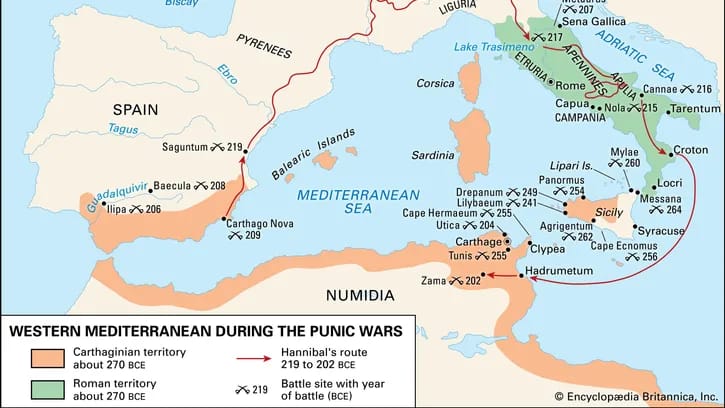
(February 5, 146 bce): Punic Wars ended
The Third Punic War, the last of three between Rome and Carthage, came to an end this day in 146 bce, culminating in the final destruction of Carthage, the enslavement of its people, and Roman hegemony over the Mediterranean.