- Basedment
- Posts
- Patriot Missiles, Spain Unrest & Whispers Around Xi’s Future
Patriot Missiles, Spain Unrest & Whispers Around Xi’s Future
Your daily dose of geopolitical updates and strategic analysis. Unbiased, but not unbased.

Editor-in-Chief
July 14, 2025
THE BRIEFING
Here’s what’s happening in geopolitics today.
Today’s top stories span a broad spectrum - from U.S. air defence support for Ukraine and high-level diplomatic meetings in Kyiv, to deadly clashes in Syria and renewed unrest in Spain.
Trade tensions continue to simmer as Trump’s tariff policy expands, while Indonesia is shaken by yet another earthquake. Regional fault lines, both political and literal, are once again in focus.
In today’s deep dive, we turn to Beijing, where quiet rumours of internal dissent have sparked fresh speculation about Xi Jinping’s grip on power.
THE LAST 24 HOURS IN GEOPOLITICS
1. US to send patriot air defence missiles to Ukraine
The United States has announced it will supply Patriot air defense missile systems to Ukraine, marking a significant escalation in support after previously pausing some weapons deliveries. President Trump said the systems will be fully funded by the European Union and are urgently needed as Ukraine faces intensified Russian missile and drone attacks. This decision signals a toughening U.S. stance toward Putin’s aggression and aligns with NATO’s increasing efforts to bolster Ukraine’s air defences.
read more
2. US envoy Kellogg arrives in Kyiv on Monday to discuss security & sanctions
Trump’s special envoy, Lt. Gen. Keith Kellogg, landed in Kyiv on Monday to spearhead high-level discussions focused on security collaboration and sanctions against Russia. Ukrainian Presidential Chief of Staff Andriy Yermak said the agenda includes bolstering defence capabilities, weapon shipments, civilian protection, and tighter cooperation between Washington and Kyiv. President Zelenskyy has instructed military leaders to brief Kellogg on Russia’s evolving military posture and Ukraine’s strategic needs, while meetings with intelligence chiefs are also on the roster.
read more
3. Magnitude 6.7 earthquake strikes Indonesia’s Tanimbar Islands region
Indonesia was jolted by a magnitude 6.7 earthquake off the coast of the Tanimbar Islands on Monday, the country’s geophysics agency reported, noting there was no tsunami threat following the quake’s 98 km depth. Tremors were felt across several small towns in eastern Indonesia, but early reports from disaster officials indicate no damage or casualties. This seismic event underscores the ongoing activity along the Pacific Ring of Fire, where Indonesia is particularly prone to such unpredictable earthquakes.
read more
4. More than 30 killed in sectarian clashes in Syria’s Sweida
At least 37 people have been killed in fierce sectarian clashes in the predominantly Druze city of Sweida, southern Syria, as fighting erupted between Druze militias and Sunni Bedouin tribes following a wave of kidnappings, including the abduction of a local merchant. Reports indicate that close to 100 people were injured amid escalating confrontations and that Syrian security forces have deployed in an attempt to restore order . This violence marks a dangerous intensification of sectarian divisions in the region and underscores the fragility of stability in post-Assad Syria.
read more
5. ‘Far-right’ groups and migrants violently clash again in Spanish town
At least eight individuals have been detained in Torre Pacheco, southeastern Spain, following violent clashes over the weekend involving far‑right activists and North African migrants. Riot police resorted to rubber bullets to disperse hooded youths who hurled glass bottles, in response to a prior assault on an elderly man that ignited tensions. Interior Minister Fernando Grande‑Marlaska blamed xenophobic hate speech from groups like Vox for fueling the unrest and warned of orchestrated violence via social media–organised “patrols,” prompting the deployment of over 90 Guardia Civil officers to restore order.
read more
DAILY DEEP DIVE
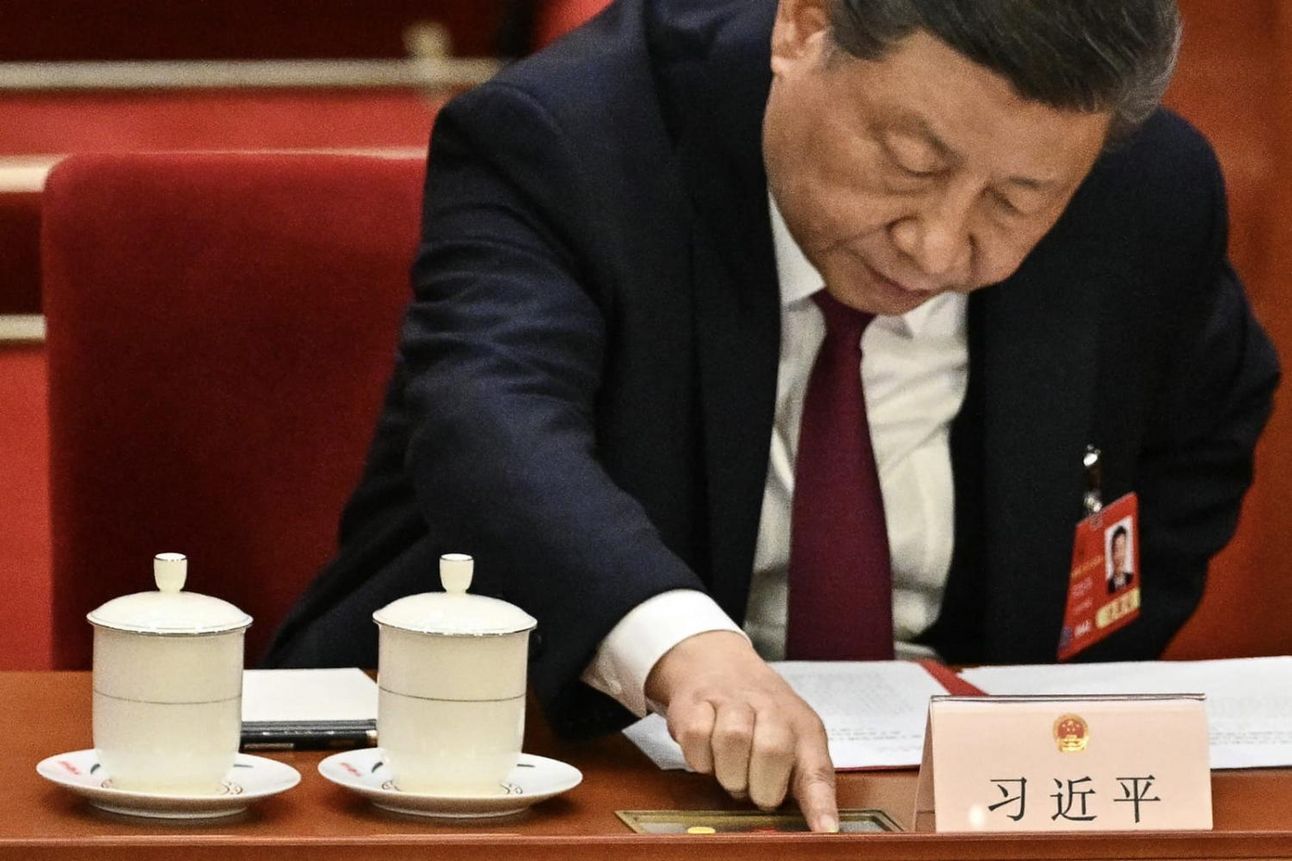
Xi Jinping: Sidelined or Still Supreme?
Rumours are swirling that China’s once-unchallengeable leader, Xi Jinping, is on the political ropes. This July 2025 wave of speculation, revived stories of a “slipping grip” or secret coup and has jumped from fringe chatter to mainstream headlines. It’s worth asking: what exactly is fuelling this latest round of gossip, and how much weight can it carry?
Fuelling the speculation
Observers point to a series of odd signals. In recent weeks Xi has missed events he normally wouldn’t: for example, he skipped the 2025 BRICS summit in Brazil and sat out at least one Politburo meeting. Meanwhile, high-profile shake-ups (i.e. the sudden disappearances or demotions of top generals and ministers) lend an air of turmoil. Outside China, analysts even scrutinize state media for “coded” language or a dip in Xi’s name-recognition as secret clues. All these tantalize rumor-mongers:
Absent Appearances: Xi’s no-shows at foreign forums (notably BRICS) and gaps in his public schedule.
Party Shakeups: A spate of purges or disappearances among senior PLA officers and officials, hinting at internal strife. (Experts note these moves could just as easily signal Xi consolidating control as losing it.)
Media Signals: Analysts scan state outlets for odd phrasing, fewer mentions of Xi, or sudden emphasis on other leaders – signs some interpret as a hidden crisis.
Echo Chambers: Discussion of these items is amplified on obscure Chinese-language YouTube and social-media channels (often linked to exiled dissidents or Falun Gong affiliates) as well as in alarmist Western commentaries.
Rumours in the Media and Online Sources
Much of the noise comes from beyond Beijing. Chinese exile media and diaspora forums have long trafficked sensational claims. As The Australian Financial Review notes, Xi rumors “surface on obscure Chinese-language YouTube accounts, often linked to exiled dissident groups or… Falun Gong,” a movement notorious for online misinformation.
In the West, even mainstream outlets have unwittingly fanned the flames: for instance, a New York Post op-ed by a former diplomat (with little China expertise) garnered attention for warning of an imminent coup. Some social feeds and partisan sites churned these snippets into headlines about an “End of Emperor Xi”. Yet many experts urge caution. An Indian analyst writes that “speculating too much about Xi’s control… just because of his absence is bound to be lazy, inaccurate analysis”
This doesn’t mean no one’s talking. Notably, some Chinese state outlets themselves reported internal party “institutional reforms” and a new Politburo lineup, stories that pundits in Beijing interpreted as succession hints. But official spin casts those as routine updates, while the CCP remains characteristically silent on private matters. In any case, there is a clear echo-chamber effect: one obscure post about Xi’s health gets picked up by fringe Twitter, then amplified by fringe blogs, then by some hungry news sites, then (sometimes) by broader media. By the time it hits the papers, it may seem urgent though as journalist Jessica Sier observes, it’s often “internet mischief and wishful thinking” with “little more than” it.

Passing the evidence
So what does the sober evidence say? As yet, little concrete has emerged from official channels. In fact, analysts tracking Chinese state media find Xi still dominates the headlines. A China Media Project study showed Xi on People’s Daily’s front pages nearly as often in mid-2025 as in mid-2024. No other Politburo figure saw a surge of coverage – Li Qiang (the premier) appeared just as rarely in both years. In summary, “he remains dominant,” concludes the CMP. Likewise, other data points seem at odds with a sidelining: Xi is still hosting foreign leaders in Beijing and making diplomatic trips (even if he let Premier Li Qiang go to Rio in his place). His high command remains packed with allies – the entire 7-member Standing Committee is his pick – and no one has publicly replaced him or announced a successor.
Bill Bishop of the Sinocism newsletter sums it up bluntly: tracing these rumors reveals “no sources” and “given everything observable, you’ve got to bring a lot more evidence” before concluding Xi is in trouble. Likewise, the AFR report stresses that real palace coups usually leave visible signs, such as mass arrests, confession TV, or dramatic reshuffles - none of which we’ve seen.
What now?
Is Xi truly untouchable, or is this all misdirection? The truth may lie somewhere in between. China watchers acknowledge that opaque CCP politics mean surprises are always possible. A new health crisis or a sudden house arrest could be unfolding behind closed doors but so far there’s no verified proof. On balance, the recent heat of rumor seems to tell us more about anxious observers than about Beijing itself.
For now, the safest bet is skepticism. Scholars remind readers that a patient autocrat like Xi often prefers “strategic patience” and silence over public drama. Xi may simply be focusing on China’s economy and avoiding distractions (which is exactly what a nominally powerful leader would do). Until the CCP itself breaks its usual silence, all talk of a coup or retirement remains unconfirmed. In the meantime, this episode is a cautionary tale in modern geopolitics: with China’s leadership shrouded from view, rumour spreads easily, but it must still survive the litmus test of facts.
TWEET OF THE DAY
Anyone else experiencing secondhand embarrassment…?
Trump is hilarious dude😂
Reece James looked at him and said “You staying?🤨”
— Kiko Suarez (@imkikosuarez)
10:09 PM • Jul 13, 2025
TODAY IN HISTORY
(July 14, 1789): Bastille stormed by Paris mob.
On this day in 1789, a mob advanced on the Bastille in Paris, demanding the arms and munitions stored there, but, when the guards resisted, the crowd captured the prison, an act that symbolized the end of the ancien régime.
