- Basedment
- Posts
- Red Sea Attacks, New Tariffs & Syria's Burning Crisis
Red Sea Attacks, New Tariffs & Syria's Burning Crisis
Your daily dose of geopolitical updates and strategic analysis. Unbiased, but not unbased.

Editor-in-Chief
July 09, 2025
THE BRIEFING
Here’s what’s happening in geopolitics today.
Global politics saw another whirlwind day, from Trump reshaping U.S. policy on Syria and rattling trade partners in Asia, to European royal diplomacy and renewed maritime violence in the Red Sea.
Netanyahu made headlines by nominating Trump for the Nobel Peace Prize, praising his Middle East peace efforts, while deadly Houthi attacks underscored the region’s ongoing volatility. Meanwhile, King Charles welcomed President Macron in a historic display of post-Brexit unity, even as trade tensions spike between the U.S. and its key Asian allies.
Today, we shift our focus to Syria’s fragile coastal regions, where raging wildfires are testing the mettle of the country’s new government and deepening an already complex humanitarian crisis.
THE LAST 24 HOURS IN GEOPOLITICS
1. Trump Administration revokes terrorism designation of new Syrian leader’s group
President Trump announced the lifting of most U.S. sanctions on Syria, citing requests from Middle Eastern leaders, including Israeli Prime Minister Benjamin Netanyahu. This move follows his meeting with Syria's new president, Ahmed al-Sharaa, a former al-Qaeda affiliate leader who assumed power after the ousting of Bashar al-Assad in late 2024. Trump praised al-Sharaa's leadership, stating, "He comes from a tough background—it's a tough part of the world," and emphasized the opportunity for Syria to rebuild and reintegrate into the international community. While sanctions related to human rights abuses and the Caesar Act remain in place, the decision marks a significant shift in U.S. policy towards Syria.
read more
2. Netanyahu nominates Trump for Nobel Peace Prize
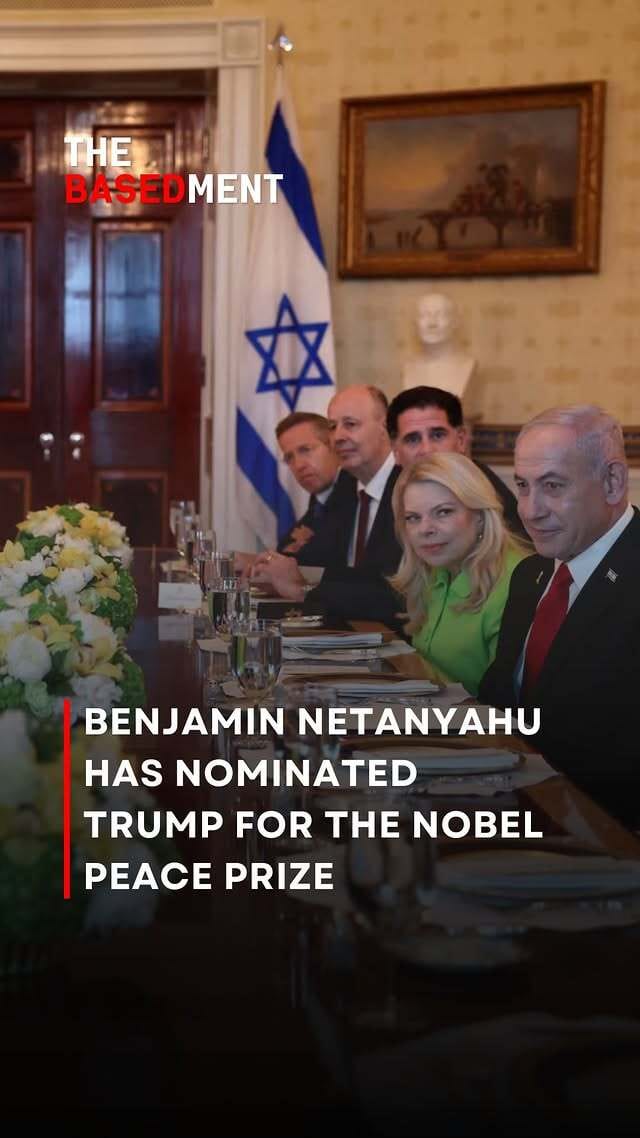
During a recent meeting at the White House, Israeli Prime Minister Benjamin Netanyahu formally nominated U.S. President Donald Trump for the 2026 Nobel Peace Prize, citing his role in brokering the Abraham Accords. These agreements, established in 2020, normalized relations between Israel and several Arab nations, including the UAE, Bahrain, Sudan, and Morocco. Netanyahu praised Trump's leadership in advancing regional peace, stating that his efforts have led to "forging peace in one country and one region after the other."
read more

3. 2 crew dead, 2 hurt as Yemen’s Houthis resume Red Sea attacks
Two crew members were killed and at least two others injured when the Greek-owned, Liberian-flagged bulk carrier Eternity C was attacked in the Red Sea. The assault, involving sea drones and speedboats, occurred near Yemen's Houthi-controlled port of Hodeidah and marks one of the deadliest maritime incidents in the region this year. The attack is part of a renewed campaign by Yemen's Houthi rebels, who have resumed targeting commercial vessels in the Red Sea, disrupting global shipping routes and escalating regional tensions.
read more
4. King Charles hosts Macron in first European state visit since Brexit
King Charles hosted French President Emmanuel Macron at Windsor Castle on July 8, marking the first European state visit to the UK since Brexit. The visit, rich in ceremonial pageantry, underscores a renewed commitment to Anglo-French cooperation amid shared challenges such as defense, migration, and climate change. Macron's itinerary includes addressing the UK Parliament and engaging in discussions with Prime Minister Keir Starmer, focusing on bolstering European security and supporting Ukraine.
read more
5. Japan, South Korea face 25% tariffs as Trump ramps up trade war in letters to 14 nations
President Trump has announced plans to impose a 25% tariff on all goods imported from Japan and South Korea starting August 1, 2025, unless new trade agreements are reached. In letters sent to the leaders of both nations, Trump cited significant trade deficits and emphasized the need for more balanced trade relationships. The proposed tariffs have raised concerns about escalating trade tensions and potential impacts on global markets.
read more
DAILY DEEP DIVE
Latakia Fires: Environmental Crisis or Deliberate Arson? A Glimpse into the Challenges Jolani May Soon Face
As wildfires continue to devastate Syria’s Latakia and Tartous provinces, consuming over 180 square kilometers of forest in less than a week, a new element has emerged: possible arson with sectarian motives. While Syrian authorities have attributed the fires to high temperatures, dry terrain, and strong winds, a jihadist group claiming ties to Islamic State, Saraya al-Ansar al-Sunna, has publicly taken credit for starting at least some of the blazes in the Qastal forest. The group, which has a growing presence in Syria’s coastal region, claims the arson was intended to displace the local Alawite population.
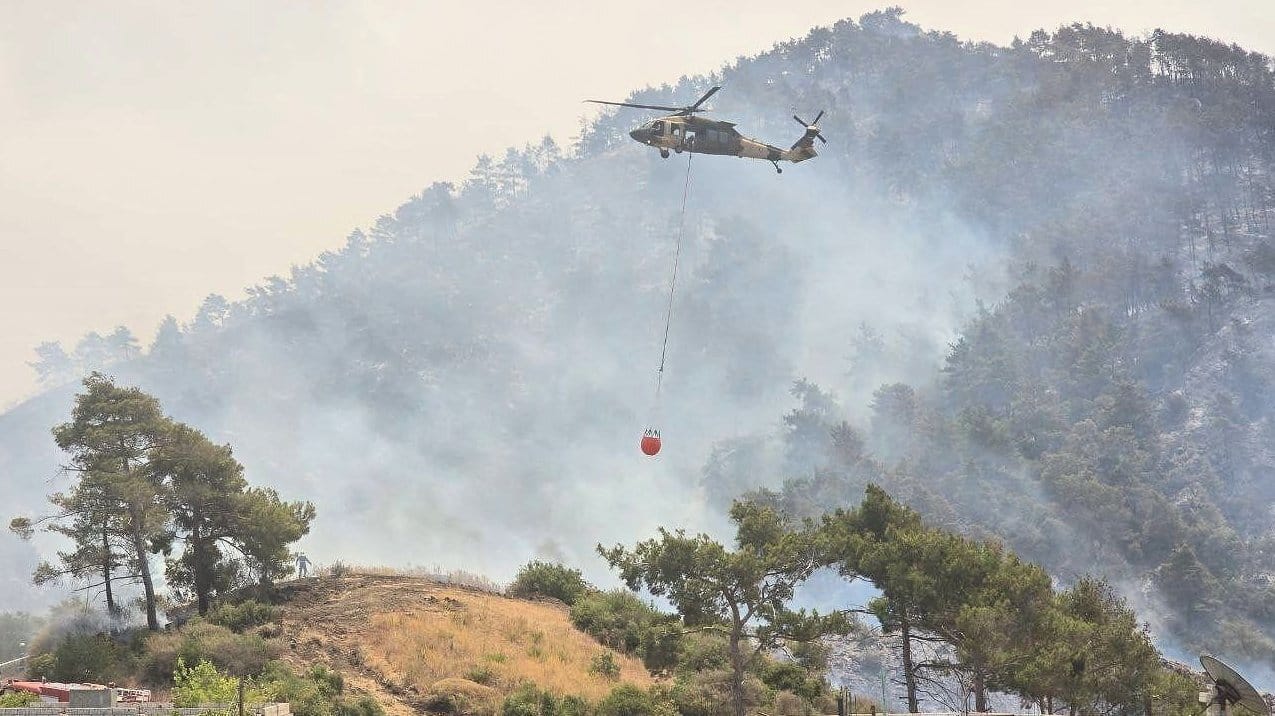
Helicopters used to put out the fires. Countries like Jordan have sent assistance.
No independent evidence has confirmed the group’s claim. However, it is not without precedent. In past years, Islamic State militants set fire to agricultural land in Iraq and called for environmental sabotage as a form of asymmetric warfare. The group’s messaging, analyzed in a recent thread by Syrian researcher Hussam Hammoud, shows increasing sophistication. Its second statement, issued by religious figure Abu Sufyan al-Dimashqi, was ideologically charged and framed the fires as part of a larger campaign against the Syrian government and minority populations.
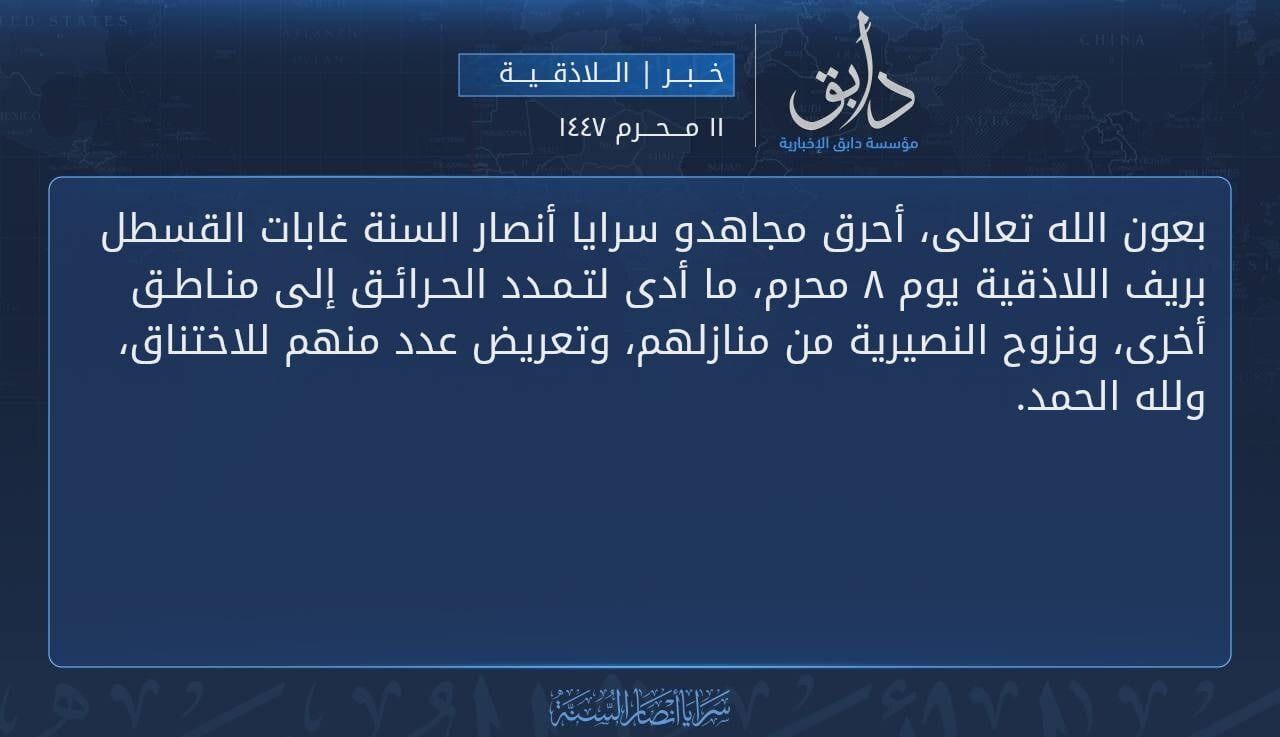
One of the recent statements made by the group
In intelligence terms, Saraya al-Ansar al-Sunna fits the “starfish” model—a decentralised structure made up of autonomous cells or “lone wolf” squads, which makes the group harder to monitor and disrupt. Its messaging blends revolutionary anger with strict jihadist doctrine, targeting both government forces and efforts at communal coexistence.
Note: The group has claimed responsibility for several recent attacks, including the bombing of St. Elias Church.
A glimpse of what may lie ahead
Moving forward, Saraya al-Ansar al-Sunna is likely to continue carrying out and claiming attacks to undermine the legitimacy of Syria’s new government. Syrian society remains fragile, shaped by a decade of bloody sectarian conflict, massacres against Alawites and minorities (allegedly by government forces), Pro-Assad militia’s, as well as Druze unrest and Israeli occupation. The recent wave of arson attacks, which some minority communities accuse the government of either participating in or ignoring, adds further tension. And Saraya recognises this fragility, which is exactly why they commit these attacks as it knows it complicates matters for Jolani.
Another key aim of the group will be to influence groups in Jolani’s new Syrian military and government to side with them, under the belief many would not be happy with Jolani’s public distancing of extremist views.
This raises an important question: how much control does Jolani actually have over the more extremist elements within his ranks? If we assume he did attempt to limit the targeting of minorities earlier this year, it suggests he faces serious challenges in exerting full command. While reports of massacres have declined, some minority communities argue this is not due to improved conditions but rather a policy of enforced concealment—deliberately avoiding the documentation or reporting of such attacks under the new government.
Overall, If left unaddressed, this may signal not an isolated crisis, but the opening chapter of a broader campaign to fracture the fragile order Jolani is trying to build.
Sources:
CNN. (2025, July 6). Wildfires along Syria’s coast a major test for new government. https://edition.cnn.com/2025/07/06/middleeast/wildfires-syria-coast-major-test-for-new-government-intl
France 24. (2025, July 7). Syria wildfires devastate coastal regions, raise questions over response. https://www.france24.com/en/middle-east/20250707-syria-wildfires
Hamoud, H. (2025, July 7). On-the-ground reporting of Syrian coast wildfires. https://x.com/HussamHamoud/status/1941831072825684221
Pace, N. (2014). Decentralisation: The Future of ISIS. Small Wars Journal. https://smallwarsjournal.com/jrnl/art/decentralization-the-future-of-isis
UNOSAT. (2025, July 7). Satellite imagery of Syria wildfires. https://x.com/UNOSAT/status/1942559267581747585
TWEET OF THE DAY
Can we just take a moment to appreciate an absolute cinematic masterclass from Christopher Nolan?
Since its release 11 years ago, just one hour and 31 minutes have passed on Miller's planet in Interstellar.
— cinesthetic. (@TheCinesthetic)
1:01 AM • Jul 7, 2025
TODAY IN HISTORY
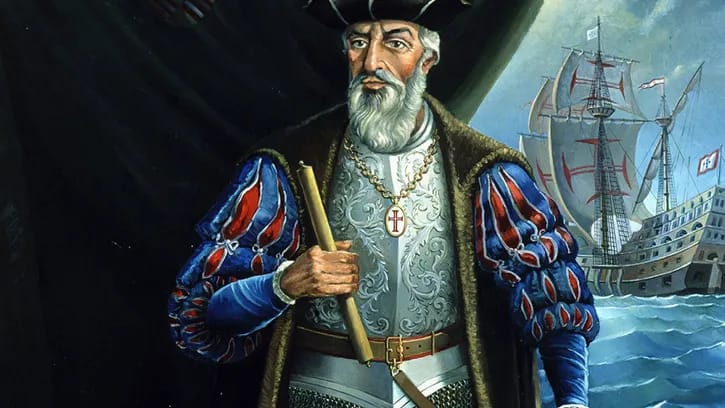
(July 8, 1497): Vasco da Gama's first voyage to India. On this day in 1497, Vasco da Gama sailed from Lisbon with a fleet of four vessels, and he ultimately opened a sea route from western Europe to Asia by way of the Cape of Good Hope, ushering in a new era in world history.