- Basedment
- Posts
- Russia Advances on Lyman, But Old Issues Await
Russia Advances on Lyman, But Old Issues Await
Your daily dose of geopolitical updates and strategic analysis. Unbiased, but not unbased.

Editor-in-Chief
August 31, 2025
THE BRIEFING
Here’s what’s happening in geopolitics today.
Today’s briefing brings you a snapshot of key developments shaping the global stage.
From Washington’s tightening visa rules and a major legal setback to Trump’s trade agenda, to political shocks in Ukraine and Yemen, the day has been marked by fast-moving shifts. We also look at the human toll of violence in Nigeria, where civilians continue to pay the heaviest price.
And in our deep dive, today we return to the Ukraine conflict and examine the Lyman front, where Russia has made progress, but old problems await them.
THE LAST 24 HOURS IN GEOPOLITICS
1. Trump administration proposes shortening visa stays for foreign journalists
The Trump administration has proposed stricter limits on visa durations for international students, cultural exchange visitors, and foreign journalists. Under the new rule, F and J visas would be capped at four years, while I visas for media personnel would be limited to 240 days, and just 90 days for Chinese journalists, who could apply for extensions if needed. The administration defends the move as necessary for better oversight and national security, though critics warn it may significantly hinder academic and journalistic exchange.
read more
2. U.S. appeals court finds many of Trump’s global tariffs are illegal
A U.S. federal appeals court has ruled that most of President Trump’s sweeping global tariffs were illegal, finding he exceeded his authority under the International Emergency Economic Powers Act (IEEPA), which does not explicitly allow the imposition of tariffs. However, the court granted a temporary stay, allowing the tariffs to remain in effect until mid-October to give the administration time to appeal, likely to the Supreme Court. The decision marks a notable legal setback for Trump’s economic agenda and underscores ongoing concerns about the limits of executive power in trade policy.
read more
3. Former Ukrainian parliament speaker Andriy Parubiy shot dead in Lviv
Former Ukrainian parliamentary speaker Andriy Parubiy was assassinated in Lviv on Saturday, shot multiple times by an assailant disguised as a food delivery courier before fleeing on an electric bike as authorities launched Operation Siren to apprehend the suspect. President Zelenskyy condemned the killing as a "horrific murder," pledging full deployment of law enforcement resources to find the perpetrator. Parubiy was a prominent Maidan-era figure and former national security chief, and his death is being mourned as a symbolic blow to Ukraine’s sovereignty movement.
read more
4. Confirmed Head of Yemen’s Houthi Government & some ministers killed in strikes
An Israeli airstrike in Sanaa on Thursday killed the head of Yemen’s Houthi government, Prime Minister Ahmed al-Rahawi, along with several ministers, according to Houthi-run media and confirmed by Reuters sources. The strike, described by Israel as a precision attack on a military target, took place during a government meeting and dealt a significant blow to the Iran-backed group's leadership structure. This marks a major escalation in cross-border tensions at a time when the Houthis have been increasing missile and drone attacks on Israel in solidarity with Palestinians.
read more
5. At least 13 drown fleeing armed men in Northwest Nigeria
At least 13 people drowned and more than 20 remain missing in northwest Nigeria's Zamfara State after their overloaded boat capsized while fleeing an attack by armed assailants, according to local officials and residents. The survivors had been escaping two attacked communities in Birnin Magaji when they boarded a single, overcrowded boat, highlighting the desperation and danger civilians face amid escalating bandit violence.
read more
DAILY DEEP DIVE
A CLOSER LOOK ON THE LYMAN FRONT
From Lyman to Siversk, this area has been Ukraine’s bloodiest defensive line, where rigid command structures and motivated brigades have inflicted tens of thousands of Russian casualties in grinding battles over forests, rivers, and fortified villages.
The situation on the Lyman axis has seen renewed Russian offensive momentum, marked by localised breakthroughs and heavy use of airpower. Russian forces made their most notable progress southeast of Shandryholove after a string of failed assaults. Shifting tactics, they widened their eastern flank along the low-lying ground, consolidating gains in forest plantations. From these footholds, Russian units pushed approximately 3.9km southwest, securing new tactical heights and entrenching themselves in treeline positions. Simultaneously, they improved their hold along two parallel treelines south of Zelena Dolnya, strengthening control over elevated ground critical for further operations.
Northwest of Lyman, Russian troops advanced deeper into Serednje, extending their control from the village centre to its southern outskirts. Reinforcements allowed them to expand westward, capturing treeline positions that broadened their zone of control. These gains came at the cost of setbacks elsewhere: Russian forces failed to consolidate on the northern outskirts of Shandryholove and withdrew, while Ukrainian forces pulled back north of Serednje, creating a contested grey zone. Overall, Russian advances in the sector amounted to roughly 6.64km² of new territory.
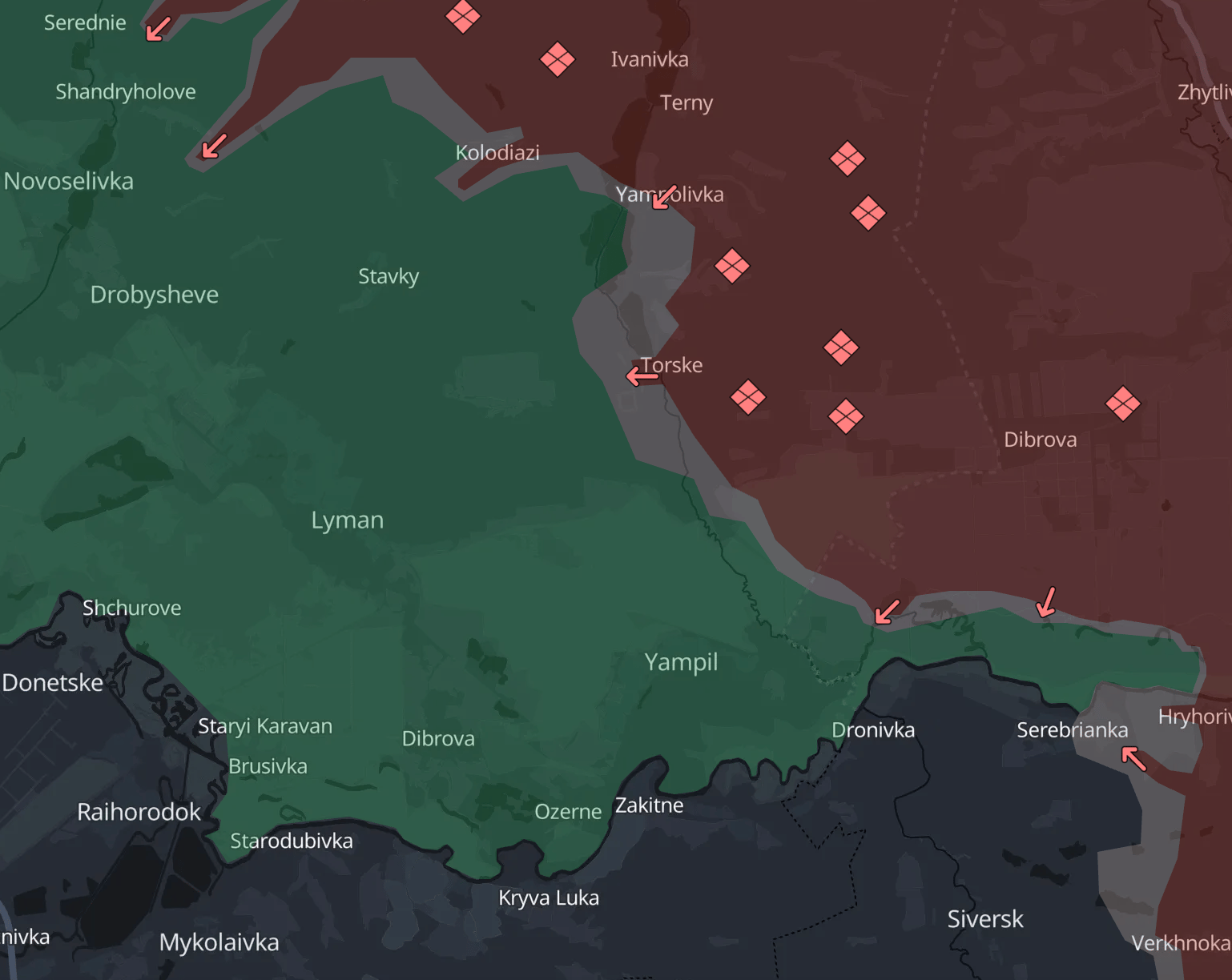
With the fall of Torske, the push to Lyman has become easier. Notice the green shading, that is previous Russian territory in 2023. Note the border on the river. Russian units were never able to secure a bridgehead over it.
The wider battlefield context reinforces the significance of these tactical gains. The fall of the fortified Serebyanka forest earlier this month and incremental progress northwest of Lyman have opened avenues for further Russian pressure. The Russian air force has played a decisive role, conducting nearly 800 strikes in Lyman and Siversk, with over 80% concentrated in the past three weeks. This intensity underscores Moscow’s effort to break Ukrainian defences through relentless aerial bombardment paired with ground assaults.
Ukrainian sources, some linked to military intelligence, suggest Russian advances near Shandryholove remain ongoing, though these reports are not fully verified. Fighting has also been reported near Novomykhailivka, Ridkodub, Zelena Dolyna, Torske, and within the Serebryanske forest. Meanwhile, geolocated footage confirmed the involvement of Russia’s 144th Motorized Rifle Division, supported by advanced drone units such as the Rubikon Center and elements of the 752nd Motorized Rifle Regiment, highlighting the integration of UAVs and unmanned ground vehicles in combined-arms operations

Amazing map by Clement, showing concentration of FAB airstrikes using satellite imagery.
The Strategic Importance of Lyman
The battle for Lyman is not only about immediate tactical gains but also about shaping the operational environment for a future offensive against Sloviansk. Lyman sits as the last major settlement directly north of Sloviansk, making it a natural gateway for any advance deeper into Donbas. If Russia secures the town and surrounding heights, it would improve its ability to project force southwards and attempt an envelopment of Sloviansk from the northwest.
This objective is not new. In 2023, Russia simultaneously controlled Izyum and Lyman, giving it positions north and east of Sloviansk. At that time, many anticipated a major offensive designed to cut off the city. Yet, the operation never materialised. The reasons were multiple: poor logistics, high casualties, and, most critically, the unforgiving terrain. North and east of Sloviansk lies the Siverskiy Donets River, a marshy, heavily forested natural barrier. This river line has long been a formidable obstacle, shielding Sloviansk and Kramatorsk, the twin strongholds of Ukraine’s eastern defences.
The dangers of this terrain were clearly demonstrated in 2023, when Russian forces attempted multiple crossings of the Siverskiy Donets. Ukrainian artillery and drones decimated the Russian columns, leaving behind wrecked vehicles and heavy casualties and destroyed pontoon bridges. Those failed crossings became emblematic of the limits of Russian offensive capability against fortified river positions.
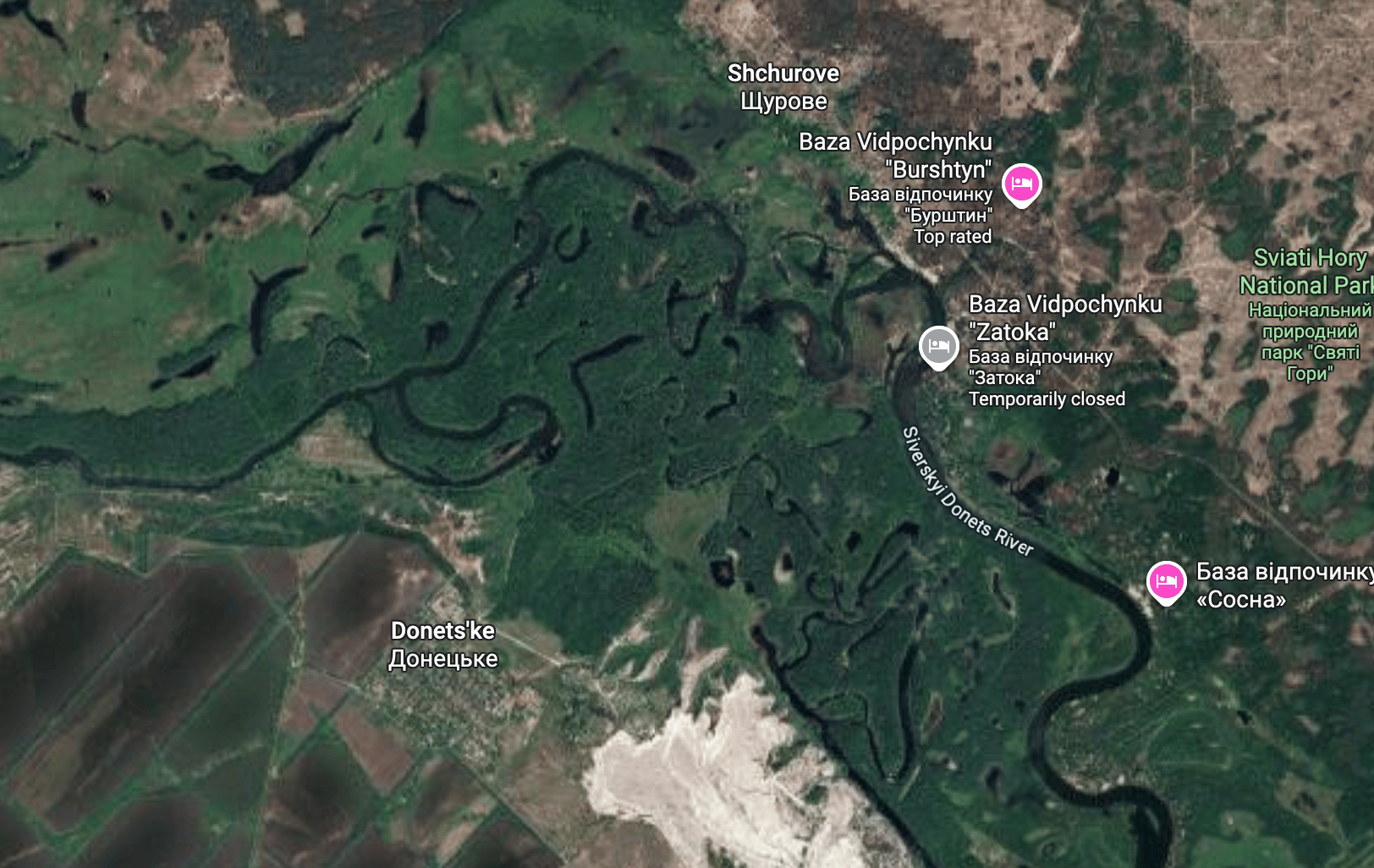
One of the key reasons Russian units could never push through, just look at this terrain.
Sources:
Clement_Molin on Telegram
Deepstate.com
Suriyak on Telegram
ISW 29/08/2025
AMK_Mapping on Telegram
TWEET OF THE DAY
Interesting. Very interesting.
BREAKING NEWS: Out of the top 200 insider trades over the last week (by value). 0/200 were buy orders. I have never seen anything like this in my life.
— Kevin Malone (@Malone_Wealth)
4:14 AM • Aug 29, 2025
TODAY IN HISTORY
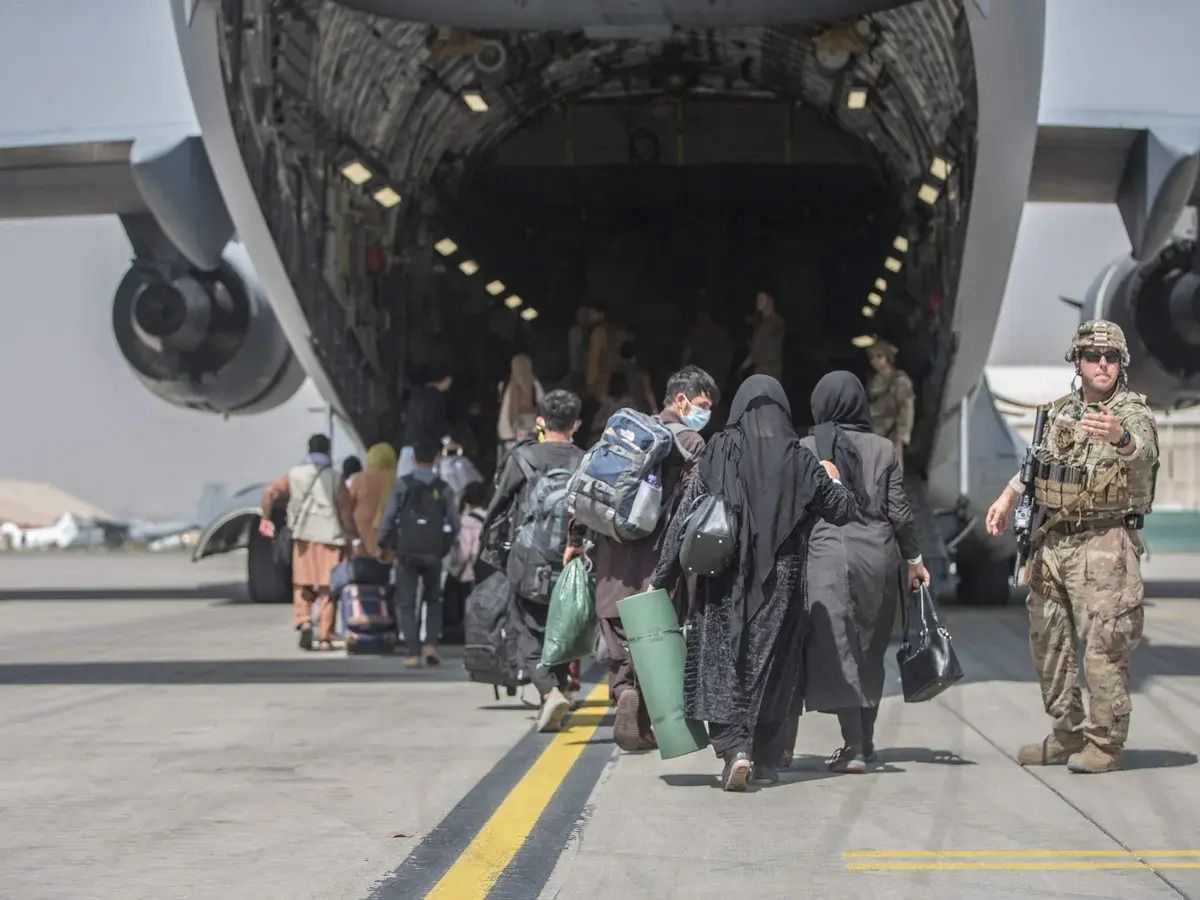
(August 30, 2021): On this day in 2021, the United States completed its final withdrawal from Afghanistan, bringing to a close a chaotic exit that unfolded seven years after the war had been officially declared over. Though combat operations ended in 2024, U.S. forces had remained in advisory and counterterrorism roles, and their eventual departure marked the conclusion of America’s two-decade involvement in the country.