- Basedment
- Posts
- Russia Makes Gains On Southern Front
Russia Makes Gains On Southern Front
Today we examine Russian advances across Siversk, Hulyaipole and Zaporzhizhia.

Editor-in-Chief
December 28, 2025
THE BRIEFING
Here’s what’s happening in geopolitics today.
It’s a packed global docket today. From a fragile ceasefire easing deadly fighting on the Thailand–Cambodia border and China sharpening its legal tools for the next phase of the trade war, to a diplomatic shocker with Israel recognising Somaliland.
We’re also tracking accountability in Malaysia as Najib Razak’s 1MDB saga deepens, alongside Myanmar heading to the polls under the shadow of civil war and a worsening humanitarian crisis.
In today’s Deep Dive, we examine Russian advances across Siversk, Hulyaipole and Zaporzhizhia.
QUICK WORD FROM TODAY’S SPONSOR
Turn AI Into Extra Income

You don’t need to be a coder to make AI work for you. Subscribe to Mindstream and get 200+ proven ideas showing how real people are using ChatGPT, Midjourney, and other tools to earn on the side.
From small wins to full-on ventures, this guide helps you turn AI skills into real results, without the overwhelm.
THE LAST 24 HOURS IN GEOPOLITICS
1. Thailand and Cambodia sign truce to halt brutal border war
Thailand and Cambodia signed a ceasefire agreement to halt weeks of intense border clashes that represent the worst fighting between the two neighbours in years, involving artillery, rocket fire and even fighter jet sorties along their disputed frontier. The truce, agreed by both countries’ defence ministers, calls for an immediate halt to hostilities, maintenance of current troop positions and no reinforcements, and comes after more than 100 people were killed and hundreds of thousands displaced in recent weeks of fighting. While the ceasefire brings a pause in violence, it does not yet resolve the longstanding territorial disputes that underlie the conflict.
read more
2. China passes revised foreign trade law to bolster trade war capabilities
China’s top legislature on Saturday passed a major revision to its Foreign Trade Law, set to take effect on March 1, 2026, marking the first sweeping overhaul of the legislation in decades as Beijing seeks to strengthen its legal footing amid rising global trade friction. The revised law incorporates new provisions to safeguard national sovereignty, security and development interests, broaden China’s ability to respond to external economic threats and align trade rules with high-standard international norms. It also aims to enhance intellectual property protections, improve compliance and risk response for foreign trade operators, and expand China’s legal toolkit for countermeasures in foreign trade disputes.
read more
3. Israel becomes first country to recognise Somaliland
Israel officially became the first country in the world to recognise the Republic of Somaliland as an independent and sovereign state, signing a mutual declaration with Somaliland’s president to establish full diplomatic relations, including the planned exchange of ambassadors and opening of embassies. Somaliland, which declared independence from Somalia in 1991 but had remained unrecognised by any United Nations member, hailed the move as a historic breakthrough and said it intends to pursue membership in the Abraham Accords.
read more
4. Former Malaysian PM Najib Razak jailed for 15 more years in 1MDB graft scandal
Former Malaysian Prime Minister Najib Razak has been sentenced to an additional 15 years in prison after being found guilty on multiple charges of abuse of power and money laundering tied to the multibillion-dollar 1Malaysia Development Berhad (1MDB) scandal, in what Malaysian media and court records describe as the largest trial linked to the affair. The High Court also imposed fines totaling about 11.4 billion Malaysian ringgit and ordered the recovery of roughly 2 billion ringgit in assets, with the new sentence set to begin after he completes his current term on a separate 1MDB-linked conviction. Najib, 72, who denied wrongdoing and claimed the funds were political donations, has indicated plans to appeal the verdict.
read more
5. Myanmar goes to the polls amid civil war and humanitarian crisis
Myanmar begins its first general election in five years on Sunday, a staggered multi-phase vote scheduled to run through January 25, 2026, but the process is unfolding amid a deepening civil war and one of Asia’s most severe humanitarian crises. Tens of millions of people are in need of aid, with over 3.6 million internally displaced and millions facing acute hunger and food insecurity, while ongoing fighting and exclusionary conditions have limited voting in many contested areas. The election has drawn widespread criticism from rights groups and opposition figures who argue it will neither be free nor fair and is aimed at legitimising continued junta control.
read more
DAILY DEEP DIVE
UKRAINE WAR UPDATES
Hulyaipole Direction
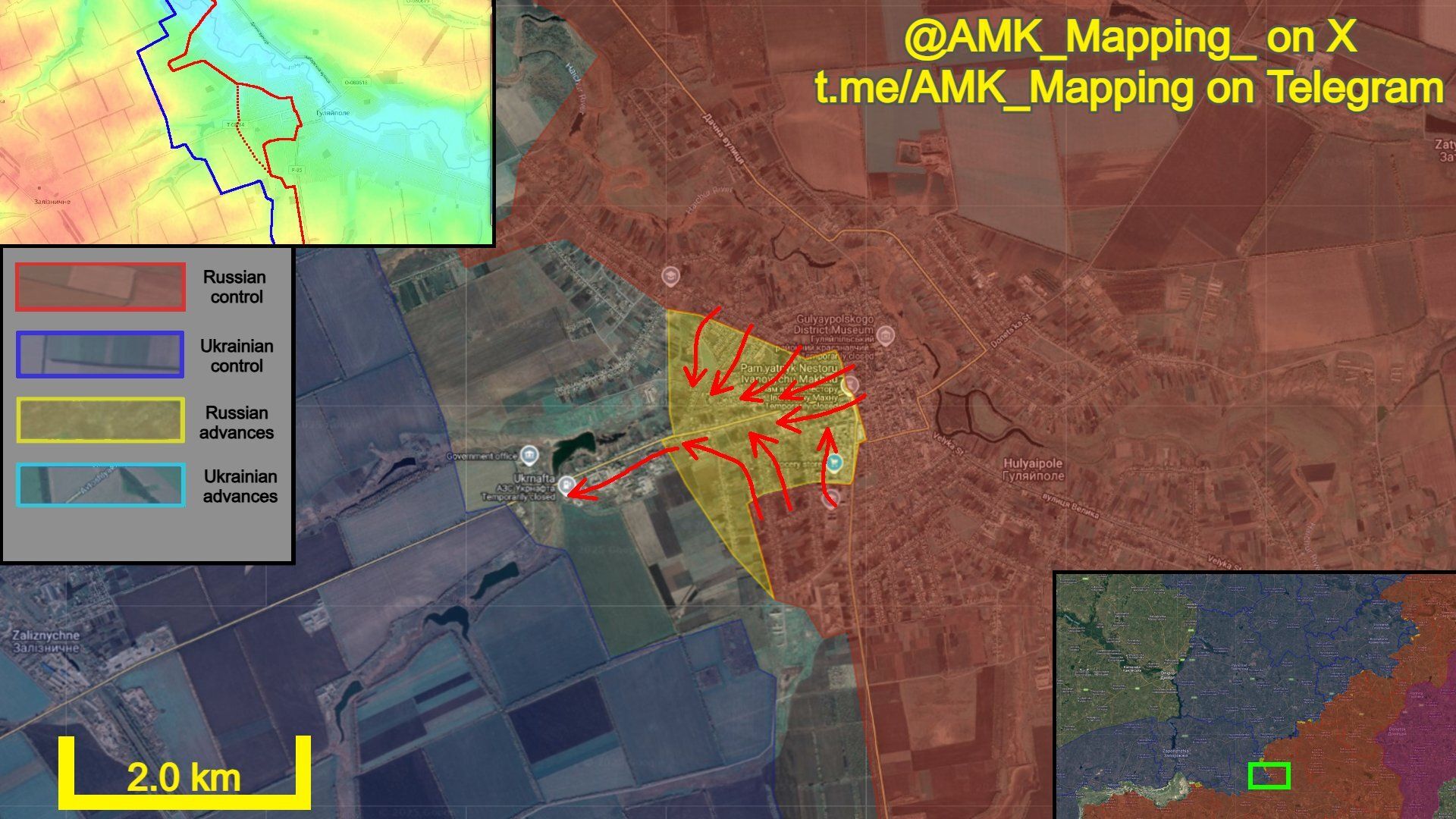
Russian forces continued advancing in Hulyaipole as the last organised Ukrainian defences collapsed. Pushing west from the administrative building, Russian troops captured the remainder of the city centre, forcing Ukrainian units to abandon their remaining high-rise strongholds. This triggered a rapid collapse of defensive lines and allowed Russian forces to seize large sections of low-rise residential areas. Assaults have since shifted toward the industrial zone on Hulyaipole’s western edge, with most remaining residential streets now under Russian control. The collapse was driven by severe coordination failures and poor command decisions on the Ukrainian side, leading to multiple encirclements and heavy losses during a disorganised withdrawal.
Siversk / Rai-Oleksandrivka Direction
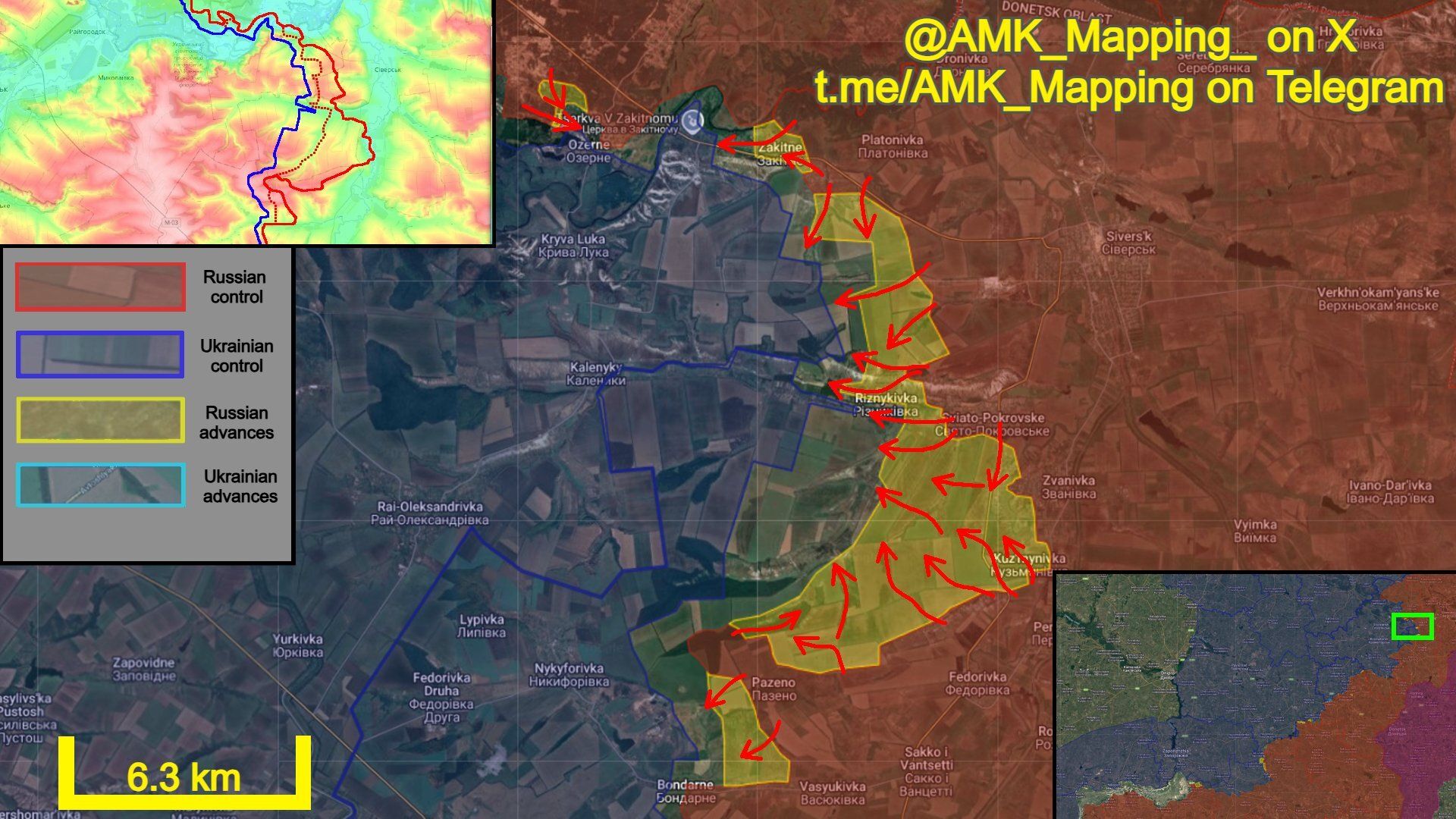
Russian forces made major gains west of Siversk, advancing rapidly across a broad front. Assault units pushed west from Pazeno, capturing treelines, forested gullies, and key tactical heights. Ukrainian positions around Kuzmynivka collapsed after being outflanked, enabling coordinated advances from Sviato-Pokrovske that fully broke Ukrainian lines south of the settlement. Russian troops consolidated along the Sukha River heights, entered Riznykivka from multiple directions, and expanded control west of Siversk toward Zakitne. Fighting continues inside Zakitne and around Ozerne, where forests and residential areas are steadily being cleared.
What has been most shocking is the fall of this front since the city of Siversk has fallen. It seems that Ukrainian defence was caught off guard when the Russians took the tactical heights south of Siversk. Ukrainian outlets Ukrainska Pravda and DeepState report that the commander of the 54th Mechanised Brigade has been dismissed following the loss of Siversk and allegations of misleading frontline reporting. Separately, the commander of the 10th Mountain Assault Brigade is expected to be removed once he returns from medical treatment.
Zaporizhzhia / Vasylivka Front
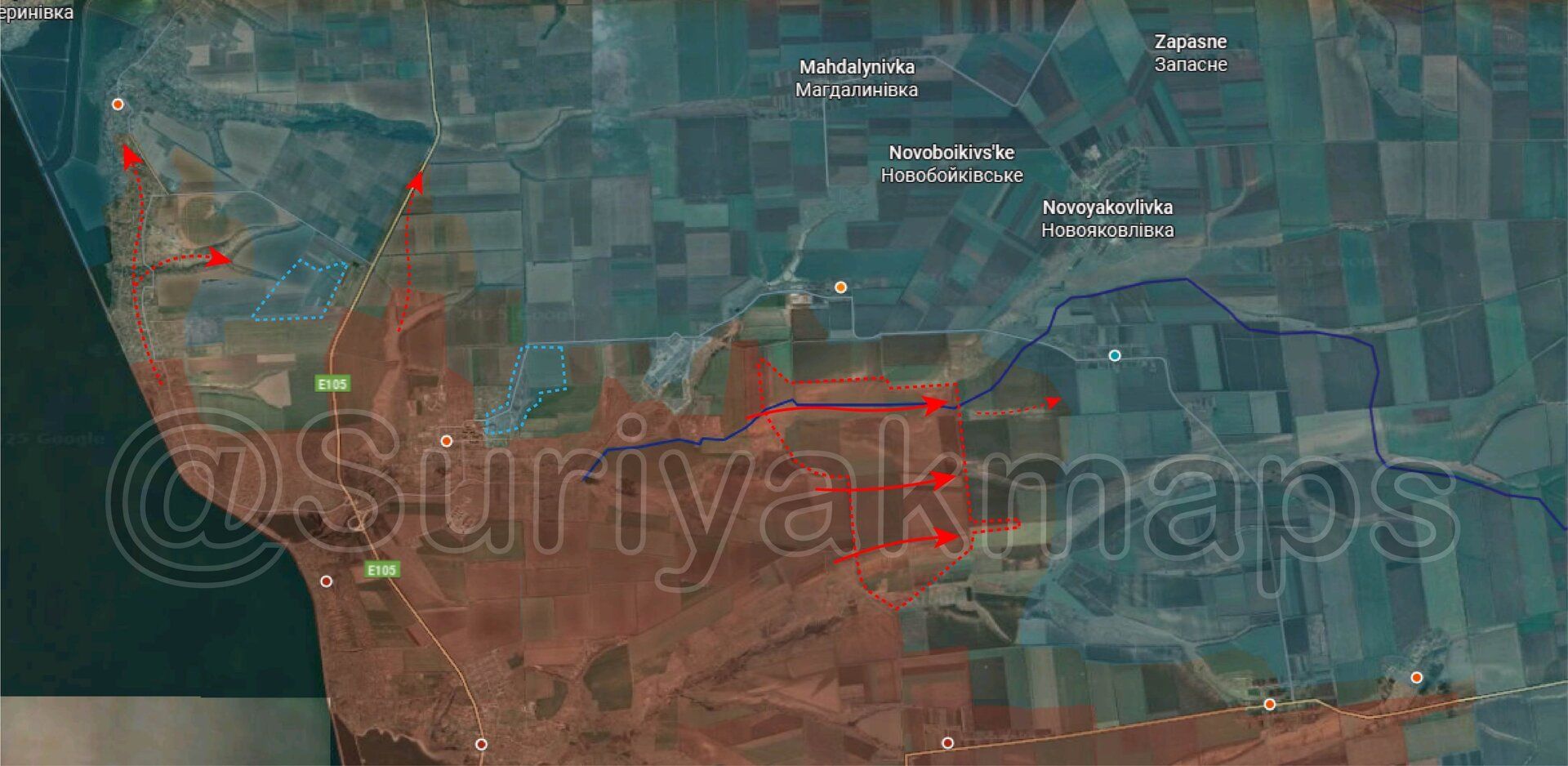
On the Vasylivka front in Zaporizhzhia Oblast, Russian forces continued capturing Ukraine’s main defensive line southeast of Lukyanivske toward Pavlivka. Around Stepnohirsk, Russian troops fully control the high-rise buildings, while Ukrainian soldiers remain isolated in cellars in the northeastern sector. Russian reconnaissance and sabotage groups have expanded operations north of Stepnohirsk and Prymorske, placing southern parts of these localities in a grey zone or under Russian control. The situation reflects mounting pressure on Ukrainian defences, with frontline stability deteriorating amid persistent probing attacks and infiltration tactics.
While most people are focussed on Donetsk, I would advise you to keep your eyes on this frontline. The Russians have managed to breakthrough several frontline fortifications in this area and continue to advance.
Sources
News/Journal sources available upon request, not shown to maintain visual integrity of page.
TODAY IN HISTORY
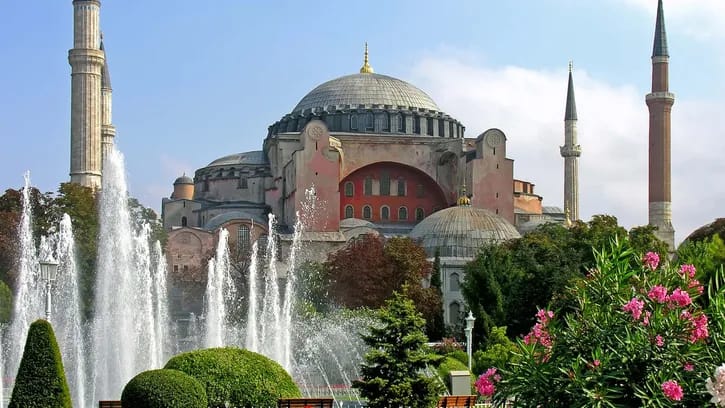
(December 27, 537): Hagia Sophia consecrated
When it was consecrated on this day in 537 as an Eastern Orthodox church, the Hagia Sophia was the world's largest church. In subsequent centuries it became a Roman Catholic cathedral, a museum, and a mosque.