- Basedment
- Posts
- Russia strikes Azerbaijan-Ukraine relationship where it hurts
Russia strikes Azerbaijan-Ukraine relationship where it hurts
Your daily dose of geopolitical updates and strategic analysis. Unbiased, but not unbased.

Editor-in-Chief
August 08, 2025
THE BRIEFING
Here’s what’s happening in geopolitics today.
Today’s top stories include a new round of joint US–South Korea military drills, confirmation of an upcoming Trump–Putin summit, and ASEAN observers stepping in to monitor a fragile Cambodia–Thailand ceasefire.
In the Pacific, Solomon Islands has barred several major powers (including the U.S., China, and Taiwan) from its biggest political summit, while Iran has carried out another high-profile execution tied to espionage allegations. Each of these developments points to shifting alliances and the increasingly complex dynamics shaping today’s geopolitical environment.
In our deep dive, we explain the recent events in the rift between Azerbaijan and Russia, as Azerbaijan continues to cozy up to Ukraine.
THE LAST 24 HOURS IN GEOPOLITICS
1. South Korea and USA to conduct major military drills
South Korea and the US will kick off their annual Ulchi Freedom Shield military exercises on August 18, continuing an 11‑day training routine designed to test readiness against evolving North Korean threats. This year’s drills include both command simulations and field exercises, but due to extreme heat, half of the originally planned field activities have been postponed to September to maintain a balanced year‑round defence posture.
read more
2. Trump to meet Putin in ‘coming days’ as ceasefire deadline looms
The Kremlin has confirmed that Vladimir Putin and Donald Trump will meet “in the coming days,” marking their first face-to-face summit since 2021, this time reportedly initiated by the U.S. side, with logistical preparations already underway and the United Arab Emirates flagged as a possible venue. Observers note the timing is critical, coming just as diplomatic pressure mounts around Ukraine and a looming ceasefire deadline.
read more
3. Cambodia and Thailand agree to ASEAN observers to ensure ceasefire holds
Thailand and Cambodia have agreed to deploy ASEAN observer teams to monitor disputed border areas and ensure the fragile ceasefire holds following last month’s deadly five-day clash. The deployment was finalized during a four-day General Border Committee meeting in Kuala Lumpur, attended by defense officials from both nations and observers from China and the U.S. This collaborative monitoring mission signals an important step toward restoring trust and stability in the region.
read more
4. Solomon Islands blocks US, China, Taiwan from Pacific’s top political meet
Solomon Islands Prime Minister Jeremiah Manele announced that 21 donor countries, including the U.S., China, and Taiwan will be excluded from the upcoming Pacific Islands Forum summit, citing an incomplete review of diplomatic relations as the reason for their exclusion. This decision follows Beijing’s pressure to effectively marginalize Taiwan and signals a recalibration of regional engagement norms that traditionally welcomed external partners. Critics see the move as a lost opportunity for vital donor engagement and a sign of growing Chinese influence, raising concerns about shifts in how the aid-dependent Pacific convenes critical dialogue.
read more
5. Iranian Government executes spy for Israel and ISIS terrorist
Iran has executed Rouzbeh Vadi, a nuclear safety expert, after accusing him of passing classified information to Israel’s Mossad, information allegedly linked to the assassination of an Iranian nuclear scientist who died during Israel’s June strikes. State media reported that Vadi met Mossad agents in Vienna and appeared on TV with a confession, though human rights groups question the fairness of such trials. His execution, carried out after Iran’s Supreme Court upheld the sentence, marks the seventh public execution for espionage since the recent escalation with Israel began.
read more
DAILY DEEP DIVE
Russia strikes at the heart of Azerbaijan realignment with the West.
Tensions between Azerbaijan and Russia have remained elevated since the 2024 incident in which a Russian air defense unit accidentally shot down an Azerbaijani passenger aircraft near the North Caucasus region. The event triggered a sharp deterioration in bilateral relations and exposed the fragility of Moscow–Baku ties, long complicated by regional rivalries, energy politics, and divergent security interests.
In the aftermath, both countries have engaged in retaliatory actions that reflect the broader geopolitical mistrust. Russian authorities arrested several Azerbaijani-linked community leaders in Dagestan and other parts of the North Caucasus, alleging involvement in transnational organized crime networks with ties to Baku's intelligence services. In a reciprocal move, Azerbaijan detained several employees of the Russian state-owned media outlet Sputnik, accusing them of espionage and attempting to undermine Azerbaijani state sovereignty.
These developments mark a broader shift in Azerbaijan’s foreign policy posture. President Ilham Aliyev’s recent rhetoric has taken a more defiant and nationalistic tone, emphasising resistance in support of Ukraine. His public messaging such as “Never accept occupation. Don’t give up.” further prompts not only the global image of Ukraine against its’s ‘aggressor’ Russia- but also emboldens Azerbaijans nationalist rhetoric. This comes after President Trump’s recent involvement in making peace with Azerbaijan and Armenia.
Complicating matters further are the overlapping energy and security interests in the Black Sea and Caspian regions. In July 2025, Russia launched missile strikes targeting the Romania–Ukraine border area, including infrastructure nodes near the Trans-Balkan corridor. These attacks coincided with Ukraine's announcement that it had, for the first time, begun importing Azerbaijani gas via the Bulgaria–Romania–Ukraine route. The move, hailed by Naftogaz of Ukraine as a strategic breakthrough, bypasses traditional Russian-controlled energy channels and introduces new geopolitical frictions.
For Azerbaijan, the energy partnership with Ukraine is a clear signal of diversification and deeper alignment with Western-backed infrastructure corridors. For Russia, the development may be viewed as a threat to its strategic influence over regional gas transit routes. The cumulative effect is a steady erosion of trust between Moscow and Baku, with both sides now navigating a volatile mix of security concerns, energy competition, and strategic realignment.
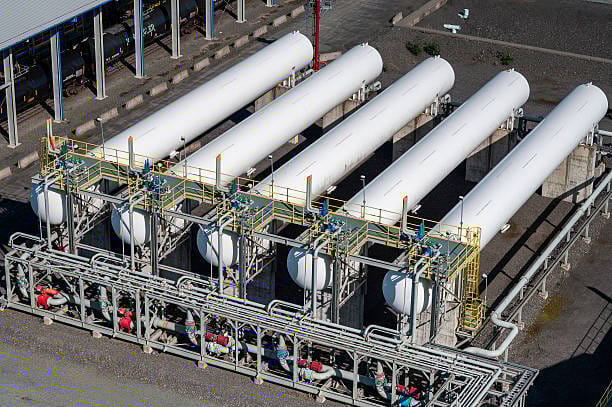
Ukrainian gas ready to be shipped to Azerbaijan
Sources:
References available upon request. A full citation list has been omitted to preserve the visual integrity of the page.
Map sources: SuriyakMaps on Telegram
TWEET OF THE DAY
Now… What do we make of this?
TODAY IN HISTORY
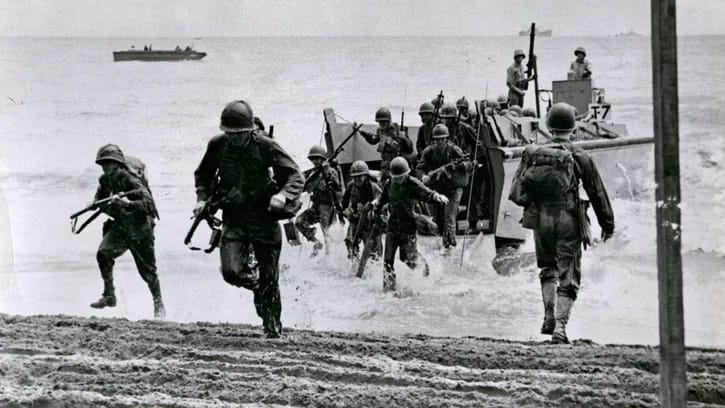
(August 7, 1942): Japanese airfield on Guadalcanal seized by Allies.
In the Allies' first major offensive in the Pacific theatre during World War II, U.S. Marines on this day in 1942 landed on Guadalcanal and captured the airfield from Japan, sparking a battle that lasted some six months.