- Basedment
- Posts
- Russian Breakthrough In Kupiansk?
Russian Breakthrough In Kupiansk?
Your daily dose of geopolitical updates and strategic analysis. Unbiased, but not unbased.

Editor-in-Chief
September 28, 2025
THE BRIEFING
Here’s what’s happening in geopolitics today.
From new fighter jets arriving in Iran to heightened drone security in Denmark, it’s been another busy stretch in international affairs.
We’re also following Moldova’s pivotal election, fresh U.N. sanctions on Iran, and a diplomatic row between Colombia and the U.S.
In today’s deep dive we analysis several reports suggesting Russian units have made a breakthrough in the key northern city of Kupiansk.
THE LAST 24 HOURS IN GEOPOLITICS
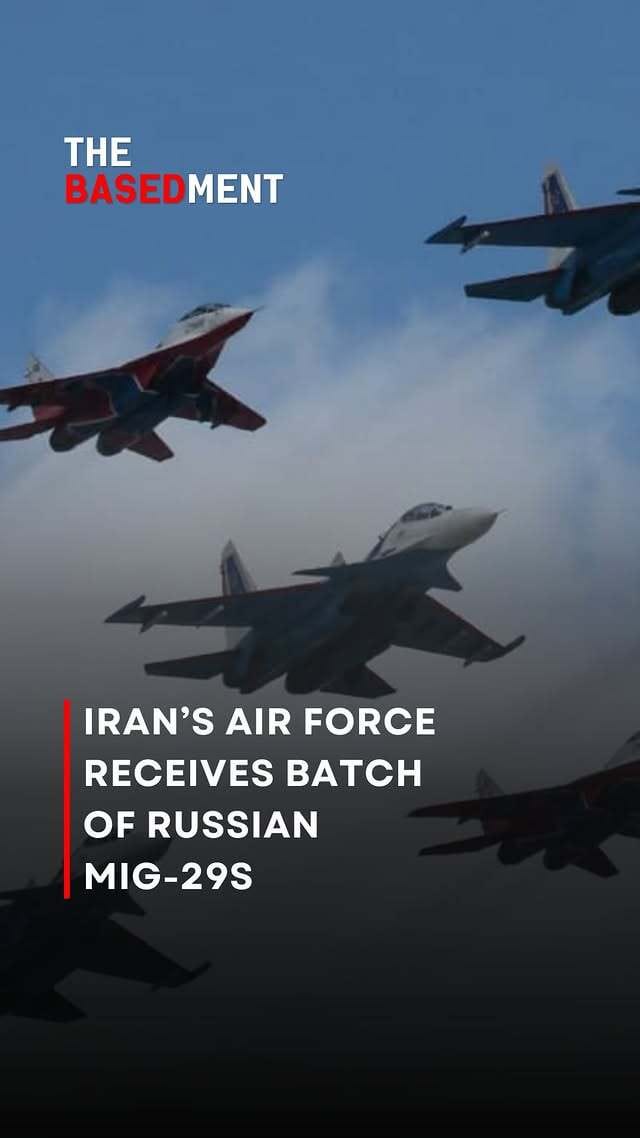
1. Iran’s Air Force receives batch of Russian MiG-29
Iran has taken delivery of a batch of Russian-made MiG-29 fighter jets, which have been stationed at Shiraz Air Base as part of an interim effort to modernize its aging air force. A parliamentarian, Abolfazl Zohrevand, described the MiG-29s as a “short-term solution,” while more advanced platforms like the Su-35 fighters are expected to arrive gradually. Alongside the new jets, Iran is also expanding its defensive network with missile systems like China’s HQ-9 and Russia’s S-400, signalling a broader strategic shift amid regional tensions.
read more

2. UN reimposes sanctions on Iran over its nuclear programme
The United Nations has reinstated a comprehensive sanctions regime, including an arms embargo, against Iran after European powers triggered the “snapback” mechanism under the 2015 nuclear deal. Britain, France and Germany pushed through the move following what they say are violations by Tehran of its commitment to international inspections and nuclear limits, a delaying resolution from Russia and China failed in the Security Council. Tehran responded angrily, warning that reimposed sanctions would hurt diplomacy and vowing to respond to what it called unjust pressure on its sovereignty.
read more
3. Danis mobile military radar spotted at Copenhagen Airport after unidentified drones
A Danish mobile military radar was spotted near Copenhagen Airport, likely deployed in response to a recent surge of drone sightings and disruptions at airfields and military bases across the country. The move underscores growing concern in Denmark over potential hybrid attacks, where drones, cyber tools and other asymmetric tactics are used to probe vulnerabilities. While officials haven’t confirmed whether this radar deployment is directly tied to a specific incident, it signals a clear escalation in defensive posture.
read more
4. Moldovans begin voting in high-stakes parliamentary election
Moldovans began voting Sunday in a tense parliamentary election that many see as decisive for the country’s European future. The contest pits the pro-Western ruling Party of Action and Solidarity (PAS) against a resurgent pro-Russian Patriotic Bloc, amid accusations of foreign interference, vote-buying, and disinformation campaigns. Observers say the outcome could either accelerate Moldova’s EU integration or pull it back into Moscow’s orbit.
read more
5. Colombian President Petro accuses U.S. of violating international law after visa revoked
Colombian President Gustavo Petro sharply criticized Washington after the U.S. revoked his visa, accusing the move of violating international law in retaliation for his outspoken criticism of Israel’s actions in Gaza. The U.S. State Department justified the revocation by calling Petro’s remarks “reckless and incendiary,” pointing especially to his exhortation for U.S. soldiers to defy orders in protest of Gaza. Petro responded defiantly, saying he no longer needs a U.S. visa thanks to his European citizenship and warning that revoking diplomatic rights for dissent creates a dangerous precedent.
read more
DAILY DEEP DIVE
The Situation in Kupiansk – From September 26
The battle for Kupiansk in Kharkiv Oblast has entered a new and highly volatile stage, with both Russian and Ukrainian sources reporting intensified fighting across the city and its outskirts. Over the past week, Russian forces have registered localized advances, particularly west of the Kupyanka River, while Ukrainian defenses have sought to limit infiltration, sabotage activities, and deeper encirclement.
Russian Advances and Control
Several sources indicate that Russian forces have expanded their control inside Kupiansk. Slightly Russian-leaning Suryiak on September 27 claimed that Russian troops had advanced beyond the railway line, capturing positions along Lermontova Street and approaching Kupyansk-Yuzhny Railway Station. It estimated that roughly 15 percent of the city is now under Russian control. This aligns with AMK’s battlefield reporting, which described Russian penetration into the western districts, including the Yuvileynyi neighborhood, and control of residential blocks leading to Sobolivka. AMK also confirmed Russian presence in the industrial zone east of the Kupyanka River, further consolidating their positions inside the city.
Ukrainian Resistance and Constraints on Infiltration
By contrast, DeepState (pro-Ukrainian channel) emphasized Ukrainian resilience in blocking Russian infiltration routes. Ukrainian forces reportedly cut off the so-called “pipe crossing,” a key conduit previously used by Russian forces to move personnel into the city. This has forced Russian units to revert to more limited crossings over the river and through forest belts, which reduces the throughput of infiltration. Despite this, DeepState conceded that Russia has been able to amass sufficient forces for reconnaissance, sabotage, and assault operations. Ukrainian officials highlighted that counter-sabotage operations are ongoing, with Russian infiltrators often disguising themselves in civilian clothing to complicate detection and clearance efforts.
A Ukrainian drone regiment commander reported that Russian forces have been halted on the northwestern outskirts of Kupyansk, relying heavily on sabotage, disguises, and forced river crossings after losing their pipeline infiltration route. He added that barrier troops are coercing soldiers to cross under threat, while even Russian milbloggers deny claims of Kupyansk being “practically seized,” noting false reports sent to the MoD.
Nature of the Fighting
Across all sources, the fighting is characterized as highly urbanized, attritional, and marked by the extensive use of drones, mortars, and sabotage groups (DRGs). Russian tactics appear to combine frontal assaults with infiltration raids. For example, reports state sustained Russian pressure near the Central City Hospital and bypass maneuvers around the heavily defended “Comb” micro-district in the north. DeepState highlighted that these attacks are supported by drone reconnaissance and mortar fire striking Ukrainian positions on the outskirts.
The ISW, however, painted a more cautious picture, stressing that while Russian forces conducted offensive operations in and around Kupiansk, there was no evidence of significant advances on September 26–27. ISW cited activity northwest of the city (Doroshivka), northeast (Kamyanka, Krasne Pershe), east (Petropavlivka), and southeast (Pishchane, Stepova Novoselivka), but maintained that Ukrainian lines largely held.
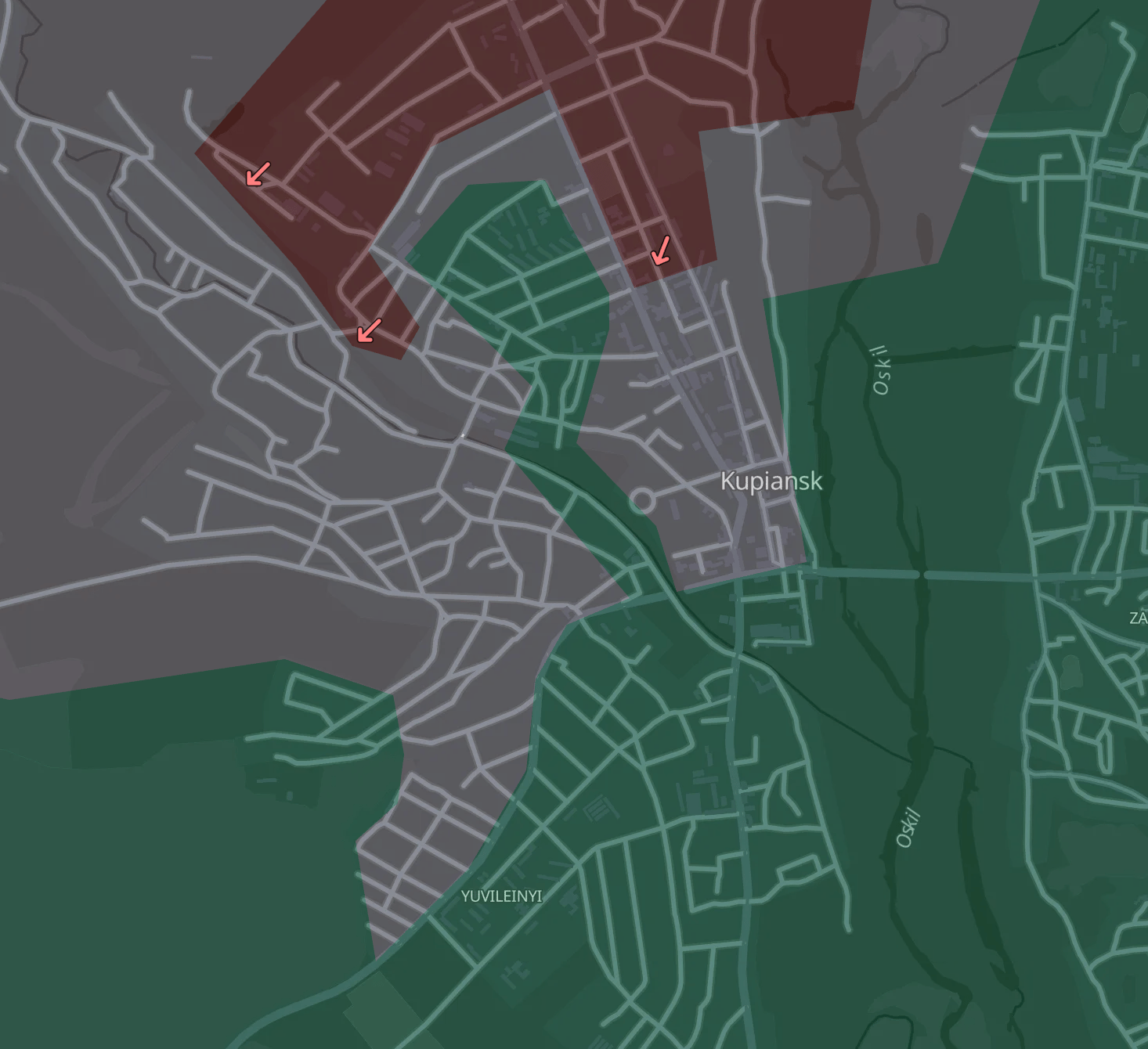
Close up view from Deepstate: Red = Russia, Grey = unconfirmed, Green = Ukraine
Look At The Flanks
Well known Ukrainian milblogger Mashovets stated the Russian offensive in Kupiansk is vulnerable due to insufficient manpower to sustain operations both in the city and across other frontline sectors. Further noting that elements of the 6th CAA operating in and around Kupyansk are fragile and could be exposed to Ukrainian counterattacks if assaults pause. He assessed that Russia would need one to two additional divisions to seize Kupyansk, but this requirement conflicts with Moscow’s goal of maintaining multiple simultaneous offensives since summer 2022. As a result, Russia risks overextending itself, weakening progress not only at Kupyansk but also in key directions such as Kostyantynivka-Druzhkivka, Dobropillya, and Pokrovsk.
This is a good observation to take into account but we must take a couple things into consideration. The left flank of the Russian forces is by no means secure, that is correct. We have talked about this before, there was even a period a few weeks ago, where a large Ukrainian counterattack on the North Western flank was discussed. This turned out to be mostly untrue, but it did reveal that the control outside of Kupiansk is fluid and dynamic. The problem with Mashovets observation is whether Ukraine can conduct a successful counter attack? Elements of the 3rd Assault Brigade were sent into the city to stabilise the front — but to conduct a large counter-attack west? That would be complicated. Ukraine has shown it can contain breakthroughs, as we saw at Dobropillya – but that containment is still going, weeks after the initial assault. So the question is do they have the manpower for such an operation?
Also consider the eastern flank across the Oskil river where DRG units have moved southward along the river towards the city centre on the eastern side. This complicates logistics for the Ukrainian units that are protecting the eastern villages, as there are no major supply roads nor bridges once Kupiansk falls. Installing pontoons is costly and extremely risky. Overall the situation on the flanks is fluid as simply neither side can concentrate manpower due to various reasons.

Deepstate map.
Sources:
Sources available upon request, not shown to maintain visual integrity of page.
Telegrams: SuriyakMaps, AMK_Mapping, Mashovets, Deepstate, KalibratedMaps
Website: Deepstatemap.live, ISW.
TWEET OF THE DAY
Is Jerome Powell finally about to be booted out the door…?
TODAY IN HISTORY
(September 28, 1542): California “discovered”
Explorer Juan Rodríguez Cabrillo, known as the “discoverer” of California, landed this day in 1542 near what is now San Diego and became the first European to set foot on the west coast of what would become the United States.
