- Basedment
- Posts
- SCO Summit: What You Need To Know
SCO Summit: What You Need To Know
Your daily dose of geopolitical updates and strategic analysis. Unbiased, but not unbased.

Editor-in-Chief
September 01, 2025
THE BRIEFING
Here’s what’s happening in geopolitics today.
Here’s a snapshot of the stories shaping the world today.
From Yemen to Gaza and Beijing to Barcelona, it’s been a weekend of major geopolitical developments, with leadership losses, high-stakes diplomacy, and new voices entering the global conversation. We’ll also touch on how climate activism and shifting alliances continue to intersect with conflicts on the ground.
In terms of our deep dive, the SCO Summit is upon us, China’s largest hosting of the bloc to date, bringing together more than 20 leaders in a high-profile display of Beijing’s bid to shape a multipolar world order.
THE LAST 24 HOURS IN GEOPOLITICS
1. Houthi Prime Minister killed in Israeli air strike on Yemen
It's been confirmed that Israel's airstrike in Sanaa on Thursday killed Ahmed Ghaleb al-Rahawi, the prime minister of Yemen’s Houthi-run government, and several senior ministers, marking the gravest blow yet to Houthi leadership since the conflict began. The operation, described as targeting a gathering of top officials, reportedly included key figures such as the defence minister and chief of staff. In response, Houthi leaders vowed revenge, signalling that Israel’s strategic shift toward eliminating regional adversaries may intensify tensions throughout the region.
read more
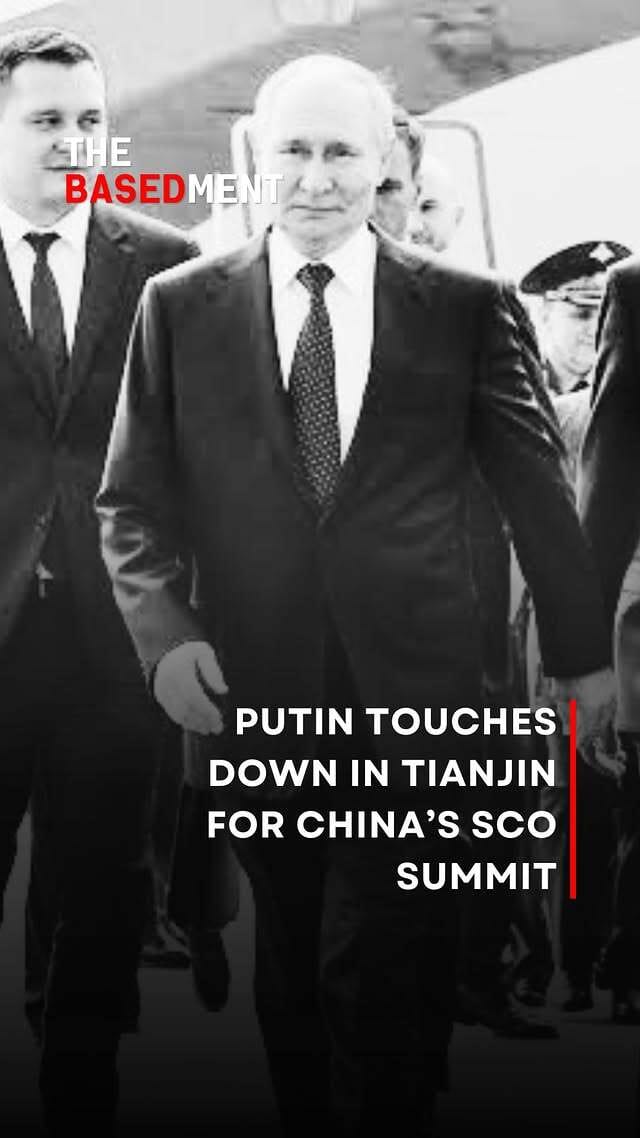
2. Putin arrives in Tianjin for China security summit
Russian President Vladimir Putin arrives in Tianjin, China, for a four-day visit to attend the SCO Summit, joining leaders like Xi Jinping and Narendra Modi to discuss regional cooperation and global issues. He will also hold bilateral talks and attend WWII victory celebrations in Beijing.
read more

3. Greta Thunberg joins flotilla heading for Gaza with aid
Climate activist Greta Thunberg set sail from Barcelona on Sunday aboard the “Global Sumud Flotilla,” joining dozens of vessels aiming to deliver life-saving humanitarian aid to Gaza and challenge Israel’s longstanding naval blockade. This marks her second attempt at such a voyage after being intercepted in June, as she continues to frame the mission as emblematic of failing international responses to worsening humanitarian conditions. Thousands gathered in Barcelona to back the mission, which organisers say is the largest maritime solidarity effort yet, with participation from over 44 countries.
read more
4. Hamas confirms death of its military leader Mohammed Sinwar
Hamas has officially confirmed the death of its Gaza military commander, Mohammed Sinwar, several months after Israeli forces claimed he was killed in a May airstrike. The militant group released photos honouring him as a “martyr,” but offered no details on how or when his death occurred. With his passing now confirmed, operational command of Hamas' armed wing in the Gaza Strip is expected to shift to Izz al-Din Haddad, who currently leads forces in northern Gaza.
read more
5. China, Armenia establish strategic partnership
China and Armenia elevated their ties to a strategic partnership at a high-level meeting between President Xi Jinping and Prime Minister Nikol Pashinyan in Tianjin, ahead of the SCO Summit 2025. Xi pledged China’s support for Armenia’s full membership in the Shanghai Cooperation Organisation, underscoring plans to deepen cooperation across trade, connectivity, and cultural exchange. The agreement marks a major milestone in bilateral relations, reflecting Armenia’s strengthening diplomatic pivot within the Global South under the expanding Belt and Road framework.
read more
DAILY DEEP DIVE
SCO SUMMIT: Xi’s Push For Multipolarity
Our second last deep dive was on the upcoming Victory Day parade in China. This summit will have an equally similar substance. This is another chance for Xi to project multipolarity - with the ability to bring together old enemies, large and small countries into one city.
A Brief History
Formed in 2001 out of the “Shanghai Five,” the SCO was designed to stabilise Central Asian borders and build regional trust between China, Russia, and their neighbours. Over time it expanded - first to include India and Pakistan (2017), then Iran (2023) and Belarus (2024). Today it spans roughly 40% of the world’s population and a quarter of the global economy, combining nuclear powers with fragile states, democracies with dictatorships. Its mandate has also broadened: from counterterrorism drills to trade coordination, cultural exchanges, and more recently, a claim to represent the “Global South” against Western dominance.
Who’s Attending
The guest list underscores the summit’s weight. Xi Jinping will host Russia’s Vladimir Putin, India’s Narendra Modi, Iran’s Masoud Pezeshkian, Pakistan’s Shehbaz Sharif, and Belarus’s Alexander Lukashenko, alongside Central Asian leaders Tokayev, Mirziyoyev, Japarov, and Rahmon. Beyond the core, observers include Turkey’s Recep Tayyip Erdoğan, Indonesia’s Prabowo Subianto, Malaysia’s Anwar Ibrahim, and Nepal’s K.P. Oli. UN Secretary-General António Guterres and ASEAN’s chief will also attend. Many leaders will remain for Beijing’s September 3 military parade, joined by Kim Jong Un and others, reinforcing the spectacle of China as host and convener.
Deeper Meaning:
The summit is ultimately a power play for Beijing on multiple levels. Diplomatically, it allows China to present itself as the indispensable Eurasian convener - the only power able to bring rivals like India and Pakistan to the same table while framing itself as a “stabilising force” alongside Russia. Historically, hosting in Tianjin carries symbolism: a city once carved up by colonial concessions now recast as the centre of Asian diplomacy. Strategically, the SCO’s emphasis on “indivisible security” directly challenges NATO’s bloc logic, giving Xi and Putin a platform to advance spheres-of-influence politics under the banner of multipolarity and collective fairness.
What to Expect
Deliverables will be limited. The SCO operates on consensus, meaning disputes often sink joint statements. India resists aligning too closely with Russian narratives on Ukraine, while its ties with Israel complicate any united front on Gaza. Pakistan and India remain at loggerheads over border issues. We predict symbolism will outweigh substance: expect communiqués on “security” and multipolarity, but little progress on concrete conflict resolution or economic integration. Still, the optics matter. Modi’s attendance after skipping last year is significant, especially as Trump’s 50% tariffs on Indian goods strain U.S.–India ties. Even a handshake with Xi in Tianjin will be read in Washington as a warning sign.
For Russia, the summit offers rare international spotlight amid its war in Ukraine and sanctions isolation. For India, it is a chance to hedge between strained U.S. ties and pragmatic engagement with China and Russia. For smaller states, attendance signals alignment with a bloc that increasingly sees itself as the counterweight to Western institutions.
Xi takes on the role of the big brother:
The inclusion of the Central Asian states highlights the double-edged nature of the SCO summit. Historically, the region lay within Russia’s sphere of influence, but Moscow’s grip has loosened as the war in Ukraine drains its capacity to project soft power. In contrast, China has steadily expanded its footprint through initiatives like the Belt and Road, financing infrastructure and deepening economic ties. The summit therefore becomes a stage for Xi to flex soft power at Russia’s expense, as Putin increasingly relies on Beijing to sustain his war machine. For Xi, assuming the dominant role in this relationship cements China as Moscow’s senior partner. A reversal of history, when it was the Soviet Union that once dictated terms to Beijing.
Sources:
Available upon request.
TWEET OF THE DAY
Let me guess Mr Trump… tariffs coming to both India and China?
JUST IN: Xi Jinping says, in meeting with India's Modi, that it is 'time for the dragon and the elephant to dance together'.
— The Spectator Index (@spectatorindex)
10:43 AM • Aug 31, 2025
TODAY IN HISTORY
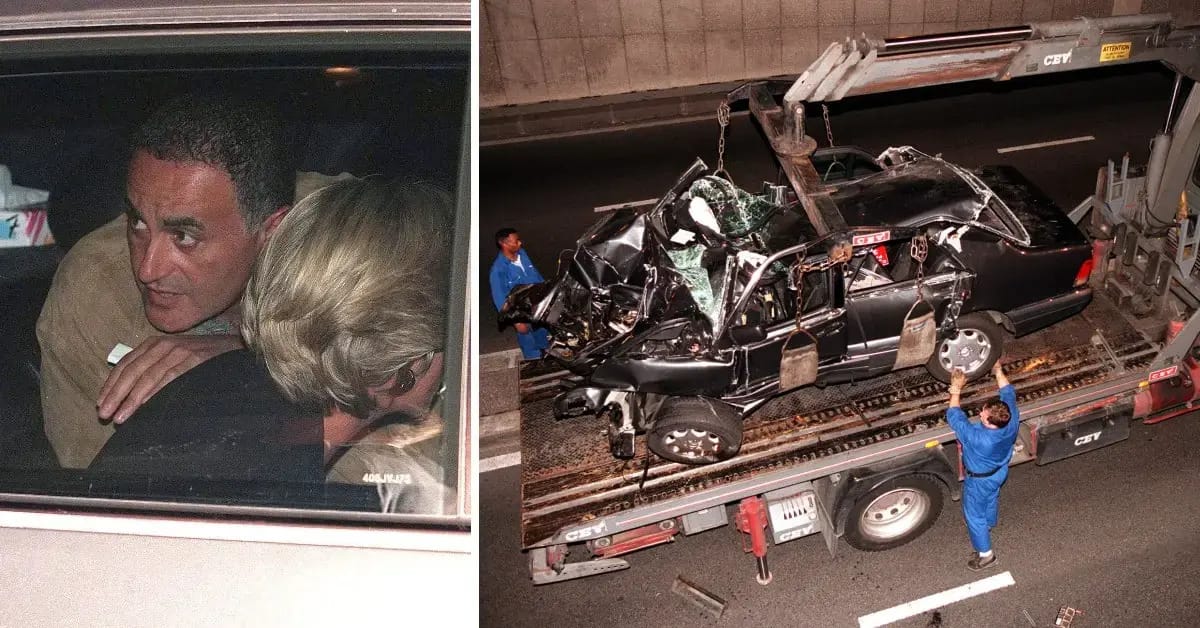
(August 31, 1997): Princess Diana, beloved worldwide for her compassion and humanitarian work, died in a car crash in Paris’s Pont de l’Alma tunnel on August 31, 1997. Her sudden death at the age of 36 shocked the globe, triggering an unprecedented outpouring of grief and prompting deep reflection on the role of the monarchy, media intrusion, and her enduring legacy as the “People’s Princess.”