- Basedment
- Posts
- Slovakia And Hungary Protest Ukrainian Attacks On Pipeline
Slovakia And Hungary Protest Ukrainian Attacks On Pipeline
Today we take a look at the fundamental unanimity problem within the EU when states do not share the same view on policy, in this case Ukraine.

Editor-in-Chief
February 22, 2026
THE BRIEFING
Here’s what’s happening in geopolitics today.
Today’s headlines stretch from the Middle East to the Pacific, with fresh Israeli strikes in Bekaa Valley, a new tariff move from Donald Trump after a Supreme Court setback, and renewed nuclear brinkmanship between Washington and Iran.
The U.S. military also confirmed a lethal strike on a suspected drug-trafficking vessel in the eastern Pacific, while mass killings and abductions in Zamfara highlight the deepening security crisis in northwestern Nigeria.
In today’s deep dive, today we take a look at the fundamental unanimity problem within the EU when states do not share the same view on policy, in this case Ukraine.
THE LAST 24 HOURS IN GEOPOLITICS
1. At least 12 killed in Israeli strikes in Lebanon’s Bekaa valley
At least 12 people were killed in a series of Israeli airstrikes across Lebanon on Friday, with the Bekaa Valley in the east accounting for the bulk of the deaths, according to Lebanon’s health ministry and local media reports. The Israeli military said it targeted Hezbollah command centres in the Bekaa region, and a senior Hezbollah figure was reported among those killed, while other strikes hit the Ein el-Hilweh Palestinian refugee camp near Sidon. The violence represents one of the deadliest rounds of Israeli strikes in Lebanon in months and raises concerns about further escalation along the fragile ceasefire line.
read more
2. Trump brings in new 10% tariff as Supreme Court rejects his global import taxes
Trump announced a new 10 % global import tariff following a 6-3 U.S. Supreme Court ruling that struck down his broader tariff regime imposed under emergency powers, with the new duty set to take effect imminently under a different trade law. The high court held that Trump had exceeded his authority under the International Emergency Economic Powers Act by unilaterally imposing sweeping tariffs without explicit congressional authorization, reaffirming that tariff powers rest with Congress. In response, Trump criticised the justices’ decision and said the temporary 10 % tariff will apply while his administration pursues alternative legal routes for broader trade levies.
read more
3. Iran preparing nuclear counterproposal as Trump warns he is considering strikes
Iran’s Foreign Minister Abbas Araghchi said Tehran expects to have a draft nuclear counterproposal ready within the next few days following a round of indirect talks with U.S. negotiators, aiming to advance discussions on limiting Iran’s nuclear programme. Trump, amid a major military buildup in the Middle East, warned he is “considering” limited military strikes on Iran if a deal is not reached within roughly 10–15 days, using the potential action to pressure Tehran in negotiations.
read more
4. US Military says it attacked vessel in Pacific Ocean, killing three people
The U.S. military said it conducted a lethal strike on a vessel in the eastern Pacific Ocean on Friday, killing three people after intelligence indicated it was transiting known narco-trafficking routes and was involved in drug smuggling, according to a statement from U.S. Southern Command on social media. The operation, part of an expanded campaign under Trump targeting suspected narcotics-trafficking boats in international waters, brings the total number of similar strikes to at least 43 and the reported death toll to around 148 since September.
read more
5. Attackers kill at least 50, abduct women and children in Nigeria’s Zamfara state
At least 50 people were killed and several women and children abducted after armed men attacked a village in the Tungan Dutse area of northwestern Nigeria’s Zamfara state, according to a local lawmaker’s account to Reuters. The assailants, reportedly arriving on motorcycles and moving from one community to another overnight, burned buildings and shot residents who tried to flee in an assault that lasted from Thursday evening into early Friday. Local leaders and officials are still trying to account for those taken, while the incident underscores the persistent insecurity and rising violence by armed groups in the region.
read more
DAILY DEEP DIVE
Slovakia And Hungary Outliers Within The EU On Support For Ukraine
Wider Context
Hungary and Slovakia have escalated pressure on Kyiv after Russian oil shipments through the Druzhba pipeline were interrupted on January 27. The disruption followed reported damage to the pipeline inside Ukraine, allegedly caused by a Russian drone strike. The Druzhba system carries Russian crude across Ukrainian territory into Central Europe and remains a key supply route for both countries.
Hungary and Slovakia, which currently hold temporary exemptions from the EU ban on Russian oil imports, have accused Ukraine of deliberately delaying the resumption of flows. Kyiv denies this and has proposed alternative transit arrangements, including rerouting oil through Ukraine’s internal transport network or via maritime routes while repairs are underway.
Hungarian Foreign Minister Péter Szijjártó said Budapest would block a planned €90 billion EU financial package for Ukraine unless oil deliveries resume. Slovakia’s Prime Minister Robert Fico warned that, if flows are not restored, Bratislava could instruct Slovak energy companies to halt emergency electricity supplies to Ukraine.
The dispute highlights ongoing energy interdependence within the EU despite broader efforts to reduce Russian imports since 2022. Hungary in particular has maintained significant Russian oil and gas purchases, creating friction within the bloc as the war approaches its fourth year.
Our Comment
The standoff over Russian oil shipments has revived a deeper structural issue inside the European Union: unanimity. European Commission President Ursula von der Leyen has increasingly signalled openness to reforming EU decision-making rules, including reducing or removing unanimity requirements in certain foreign policy and financial areas. The logic is straightforward. When major packages — such as macro-financial assistance to Ukraine — require full consensus, individual member states gain veto leverage. Hungary and Slovakia have repeatedly used that leverage, positioning themselves as obstacles to more hardline EU policy toward Moscow.
Both governments maintain comparatively pragmatic relationships with Russia. Hungary in particular has preserved significant energy ties and long-term gas agreements. Slovakia, while more aligned with EU policy overall, remains structurally dependent on Russian crude via the Druzhba pipeline. These positions have placed both governments at odds with member states advocating stronger sanctions and reduced Russian exposure.
At the same time, Washington has attempted to reduce Hungary’s energy reliance on Russia through liquefied natural gas (LNG) arrangements and alternative supply discussions. Under the Trump administration, energy diversification was framed as both a geopolitical and commercial priority, with U.S. LNG positioned as a substitute for Russian pipeline gas.
It is also worth noting that disruptions to oil infrastructure affecting Hungary and Slovakia are not unprecedented. Energy facilities linked to Russian supply routes have previously been targeted or damaged during the conflict, highlighting the vulnerability of transit systems that still run through Ukrainian territory.
Sources
News/Journal sources available upon request, not shown to maintain visual integrity of page.
TODAY IN HISTORY
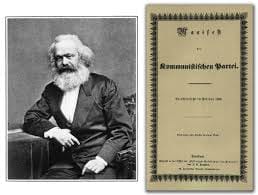
(February 21, 1848): The Communist Manifesto, written by Karl Marx and Friedrich Engels, was first published; the pamphlet became one of the largest guiding influences of the European socialist and communist parties in the 19th and early 20th centuries.