- Basedment
- Posts
- Special Edition: Inside Russia’s Tank Production - Updated
Special Edition: Inside Russia’s Tank Production - Updated
Your daily dose of geopolitical updates and strategic analysis. Unbiased, but not unbased.

Editor-in-Chief
August 13, 2025
THE BRIEFING
Don’t forget to subscribe, you won’t get this kind of information with other media outlets.
Russia’s tank fleet remains large and sustainable despite heavy wartime losses. Uralvagonzavod now produces 250–300 new T-90Ms annually, while refurbishing hundreds of older T-72s, T-80s, and T-62s, though higher-end stocks are dwindling. Chinese industrial support sustains optics and electronics, while sanctions bottlenecks persist. The T-14 Armata remains sidelined due to cost and performance doubts. Drone strikes have little effect on production, and while tactics have shifted, tanks still play a valued, adaptable role in modern Russian operations
RUSSIAN TANK PRODUCTION
Uralvagonzavod's Output and T-90 Production: Past, Present, and Future
Russia’s main tank manufacturer, Uralvagonzavod (UVZ), has emerged as a central pillar of Moscow’s wartime rearmament strategy. Prior to the full-scale invasion of Ukraine in 2022, UVZ had produced between 120 and 150 original T-90s and around 280 T-90A variants. By February 2022, the Russian army had between 65 and 85 T-90M Proryv tanks, in addition to 370–380 older T-90 models.
Production has sharply increased since then. UVZ built an estimated 60–70 T-90Ms in 2022, followed by 140–180 units in 2023 as the factory transitioned to a 24/7, three-shift operation. By 2024, output is believed to have reached 250–300 new T-90M tanks annually. Unlike earlier periods, all tanks currently being produced are new builds, not upgrades.
Estimates suggest that since 2022, 540–630 T-90M tanks have been produced or upgraded, with at least 130 destroyed (or severely damaged, consider the difficulty in confirming destroyed vehicles) in combat. This leaves approximately 410–500 T-90Ms in service, making up around 15% of Russia’s deployed tank fleet (2025). Efforts to scale production further are underway. UVZ has issued tenders for new welding stations and machining stands, with an eye toward future growth. However, a substantial increase would require long-term investment in new assembly lines and modern equipment.
According to industry reporting, UVZ’s workforce has expanded significantly since 2022, now exceeding 12,000 employees, with overtime pay and state subsidies helping maintain continuous operations. While the availability of armoured hulls has not limited production, other parts of the supply chain remain stretched, particularly gun barrel production at UVZ, where bottlenecks have been recorded such as in 2023 for instance. There have also been contract-supply issues between armament companies. In April 2024, Zavod No. 9 accused Zenit-Investprom of failing to deliver modernisation equipment, threatening legal action.
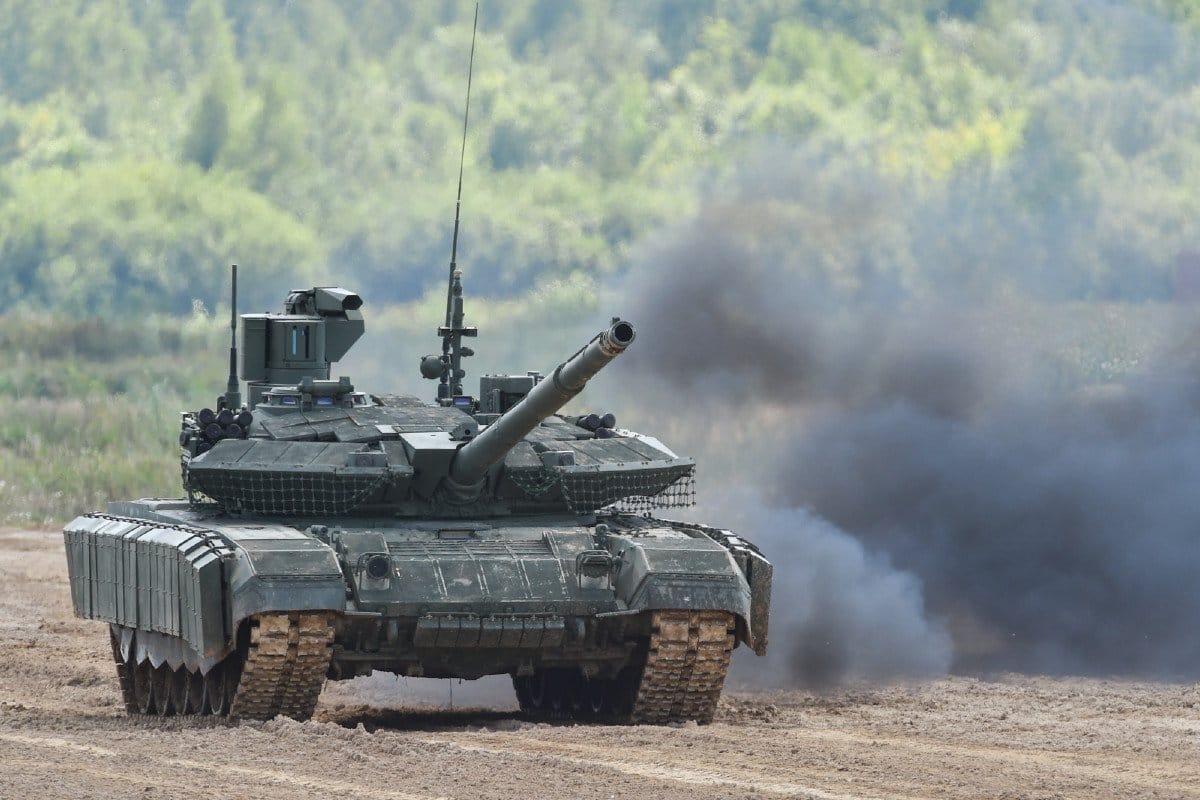
T-90M Tank
Modernisation and Cannibalisation of T-72s and T-80s
Alongside new T-90M production, Russia continues to rely heavily on the modernisation of older platforms, particularly the T-72B3 and T-80BVM. Uralvagonzavod has updated the T-72B3 multiple times since the full-scale invasion. T-72B and T-72B1 upgrades to the B3 standard also continue at volume, about 200 modernisations were recorded in 2024. However, some analysts believe that the stockpile for the T-72’s and T-80’s are pretty much non-existent based on satellite imagery.
The most recent variant, designated T-72B3M (Model 2024), includes rubber-fabric side and turret screens to protect engine compartments and rear turret arcs, a feature first seen in footage from mid-2024. Earlier wartime variants introduced incremental upgrades, such as Relikt ERA packages, slat armour, and cope cages, though their quality varied due to component shortages. Many tanks were delivered with downgraded optics (1PN96MT-02) and missing meteorological sensors, reducing long-range fire accuracy. These deficiencies mirrored similar issues in the T-80BVM modernisation programme at Omsktransmash, where supply problems led to inconsistent armour packages and delayed deliveries.
This is arguably better than the 2022 early war period where Russian tanks had no explosives in their ERA packages, but rather egg cartons. This highlighted the significant corruption at hand between the industry and military.
Cannibalisation remains key to sustaining the armoured fleet. According to NATO estimates (2024), 86% of Russia’s tank output last year consisted of refurbished vehicles. While Moscow holds around 4,000-5,000 tanks in storage, a large share are useful only as parts donors due to poor condition.
Although Russia announced a resumption of T-80 production in late 2023, tangible progress remains unclear. Open-source analysts estimate that “good condition” T-80s in storage dropped from 1,200 to 300 by early 2025, suggesting the usable stockpile will be exhausted by mid-2026. However, some OSINT analysts believe that these stockpiles are already non-existent.
Once T-80 reserves are depleted, Russia will increasingly field older T-62s and even T-55s, which have already appeared in secondary roles such as static defensive positions and indirect fire platforms. OSINT analysts have noted a marked decline in T-80 losses since early 2025, not because of improved survivability, but due to reduced deployment (See graph below). In parallel, sightings of T-62s on the front have increased, indicating a gradual but unavoidable downshift in fleet quality as higher-end models run out.
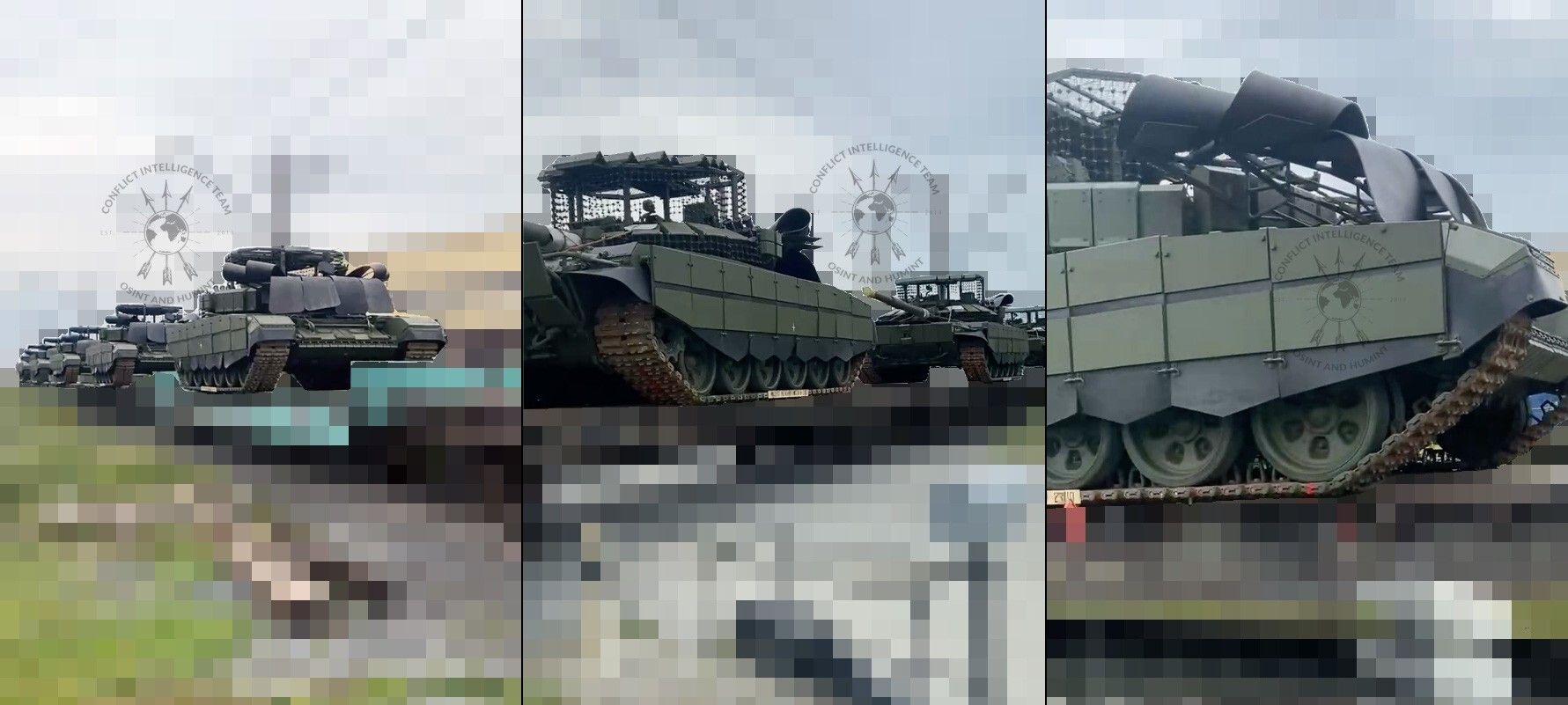
Electronics, Optics, and Chinese Support
The primary issue that has plagued tank production has been electronics and optics. Modern tanks require several complicated electronic components, which Russia has struggled to acquire due to sanctions. Russia’s tank advancements in optics and electronics, is primarily driven by Shvabe Holding, a Rostec subsidiary. Leaked documents from 2024 reveal key ongoing projects, including thermal imagers, fire control systems, and laser tech for tanks and UAVs. Firms like KMZ, Lytkarino, POLYUS, and VOMZ are involved in various upgrades, such as integrating UAVs into tank targeting systems. However, internal records highlight recurring issues with quality control and delays, notably with the OPS-28M system for Mi-28MM helicopters.
To sustain production, Russia increasingly depends on Chinese industrial support. Shvabe affiliates, such as Zenit-Investprom, source CNC machines from Chinese firms like Push Ningjiang and Tianjin No.1 Machine Tool. Shvabe Opto-Electronics, based in Shenzhen since 2009 and under U.S. sanctions, continues to supply critical components. These workarounds form the backbone of Russia’s import substitution strategy, allowing production to continue despite Western sanctions.
Shvabe’s project portfolio extends beyond tanks, the same thermal imaging modules are adapted for infantry fighting vehicles and attack helicopters. The Lytkarino Optical Glass Factory is producing the night vision equipment for T-62s, T-72, and T-80s and armoured fighting vehicles. While POLYUS has been tasked with developing high-powered laser counter-UAV technology for integration into Pantsir-S1 systems. VOMZ’s UAV-linked tank fire control system, if fielded at scale, could enable indirect tank fire at ranges up to 15km, a capability not currently standard in Russian armour doctrine. These developments, however, are slowed by missed deadlines and production backlogs, exacerbated by reliance on imported CNC equipment and microbolometer arrays that must be covertly sourced from abroad.

Small uptick in T90 losses is more a statistical anomaly, but focus more on the drastic drop of T80’s (as discussed) and rise of T62’s. These losses are a good indicator of which models are being used more on the front. (APRIL-JUNE Data)
Will Russia Run Out of Tanks?
As of June 2025, Russia recorded its lowest monthly vehicle losses since the war began: 149 destroyed, including 17 tanks, a 30% drop from May, which had already declined 30% from April.
The reliability of the data is up for debate as some would argue it skews data in favour of Ukraine, but importantly it does show considerable drops in Russian losses that corresponds with other research.
Tank attrition in 2025 is far below 2022–2023 levels, largely due to the reduced use of frontal mechanised assaults. Tanks now serve mainly in support and direct-fire roles, especially older models like the T-55, often used from concealed positions.
Despite ongoing quality control issues and reliance on refurbished tanks, Russia’s output of 250–300 new T-90Ms annually, combined with modernisation programs and older stored models, likely sustains operational needs through at least 2026.
However, if the current pace of modernisations (~200 annually) and T-90M production is maintained, Russia could still offset moderate battlefield losses for several more years, even if the overall fleet composition shifts toward older designs. The bigger concern for Moscow is the erosion of qualitative advantage as advanced optics, armour packages, and active protection systems are rationed to elite units. In practice, this means that while Russia may avoid a numerical shortage, the gap between its best and average tanks will widen. This could limit operational flexibility in high-intensity engagements against well-equipped adversaries. Yet, production expansion is limited. Bottlenecks in barrel manufacturing and delays in equipment upgrades (evident from 2024 internal correspondence) continue to slow scaling efforts.
Experts like Tatagrami and the Conflict Intelligence Team stress that stronger enforcement of sanctions and export controls, particularly targeting industrial machinery routed through third countries, remains essential to curb long-term rearmament.
Without tighter controls on machine tools, optics, and electronics, Russia is likely to continue gradual fleet modernisation while replacing combat losses. The most effective pressure points are Chinese CNC exports, Indian re-routing of European optical components, and enforcement against microbolometer shipments, all of which remain exploitable gaps in the sanctions regime.
Overall, Russia is not running out of tanks, despite significant battlefield losses. Early in the war, it pulled most serviceable vehicles from storage to equip new units, including older T-54/55s, T-62s, and T-72Urals. Since then, the focus has shifted to refurbishing and upgrading stored T-72Bs, T-80B/BVs, and T-62s, alongside expanding T-90M production, a process that has, in some respects, made the fleet “newer” than before. While stocks of T-72Bs and T-80B/BVs are now almost exhausted, thousands of older tanks remain, and over 4,100 have already been taken from visible reserves. Overall, current numbers remain comparable to pre-war levels, meaning a shortage of tanks is not one of Russia’s immediate problems.
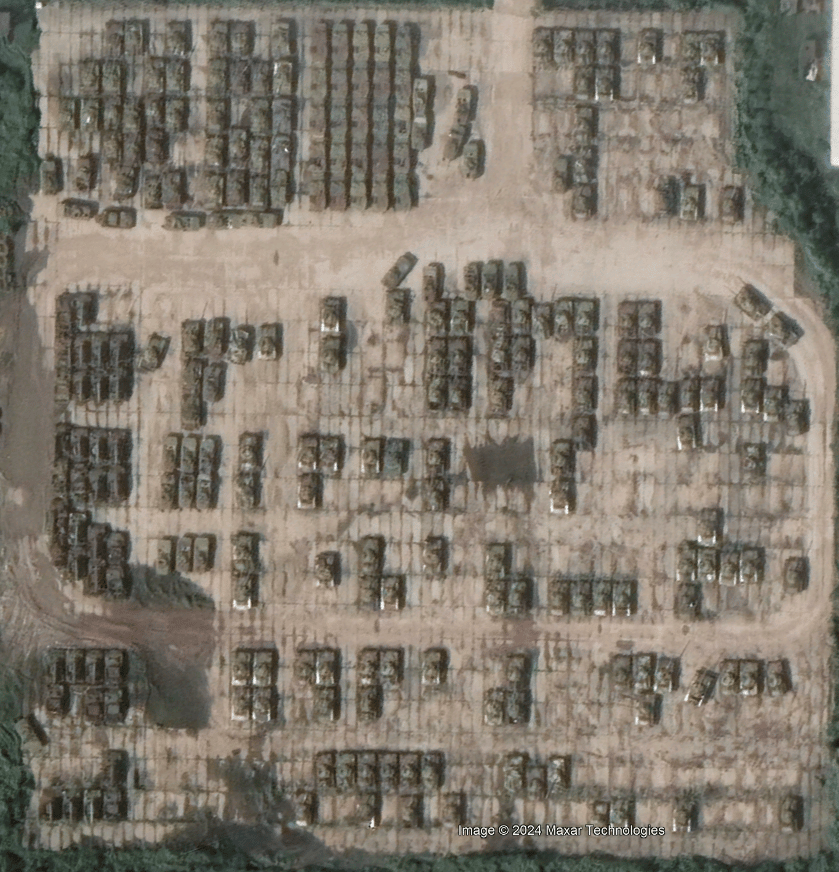
Satellite footage of T-80 storage area
BONUS NOTES
T-14 ARMATA TANK
The T-14 Armata, developed by Uralvagonzavod from 2013 and drawing on earlier Russian tank projects like the T-95 and Black Eagle, was unveiled at the 2015 Victory Day parade as Russia’s next-generation main battle tank, featuring a 55-ton chassis, unmanned turret, three-person crew, and 125mm main gun with automatic loader. Despite extensive trials in varied climates, limited deployments to Syria, and promotional efforts including proposals for joint development with India, the T-14 has faced persistent production delays, manufacturing issues, and high costs, preventing its use in Ukraine’s ongoing war. Rostec chief Sergey Chemezov confirmed that the Russian military has opted for the more cost-effective and combat-proven T-90, contradicting earlier state media claims of T-14 combat use. Analysts widely regard the T-14 as a failed project, with operational doubts, logistical challenges, and fears of reputational damage, should it be destroyed by Western-supplied Ukrainian anti-tank systems, outweighing any potential battlefield advantage, leaving it as more of a prestige and marketing tool than a practical combat asset.
DRONE ATTACKS:
There are almost daily attacks on Russian military infrastructure these days, are they having an effect on tank production? We would argue no. We cannot stress how large the Uralvagonzavod tank facility is, and like most things created in the Soviet Union, it was designed to be rocked by weapons much larger than kamikaze drones. It would take a dedicated aerial campaign using drones with a much higher payload to do any reasonable damage to the tank factory. Now, where Ukraine will have more success, is in it’s targeting of the railway logistics systems. These are much softer and easier targets. They have already begun targeting railway hubs and energy stations that power the railways. This will impact the logistics of both sending out new tanks and refurbishing old or damaged tanks.
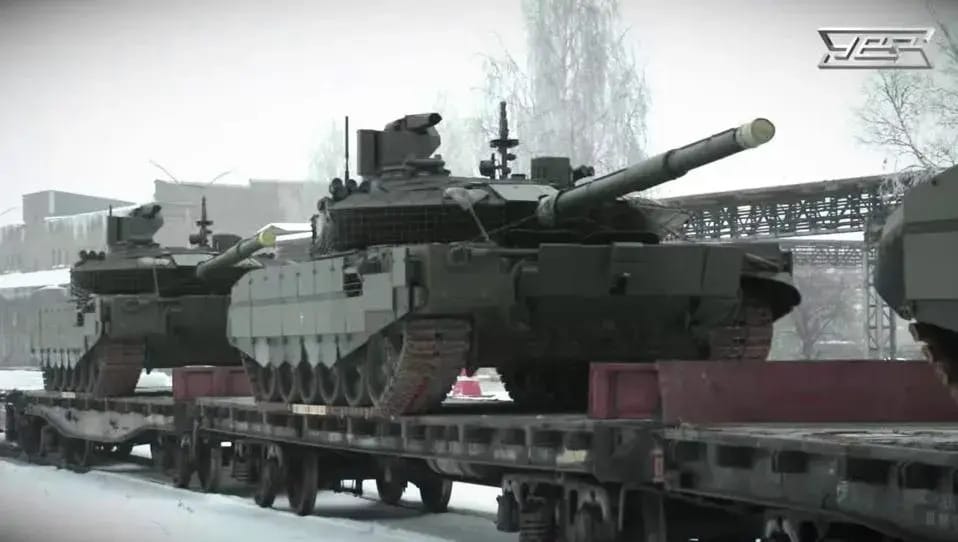
All major factories are linked to Russia’s railway system
ARE TANKS EVEN WORTH IT?
There is ongoing debate about the usefulness of tanks. It is true that it is a bad time to be a tank, whether Western or Soviet-made, but they still have a place on the battlefield. Just because drone warfare has, at present, limited their usefulness does not make them obsolete. While far less common, tank assaults still occur in adapted forms. If the environment is protected by EW systems, tanks can operate with deadly effect. Their ability to withstand infantry firepower while covering advancing troops and clearing trenches with heavy payloads is highly valued among infantry units. We have also seen adaptations of tanks with remarkable results, such as the so-called “Tsar Tank,” which reportedly required over 40 drone hits to disable. Strategies have shifted, and tanks are now also used in more fixed positions as direct-fire artillery, particularly older models. Ultimately, while their role has evolved, tanks remain a potent and adaptable asset in modern warfare.
SOURCES AND DISCLAIMER
We are an independent and unbiased organisation. We sift through vast amounts of open-source information, verify its credibility, and deliver it directly to you — so you don’t have to.
CNN – Russia artillery shell production far outpaces U.S. and Europe
https://edition.cnn.com/2024/03/10/politics/russia-artillery-shell-production-us-europe-ukraine
Conflict Intelligence Team (CIT) – How Many Т-90M Tanks Does Russia Produce?
https://notes.citeam.org/eng_t90
Conflict Intelligence Team (CIT) – Uralvagonzavod: Russia’s Tank Production Hub
https://notes.citeam.org/uralvagonzavod_en
Defence UA – Researchers Counted Remaining T-80 MBTs in Russian Storage — Enough to Keep the Army Supplied Until 2026 https://en.defenceua.com/analysis/researchers_counted_remaining_t_80_mbts_in_russian_storage_enough_to_keep_the_army_supplied_until_2026-11028.html
Frontelligence Insight – Through the Optics of War: How Shvabe Shapes Russia’s Optical Capabilities
https://frontelligence.substack.com/p/through-the-optics-of-war-how-shvabe
Oryx – Attack on Europe: Documenting Equipment Losses During the Russian Invasion of Ukraine
https://www.oryxspioenkop.com/2022/02/attack-on-europe-documenting-equipment.html
Twitter / X – Richard Vereker
https://x.com/verekerrichard1/status/1941563072918978612
Twitter / X – WarSpotting
https://x.com/WarSpotting/status/1941145142565703718
Twitter / X – HighMarsed
https://x.com/HighMarsed/status/1951205846773375138
The National Interest – Russia’s T-14 Armata Tank Nightmare is Just Getting Started
https://nationalinterest.org/blog/buzz/russias-t-14-armata-tank-nightmare-just-getting-started-210453