- Basedment
- Posts
- Special Edition: The Russo-Ukraine Conflict 4 Years On
Special Edition: The Russo-Ukraine Conflict 4 Years On
Four years since Russia's invasion of Ukraine and a lot has happened. Today we're doing something different as we tackle different localised perspectives of Europe's most destructive war since WW2.

Editor-in-Chief
February 24, 2026
THE BRIEFING
Here’s what’s happening in geopolitics today.
It’s a day of diplomatic turbulence: from the arrest of former UK ambassador Peter Mandelson over his ties to Jeffrey Epstein, to Paris sidelining U.S. envoy Charles Kushner after a missed meeting with Jean-Noël Barrot.
In Eastern Europe, Slovakia has halted emergency power flows to Ukraine amid a dispute over Russian oil transit, even as London pledges fresh funds to shore up Ukraine’s battered energy grid. And in the Middle East, Washington is evacuating staff from its Beirut embassy as tensions with Iran simmer.
In today’s deep dive, we're doing something different as we tackle different localised perspectives of Europe's most destructive war since WW2.
TODAY’S SPONSOR
The Headlines Traders Need Before the Bell

Tired of missing the trades that actually move?
In under five minutes, Elite Trade Club delivers the top stories, market-moving headlines, and stocks to watch — before the open.
Join 200K+ traders who start with a plan, not a scroll.
THE LAST 24 HOURS IN GEOPOLITICS
1. Former UK Ambassador Mandelson arrested over Epstein revelations
Former British ambassador to the U.S. Peter Mandelson was arrested in London on suspicion of misconduct in public office amid an ongoing police probe into his ties with convicted financier Jeffrey Epstein, following widespread media coverage of newly released U.S. Department of Justice documents. Police allege Mandelson, 72, may have improperly shared sensitive government information with Epstein during his time in British government, and officers executed search warrants at two addresses linked to him before taking him into custody; he has since been released on bail pending further investigation. Mandelson had already resigned from the Labour Party, stepped down from the House of Lords, and was previously dismissed as ambassador in 2025.
read more
2. France blocks US Ambassador’s access to ministers after he fails to show for meeting
France has restricted U.S. Ambassador to France Charles Kushner’s access to French government ministers after he failed to attend a scheduled meeting with the Foreign Ministry that was meant to address Washington’s public comments on the killing of far-right activist Quentin Deranque. French Foreign Minister Jean-Noël Barrot said the decision reflects what he described as a misunderstanding of “the basic expectations of the ambassadorial mission,” though Kushner is still permitted to engage with other diplomatic officials.
read more
3. Slovakia halts emergency power supplies to Ukraine over Russian oil dispute
Slovakia has halted emergency electricity supplies to Ukraine, cutting crucial power assistance after Prime Minister Robert Fico said Kyiv had failed to restore Russian oil transit through the Druzhba pipeline, a central issue in an escalating energy dispute between Bratislava and Kyiv. The stoppage follows a diplomatic deadlock over halted Russian oil flows that Slovakia and neighbouring Hungary blame on Ukraine, even as Kyiv says the disruption stems from damage caused by Russian drone attacks. Fico warned that the suspension will remain in place until oil shipments resume and suggested further measures could follow.
read more
4. US evacuates staff from Lebanon embassy amid tensions with Iran
The United States has ordered the evacuation of non-essential staff and eligible family members from its embassy in Beirut, Lebanon, citing escalating tensions with Iran and concern about potential security threats in the region, though core diplomatic operations will continue with essential personnel. U.S. officials said the reduction in embassy staff is a temporary safety measure based on ongoing assessments of the security environment amid a significant buildup of U.S. military assets in the Middle East and threats linked to Iran and its allies. About 50 personnel departed Beirut on Monday.
read more
5. UK allocates $27 million for Ukraine’s energy repairs in new aid package
The United Kingdom has announced a new £20 million contribution to Ukraine’s energy sector, aimed at protecting and repairing critical power infrastructure damaged by ongoing Russian attacks, as part of a broader support package unveiled on the fourth anniversary of the full-scale invasion. This latest funding is intended to help keep electricity and heating operational for Ukrainian civilians during winter and boost resilience against future strikes, bringing the UK’s total energy-sector support since the war began to over £490 million.
read more
DAILY DEEP DIVE
The Russo-Ukrainian War – A Localised Perspective
A temptation, often indulged, is to view the Russo-Ukrainian War as a manifestation of a great power rivalry between NATO (read USA) and Russia. Whilst this is certainly an important factor, there are other, equally important, more localised geopolitical factors rooted in a historical understanding that predates America’s deep military, financial and political involvement in Europe. European history does not begin in 1945 with the defeat of Nazi Germany and the progressive breakdown in US-Soviet Relations, its older contours continue to animate and drive present tensions, playing an important part in the current war. Memories are long and none longer than the current Russian President’s. Yes, he has grievances against NATO, but his thinking goes back to a time much older. When Tucker Carlson asked him why he invaded Ukraine, Putin took him back to a time when the Vikings were still a menace.
A Russian Perspective
Thankfully we needn’t go back that far, instead the 1st half of the 20th Century will suffice and to the two conflicts that ripped across Europe and the world. On both occasions, the conflict involved an invasion of Russia by Germany and on both occasions, it was an especially miserable experience for the Russians. The 1914 invasion resulted in defeat, the imposition of a humiliating peace treaty (Trotsky couldn’t bring himself to sign it and others were sent in his place), the collapse of Tsarism and Empire, the descent into a terrible Civil War and the establishment of a Communist dictatorship. The second, 1941, invasion though rebuffed and menacingly reversed came with a truly staggering human cost. Historians estimate a Soviet death toll of approximately 27 million people. (Note: Soviet does not mean Russian. The Soviet Union consisted of many non-Russian republics who fought in the war). It is hard to conceive of such numbers. Some of the most brutal battles in human history were fought on the Eastern Front. D-Day which lives large, not unjustifiably, in the Western imagination was a blip in comparison to the harsh conditions, close combat and attritional fighting at the Battle of Stalingrad. Street to street, house to house, even room to room (one incident saw German and Russian soldiers mistakenly discover they were hiding in the same house). The bravery and sacrifice it took to defeat the Germans is something the Russians are justifiably proud of (notwithstanding the terrible revenge the Red Army took on the Germans during the closing stages of the war), and the Russians took steps to ensure they would never again be made to experience such a trauma. Stalin expanded Soviet territory and kept his army firmly encamped throughout Eastern Europe. This was done for ideological reasons, they were Communists after all, but also for important security reasons. Like many great powers, Russia expected and expects a buffer-zone or sphere of influence that protects its core from peripheral threats. By 1948 Russia had reversed the losses of the Great War and much to Stalin’s satisfaction, expanded on them.
Ukraine and Russia
Which brings us to Ukraine. In 1991 when the Soviet Union was dissolved, the Russian position regressed to a place worse than it had been on the eve of Operation Barbarossa. Not only did the Warsaw Pact collapse, but the non-Russian Soviet Republics were, one by one, gleefully declaring their independence, including the Baltic States, Belarus and Ukraine. The ties that connected Russians and Ukrainians ran deep. They were descended from the same Slavic peoples, the Kievan-Rus, whose Kingdom capital was Kiev. Their languages were closely related. They were mostly Russian Orthodox. The name, Ukraine, literally means borderland in both languages. Ukraine may have declared independence – 92% voted yes in the referendum, including a narrow Crimean majority - but it was still firmly in the Russian sphere of influence.
Therefore, the possibility of a Ukraine with NATO membership was unacceptable to the Russians for obvious cultural, historical and security reasons. Ukraine in NATO meant not just a potential American military presence right on Russia’s border, but a European one as well. Allowing them to influence, to limit the scope of Russian actions, to even attack Russia, enact regime change. Look at the Yugoslav Wars; did not NATO involve themselves, on a poorly understood pretext, in a conflict whose major belligerents were not even NATO members? Serbia reduced to a rump. Russian influence diminished. From the Russian perspective NATO is not a defensive alliance, but an aggressive tool of American and European ambition. As Ukraine practically begged to join NATO, even amending its constitution in 2019 to explicitly declare membership a national goal, the Americans and Europeans prevaricated, afraid of provoking the Russians without appearing weak. In the end, Ukraine was left in the worst possible position, Russia provoked without NATO protection.
In many ways, the current conflict is a product of western short-sightedness and arrogance. Like it or not Russia is the world’s largest country by size, with a well-trained and highly experienced army and enough nuclear weapons to make life on earth redundant. Its perspective matters and must be, if not respected, then at least understood.
A Polish Perspective
However, there are very different perspectives on this conflict from the one just presented. There are the American and European perspectives (though hardly uniform), but if we are arguing that there is more to this conflict than great power rivalry, we should zoom our focus deeper and consider, for e.g. the Polish perspective and in doing so return to the first half of the 20th century and the two German invasions of Russia. When one thinks of a nation invading another it is fair to assume that the invasion begins in their country, Germany, and lands in the country being invaded, Russia. Not exactly. Many of the operations of the First World War were conducted on territory that had been occupied and annexed by neighbouring great powers. None more so than Poland. In 1914, over the previous 150 years, Russia, along with Prussia (later Germany) and Austria had engaged in three separate partitions of Poland, eliminating a Commonwealth that had once been the largest by land size in Europe. With the collapse of all three empires from 1917 onwards Poland reemerged as an independent state in 1918. It was almost reoccupied in 1920 by a Soviet invasion but, in one of modern history’s more underrated events, Polish forces defeated the Russians at the Battle of Warsaw and forced them to retreat. Yet in 1941 when the Germans invaded the Soviet Union some of the first locations they attacked were in Poland. Had they not already invaded and conquered Poland two years earlier? Not quite. 16 days after the German invasion of Poland the Soviet Union followed suit. The two powers agreed to a non-aggression pact which divided Eastern Europe into two spheres of influence with Poland, once again, to be partitioned. The Nazis were, to put it mildly, lying through their teeth. If this was a nightmare for the Russians, imagine what it must have been for the Poles. By 1945 approximately one-fifth of the country’s pre-war population was dead, many of them Jewish victims of the Holocaust. Celebrate the end of the war, as they surely did, it would soon have become very clear that one tyranny, German Fascism, had simply been replaced by another, Russian Communism. For the next 45 years though ostensibly independent Poland was a mere vassal of the Russians – do as we say or else; a harsh lesson the governments of Hungary and Czechoslovakia were taught in 1956 and ‘68 respectively. This tyranny was not merely Communist, but also Russian. The latter component very important to the Soviet Union’s conceptualisation of itself. As Polish writer Czeslaw Milosz vividly captured in his non-fiction classic the Captive Mind, the Russian language became a tool of Russian domination, Moscow the centre of intellectual life.
The End of History?
This tyranny would eventually extinguish with the collapse of the Soviet Union and the withdrawal of Russian troops by 1993. With Russia weak and chastened by the loss of its empire how should the newly independent Poland act? Does it accept, as some argued, that with the victory of the United States in the Cold War the end of history had arrived? The future was said to be liberal democracy and globalised free markets. Russia, it was hoped, had seen the light, learnt its lesson and would become a good global citizen, respecting its neighbours and developing democratic institutions. The Polish, suffice to say, did not fall for this wonderfully wishful narrative. They believed the Russians would be back, that the confluence of historical anomalies which allowed the collapse of Russian power in Eastern Europe would not sustain. Russia would rebuild, rearm and once again pose a threat to its neighbours. If Poland was at any time tempted to believe the ‘end of history’ thesis, Russian actions in the early 90s disabused them quickly. Russia got involved in Moldova, Georgia, Tajikistan and most violently in Chechnya. It was clear that Russia was not likely to just accept the collapse of its empire; when it could fight, it would. After two centuries of near continued occupation, Poland had no choice but to ensure its security.
This is where NATO comes into view. Right next door in Germany, reunification effectively meant an annexation of East Germany by West Germany. Overnight what was once a Warsaw Pact country was now a key part of NATO. Poland wanted that for itself. Here was an alliance which provided a theoretical guarantee of assistance in the case of an attack by a hostile power, underpinned by the United States, a great power thousands of kilometres away – all the better. For the Polish this was a no-brainer and they immediately went about trying to make it happen, brashly, confidentially. A former-Polish president travelled to the US during the ‘96 election hoping to influence the result in Poland’s favour. It’s even been claimed that Polish official(s) threatened to develop their own nuclear weapons if they were not admitted to NATO. The Americans, hesitant, eventually agreed and in 1999 Poland, Hungary and Czechia were all admitted. The core reason being the Eastern European fear of Russian aggression. From the perspective of Poland NATO is a defensive alliance that guarantees their protection from Russian revanchism. Russia’s invasion of Ukraine was not the natural reaction to reckless NATO expansionism, but a vindication of Poland’s position on Russian motives and decision to join the alliance.
Great power rivalries are very real and potent. 35 years since the end of the Cold War, the USA and Russia remain competing adversaries across different theatres. However, the removal of one of these great powers from the equation is by no means a guarantee of peace. Russia’s security concerns don’t disappear if America pulls out of NATO, ditto Poland. History did not begin in 1945 and conclude in 1991. Local issues, older, more complex, have a way of becoming international crises and world wars. That’s the thing about history, it has a way of pervading a complexity we choose not to give it; binaries are easier to understand and deal with, but they are by no means accurate.
This special edition was written by our guest writer and community member,
Raymond Nassif
Sources
News/Journal sources available upon request, not shown to maintain visual integrity of page.
TODAY IN HISTORY
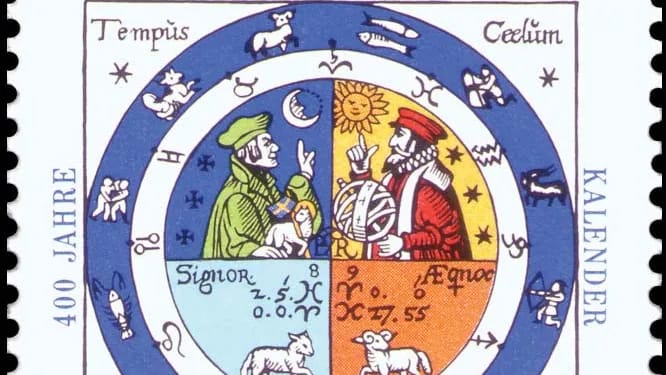
(February 24, 1582): Pope Gregory XIII introduces a new calendar
On this day in 1582, Pope Gregory XIII issued a papal bull that would erase ten days of the year—Thursday, October 4, would be followed by Friday, October 15. This change overrode the Julian calendar, which had been the standard since 46 bce. Pope Gregory's change accounted for the fact that a solar year is slightly shorter than 365.25 days (the year length used by the Julian calendar) and created a new system to address leap years. Roman Catholic countries began using the new calendar immediately, while others were more reluctant. Today, just four countries have not adopted the Gregorian calendar.