- Basedment
- Posts
- Special Edition: Ukraines Flamingo Cruise Missile
Special Edition: Ukraines Flamingo Cruise Missile
Your daily dose of geopolitical updates and strategic analysis. Unbiased, but not unbased.

Editor-in-Chief
August 23, 2025
THE BRIEFING
The 'Flamingo' FP-5 Cruise Missile
Ukraine’s Fire Point has emerged as a key player in domestic arms innovation, producing the FP-1 drone and now the long-range FP-5 “Flamingo” cruise missile. With a 3,000 km range, 2,500 lb warhead, and engine designs repurposed from trainer jets, the Flamingo prioritises payload and scale over stealth. Production goals of up to ten per day suggest growing European support. While highly visible and vulnerable, Flamingos could overwhelm Russia’s overstretched air defences, targeting hardened infrastructure and exposing Moscow’s vast geography as a strategic liability.
DAILY DEEP DIVE
THE UKRAINIAN ‘FLAMINGO’
Russian Vastness: Once A Strength, Now A Vulnerability?
In 2024, Ukraine launched its first deep strikes into Russia, reaching 1,000 km. While limited in explosive impact, the revelation of what was possible was far greater. Ukrainian military officials realised it was possible to strike deep within Russia without Western support. In wars past (Napoleonic and WWII for instance) Russia could simply retreat far into its own territory. But now, with its infrastructure and weapons depots spread far and wide, air defences are struggling to contain attacks.
Since 2022, there has been an awkward pattern: first, Western nations hesitated to send support due to Russia’s stated “red lines,” only to eventually agree far too late. By the time aid arrived, it was often in insufficient quantity, changed battlefield dynamics had already reduced its impact, or Russia had adapted. But this time might be different.
Uncertainty in support has pushed Ukraine to pursue self-sufficiency in a war that neither side seems willing to end without serious concessions. Now a Ukrainian company, Fire Point, is at the forefront of innovation within the defence sector, aiming to mass-produce the Flamingo cruise missile and continually improve it.
Fire Point: Head of the “Silicon Valley of Defence”:
Fire Point was founded in 2022, just after the Russian invasion, like hundreds of other defence start-ups across the country. Ukrainian defence entrepreneur Yaroslav Azhnyuk remarked: “Ukraine is in this very unique moment now where it is becoming, de facto, the Silicon Valley of defence.”
Ukraine spends about $10 billion annually on domestic arms production, and Fire Point has quickly taken the spotlight. The company has been responsible for over 60% of deep strikes in Russia, mainly targeting oil and gas infrastructure and weapons depots. Their main product behind these strikes is the FP-1 drone, which they are producing at a rate of about 100 per day.
Cost per unit: $55,000
Payload: 60 kg of explosives
Share of deep strikes into Russia: 60%
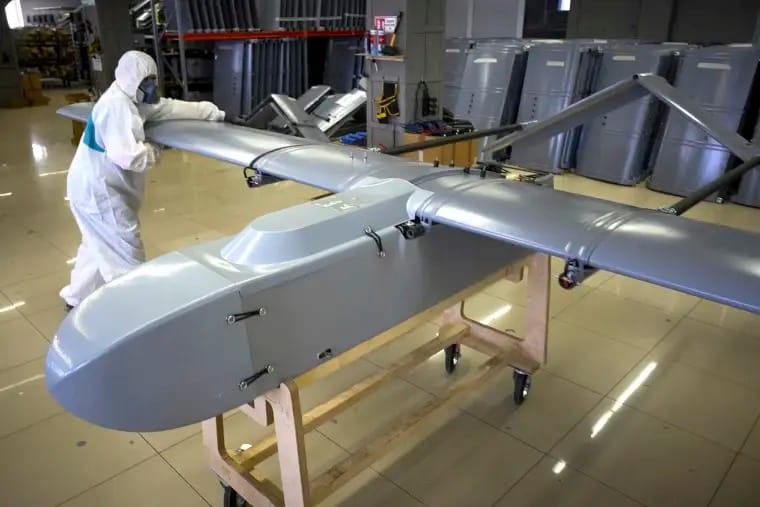
FP-1 Drone
No One Was Expecting Flamingos When They Said “Birds Over Russia”
When the first prototypes were delivered, workers at Fire Point were surprised to see them painted pink. This was due to a miscommunication in the paperwork, and thus the nickname “Flamingo” stuck.
Long-time analyst of Russia’s military production capabilities, Patricia Marins, believes Russia is at its limit in terms of missile production for deep strikes. Significant bottlenecks exist, with almost all production immediately consumed on the battlefield. As a result, Russia has increasingly prioritised drone production with larger payloads. Marins argues that no matter how strong Ukraine’s air defence becomes, it cannot defend against hundreds of new Geran-3 drones, that have a even larger payload than before (made from Chinese components). This, she claims, explains why Ukraine has opted for an offensive doctrine rather than a purely defensive one.
This brings us to a Cruise Missile that was created in less than 9 months allegedly.
Fire Point’s FP-5 “Flamingo” Cruise Missile:
Range: 3,000 km (1,864 miles)
Payload: 1,150 kg (2,535 lbs)
Length: 8–12 metres
Accuracy: within 14 metres of target
Output target: 7–10 per day by October
Zelensky has suggested mass production could begin by February
Ten missiles per day would be a significant number, with some analysts suggesting that key components are actually being produced in Europe and then either assembled or stored in Ukraine. Europe may be providing substantial support by producing Flamingos abroad and shipping them for assembly, a move that could both influence the war and be perceived as bypassing existing missile treaties.
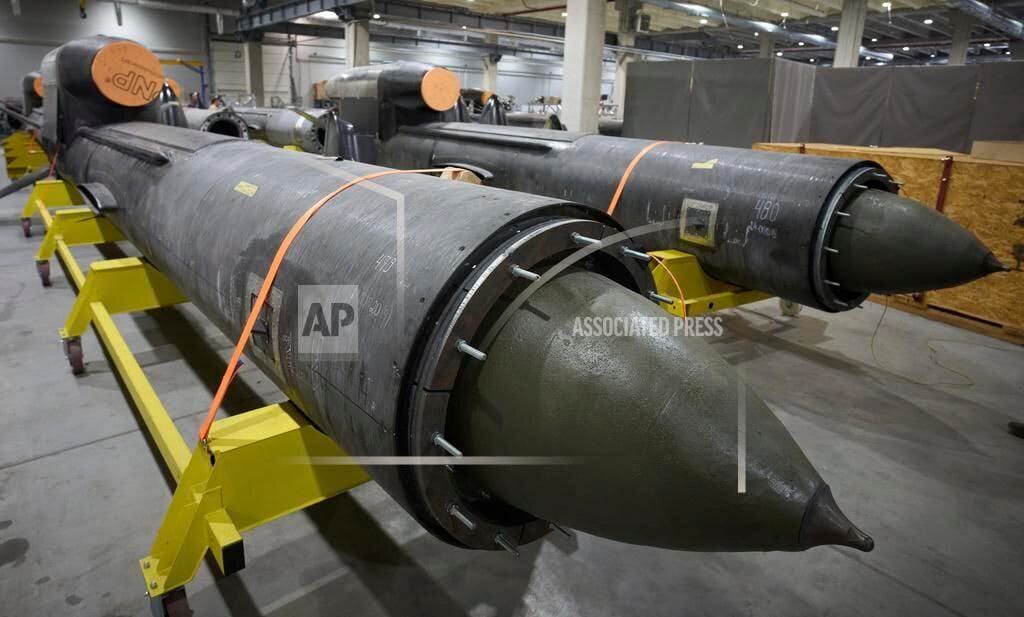
Warhead: FAB-1000
Design Philosophy:
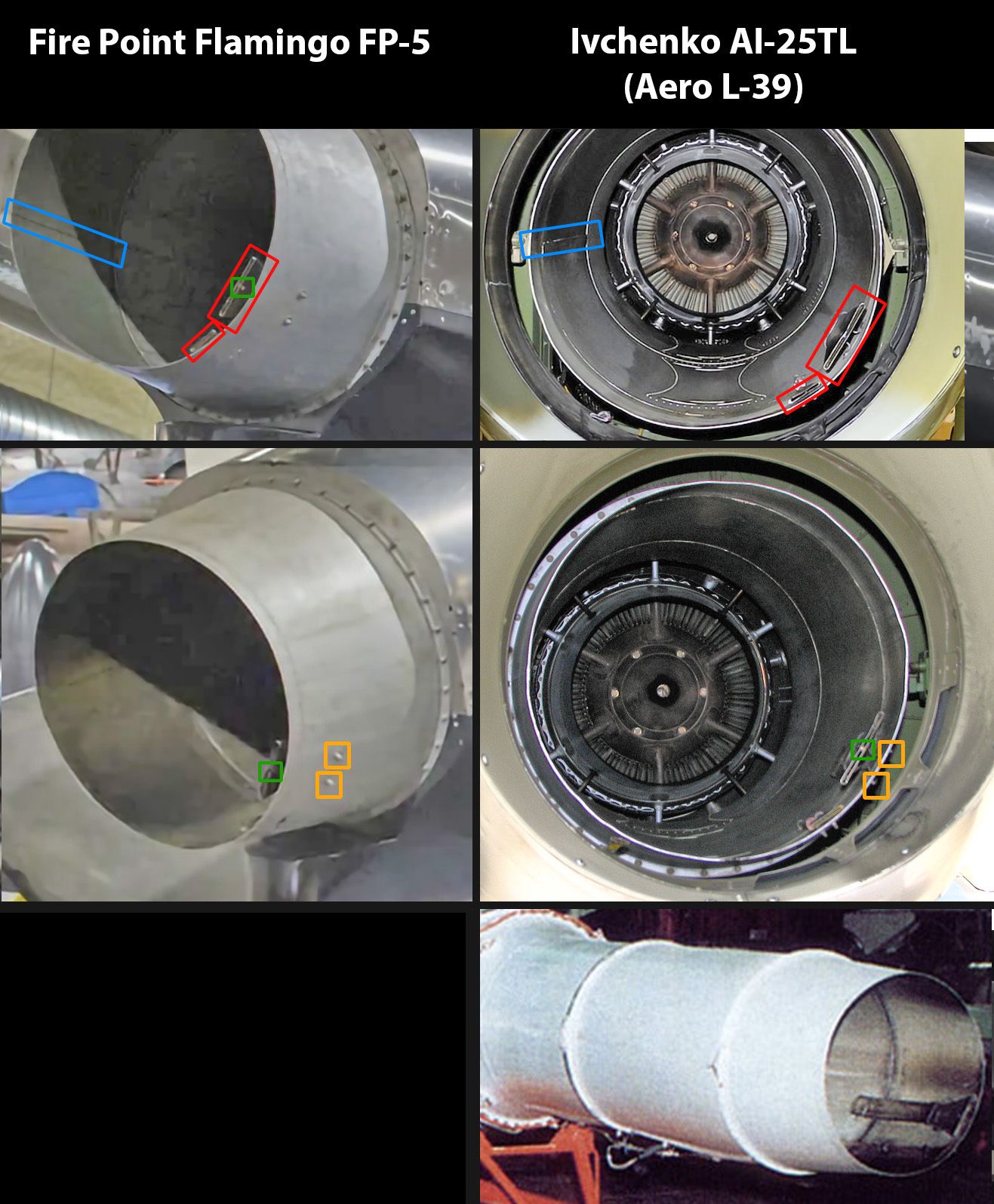
Ukraine’s FP-5 Flamingo reflects a deliberate design philosophy of engine flexibility and affordability. Instead of relying on scarce and expensive miniaturised turbofans designed specifically for cruise missiles or UAVs, Ukraine is repurposing larger, widely available turbofan engines originally built for manned aircraft, most likely the Ivchenko AI-25TL from the L-39 trainer jet.
This approach allows for cost-effective scaling: engines like the AI-25, or even surplus J85s, can be obtained cheaply on global markets, sometimes at scrap prices, making production more feasible. The trade-off is a bulkier missile, but the payoff is significant ; Ukraine gains a long-range, heavy-payload weapon that can be mass-produced quickly. Analysts agree this is smart, pragmatic engineering, though Fabian Hinz warns it raises proliferation concerns, since controlling transfers of common aircraft engines is far more difficult than regulating specialised missile components. The same can be said for the warhead which is essentially a repurposed FAB-1000 bomb fitted at the head of the Cruise Missile. Ukraine has a large stockpile of these old bombs which means procurement wouldn’t be an issue.
Vulnerabilities and Targets
Most attention on the Flamingo has focused on its size. When compared to the American Tomahawk (which carries a ~1,000 lb warhead), the Ukrainian Flamingo carries nearly 2,500 lbs. This power comes with trade-offs, raising questions about its vulnerability.
It’s one thing to send hundreds of small drones that are extremely difficult to detect due to their low altitude and small radar cross-section. But Western cruise missiles were designed for use in opening phases of conflict, before or alongside air superiority. Ukraine, unable to achieve air superiority, must prioritise punch over stealth. These are two fundamentally different doctrines: NATO focused on air-launched, stealthier systems, while Ukraine is reviving the concept of ground-launched cruise missiles with massive payloads.
Detectability is therefore a major issue. Ukraine is gambling on Russian air defences being too stretched and depleted to effectively intercept Flamingos. Russia must allocate systems like the S-300, S-400, and Pantsir to Ukraine’s frontlines first, then to border regions, then to the Urals, while still protecting key cities like Moscow. Meanwhile, Ukrainian drones are deliberately targeting these air defence units, which cost $30–80 million each and can only be produced at a rate of about two per year. This cost-effective attrition strategy, $60,000 drones eliminating multi-million-dollar SAM systems, is already shifting the balance. If Ukraine can scale Flamingo production as planned, Russia could face a massive problem.
Another potential Russian counter is airborne patrols, which could operate deep inside Russian territory without the same risk of being shot down as in Ukraine. However, these bring their own risks: friendly fire incidents (unfortunately common in Russian aviation), Ukrainian SOF sabotage missions, and possible innovations like countermeasure packages on future Flamingos (flares, chaff, spoofing) similar to Russian cruise missile designs.
Russia will also likely prioritise finding Flamingo storage and launch sites. Pro-Russian sources have already claimed to geolocate Fire Point facilities in southern Kyiv from press photos, with reports of subsequent drone and missile activity in the area. While unconfirmed, it highlights the risks of poor operational security, something Ukraine has paid for before in both material and lives.
Importantly, Flamingos are unlikely to be used against fragile oil and gas facilities, which are already vulnerable to smaller FP-1 drones. Instead, they will be aimed at hardened or strategic targets: factories producing drones and tanks, command centres, and other critical infrastructure that smaller drones cannot effectively damage. In saying that, the CM has been used in recent weeks on oil facilities probably as test targets.
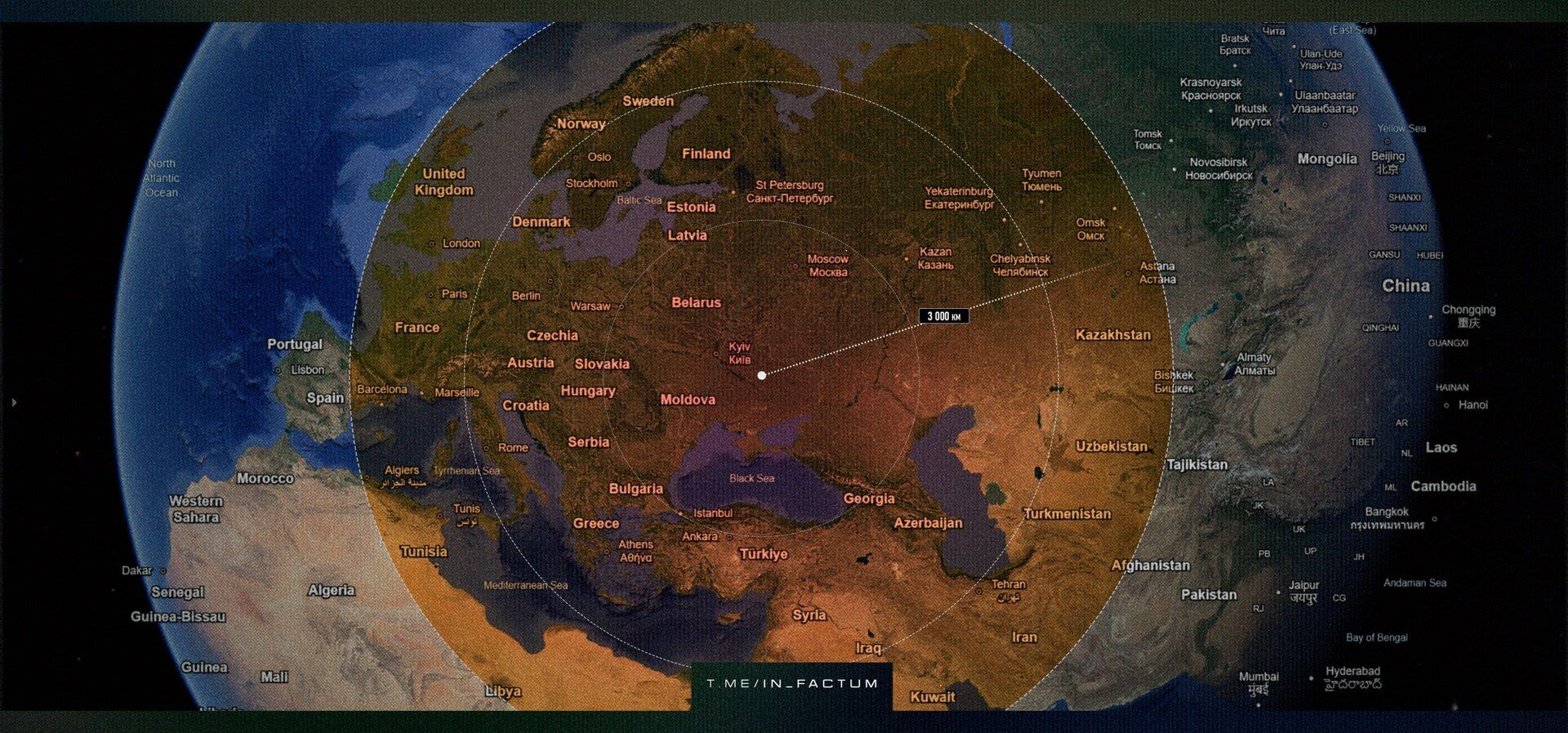
Reach of the 'Flamingo’.
Conclusion:
The Flamingo represents a leap in Ukraine’s long-range strike capability, a weapon born of necessity, designed for scale rather than stealth, and carrying a payload that rivals anything Russia can currently defend against. Whether it becomes a game-changer will depend less on individual missile performance and more on Ukraine’s ability to sustain production, maintain operational security, counter Russian adaptation, and exploit the growing gaps in Russia’s stretched air defence network.
Sources:
AP News. (2025, August). This Ukrainian startup makes drones that strike deep inside Russia. AP News. https://apnews.com/article/ukraine-drones-weapons-industry-russia-7201ab851544c394ee454407058b10ba
Deprez, F., & Stognei, A. (2025, August 22). Ukraine war briefing: Zelenskyy reveals huge Flamingo cruise missile as no peace in sight. The Financial Times. https://www.ft.com/content/1a22515d-f0e2-4f11-8e1f-6d7b9d30ef13
Hinz, F. [@fab_hinz]. (2025, August 21). [Tweet about repurposing aircraft engines for cruise missiles and proliferation concerns] [Tweet]. X. https://x.com/fab_hinz/status/1958562583193031137
Murray, W., & Guardian writers & agencies. (2025, August 22). Ukraine war briefing: Zelenskyy reveals huge Flamingo cruise missile as no peace in sight. The Guardian. https://www.theguardian.com/world/2025/aug/22/ukraine-war-briefing-zelenskyy-reveals-huge-flamingo-cruise-missile-as-no-peace-in-sight
Telenko, T. [@TrentTelenko]. (2025, August 21). [Tweet about Ukrainian missile and engine-agnostic design] [Tweet]. X. https://x.com/TrentTelenko/status/1958598336316948952
TODAY IN HISTORY
(August 23, 2011): The Fall of Muammar al-Qaddafi
On this day in 2011, rebel forces overran Muammar al-Qaddafi’s compound in Tripoli, bringing an end to his 42-year rule over Libya. The longtime leader had seized power in a 1969 coup and maintained control through a mix of authoritarianism, oil wealth, and brutal repression.
Although his exact whereabouts remained unknown immediately after the fall of his compound, Qaddafi was discovered two months later in his hometown of Surt, where he was captured and killed. His death marked the collapse of his regime but left Libya fractured, setting the stage for years of political instability and civil conflict.