- Basedment
- Posts
- Breakdown of the Israel and Iran War
Breakdown of the Israel and Iran War
Geopolitics Daily Briefing - 13th of June 2025

Editor-in-Chief
June 14, 2025
SPECIAL REPORT - BRIEFING
On Friday the 13th of June, Israeli forces conducted a combined operation codenamed “Rising Lion” against Iranian military and nuclear facilities. Israel deployed over 200 fighter jets alongside missile units to strike a multitude of targets across Iran.
Basedment journalists have been covering this rapidly unfolding story. Below is some essential background to help make sense of why this escalation is happening, and what it could mean for the region — and the world.
BACKGROUND
At the heart of the latest escalation between Israel and Iran is a rapidly intensifying nuclear standoff. Israel says it launched its strikes to halt what is called an “imminent threat” - Iran’s alleged pursuit of atomic weapons.

IDF Spokesperson Brigadier General Effie Defrin
The strikes came just hours after the International Atomic Energy Agency (IAEA) released a report that stated Iran has not only resumed high-level uranium enrichment, but has done so at an unprecedented speed and secrecy. The agency formerly ruled Iran in violation of the Nuclear Non-Proliferation Treaty for the first time in 20 years, citing its stockpile of 400kg of near-weapons-grade uranium and a failure to comply with inspections.
Netanayahu claims Iran is now just steps away from assembling a nuclear bomb, calling it a “clear and present danger” to Israel’s survival.
Meanwhile, Iran denies any intention to build nuclear weapons, insisting its programme is for peaceful purposes - and has responded defiantly, announcing a third enrichment facility in an undisclosed “invulnerable” location.
The attack on Iran comes a few days before a fresh round of US-Iran backchannel talks that were scheduled in Oman with an aim to find a diplomatic solution over Iran’s nuclear programme. For Israel, the timing seems to be no accident…
TIMELINE
One/ At 3:30am local time, Israel attacked Iran with explosions booming across Tehran
Israeli Airstrikes in Iran
Two/ Israeli officials were quick to confirm that “dozens” of sites across Iran were targeted.
Three/ IDF claimed responsibility on X shortly after
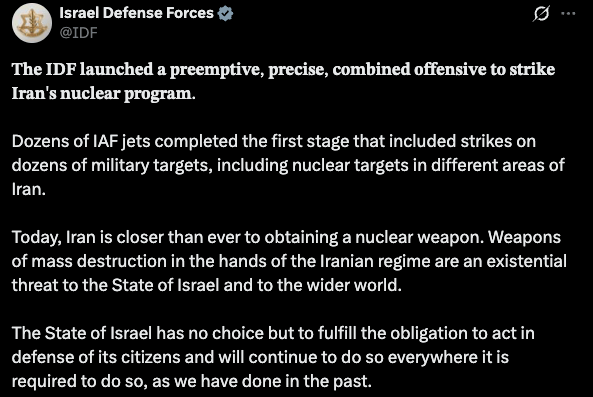
Four/ This was followed by Netanyahu speaking on national television claiming the strikes were aimed at hurting Iran’s nuclear infrastructure, ballistic missile factories and other military capabilities.
“The operation will take as long as is needed to complete the task of fending off the threat of annihilation against us”.
Five/ Iran’s Supreme Leader Ayatollah Ali Khamenei says Israel will receive a “harsh punishment” in response to the strikes.
Six/ Iran launches a 100-drone assault on Israel.
Seven/ Protesters in Iran call for retaliation after Israeli strikes
Eight/ Iran requests emergency meeting of UN Security Council
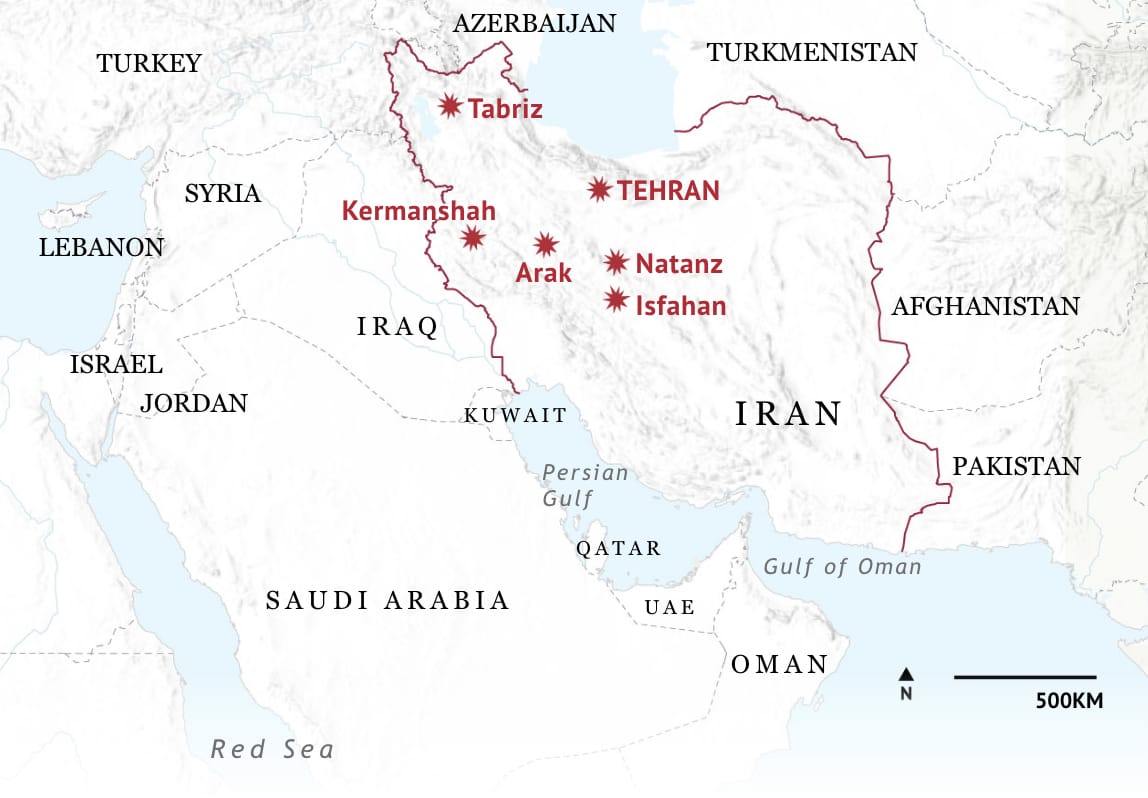
Nine/ New Israeli attacks in the city of Shiraz and Tabriz as well as the Natanz nuclear site in new wave of attacks
Ten/ Israeli strike hits Kermanshah facility storing ballistic missiles
Eleven/ Air raid sirens sound in northern Israel in the Galilee region
KEY TARGETS
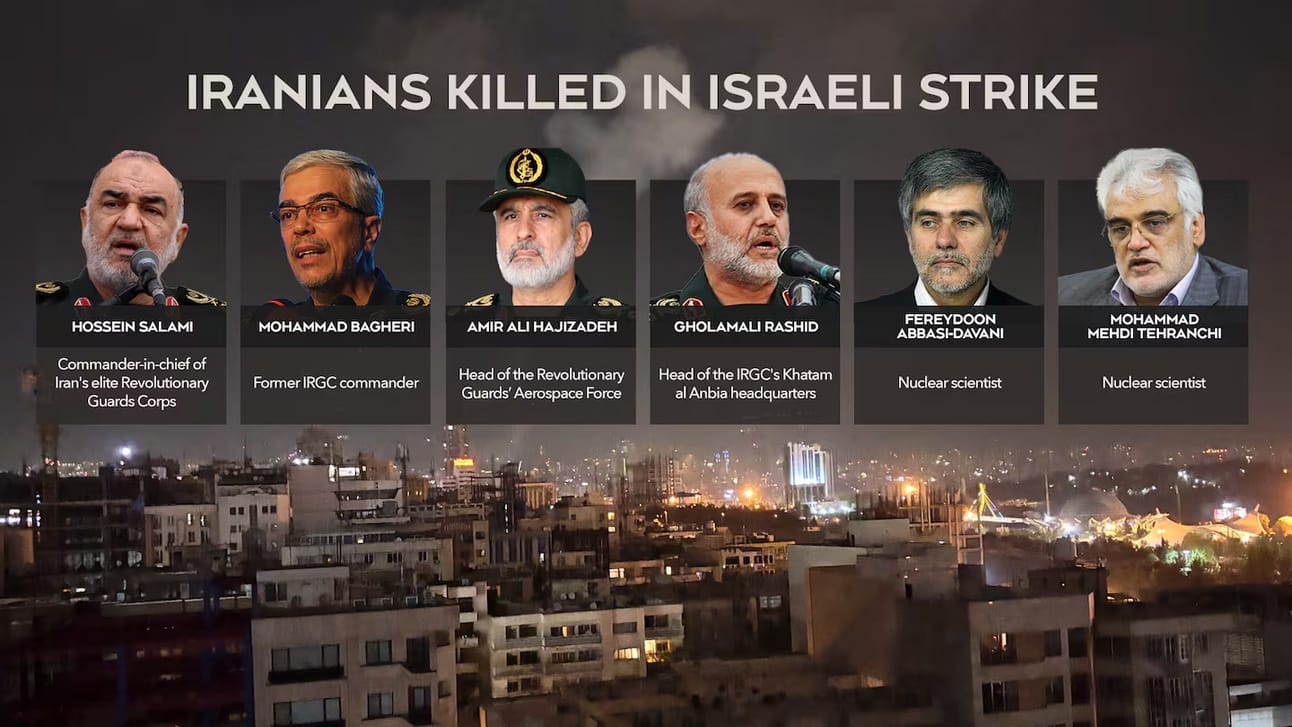
Israel’s main goal was Iran’s nuclear infrastructure. Military targets were secondary — struck to delay retaliation. By hitting over 20 senior commanders, radar sites, and air defenses, Israel disrupted Iran’s command and created a brief window to strike Natanz, Parchin, and Arak. The aim was to hit Iran’s strategic depth: its nuclear capability.
Strategic Intent: Message to Iran’s Military-Industrial Complex
Strikes on Natanz, Parchin, and Arak were designed to degrade Iran’s nuclear infrastructure, not delay it. These facilities are central to uranium enrichment, weaponization research, and material production. Israel has moved from covert sabotage (e.g Natanz sabotage via Stuxnet) to overt military action. Even limited damage demonstrates its ability to reach and threaten Iran’s most protected sites.
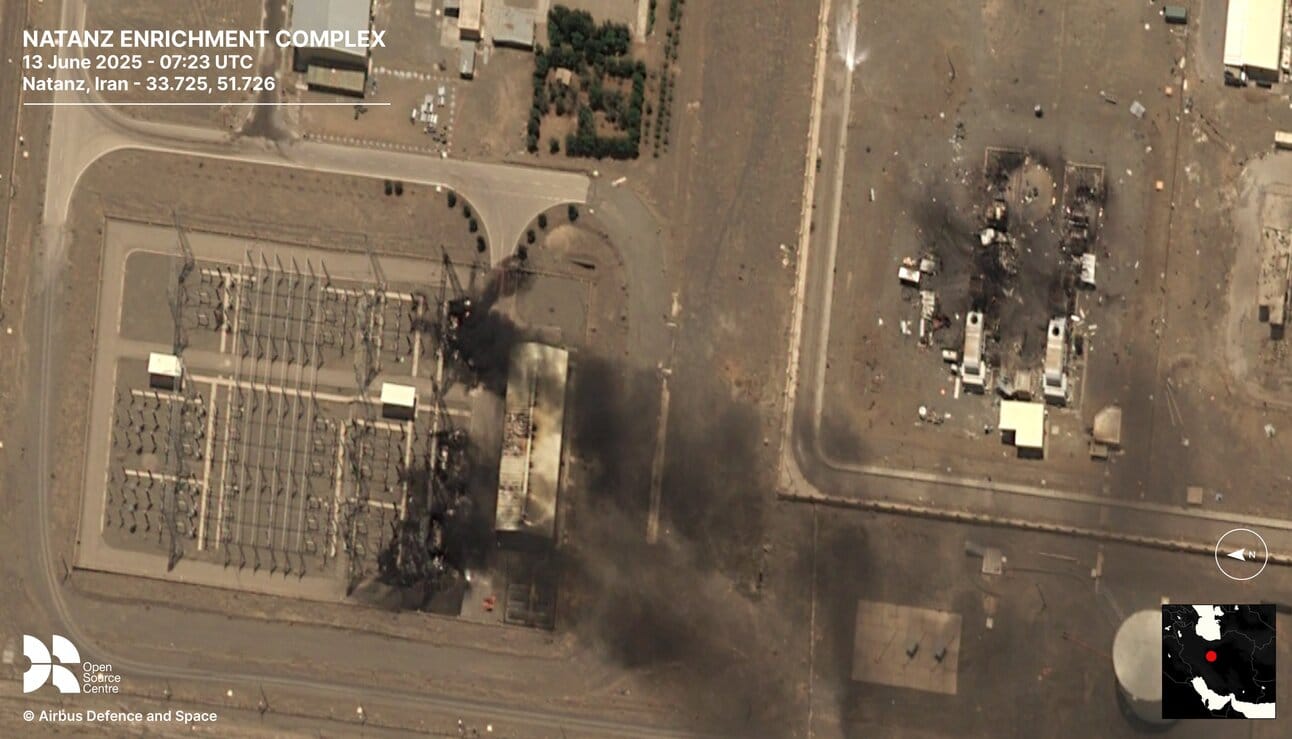
Satellite imagery of extensive damage at Natanz nuclear facility
Threshold Testing: Red Lines in Plain Sight
This was a public challenge to Iran’s red lines. Previous Israeli actions were covert or plausibly deniable. This was direct and visible.
Israel is testing Iran’s willingness to respond. It is also testing whether global powers, including the United States, are prepared to intervene or deter further escalation.
Domestic Pressure on Tehran’s Leadership
The strikes undermine the regime’s claim that its nuclear assets are secure. This damages credibility at home and within elite circles.
Institutional blame between the IRGC and civilian sectors is likely. The perception of vulnerability could inflame internal instability
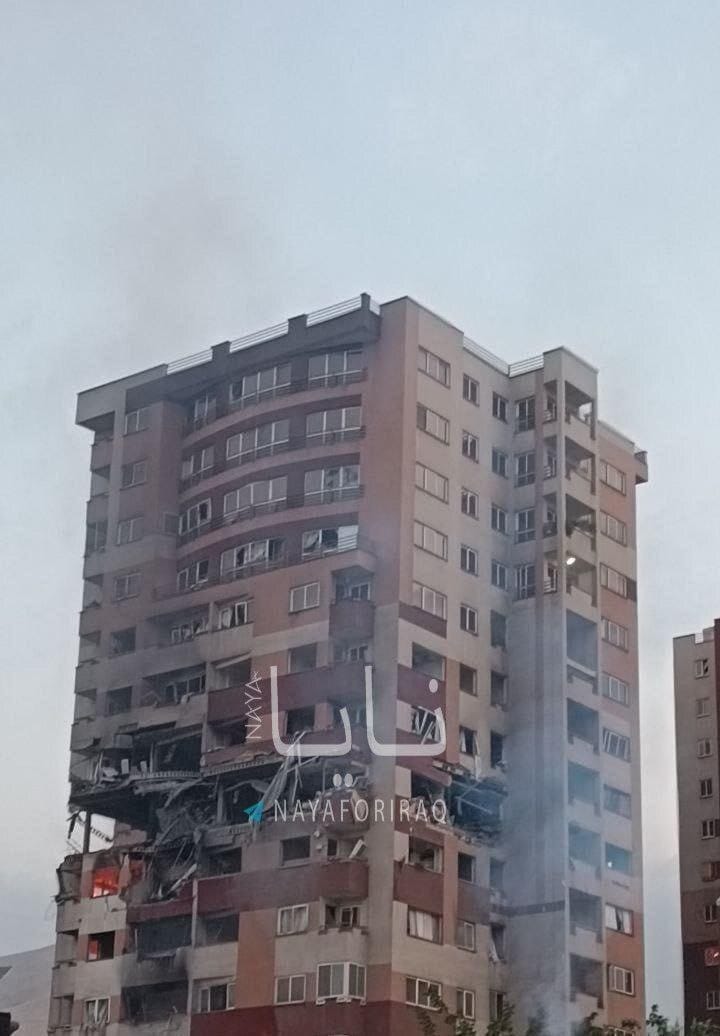
An example of a precision airstrike assassination in
SO, WHAT ARE IRAN’S OPTIONS?
DIRECT MILITARY RESPONSE (Most likely)
Background: Operations True Promise I & II (2024)
Iran’s two major direct strikes on Israel in 2024 set the precedent for how Tehran might respond now. Operation True Promise I, launched on April 13, 2024, came two weeks after Israel struck Iran’s embassy in Damascus . In response, Iran fired a massive barrage of around 170 drones, 30 cruise missiles, and 120 ballistic missiles toward Israel. Despite its scale, the strike was largely symbolic — with 99% of the incoming weapons intercepted by Israeli and allied defense systems.
By contrast, Operation True Promise II, executed on October 1, 2024, was far more calculated. It was a response to the assassinations of high-level Hamas, Hezbollah, and IRGC figures. Iran shifted tactics, relying more heavily on ballistic missiles and less on drones. The attack, launched in multiple waves and planned over three months, inflicted modest but visible damage on Israeli airbases and civilian areas.
What a 2025 Response Might Look Like
Iran’s 2025 response may take two forms. A quick retaliation within weeks would likely mirror April 2024 — high-volume drone and missile attacks with little impact, meant for political messaging. A delayed strike over 1–3 months would resemble October 2024 — heavier use of ballistic missiles, better targeting, and more damage potential.
Targets would likely include Israeli airbases (Nevatim, Tel Nof, Ramon), intelligence hubs (Mossad HQ, Unit 8200), and symbolic sites like Dimona. U.S. bases could be targeted if the conflict escalates, but this remains unlikely.
Strategic Complications
Several new factors complicate Iran’s ability to respond effectively. The most critical is Mossad’s infiltration of Iranian air defence systems. Israel has released footage showing drones being launched from within Iran itself. The strikes have probably caused internal panic within Iran’s military. Mountain bunkers housing aircraft and missile stockpiles are now seen as vulnerable, and fears of insider sabotage or follow-up drone attacks are disrupting operations. Iran’s air force has also been displaced — jets were reportedly scrambled eastward, away from key strike zones, limiting rapid response capability. On top of this, psychological pressure is mounting. The regime faces both global calls to retaliate and internal distrust. Corruption, factional divides, and doubts over competence now cloud Tehran’s decision-making. A misstep could further damage its legitimacy.

Footage released by Mossad shows loitering muntions drones released from within Iran to target radar instalments and air defence systems.
Strategic Dilemma
Iran faces a difficult choice. A rushed retaliation risks failure — militarily, symbolically, and politically — especially if it mirrors the largely ineffective April 2024 operation. But delaying a response could be seen as weakness by both Iran’s allies and adversaries, weakening Tehran’s image as a committed resistance power.
Both paths carry the danger of regional escalation. A larger-scale strike could draw in the United States, activate proxy networks across multiple fronts, or spiral into a broader war. The more calculated Iran’s response, the more likely it can maintain credibility without triggering uncontrollable escalation. Iran has also shown that it does feel forced to react quickly.
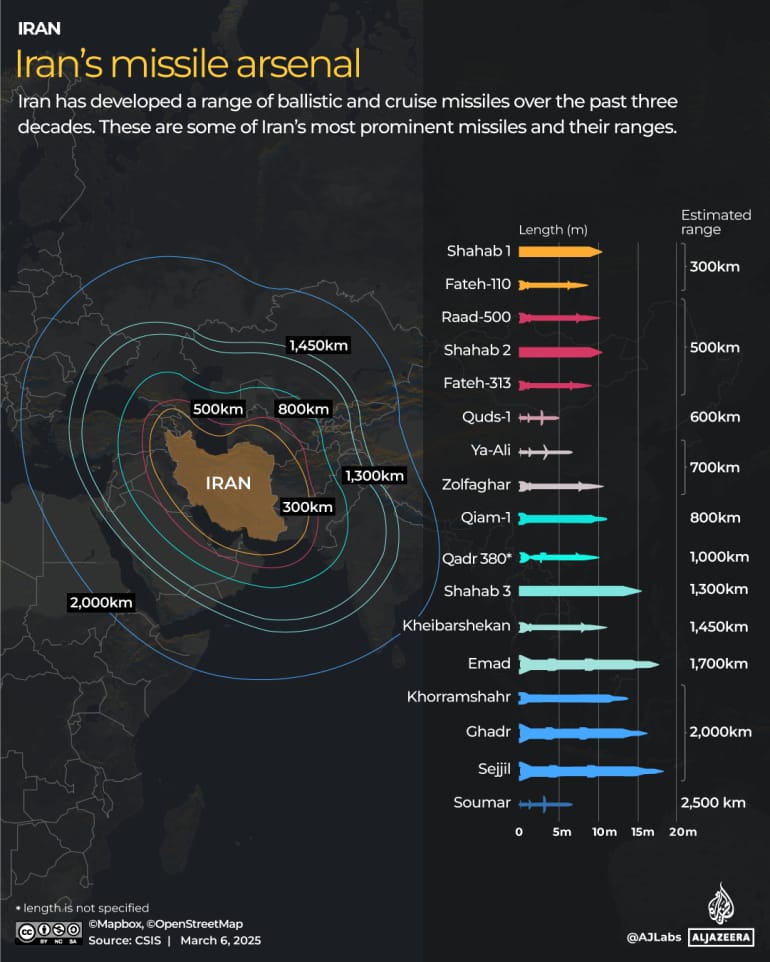
Iran’s missile arsenal (Al Jazeera, 2025)
The use of Proxies (Possible, probably in unison with direct response)
Iran may activate proxies like Hezbollah, the Houthis, and the PMF for indirect retaliation. Hezbollah’s capacity is degraded after months of conflict and repeated Israeli strikes on its leadership. Supply lines weakened with Syria’s collapse, forcing reliance on risky, often intercepted smuggling. Reports indicate PMF drones were launched from Iraq today, likely at U.S. or Israeli targets, but such attacks have historically had little effect. The Houthis may resume strikes on Israel or Gulf infrastructure to raise pressure. While proxies offer plausible deniability, their effectiveness is limited, and overuse risks weakening Iran’s strategic posture.
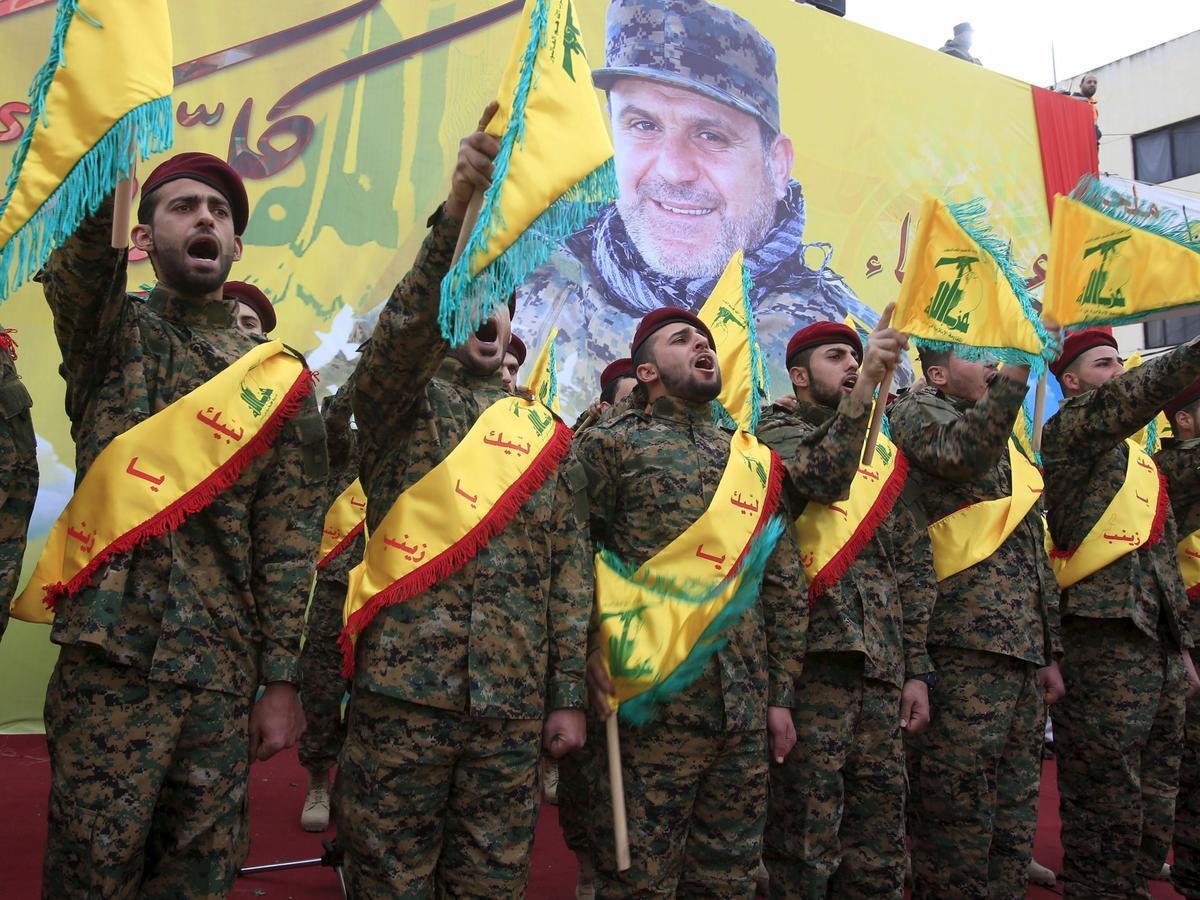
Funeral of Hezbollah Offical
Strategic restraint + international leverage (unlikely)
Iran may delay retaliation, presenting itself as a rational actor. Though unlikely to deter Israel, Tehran could push diplomatic pressure via the UN, the Non-Aligned Movement, or partners like China and Russia. Restraint could also buy time to regroup, rebuild air defences, and secure key assets.
Bonus: Cyber attacks
With the reported leaks of Israeli nuclear information by Iran. We will probably see further leaks by Iran - however, the strategic effects of this are negligible at the moment.