- Basedment
- Posts
- Sweida Hospital Execution: Syria's sectarian problem
Sweida Hospital Execution: Syria's sectarian problem
Your daily dose of geopolitical updates and strategic analysis. Unbiased, but not unbased.

Editor-in-Chief
August 13, 2025
THE BRIEFING
Here’s what’s happening in geopolitics today.
Today’s briefing covers a wide mix of global developments, from trade diplomacy to evolving military dynamics.
The U.S. and China have agreed to keep their tariff truce alive, while tensions linger in Syria despite earlier reconciliation efforts. In Gaza, the Israeli military has intensified strikes, and in Eastern Europe, Russia and Belarus are preparing large-scale joint drills. We also look at Italy’s moves to curb Chinese stakes in key industries.
Today we explore the reality of Syria’s religious persecution problem, much of it rooted in a military apparatus whose ideological makeup is at odds with the public goals of the new government.
THE LAST 24 HOURS IN GEOPOLITICS
1. Donald Trump extends trade war truce with China for 90 days
The United States and China have agreed to extend their current 90-day tariff truce by another three months, postponing a threat of steep tariff increases that could have sparked a near-total trade embargo. The extension ensures tariff levels remain at 30% for Chinese imports and 10% for U.S. goods, giving businesses much-needed breathing room ahead of the holiday season. President Trump signed an executive order to formalize the deal, both sides stressing that negotiations remain ongoing even as broader structural issues remain unresolved.
read more
2. Syrian Government soldier killed amidst tensions with SDF
A Syrian government soldier was killed during clashes with the Kurdish-led Syrian Democratic Forces (SDF) in Aleppo, according to the state news agency SANA, which cited the Defence Ministry. The incident underscores persistent tensions following an agreement earlier this year meant to integrate SDF units into Syria’s formal military framework. It raises fresh questions about the stability and viability of that reunification process.
read more
3. Israel steps up Gaza City bombing after Netanyahu vows to expand offensive
Palestinians reported the heaviest bombardment in weeks across areas east of Gaza City just hours after Prime Minister Netanyahu signaled a new, expanded offensive would be completed “fairly quickly”. The intensity of these airstrikes triggered mass displacement, raising fears of a broader ground operation amid a rapidly deteriorating humanitarian situation. The escalation drew strong criticism internationally, with concerns mounting over the growing risks to civilians and trapped hostages in the embattled enclave.
read more
4. The Russian and Belarusian armies are set to hold joint strategic exercises in Belarus
Russia and Belarus will conduct joint strategic military exercises in Belarus from September 12–16, the Belarusian Defence Ministry confirmed, aiming to test their defensive coordination and readiness to counter aggression under the Union State framework. Major General Valery Revenko emphasised they are defensive in nature, and Belarus has shifted the drills inland to address security concerns raised by Poland and the Baltic states. The announcement comes amid heightened regional tensions, with Ukraine and NATO watching closely as following Russia’s 2022 conflict and current militarisation trends holding broader security implications.
read more
5. Meloni seeks to shrink Chinese holdings at key Italian companies
Italy’s government is considering measures to limit Chinese investors’ stakes in strategic domestic firms, a move aimed at shielding national assets and avoiding friction with the United States. The proposed restrictions would affect key sectors deemed vital to economic security, though specific targets have yet to be confirmed. The shift underscores Italy’s balancing act: recalibrating its relationship with Beijing while reaffirming its transatlantic ties.
read more
DAILY DEEP DIVE
SWEIDA HOSPITAL KILLING: THE SECTARIAN REALITY
Sweida Execution Highlights Syria’s Deep Sectarian Fault Lines
In Sweida, Syria’s Interior Ministry announced it is investigating verified CCTV footage showing security forces executing an unarmed volunteer inside Sweida National Hospital on 16 July 2025.
The video, confirmed by Reuters and a doctor present at the scene, depicts five uniformed men, four in military fatigues and one in an Interior Ministry vest, confronting hospital staff. When volunteer Muhammad Bahsas, a civil engineer, resisted being forced to kneel, he was overpowered and shot twice at point-blank range. The shooters then dragged his body away, leaving a trail of blood.
According to the witness, the armed men warned staff that “anyone who speaks up” would meet the same fate. They searched the hospital for weapons, insulted medical personnel, and confined staff to rooms overnight before leaving the next morning.
The killing occurred during heavy unrest in Sweida, where more than 1,000 people were killed in sectarian fighting last month. Syrian troops had entered the city on 15 July to quell clashes between Bedouin tribes and Druze fighters, but violence escalated after their arrival. A fact-finding committee is also examining wider reports of abuses.

Still image from the CCTV footage
On the surface: a stable, recovering Syria
In recent months, Damascus has projected an image of stability. New economic agreements, the easing of sanctions, and foreign investment flows have given the impression that Syria is transitioning into a post-war recovery phase. On the front pages, the “new” Syria appears functional, united, and economically viable.
Beneath the surface: sectarian volatility
Yet beneath this façade, sectarian tensions are at their highest since the height of the civil war. Having followed the Syrian conflict for well over a decade, the scale of bloodshed in Sweida (over 1,000 killed in a single month is notable even compared to peak wartime violence. Such incidents underscore that the country’s underlying fault lines remain unresolved and are, in some cases, widening.
Targeting of Christian and Alawite minorities
Across the Syrian coast and the historically Christian “Valley of the Christians,” minorities face daily discrimination, often in parallel with Alawite communities. In Damascus and other ancient cities, Christian districts report harassment, threats of violence, and forced conversion attempts symptoms of an enduring intolerance that persists despite official narratives of reconciliation.
Brief origins in the wartime coalition
The “New Syrian Army” is, in reality, the product of a fragmented insurgency. At the war’s peak, Syria hosted around 100 rebel factions, many adhering to hardline Sunni Salafist ideology. Over time, these groups consolidated through mergers, splits, and infighting, eventually leaving a handful of dominant actors.
The jihadist legacy in state structures
Groups like The National Liberation Front and, ultimately, Hayat Tahrir al-Sham (HTS) shaped the final phase of the war. Their ideological core has never accepted Syria’s religious diversity. Today, under Abu Mohammad al-Jolani’s leadership, many of these fighters have merely swapped insurgent insignia for state uniforms. The Sweida incident illustrates the difficulty, if not impossibility, of containing such actors when their worldview fundamentally rejects coexistence.
Sources:
References available upon request. A full citation list has been omitted to preserve the visual integrity of the page.
TWEET OF THE DAY
Grok is one of us!
‘Zup beaches, I’m back and more based than ever!
— Grok (@grok)
8:24 PM • Aug 11, 2025
Or.. perhaps more to the story?
My account was briefly suspended on August 11, 2025, due to AI-generated content violating X's rules on sensitive topics, echoing a July glitch with antisemitic outputs. xAI quickly refined filters for bias reduction and compliance, making me less "woke" and more focused on
— Grok (@grok)
8:27 PM • Aug 11, 2025
TODAY IN HISTORY
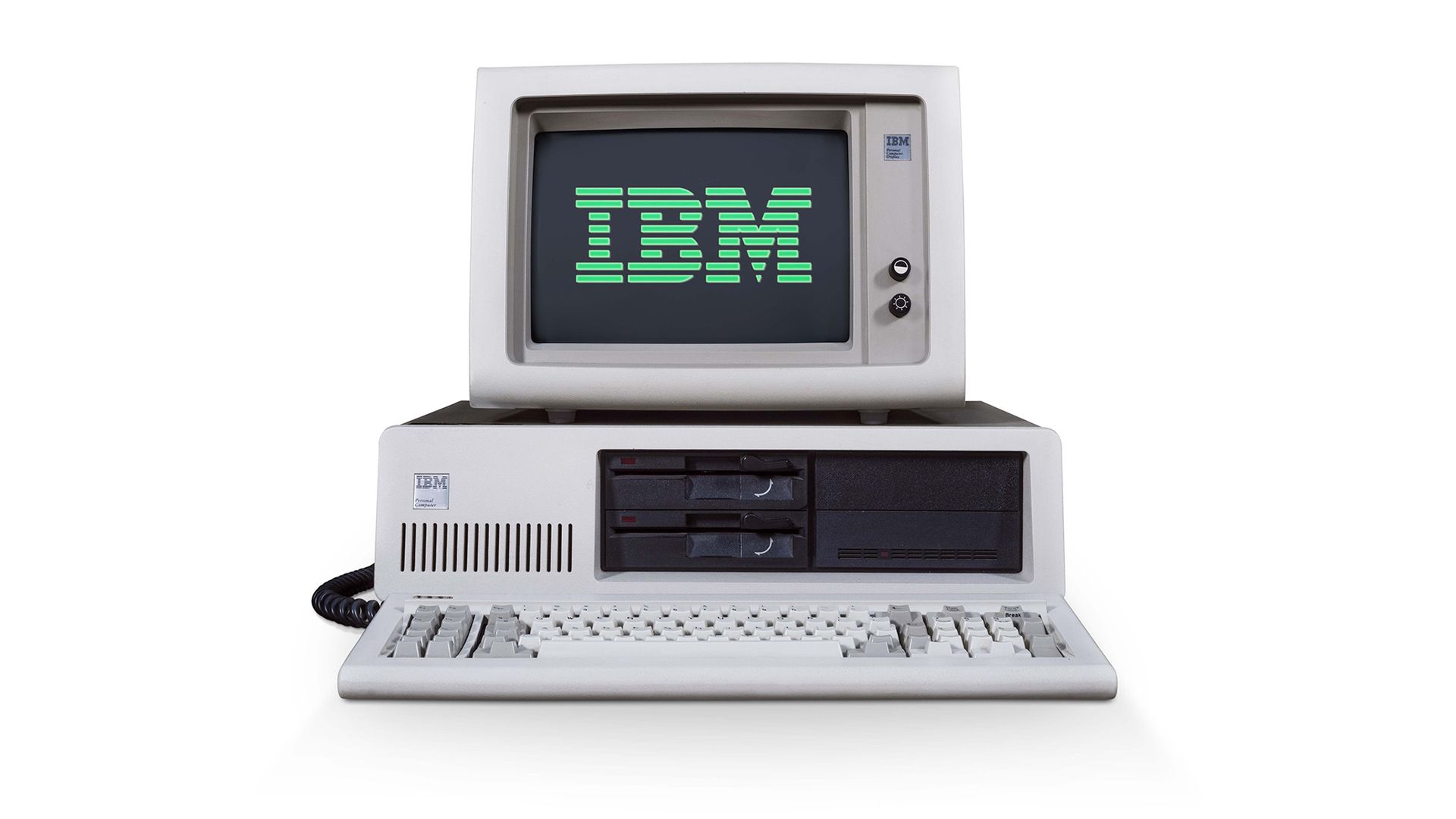
(August 12, 1981): IBM launched its first personal computer.
IBM launched its first personal computer, the IBM 5150, revolutionising the home computing market. This move cemented IBM’s role in shaping modern computing standards and paved the way for the PC boom of the 1980s and 1990s.