- Basedment
- Posts
- Is Syria's Relationship With Foreign Jihadists Breaking Apart?
Is Syria's Relationship With Foreign Jihadists Breaking Apart?
Your daily dose of geopolitical updates and strategic analysis. Unbiased, but not unbased.

Editor-in-Chief
October 23, 2025
THE BRIEFING
Here’s what’s happening in geopolitics today.
It’s been another busy night on the geopolitical front. From cabinet tensions in Lithuania to renewed missile launches out of North Korea, the headlines are once again dominated by security and diplomacy.
Meanwhile, the Louvre is back open in Paris following that audacious jewellery heist, and China is trading barbs with Australia over an airspace dispute in the South China Sea.
In today’s deep dive, we explore what could be the beginning of Syria’s own version of the ‘Night of the long knives’.
THE LAST 24 HOURS IN GEOPOLITICS
1. Lithuanian Defence Minister resigns over clashes with Premier
Lithuania’s Defense Minister Dovilė Šakalienė said Tuesday she has decided to step down after losing the trust of Prime Minister Inga Ruginienė and Social Democratic Party chairman Mindaugas Sinkevičius over the defence budget. Speaking on Tuesday, Šakalienė said she sees “no other opportunities to work when there is no trust.”
read more
2. North Korea test-fires multiple ballistic missiles as APEC Summit nears
North Korea launched multiple ballistic missiles toward the East Sea, just days ahead of the Asia‑Pacific Economic Cooperation (APEC) summit, according to South Korea’s military. This is North Korea’s first such launch in months just a week before world leaders, including US President Donald Trump, descend on South Korea for a summit. The missiles were fired around 8:10 am Wednesday (2310 GMT Tuesday) from an area south of the capital Pyongyang, Seoul's military said.
read more
3. Budapest Summit postponed as Putin rejects Trump’s ceasefire proposal
A planned summit in Budapest between Trump and Putin aimed at advancing peace talks over Ukraine has been postponed after Russia rejected the proposed immediate cease-fire. Moscow insisted any truce must address its demands for territorial concessions, undermining the U.S.-brokered initiative to freeze the current front lines. The decision highlights how diplomatic efforts remain vulnerable to breakdown when Moscow sticks to maximum demands and the U.S. declares it will not proceed with a “wasted meeting.”
read more
4. Paris’ Louvre Museum reopens following jewellery heist
Louvre Museum in Paris reopened on Wednesday, three days after a bold daytime heist saw thieves flee with jewels valued at around €88 million (US $102 million). The museum’s temporary closure allowed forensic teams to probe serious security shortcomings highlighted by staff reductions and delayed modernisation efforts. While visitors have now returned, the incident has triggered a national review of cultural-site protections and raised uneasy questions about safeguarding national heritage in a high-traffic landmark.
read more
5. China accuses Australia of covering up airspace intrusion in South China Sea
South China Sea tensions flared as Paracel Islands-based airspace was at the heart of a clash in which Australia alleged a Chinese fighter jet dropped flares dangerously close to one of its surveillance planes, calling it “unsafe and unprofessional.” Beijing, however, fired back by accusing Canberra of covering up an “illegal intrusion” into Chinese airspace and lodging a formal complaint over what it described as a provocation. The incident underlines how contested skies in this strategically vital maritime region remain a hot-button issue for both powers.
read more
DAILY DEEP DIVE
SYRIA’S ‘NIGHT OF THE LONG KNIVES’?
We recommend reading the full X thread of the primary source we are using for this deep dive — Linked below.
The Jihadi Elephant In The Room
The jihadi elephant in the room has been a persistent topic of discussion among analysts familiar with Syria’s long and bloody conflict. Al-Sharaa is a pragmatist who recognised that the only way a rebel Syria could survive was by fitting into the international community — how much of that exists on paper and how much in reality is another question. His biggest challenge is that he commands tens of thousands of foreign fighters who came to wage jihad and establish an Islamic state under Sharia law. These men and their families have little connection to a Syrian identity.
Foreign fighters, particularly Europeans who refused to “bend both knees” before the new authority, were always going to be the first targets. Their vision of an Islamic emirate has been replaced by al-Sharaa’s state-first model — an authoritarian, nationalist project that promises stability to foreign capitals. The jihadist dream has been traded for bureaucracy.
The Clean-Up
So far, it has worked for al-Sharaa. Many groups, such as the Uighurs, have formally integrated into the newly formed Syrian army as have even more extreme factions. For most of them, there was no other option. Global funding was funnelled through al-Sharaa, and any move against him would risk losing external support. The Uighurs are a good example as their integration both ensures their own survival and China’s approval that Al-Sharaa desperately needs in the long run.
The problem is that these groups (and there are many) sit across a vast spectrum of moderation and radicalism, nationality, ethnicity, loyalty, and mercenary motives. It is the reason al-Julani spent much of the years leading up to his takeover not fighting Assad, but fighting internal turf wars across Idlib’s towns and suburbs, conflicts he knew would one day threaten his power.
The main antagonist to al-Sharaa’s control of Syria is Omar Omsen, a French jihadist whose group, Firqatul Ghuraba, now finds itself in the crosshairs of a government it once fought beside. Omar describes himself as an Emir of his own enclave. Naturally such claims would not sit well with the new Syrian government. Since 2017, an internal war has raged between HTS and rival jihadist factions, mass arrests, car bombings and assassinations were commonplace for years. Omsen was caught up in these internal battles. By 2020, al-Sharaa’s men had detained him, his son, and several of their French-speaking followers. Though later released, the message was clear: independence would no longer be tolerated.
After declaring himself President, al-Sharaa redefined Syria’s role on the regional stage. “Syria will not be a threat to its neighbours or to the world,” he said — language crafted for Western ears. Behind that rhetoric lies a deal of convenience: Western intelligence services would quietly tolerate al-Sharaa’s rule so long as he neutralised jihadist remnants and prevented attacks abroad.

Picture of Omsen
Syria’s Night Of The Long Knives?
Harem, a small border town filled with the families of foreign fighters, has become the last stronghold of resistance. Intelligence from the area describes growing tension between Omsen’s men and Syrian authorities. According to reports, Ansar al-Tawhid (now reorganised as the 82nd Army Division under government command) warned the French-speaking fighters that a crackdown was imminent. Mediation efforts by Khaled al-Halabi, a former jihadist commander turned regime officer, failed. By 21 October 2025, Firqatul Ghuraba issued a statement accusing Damascus of planning to “disperse the camp” and even hinted at French intelligence support for the operation.
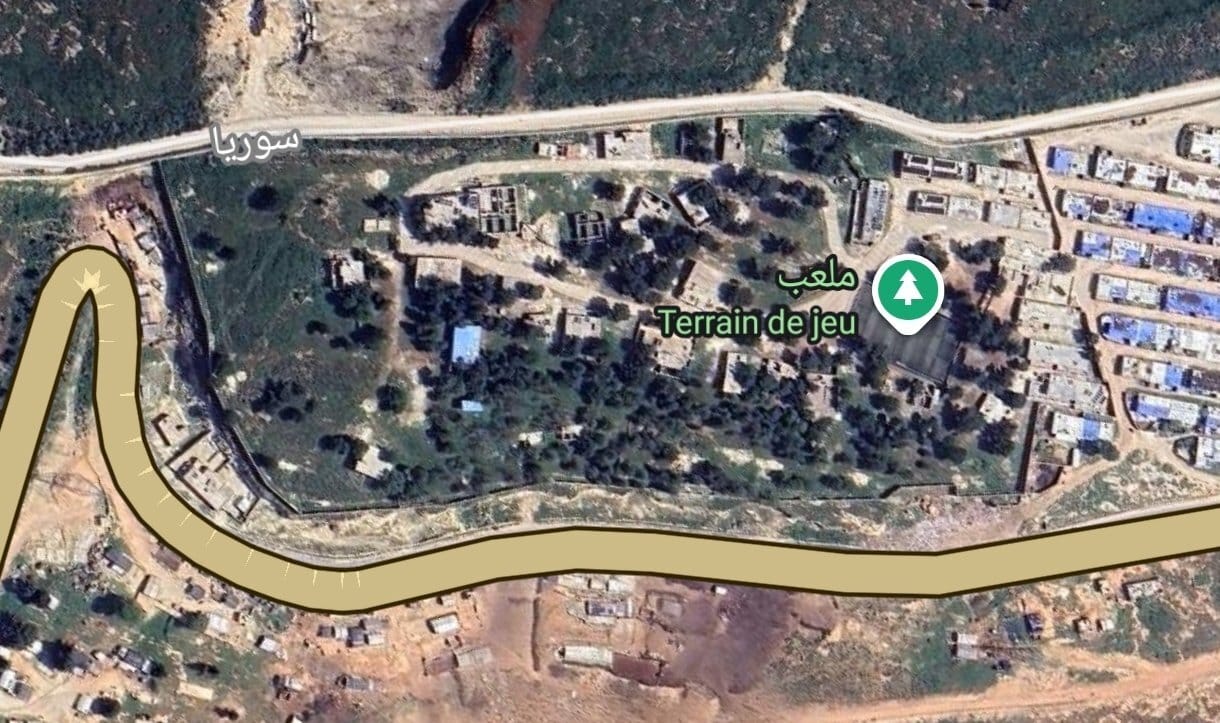
Aerial image of Omsen’s compound.
Whether Paris is directly involved remains unconfirmed, but it would not be out of line with French counter-terror logic. Authorities in France and Belgium have spent a decade tracking Omsen’s network, which continues to attract new European arrivals despite its isolation.
Across Syria, the same blueprint is unfolding. In Daraa, Damascus, and other regions, security raids are rounding up former rebel commanders and hardliners. Our primary source, Cedric, compares it to a “McCarthyism of jihadism” — an internal cleansing designed to stabilise al-Sharaa’s rule.
Cedric points to a recent case study: the Dumayr affair. A local notable with a past in Ahrar al-Sham and the Islamic State was arrested by the former U.S.-backed New Syrian Army and later died in custody. The official narrative spoke of “mistaken identity”, but insiders describe it as part of the same campaign — the pre-emptive removal of anyone deemed ideologically unreliable.
The foreign-fighter purge is simply the most visible chapter to consolidate power and it is something we have discussed repeatedly. The operation in Harem may soon decide whether foreign fighters can still exist independently in Syria. Elements within al-Sharaa’s security network, supported by regional intelligence services, are reportedly preparing for direct action. Some Caucasus groups in the same area have already been targeted. If Firqatul Ghuraba resists, the outcome will likely be swift and bloody. There is no safe exit. The Islamic State, which once condemned Omsen personally, will not shelter them. Turkey’s border is sealed. Local allies are gone.
Sources:
Sources available upon request, not shown to maintain visual integrity of page.
Main source of recent information: https://x.com/CdricLabrousse/status/1980747969860161998
TWEET OF THE DAY
Not me waiting on Elon to quote retweet… 😂
The new space race so far
— Goose (@megagoose11)
8:47 PM • Oct 21, 2025
TODAY IN HISTORY
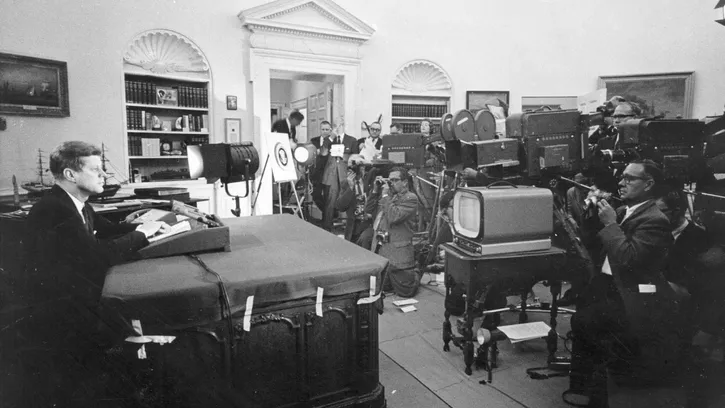
(October 22, 1962): Cuban missile crisis
On this day in 1962, President John F. Kennedy alerted Americans to the Cuban missile crisis, declaring a naval blockade to prevent further missile shipments to the island country 90 miles (145 km) off the coast of the U.S.