- Basedment
- Posts
- Taliban-Pakistan Border Clash Explained
Taliban-Pakistan Border Clash Explained
Your daily dose of geopolitical updates and strategic analysis. Unbiased, but not unbased.

Editor-in-Chief
October 13, 2025
THE BRIEFING
Here’s what’s happening in geopolitics today.
A mix of politics, protests, and maritime tensions defined the global news cycle overnight.
From the Seychelles’ election shake-up to Trump’s promise that U.S. troops will be paid despite the shutdown, it’s been a busy start to the week. Protests in both West Africa and Australia dominated headlines, while Manila and Beijing are trading blame after another maritime clash in the South China Sea.
With a new round of border clashes, we’re doing a deep dive on the Pakistani-Taliban border issues.
THE LAST 24 HOURS IN GEOPOLITICS
1. Seychelles’s Patrick Herminie wins presidential run-off election
Opposition leader Patrick Herminie won the Seychelles presidential run-off election with 52.7% of the vote, unseating incumbent Wavel Ramkalawan.Herminie’s party, United Seychelles, also regained a parliamentary majority, restoring unified control of government to the party that ruled for decades before 2020.During his victory speech, Herminie promised to lower the retirement age and implement a truth and reconciliation commission on past human rights abuses.
read more
2. Trump says military will get paid despite shutdown
Trump announced he had directed the Department of Defense to use “all available funds” to ensure U.S. troops are paid on October 15, despite the ongoing federal government shutdown. He said he identified approximately $8 billion in un-obligated research and development funds from prior fiscal years to cover military paycheques if the shutdown continues. The move only affects active-duty military — thousands of furloughed federal employees remain unpaid as Congress remains deadlocked over funding legislation.
read more
3. Ivory Coast arrests 237 protesters amid rising tensions before presidential election
At least 237 protesters were arrested in Abidjan during demonstrations over what activists say is an authoritarian drift in the lead-up to the October presidential election. Authorities reportedly used tear gas and blocked roads to impede the march — the protest had been declared illegal by local officials. Demonstrators are reacting strongly to the exclusion of top opposition figures, including Laurent Gbagbo and Tidjane Thiam, seen by many as undermining the fairness of the election.
read more
4. Philippines says Chinese ship rammed Government vessel at Sea
A Chinese coast guard vessel rammed the BRP Datu Pagbuaya, a Philippine fisheries support vessel anchored near Thitu Island, after firing a water cannon, Philippine authorities said. The ship sustained minor structural damage but no crew members were injured. Manila condemned the act as a “dangerous and provocative maneuver,” while China countered that the Filipino vessel had illegally entered its claimed waters near Sandy Cay.
read more
5. Australia pro-Palestinian rally draws tens of thousands, scepticism on ceasefire
Tens of thousands turned out for a pro-Palestinian rally in Sydney, one of around 27 demonstrations across Australia, with organisers estimating a crowd of 30,000. Despite a new ceasefire in Gaza, many protesters voiced deep scepticism that the truce would hold, citing historical patterns of breakdown. The chants largely centred on ending occupation, demanding justice, and ensuring that international actors don’t forget Gaza’s plight.
read more
DAILY DEEP DIVE
TALIBAN-PAKISTAN BORDER CLASH EXPLAINED
Overview
Tensions between Afghanistan and Pakistan erupted this week after Taliban forces launched coordinated assaults on Pakistani border posts — a move they called “retaliation” for alleged Pakistani air strikes on Kabul. The clashes, spanning at least six locations across Khyber-Pakhtunkhwa province, saw Taliban fighters claim the capture of three Pakistani posts, while Islamabad said its forces destroyed several Afghan positions and shot down three explosive-laden drones.
The fighting marks one of the most serious escalations since the Taliban’s return to power in 2021. Kabul accuses Pakistan of violating Afghan sovereignty, while Islamabad insists it’s responding to unprovoked fire and demands that Afghanistan stop harbouring the Pakistani Taliban (TTP) — a group responsible for hundreds of attacks on Pakistani troops in recent years.
Who are the TTP?
The Tehrik-e-Taliban Pakistan, or TTP for short, was formed in 2007 when a number of militant factions united following Pakistani military operations against al-Qaeda. Some reports estimate their strength at between 30,000 and 50,000 fighters.
Old Colonial Answers Causing New Problems
A central cause of the tension is that groups like the Taliban have never recognised the British-created border known as the Durand Line. The Taliban are primarily Pashtun, and Pakistan has a close-to 40 million-strong Pashtun minority it seeks to appeal to. The Taliban’s support for the TTP, which has intensified attacks inside Pakistan by over 50% since 2021, has severely strained ties with Islamabad. Even pro-Pakistan Taliban figures like Sirajuddin Haqqani have refused to suppress TTP operations. The Taliban’s Pashtun nationalism and rejection of the Durand Line have further deepened this divide.
It appears Pakistan has pressed its old ally to help suppress their domestic enemy, but the Taliban have refused. The Taliban view the TTP through a lens of shared ideology, rejecting modern notions of statehood and seeing them as brothers in jihad. Their support for the Pashtun-based TTP is less about declaring war on Pakistan and more about reinforcing their own nationalist and ideological credentials at home.
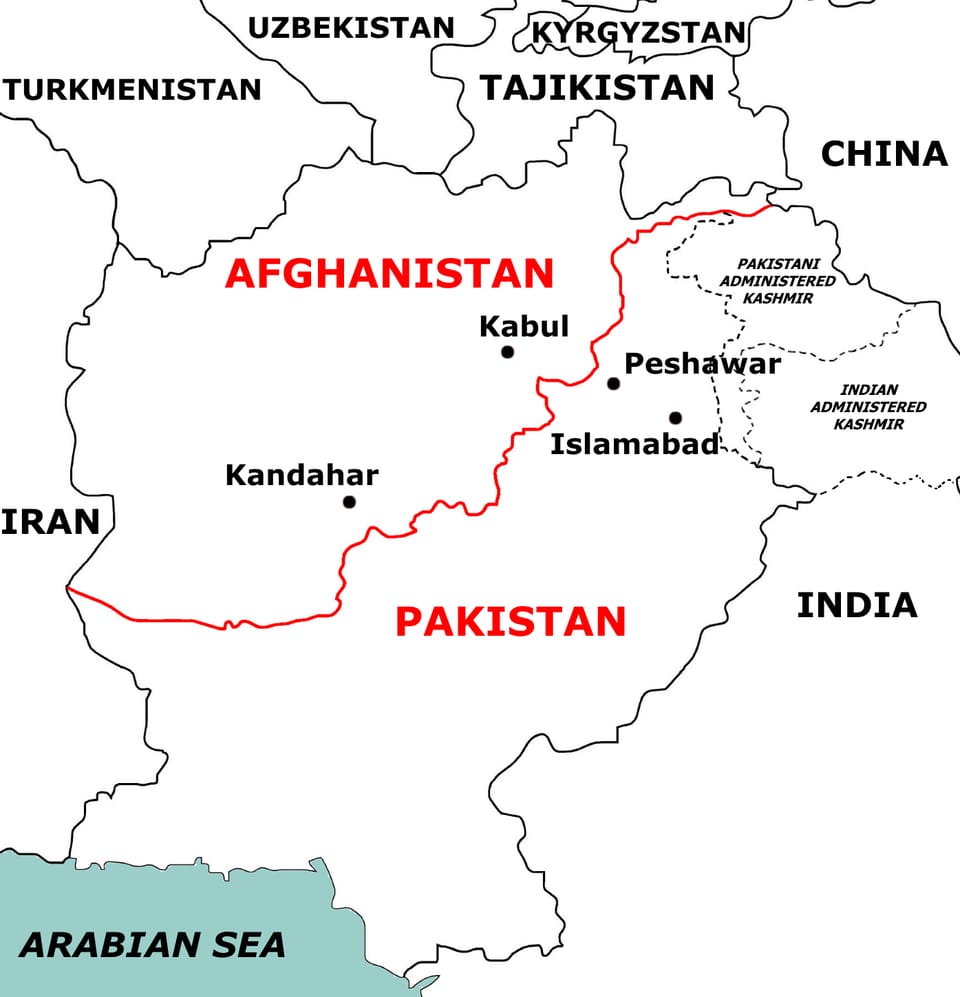
Location of the Fighting
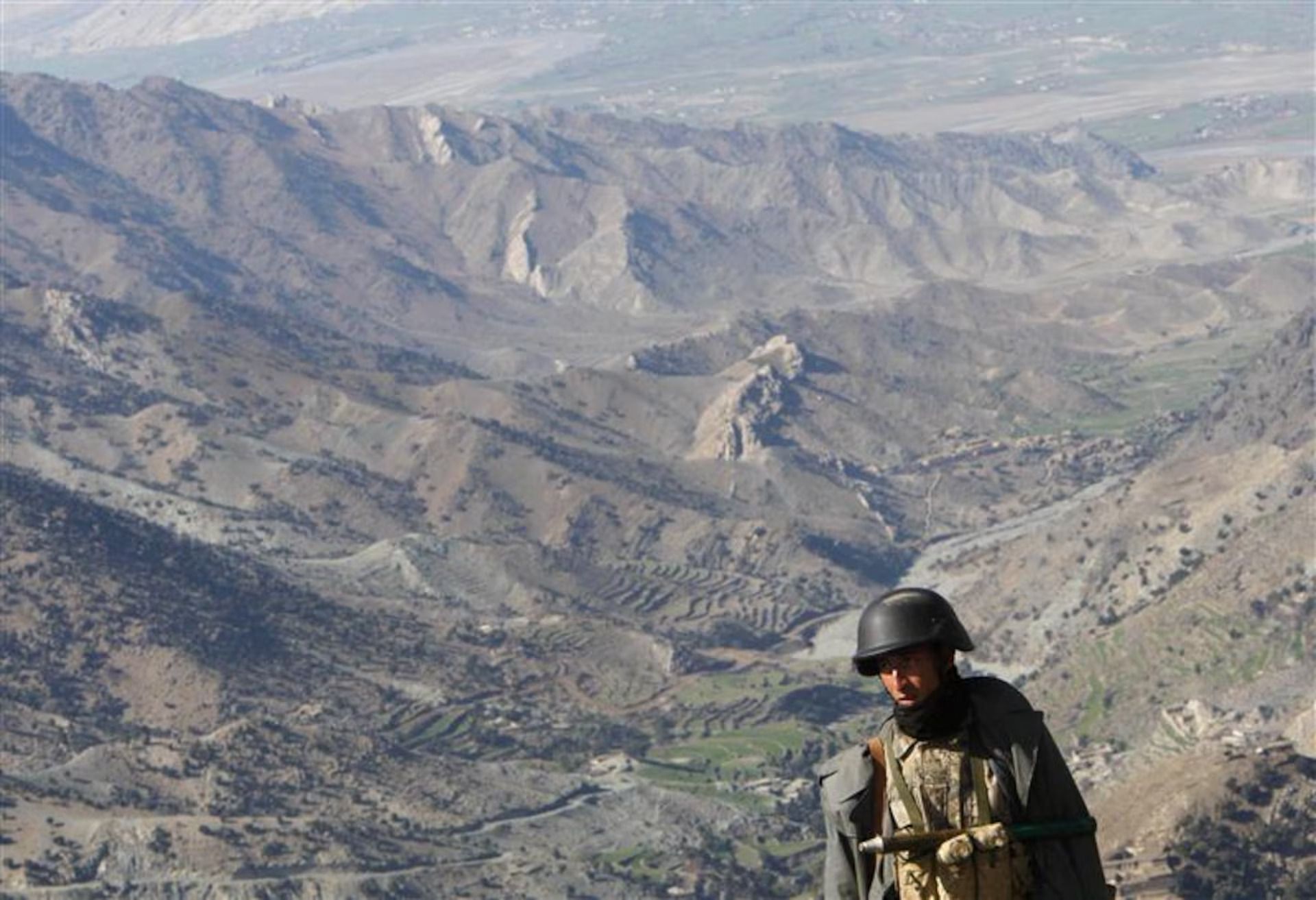
The clashes are unfolding in some of the most mountainous and rugged terrain in the world — the same landscape that once sheltered al-Qaeda and other insurgents. The harsh environment lends itself to the guerrilla warfare the TTP specialises in. However, Pakistan’s armed forces are highly experienced in mountain warfare, having battled militants in these regions for decades.
Who to Believe
As with most conflicts, early reports are chaotic and often unreliable. If something sounds too convenient, it usually is. In this case, statements from Pakistan’s defence ministry and military are likely to be more credible than those issued by the Taliban’s media wing.
What’s to Come of This?
Former Pakistani ambassador to Afghanistan Asif Durrani says the likelihood of the clashes escalating “into something bigger and more serious” is minimal. And we agree with this sentiment. The Taliban cannot afford to be drawn into a full-scale conflict, especially with a country that was among the first to recognise their regime. This is an escalation in the name of domestic and ethnic politics more than it is international.
Sources:
Sources available upon request, not shown to maintain visual integrity of page.
TWEET OF THE DAY
Good luck to all portfolios on Monday 😂
TODAY IN HISTORY
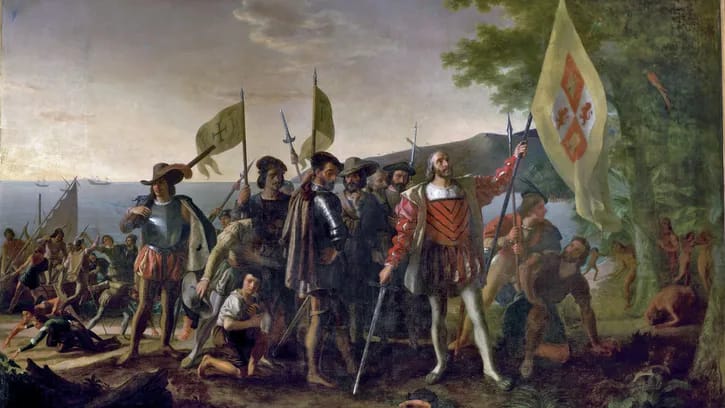
(October 12, 1492): New World sighted
The New World was “discovered” this day in 1492 when land (most likely San Salvador) was sighted in the Caribbean from the Pinta, one of the three ships that participated in Christopher Columbus's historic voyage.