- Basedment
- Posts
- Tariffs Surge, Kurdish Ceasefire & Trump’s Gaza Calculations
Tariffs Surge, Kurdish Ceasefire & Trump’s Gaza Calculations
Your daily dose of geopolitical updates and strategic analysis. Unbiased, but not unbased.

Editor-in-Chief
July 13, 2025
THE BRIEFING
Here’s what’s happening in geopolitics today.
Trade tensions, nuclear diplomacy, and geopolitical pivots are all colliding on the global stage. President Trump has unveiled sweeping 30% tariffs on the EU and Mexico, toured flood-ravaged Texas, and faces pressure over shifting U.S. positions on Gaza and trade.
Meanwhile, Putin is pressing Iran on nuclear concessions, Kurdish militants signal an end to decades of conflict, and Moscow and Pyongyang deepen their “invincible brotherhood.”
In today’s deep dive, we unpack why Trump is moving the goalposts on both tariffs and Gaza, and what it means for America’s foreign policy and economic future.
THE LAST 24 HOURS IN GEOPOLITICS
1. Trump announces 30% tariffs on EU & Mexico
President Trump announced a sharp escalation in his trade agenda, unveiling plans to impose 30% tariffs on imports from the European Union and Mexico beginning August 1, 2025. He justified the move by citing national security concerns, accusing Mexico of not doing enough to combat drug cartels and the EU of maintaining unfair trade practices and contributing to U.S. deficits. This rounds out Trump’s aggressive tariff strategy - on the heels of a 50% tariff on copper and threats against over 20 countries and has prompted warnings of retaliation from affected trade partners
read more
2. Trump visits Texas flood zone and defends government’s disaster response
President Trump toured the flood-devastated region in Kerr County, Texas, where over 120 lives were lost. During a roundtable with first responders, he praised state and federal response efforts and commended Governor Greg Abbott and DHS Secretary Kristi Noem, while dismissing criticism over early-warning failures as malicious.Despite pressure over funding cuts to FEMA and the National Weather Service, Trump affirmed he would fully support recovery and pledged continued federal aid
read more
3. Putin urges Iran to take ‘zero enrichment’ nuclear deal with US
Vladimir Putin has privately urged both Trump and Iranian officials to support a new nuclear deal that enforces zero uranium enrichment in Iran which is a drastic departure from his public backing of Tehran’s nuclear rights. While Moscow has offered to help remove Iran’s enriched uranium if such a deal materializes, Iran’s semi-official Tasnim agency has denied any message from Putin urging zero-enrichment, highlighting conflicting narratives. The proposal underscores Russia’s potential role as a broker in nuclear diplomacy, even as Iran insists that halting enrichment entirely remains non-negotiable.
read more
4. Kurdish PKK militants burn weapons in Iraq to launch disarmament
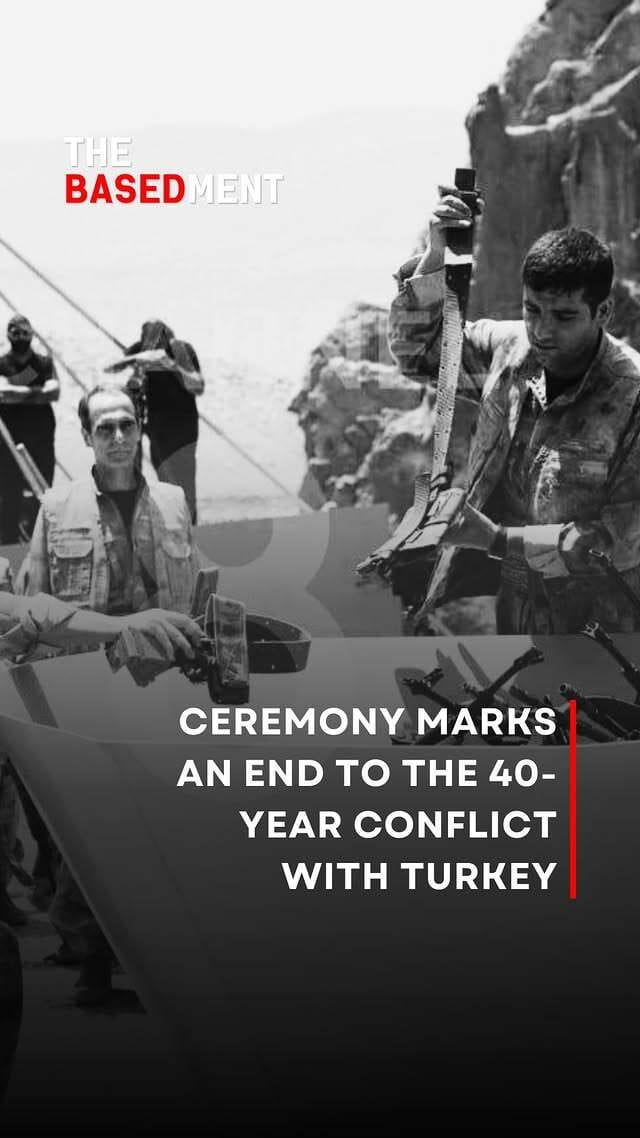
Thirty PKK militants held a powerful symbolic ceremony on Friday, burning their weapons at the mouth of a cave in northern Iraq, marking the start of disarmament negotiations aimed at ending the decades-long insurgency against Turkey. The event, attended by Kurdish, Iraqi, and Turkish officials, signals the PKK's May decision to disband and shift away from armed struggle. Turkish President Erdoğan hailed the move as a historic turning point, calling for legislative support to reintegrate former fighters and start rebuilding the southeast regions devastated by conflict.
read more

5. Russia’s Lavrov meets Kim Jong Un and praises ties as ‘invincible brotherhood’
Vladimir Putin’s top diplomat, Sergei Lavrov, met North Korean leader Kim Jong Un in Wonsan and hailed their relationship as an “invincible fighting brotherhood,” a term highlighting the deepening strategic alliance. Lavrov also conveyed President Putin’s thanks for North Korea’s military contributions in Ukraine, reportedly including over 10,000 troops, plus engineers and ammunition. They also framed the encounter with a freshly inked mutual defence pact.
read more
DAILY DEEP DIVE
Why is Trump resetting the clock on tariffs and Gaza talks?
In a week packed with both economic manoeuvring and high-stakes diplomacy, President Trump has once again proven he’s willing to rewrite his own playbook. From shaking up global trade talks to recalibrating efforts for a ceasefire in Gaza, his latest decisions signal that deadlines are flexible and the path forward remains anything but predictable.
Delays and new threats in trade policy
Fresh from the July 4th holiday, President Trump returned to the White House and quickly reshuffled two critical policy fronts that have kept markets and diplomats guessing. On the economic side, he signed an executive order delaying the imposition of new retaliatory tariffs from July 9 to August 1, buying himself more time to negotiate with trading partners. But even as he postponed the looming tariffs, Trump unveiled updated duty rates on 12 countries, with tariffs ranging from 25% on Japan, South Korea, Malaysia, and Kazakhstan, to as high as 40% on Laos and Myanmar.
A week earlier, Trump had capped reciprocal tariffs at 10% until July 9 to encourage deal-making, but so far, only Britain and Vietnam have finalized agreements. The White House insists more deals are coming, with Press Secretary Karoline Leavitt saying the president is determined to secure the “best deals possible” and is scrutinizing every country’s trade practices. Meanwhile, nations like Australia appear resigned to facing the baseline tariff, which helps fund Trump’s recent massive tax cuts. Trump has also threatened an additional 10% tariff on any nation aligning with the BRICS bloc, indicating his trade war is far from over.

Announced updates to duty rates
Behind closed doors on Gaza
On the diplomatic front, Trump’s shifting tactics were equally visible in the Middle East. Despite Israeli Prime Minister Benjamin Netanyahu’s high-profile visit to Washington, Trump unexpectedly skipped a joint press conference, opting instead for a private dinner to avoid pressing questions about a Gaza ceasefire. Israeli media had anticipated an Oval Office announcement, but the White House signaled that negotiations were still in flux.
The context is complex: Trump recently ordered strikes on Iranian nuclear facilities at Israel’s urging and helped arrange a ceasefire in the 12-day Israel-Iran conflict. Netanyahu owes Trump significant political gratitude, yet the Israeli leader is also trying to satisfy hardliners who oppose compromising with Hamas. While Trump initially projected optimism for a Gaza ceasefire, he acknowledged over the weekend that progress might take longer.

Trump and Netanyahu during a dinner in the Blue Room of the White House
Ceasefire hopes caught in politics
Currently, a U.S.-backed proposal in Qatar envisions a 60-day ceasefire involving phased Israeli troop withdrawals from parts of Gaza and the release of hostages. About 50 hostages remain, of whom roughly 20 are still alive. However, Hamas insists on guarantees that the ceasefire will lead to a permanent end to the conflict, while Netanyahu wants Hamas dismantled and its leadership exiled.
So, as on trade, Trump seems prepared to shift his deadlines again if it means keeping negotiations alive. His willingness to reset the timetable, whether on tariffs or peace deals, underscores the reality that Trump’s foreign policy is driven as much by optics and political calculations as by strategic goals. In both arenas, the world remains on edge, watching how far—and how often—the goalposts might move next.
TWEET OF THE DAY
Yes, we understand it’s not geopolitics however it’s a weekend and peak Wimbledon season so let’s take a moment to appreciate the Serbian warlord Novak Djokovic…!
When Novak Djokovic played his first Wimbledon, Sinner was 3 and Alcaraz was 2.
20 years later, he is competing with them where it all began.
That is the greatness of Novak Djokovic.
It is a privilege to witness what this man can still do.
— Danny (@DjokovicFan_)
6:34 PM • Jul 11, 2025
TODAY IN HISTORY
(July 12, 1984): Geraldine Ferraro designated running mate of Walter. Mondale Democratic presidential candidate Walter F. Mondale put forward Geraldine Ferraro as his running mate on this day in 1984, making her the first woman ever nominated for vice president by a major U.S. political party.
