- Basedment
- Posts
- The Complicated Turkey-USA Relationship
The Complicated Turkey-USA Relationship
Your daily dose of geopolitical updates and strategic analysis. Unbiased, but not unbased.

Editor-in-Chief
September 30, 2025
THE BRIEFING
Here’s what’s happening in geopolitics today.
From renewed airstrikes in Gaza to Moldova’s pro-EU election win, the past 24 hours have delivered significant developments across multiple regions.
We’re also watching Beijing’s upcoming party conclave, Netanyahu’s White House visit, and Nordic moves to tighten airspace security.
Today we examine the complexities of U.S.-Turkey relations and assess whether the Trump-Erdogan meeting marks a turning point.
THE LAST 24 HOURS IN GEOPOLITICS
1. IDF bombs new high-rise tower in Gaza City, displaced hundreds
The Israeli army bombed the Mecca Tower in Gaza City on Sunday, shortly after warning residents to evacuate, according to witnesses and state media. The high-rise, located in the Rimal neighborhood, was reportedly sheltering hundreds of displaced families at the time of the strike. The attack is part of a wider pattern in which Israeli forces are targeting tall residential towers in Gaza, moves critics argue aim to depopulate the city ahead of intensified ground operations.
read more
2. China to review five-year plan at October Communist Party Conclave
China’s ruling Communist Party will hold its Fourth Plenum from October 20 to 23, Xinhua reported on Monday, following a meeting of the Politburo. The session will take place in Beijing and is expected to focus heavily on drafting proposals for the forthcoming 15th Five-Year Plan (2026-2030), which outlines economic, social, and development goals. The meeting is being watched globally, as its outcomes may reveal shifts in policy priorities amid growing economic pressures and international scrutiny.
read more
3. Netanyahu to meet Trump on Monday as U.S. Intensifies Gaza truce push
Netanyahu is due at the White House Monday for high-stakes talks with Trump, amid assertions from Washington that a comprehensive peace plan to end the war in Gaza is almost finished. The yet-unveiled framework reportedly lays out steps for releasing all hostages, a temporary ceasefire, and a phased Israeli withdrawal, though Hamas and Arab states have only been briefed and haven’t formally signed off. Despite the optimism, analysts warn that deadlines are tight, key parties remain skeptical, and events on the ground could still derail the deal.
read more
4. Moldova’s pro-EU party wins vote mired in claims of Russia interference
Moldova’s ruling pro-European Party of Action and Solidarity (PAS) has won a decisive majority in the latest parliamentary election, securing over 50% of the vote and taking 55 out of 101 seats. The result lets PAS govern without forming a coalition, reinforcing its mandate to push forward with EU integration goals. Pro-Russian opponents, including the Patriotic Electoral Bloc, lagged far behind, despite claims of interference, disinformation and electoral disruptions.
read more
5. Sweden sends anti-drone systems, radars to Denmark to support summit security
Sweden has committed to providing Denmark with military anti-drone capabilities to bolster security during upcoming summits in Copenhagen, following recent drone sightings that forced the closure of multiple Danish airports. Swedish Prime Minister Ulf Kristersson confirmed the deployment on Monday, saying the support aims to protect critical events from aerial threats. The move highlights growing fears over drone incursions in Europe and reflects deeper cooperation in regional security among Nordic allies.
read more
DAILY DEEP DIVE
TURKEY AND USA - A COMPLICATED RELATIONSHIP
The Meeting
Trump and Erdogan’s meeting projected optimism, strengthening Turkey’s regional standing and signalling closer U.S.-Turkey ties. Economic cooperation is improving, while military issues remain unresolved due to longstanding sanctions and blocked technology transfers. Turkey faces difficult choices on its defence programs, balancing Western restrictions with alternative suppliers, as it continues its push for greater strategic autonomy. Most importantly, President Trump repeatedly hinted that stronger bilateral relations depend on Turkey reducing its reliance on Russian oil and, on a smaller note, cooperating on reopening the Eastern Orthodox School.
Where It All Went Wrong
The downturn in U.S. arms transfers to Turkey stems largely from sanctions imposed under the Countering America's Adversaries Through Sanctions Act (CAATSA) in 2020. That December, Washington targeted Turkey’s Presidency of Defense Industries and several of its officials after Ankara purchased the Russian S-400 air defence system—a move seen as incompatible with U.S. and NATO security standards . The penalties included a prohibition on granting new export licenses for American military equipment to the sanctioned Turkish entities, which effectively cut off the pipeline for major new defence contracts.
As a result, cornerstone deals such as Turkey’s planned acquisition of F-35 fighter jets were either frozen or scrapped altogether. The overall value of U.S. arms sales to Turkey has since contracted by more than 80 percent, leaving only smaller transactions (mainly spare parts and routine maintenance) moving forward. While certain previously authorised agreements have been completed, no significant new weapons deliveries have taken place since the sanctions went into force. Technically, these restrictions stop short of being a blanket embargo, but in practice the combined effect of CAATSA measures and congressional opposition has all but shut down major U.S. arms transfers to Turkey.
MOVING FORWARD
Greenlight For Turkish Influence
Trump signalled his support for Erdoğan’s growing regional influence during their joint press conference, where he did most of the talking while remaining vague on longstanding disputes. Despite offering few details on issues like defence systems, Syria, and Gaza, Trump was notably respectful toward the Turkish leader and acknowledged Turkey’s rising role in regional affairs. This included acknowledging Turkey’s role in Assad’s ousting in Syria. His remarks echoed U.S. envoy Steve Witkoff, who emphasised regular coordination with Turkish officials on Black Sea and Caspian security. Turkey’s growing sway in Syria, Libya, and the Caucasus (combined with Erdoğan’s rare ability to maintain ties with both Putin and Zelensky) gives weight to Trump’s words. While the specifics of defence cooperation remain unresolved, the meeting suggested renewed optimism for U.S.-Turkey relations and closer alignment between the two NATO allies.
It may be a stretch, but could Trump be searching for a new best friend in the Middle East? He has always gravitated toward strong leaders he sees as reflections of himself, and Erdoğan fits that mould. Erdoğan’s geopolitical clout continues to expand, and with Netanyahu’s global standing collapsing, Trump may soon shift his preferred partner in the region.
Economic Deals Lead The Way
Trump wants to strengthen bilateral relations with Turkey and sees further economic cooperation as the central way forward. Two significant energy agreements appear to have been finalised during the meeting: a $43 billion, twenty-year contract for liquefied natural gas (LNG) purchases, and a civilian nuclear partnership focused on small modular reactors. Additional commercial arrangements may also be disclosed once the official readouts of the meeting are released. To Trump, this opens pathways for stronger cooperation in the future and could convince more cautious or hostile GOP members to reconsider their stance on Turkey.
Some Things Are Hard To Forget
The meeting was filled with optimism and positive rhetoric, but offered little in terms of concrete substance. That was by design, Trump wanted the ‘first date’ to run smoothly… U.S. officials have even asked Turkish drone maker Baykar to consider opening a production facility in the United States, according to Foreign Minister Hakan Fidan.
But as of the last 24 hours the U.S. Congress has blocked the export of General Electric F110 engines to Turkey, severely jeopardising the rollout timeline for the KAAN fifth-generation stealth fighter and widening rifts within NATO. The KAAN program, once based on using U.S. engines for its first production blocks before shifting to a domestic power plant, relies heavily on TRMotor’s indigenous engine development, yet that program is still years from maturity. The congressional ban reflects deep U.S. suspicion of Turkey’s strategic choices, particularly its 2019 acquisition of the Russian S-400 system, which many in Washington believe poses risks to NATO systems and raises questions of alignment. Turkish defence insiders say that emergency funding for TRMotor has been injected to accelerate the indigenous engine timeline, but analysts still expect at least a seven-year horizon to readiness. The engine embargo forces Ankara to consider fallback options: continuing reliance on aging F-16s or turning to Russian or Chinese suppliers, and heightens the stakes in Turkey’s push for defence autonomy.
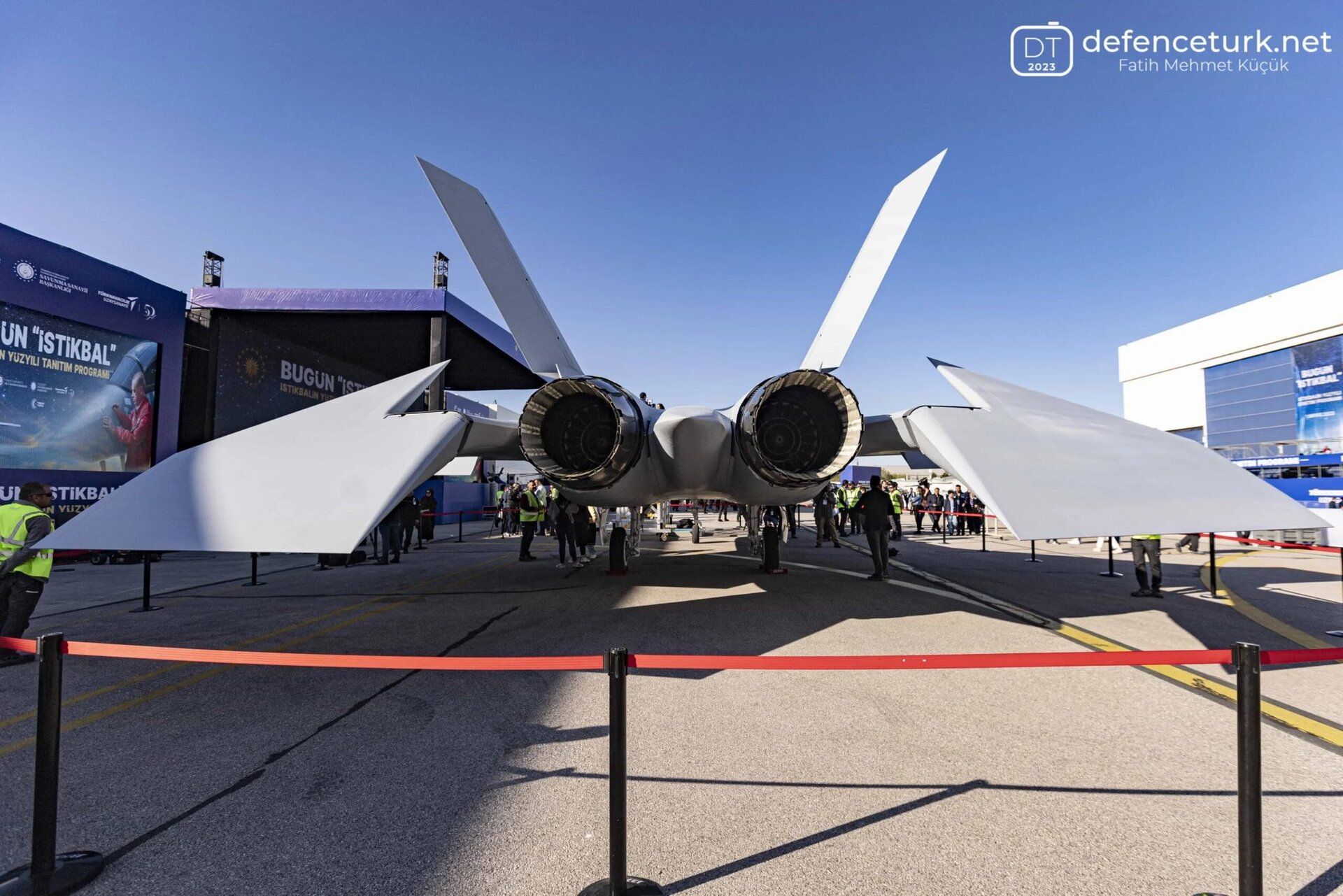
The F110 Twin engines pictured above on the KAAN prototype
Turkey’s Options
The problem with creating jet fighter aircraft is that it is an insanely complicated task. It takes close to a decade to create a domestic 5th gen fighter. So this blocking of the GE F110 is a serious issue. Turkey’s prototype KAAN uses twin General Electric F110 turbofan engines, which were expected to power subsequent prototypes as well.
So how does Turkey fix this issue?
On September 13, the Turkish outlet Nefes reported that Ankara and Moscow are discussing a potential buyback deal for the S-400 system. The report noted that Turkey has never actually deployed or operated the system, which has remained in storage, while Russia is in urgent need of additional air defence assets. Such an arrangement could represent the most practical way to satisfy all the state actors involved.
Rolls-Royce could emerge as the leading alternative to power Turkey’s KAAN program. Ankara has previously explored cooperation with the British firm, and a renewed partnership would align with Turkey’s push to diversify suppliers while reducing reliance on U.S. approvals.
China could be an option. Now you may be thinking, why would Beijing arm a NATO state actor? But if we dig deeper, the logic becomes clearer. By supplying engines, China could throttle deliveries much like GE is doing for India’s Tejas, ensuring Turkey never has enough capacity to become an export competitor. At the same time, the mere prospect of Turkish stealth fighters powered by Chinese engines would agitate the United States, Israel, and others—giving Beijing a strategic lever, even without fully committing to Turkey’s defence ambitions.
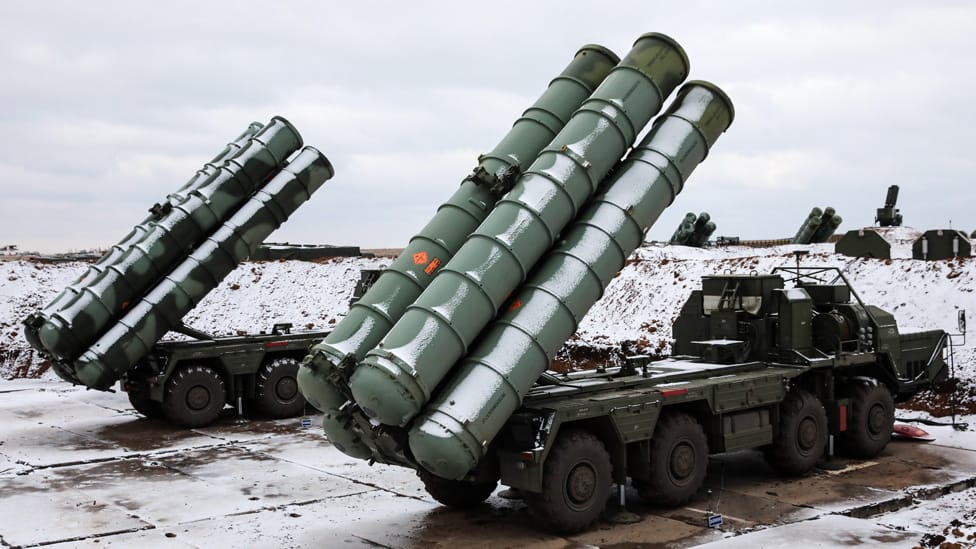
S400 launchers pictured above.
Overall, it’s a step in the right direction. Turkey is a powerful regional actor, and Washington cannot afford to see it drawn closer to U.S. adversaries. Still, these are only first steps, and much more work remains.
Sources:
Sources available upon request, not shown to maintain visual integrity of page.
TWEET OF THE DAY
Not going to lie… this had me laughing.
ICE tried to kidnap the food delivery dude in Chicago, he made clowns of them🤡🤣
— Mario (@PawlowskiMario)
1:01 AM • Sep 29, 2025
TODAY IN HISTORY
(September 29, 1923): British mandate in Palestine
Set in motion by the Balfour Declaration of 1917, the British mandate for the establishment of a Jewish homeland in Palestine was finally approved by the Council of the League of Nations and came into force this day in 1923.