- Basedment
- Posts
- The Forgotten Civil War of Sudan Part 1
The Forgotten Civil War of Sudan Part 1
Your daily dose of geopolitical updates and strategic analysis. Unbiased, but not unbased.

Editor-in-Chief
October 28, 2025
THE BRIEFING
Here’s what’s happening in geopolitics today.
A busy start to the week in global politics, with Trump making waves in Japan and a tense round of Afghanistan–Pakistan talks in Istanbul ending without progress.
Bill Gates has called for a rethink on how the world tackles climate change ahead of COP30, while Israel continues the painful process of recovering hostages’ bodies under the fragile Gaza truce. Meanwhile, Putin hosted North Korea’s foreign minister in Moscow, deepening a partnership that’s drawing growing international scrutiny.
In today’s deep dive we cover the historical and current context of one of the bloodiest ongoing conflicts in the world.
THE LAST 24 HOURS IN GEOPOLITICS
1. Trump addresses troops on U.S. aircraft carrier in Japan
Trump visited the USS George Washington aircraft carrier docked near Tokyo during his trip to Japan, where he addressed U.S. service members aboard and reaffirmed America’s commitment to its allies in the Indo-Pacific. He used the occasion to highlight the strength of the U.S.–Japan alliance, emphasizing the role of forward-deployed troops and shared readiness in facing regional challenges, from North Korea to China.
read more
2. No resolution as Afghanistan, Pakistan end peace talks in Istanbul
Negotiations held in Istanbul between Afghanistan and Pakistan have ended without a breakthrough, despite efforts to build on the cease-fire agreed in Doha earlier this month. Islamabad insisted that Kabul must crack down on militants while the Afghan side said it lacked control over the group and rejected the demands. With no resolution in sight, the fragile truce risks collapse and Pakistani officials have warned that a return to open conflict is possible unless concrete action is taken.
read more
3. Billionaire Bill Gates calls for climate strategy pivot ahead of COP30
Bill Gates has issued a call to reshape global climate strategies ahead of COP30, urging leaders to emphasise human welfare, resilience and clean-technology investment instead of strict temperature targets. In a detailed memo, Gates argued that investing in energy access, healthcare and agricultural resilience in vulnerable regions would deliver greater impact for the most suffering populations. He also called for smarter use of climate aid to ensure each dollar counts.
read more
4. Israel receives body Hamas says belongs to Gaza hostage
Israel announced that it has received the body of another deceased hostage from the Hamas-held Gaza Strip, transferred via the International Committee of the Red Cross under the U.S.-brokered ceasefire agreement. Authorities noted that identification procedures are underway, amid concerns over delays in the return of all 28 bodies of deceased hostages stipulated in the deal. The exchange highlights how the fate of hostage remains remains a key sticking point in maintaining the fragile truce between Israel and Hamas.
read more
5. Putin and North Korea’s foreign minister discuss strengthening ties
Putin met with Choe Son‑hui, Foreign Minister of North Korea, at the Kremlin on Monday to discuss “many future projects” aimed at deepening the bilateral relationship. The meeting came amid reports that Pyongyang is providing troops and artillery to Moscow’s war in Ukraine in return for advanced military technology and political support. Both sides issued statements emphasising their shared perspective on the conflict in Ukraine and their intention to build out a comprehensive strategic partnership across multiple fields.
read more
DAILY DEEP DIVE
THE FORGOTTEN CIVIL WAR IN SUDAN
PART 1 OF 2
Historical Context
The roots of Sudan’s current conflict trace back to decades of internal division and military dominance. After gaining independence in 1956, Sudan inherited deep cultural and religious fractures between the Arab-Muslim north and the largely Christian and animist south. These divides ignited two major civil wars: the first from 1955 to 1972, and the second from 1983 to 2005, which killed an estimated two million people. The 2005 Comprehensive Peace Agreement ended the latter conflict and paved the way for South Sudan’s secession in 2011, but Sudan itself remained unstable, particularly in the western region of Darfur.
During President Omar al-Bashir’s three-decade rule, his government armed Arab militias known as the Janjaweed to suppress non-Arab groups in Darfur, sparking genocide accusations and an eventual indictment by the International Criminal Court. In 2019, after months of nationwide protests, Bashir was overthrown in a military coup led by General Abdel Fattah al-Burhan, head of the Sudanese Armed Forces (SAF), and Mohamed Hamdan “Hemedti” Dagalo, commander of the Rapid Support Forces (RSF)—the paramilitary group that evolved directly from the Janjaweed.
Following Bashir’s removal, a fragile power-sharing arrangement was established between civilian leaders and the military under Prime Minister Abdalla Hamdok. However, in October 2021, Burhan and Hemedti jointly staged another coup, dissolving the transitional government and reigniting political chaos. The partnership between the two generals soon fractured, particularly over plans to integrate the RSF into the regular army. Negotiations broke down in early 2023, and by April, open warfare erupted in Khartoum.
Since then, the conflict has killed an estimated 150,000 people and displaced more than 14 million. Both sides have committed atrocities, with the RSF accused of mass killings in Darfur that left up to 15,000 dead in 2023 alone. What began as a power struggle between two generals has now devolved into one of the world’s worst humanitarian crises.
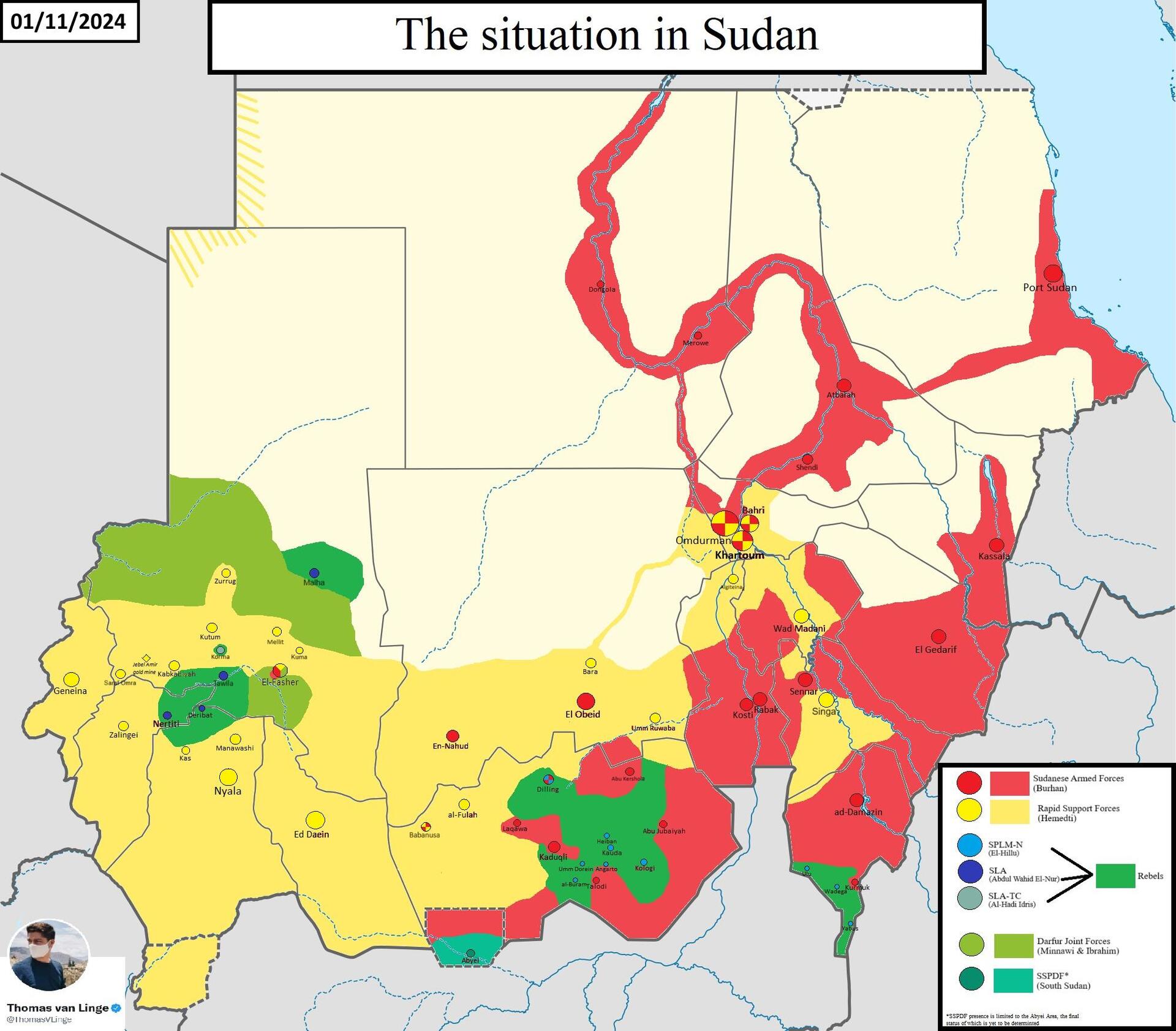
Situation end of 2024 (source: Thomas van Linge)
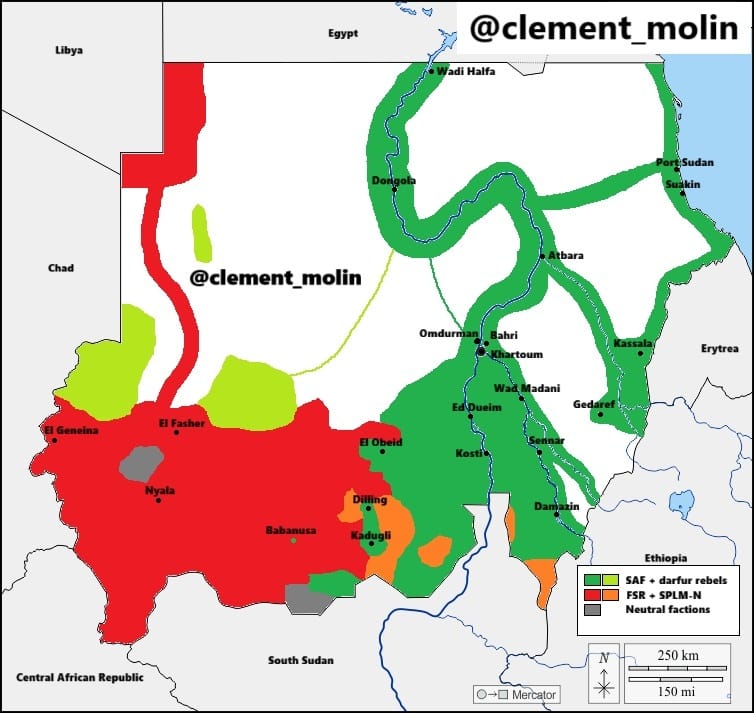
Most current situation (source: Clement_Molin)
Two Sides Draw The Line
This year has marked a significant redrawing of the conflict map. In late 2024, the Sudanese Armed Forces (SAF) launched a sweeping offensive across the greater Khartoum region, covering the cities of Khartoum, Omdurman, and Bahri — catching the Rapid Support Forces (RSF) by surprise. By February 2025, government forces had lifted the RSF’s two-year siege of Obeid. By the end of March, the SAF had retaken the capital, including the vital oil refinery north of Khartoum, while pushing RSF fighters out of Omdurman by May and regaining near-total control of Bahri, thus restoring access to the key railway corridor linking the city to the capital. By the first half of 2025, we saw the near collapse of the RSF in central Sudan.
However, the RSF have since ended the 500-day siege of El-Fashir, the capital of North Darfur. The defence of El-Fashir was led by African rebels allied to the army and by units of the 6th Division — many of whom had been persecuted by the RSF two decades earlier on orders from the SAF. The defenders consolidated positions in the centre of the city, believing a breakthrough or air resupply would occur. But the RSF, employing extensive drone and anti-air systems while building a literal mound around the entire city, eliminated any possibility of resupply or effective communication.
What we are now witnessing is a consolidation between both parties. The SAF controls the central and eastern half of the country, while the RSF holds the west. The RSF prioritised the siege of El-Fashir to free up units that will next move to secure northern SAF-aligned rebel positions and continue blockades at Babanusa, Dilling, and Kadugli. The new central battle has already begun, with the state of Kordofan serving as the gateway to both groups’ broader objectives. For the SAF, controlling Kordofan would open the path to future offensives into the heart of RSF-held Darfur. For the RSF, victory there could enable another attempt to retake central Sudan, including Khartoum, which they lost in the first half of 2025.

Map by OSINT Clement_Molin on X
In War, Only Civilians Lose
Overall, the war in Sudan has resulted in massive civilian losses and displacement. The death toll since April 2023 may be as high as 150,000, while more than 14 million people have fled their homes, many of them forced to cross borders into neighbouring countries. By November 2024, at least 24,000 deaths were officially recorded and roughly 30 percent of the population (over 14 million people) had been displaced, including around 11 million internally and 3 million who had sought refuge abroad. From 2023 onwards, the conflict accelerated: what began with explosions around Khartoum in April 2023 rapidly expanded into widespread attacks across multiple states, with thousands of incidents recorded and displacement surging into the millions.
There is no “good side” in this conflict—there rarely is in any war. The RSF is widely accused by numerous human rights organisations of committing acts that amount to genocide and ethnic cleansing. Its Arab-supremacist ideology has fuelled repeated massacres in predominantly African-populated areas. Currently, disturbing footage continues to emerge from El-Fashir, showing mass killings attributed to RSF units. The SAF, meanwhile, are far from innocent; for decades they persecuted groups that did not conform to their interpretation of Sharia law. During the most recent phase of the war beginning in 2023, the SAF has also been accused of indiscriminate attacks on civilian areas and infrastructure, showing little concern for the loss of life or humanitarian impact.
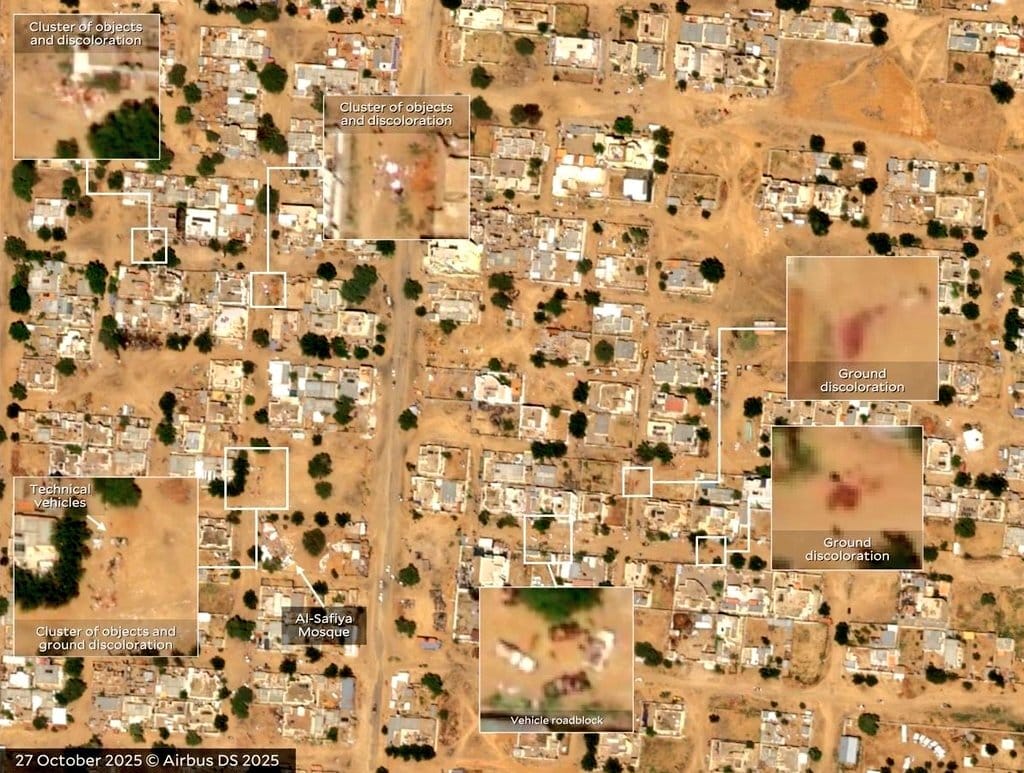
Africa focussed OSINT account AfriMEOSINT believes satellite imagery shows blood from massacre sites in the fallen city of el-Fashir
PART 2 WILL BE RELEASED TOMORROW — MAKE SURE TO SUBSCRIBE TO NOT MISS IT.
Tomorrow we will cover the wider geopolitical context of this conflict. Primarily how this war is part of a larger proxy war between Turkey and the UAE. We also cover other nations — such Iranian support and Russia’s switch from the RSF to SAF.
Sources:
News/Journal sources available upon request, not shown to maintain visual integrity of page.
OSINT Accounts used: AfriMEOSINT on X, Clement_Molin on X, Suriyak on T, AMK_Mapping on T, Vista on T/X (Arabic)
TWEET OF THE DAY
A picture tells a thousand words…?
TODAY IN HISTORY
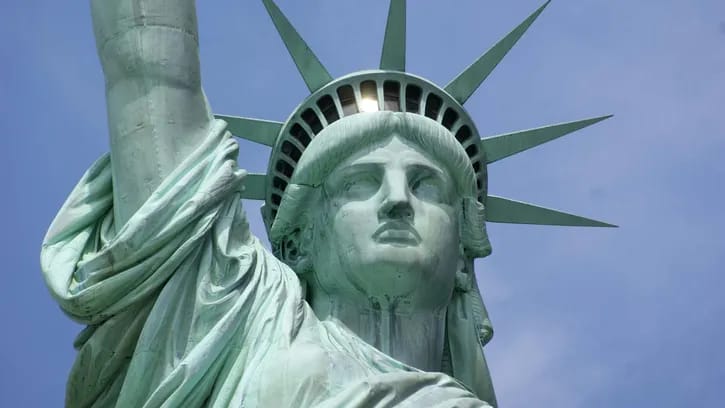
(October 28, 1886): Statue of Liberty dedicated
On this day in 1886 U.S. President Grover Cleveland officially dedicated the Statue of Liberty—a gift from the people of France to the people of the United States—on Bedloe's (later Liberty) Island in Upper New York Bay.